


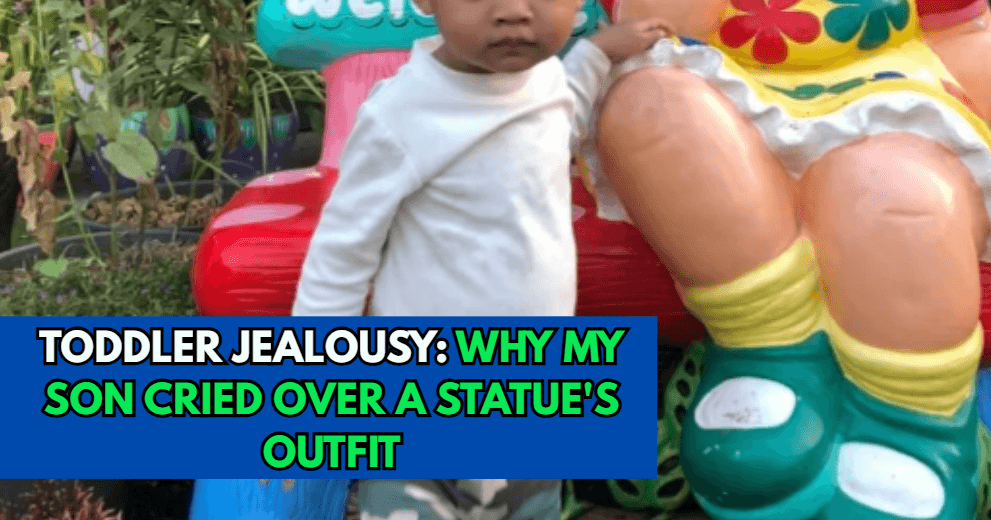
It was supposed to be a relaxing afternoon.
My son and I headed to a beautiful garden for some fresh air, a look at the flowers, and a quick photo for Grandma.
Simple plan, right?
Yeah. Not quite.
What started as a peaceful little outing turned into a full-on public meltdown.
And the culprit?
A plastic statue in a flower dress.
If you have ever been caught off guard by a sudden meltdown and had no idea what just triggered your kid, keep reading.
Because what happened that afternoon taught me more about toddler behavior than any book I had ever picked up.
Quick Takeaway
- Toddlers don’t always separate “real” from “pretend,” so a statue in a colorful dress can feel like genuine competition.
- Jealousy over another person’s outfit is a normal, healthy sign of toddler emotional development.
- Toddlers melt down over clothes because they crave control, are drawn to bright colors, and are beginning to build their own sense of identity.
- Acknowledging your child’s feelings out loud works better than explaining logic in the moment.
- You don’t need the perfect photo. You just need to show up for your kid.
The Setup: A Bench, a Statue, and a Very Opinionated Toddler
My little guy, whom I lovingly call my “Chief Negotiator,” was in a great mood at first.
He was running down the garden paths, pointing at butterflies, just doing his thing.
Then we found the perfect photo spot: a bench with a statue of a little girl sitting on it.
She was wearing a bright yellow dress covered in red flowers.
Very cute. Very colorful. Very… not what my son was wearing.
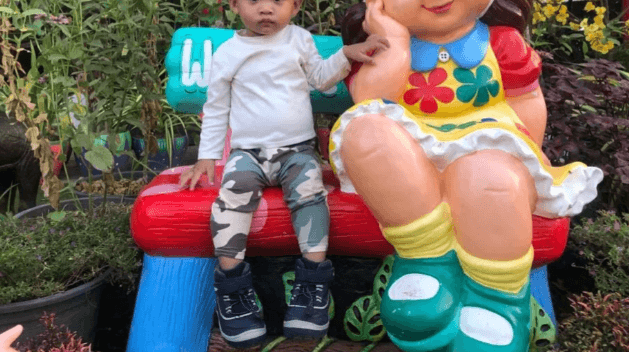
I sat him down next to her and said, “Look! A new friend! Give Grandma a big smile!”
Instead of smiling, his face just fell.
Bottom lip trembling, eyes filling up with tears.
I was genuinely confused.
Was he scared? Did the statue seem too big?
“Buddy, why are you upset?” I asked.
He wasn’t scared at all.
He pointed one little finger straight at her dress.
Why Toddlers Have Meltdowns Over Other Kids’ Clothes
That is when it clicked.
He wasn’t frightened. He was jealous.
He looked at her outfit, looked down at his plain white top and camo pants, and decided this wasn’t okay.
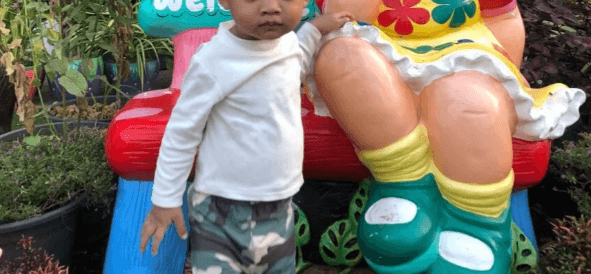
In his mind, this motionless plastic girl was wearing the coolest thing he had ever seen, and he was stuck in basics.
It wasn’t a photo op to him.
It was a competition, and he felt like he was losing.
And here is the thing: toddlers don’t separate “real” from “pretend” the way adults do.
He saw a kid with a better outfit.
It didn’t matter that she could not move or talk.
His feeling was immediate and simple: that wasn’t fair.
When you look at it from his perspective, the reaction makes total sense.
He felt underdressed and left out.
Young kids are deeply driven by emotion and comparison, and they don’t yet have the words to explain those feelings clearly.
So they cry.
Toddler Logic: Why the Reaction Is Actually Developmentally Normal
I know, from the outside it sounds a little funny.
I saw painted plastic.
He saw a kid with a better outfit.
But that is exactly how toddlers process the world.
Toddler brains are still building the ability to reason, delay emotion, and understand the difference between real and pretend.
That process takes years.
Here is what was actually happening in my son’s brain:
- He wanted control. Toddlers have almost no say over their own lives. Clothes are one of the few things they can actually have an opinion about. He didn’t pick his outfit that day, and next to a “kid” in a bright, fun dress, he felt like he had lost before the photo even happened.
- The magpie effect. Toddler brains are wired to notice high-contrast, vivid colors. That yellow dress against the green garden background was visually stimulating in a way his white shirt simply wasn’t. He wasn’t being dramatic. His brain was just doing exactly what toddler brains do.
- Copycat behavior and early empathy. When he pointed at her dress and then at his shirt, he was trying to mirror her. That is a sweet little sign of social awareness. He saw a “friend” and wanted to match her. That is actually an early marker of empathy, not bad behavior.
- Building a personal identity. When a toddler cries over a statue’s outfit or refuses to get dressed at home, they are not trying to make your life harder. They are doing the hard developmental work of figuring out who they are and what matters to them.
How to Handle a Toddler Meltdown in Public
Since we were surrounded by other families that afternoon, I had to think fast.
Here is what worked and what didn’t.
What didn’t work: explaining the logic
“Buddy, that is a statue.
She isn’t real. Her dress is painted on; she can’t take it off.”
He didn’t buy it.
He actually reached over and tugged on her dress to check for himself.
Toddlers are nothing if not thorough.
What worked: acknowledging the feeling first
Instead of trying to reason him out of his emotion, I said, “I know, her dress is really pretty.”
That one sentence did more than my full explanation.
Naming the feeling takes away some of its power.
Redirect, don’t argue
I pointed out some real flowers nearby that matched the colors on her dress.
It gave him something new to focus on without dismissing what he was feeling.
Let go of the original plan
We didn’t get the smiling Grandma photo that day.
And honestly, that was fine.
His feelings mattered more than the shot.
Some outings just go sideways, and that is okay.
When Your Toddler Is Jealous of Someone Else’s Clothes
If your toddler has ever melted down over what someone else is wearing, you are not alone.
It is actually a healthy sign of development.
They are beginning to figure out fairness, building their own sense of identity, and learning that what they wear means something to them.
A few things worth remembering the next time this happens:
- It isn’t manipulation. They genuinely feel the emotion deeply and don’t have the tools to manage it yet.
- Validate before you redirect. “I can see you really love that” goes further than “stop crying, it is just a statue.”
- Give them small choices when you can. Letting toddlers pick between two acceptable outfits gives them the control they are craving, which prevents a lot of meltdowns before they start.
- Keep your own reactions calm. Toddler’s big emotions escalate faster when a parent mirrors the stress back at them.
What I Learned From the Garden Meltdown
When I got home and looked at the photos again, the whole thing made more sense.
A little reading on toddler behavior confirmed what I had suspected: my son wasn’t just being difficult.
He was hitting real emotional development milestones right there on that bench.
He was learning about fairness.
He was noticing the world around him.
He was trying to communicate a feeling he didn’t have words for yet.
And he was trusting me enough to let it all out.
I walked away from that afternoon with one solid reminder: always expect the unexpected.
I never would have guessed a garden statue would be the source of an epic tantrum in the middle of a garden.
But now I know, anything bright and colorful is fair game.
Whether it is a public meltdown over a statue or a battle about getting dressed at home, it is always worth pausing and asking why.
Sometimes the answer is just, “I really wanted the flower shirt.”
And honestly? I get it. That statue had great style.
Next time we visit a garden, I might just let him wear whatever he wants.
Even if it is pajamas.
Frequently Asked Questions
Is it normal for toddlers to get jealous of what other kids are wearing?
Yes, completely normal. Toddlers are developing their sense of identity and fairness between the ages of two and four. Noticing and wanting what others have, including clothing, is part of healthy toddler emotional development. It shows they are becoming socially aware and starting to understand the concept of “mine” and “theirs.”
Why do little kids throw tantrums over getting dressed?
Toddlers cry over clothes for several reasons: they want control over their own bodies, they are drawn to bright and colorful things, and clothing is one of the few areas where they feel they can have a strong opinion. A meltdown over an outfit is usually about the emotion underneath, not the item itself.
How do I calm a child’s public meltdown?
The most effective approach is to acknowledge the feeling first before trying to fix it. Say something like “I can see you are really upset” or “I know you wanted that.” Avoid arguing or explaining logic in the heat of the moment. Redirect with something nearby that can capture their attention, and if needed, calmly remove them from the situation without making it a bigger scene.
Why is my two-year-old so jealous of another kid’s outfit?
Toddlers process social situations through comparison and emotion. If another child, or even a statue, is wearing something bright and eye-catching, your toddler may feel left out or overlooked. This is tied to early fairness awareness and their instinct to mirror the people around them. It is a developmental stage, not a character flaw.
At what age do toddlers start caring about their clothes?
Most toddlers begin to develop strong opinions about clothing between 18 months and 3 years old. This is when self-awareness and the desire for autonomy really start to kick in. Some children develop clothing preferences earlier or later, and the intensity varies a lot from child to child.
Should I let my preschooler choose what to wear?
Giving toddlers some control over their clothing choices can significantly reduce meltdowns around getting dressed. You don’t have to hand over full control. Try offering two choices: “Do you want the blue shirt or the striped one?” This meets their need for independence while keeping things manageable for you.
What is the difference between a toddler tantrum and a meltdown?
A tantrum is usually goal-oriented. The child wants something and is trying to get it through crying or acting out. A meltdown is more of an emotional overload, where the child has lost the ability to regulate their feelings entirely. Both require calm, patient responses, but meltdowns often need more quiet space and less talking until the child calms down on their own.
Disclaimer: I am a parent and a university educator, not a licensed child psychologist or pediatrician. This guide is based on my personal parenting experience and conflict resolution background. Always consult your child’s pediatrician for professional medical or psychological advice regarding your child’s behavior and development.
