


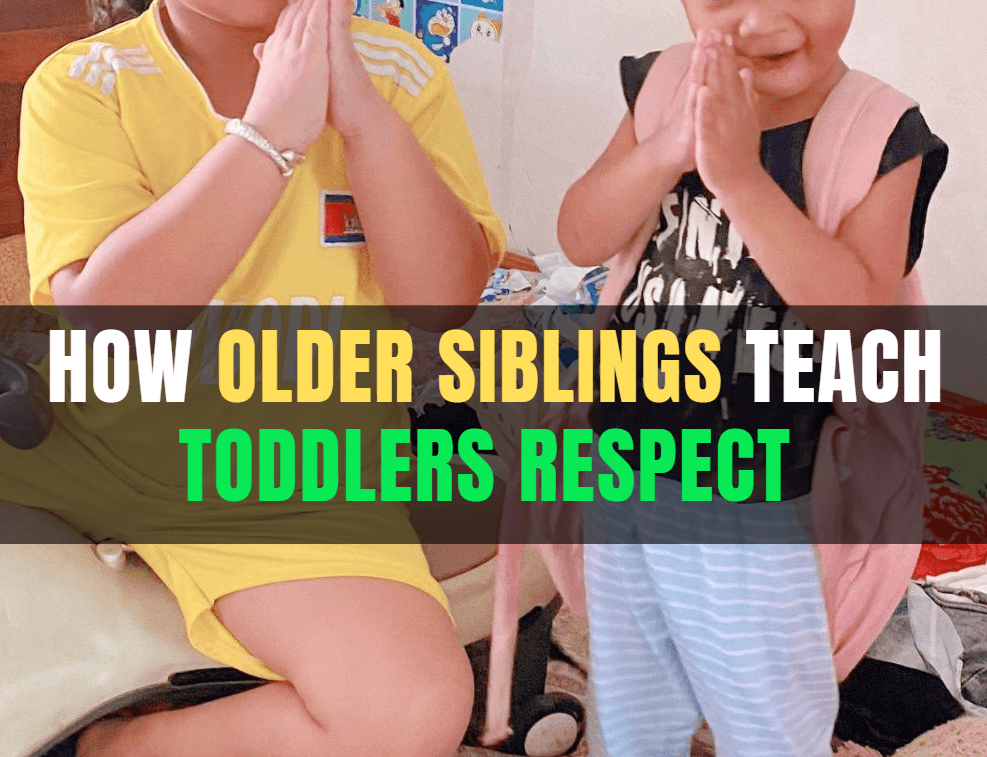
The messiest classroom I have ever been in is my kids’ bedroom.
The bed was a disaster. Toys were everywhere.
And right in the middle of it all, my eight-year-old daughter was giving my two-year-old son one of the most important lessons of his life, without me saying a single word.
If you are parenting a toddler and an older child at the same time, you already know how chaotic things get.
But watching them that afternoon taught me something I was not expecting.
When you step back and let your kids work things out, you get to watch their bond grow right in front of you.
That is a completely different experience from the one you get when you jump in to fix everything.
It Started With a Pink Backpack and a Full-On Tantrum
After lunch, my daughter sat down to go through her school bag and check her homework. Simple enough.
Not with a two-year-old around.
My son spotted that pink backpack and immediately decided it was the most important object on the planet.
He grabbed for it. She pulled it back.
The crying began, then the screaming started.
Every parent knows this scene by heart.
My instinct was to jump in and fix it.
I walked over and said to my daughter, “Let me carry it. I’ll take the bag.”
She looked at me, completely calm, and shook her head.
Then she turned back to her brother and took over.
How She Handled the Sibling Conflict I Could Not
Within about thirty seconds, the screaming stopped.
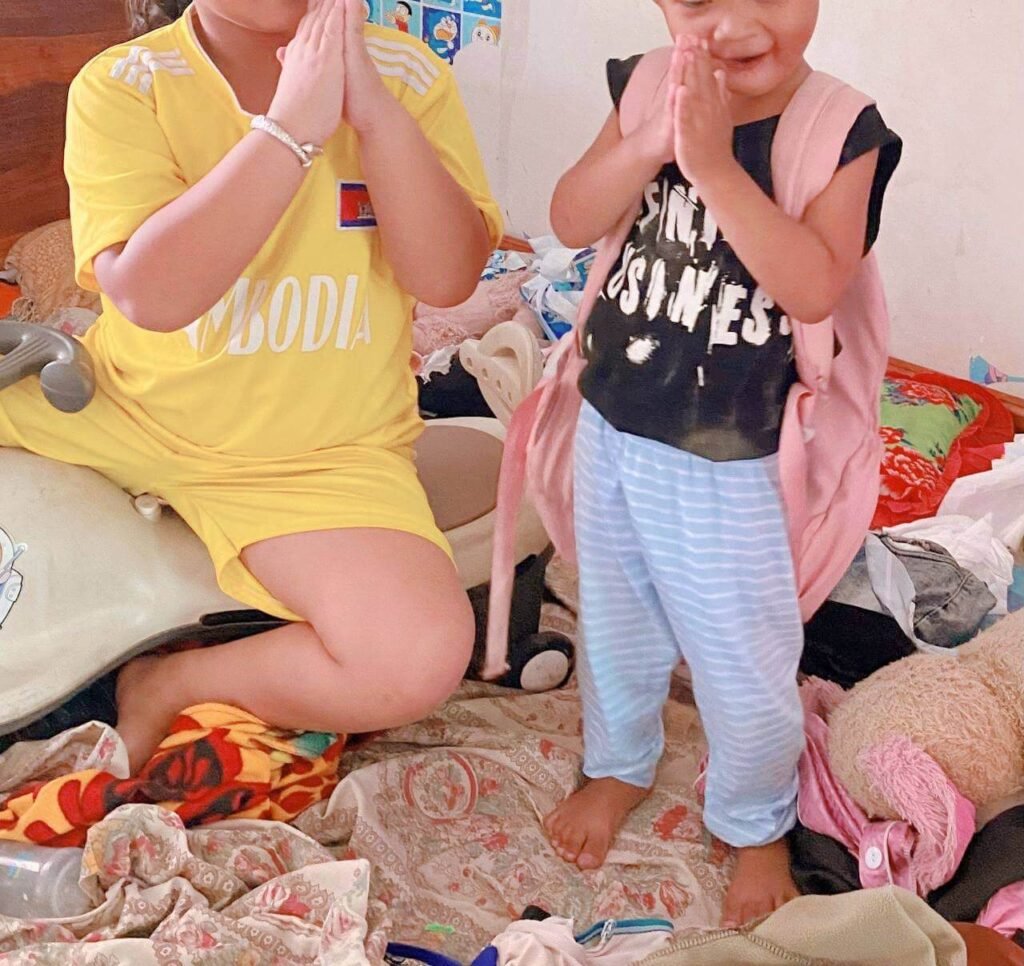
My son was standing straight up, wearing a backpack nearly as big as he was, grinning from ear to ear.
The tantrum was gone. The tension was gone.
And somehow, a full little orientation session had taken its place.
She did not bribe him. She did not distract him with a snack. She gave him a role.
Instead of acting like an annoyed older sister, she just naturally took charge.
She looked him straight in the eye and said:
“Smart children must listen to their mother. I will let you carry this bag, but you must follow me. You must stand up straight. When you carry this bag, you are a student. A good student must respect their parents, their elders, and their teachers.”
Then she showed him exactly what respect looks like in our family.
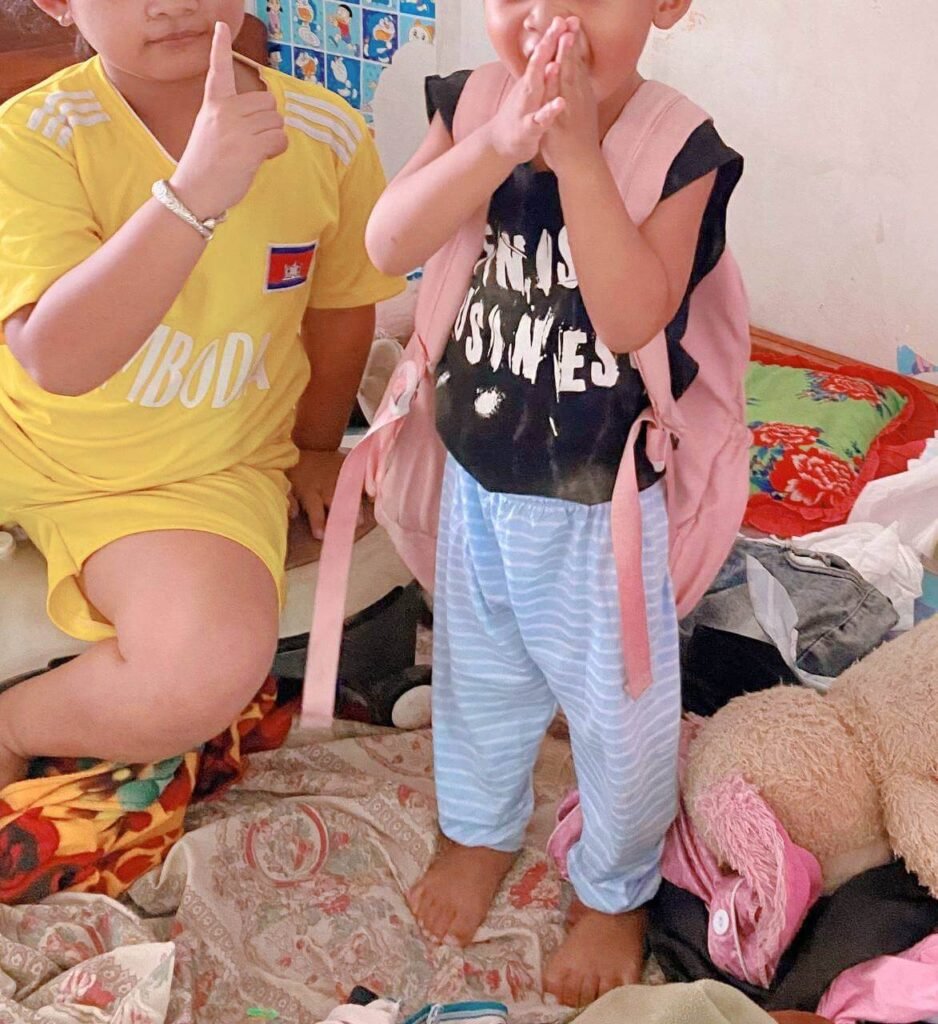
She taught him the Sampeah, the traditional Cambodian greeting, in which hands are pressed together in a gentle bow.
The same gesture I had spent years teaching her.
He copied every move. Perfectly. Proudly.
Why Older Siblings Teach Younger Siblings So Well
This part genuinely surprised me, both as a father and as an HR professional.
I have spent years studying how people learn inside organizations.
One of the most consistent findings is this: people learn faster from peers than from managers.
The closer someone is to your own level, the more their instruction actually lands.
The same thing happens between siblings.
When I explain something to my son, I am a giant talking at him from way up above.
Even when I simplify things, the gap is still there.
He loves me, but I am the authority figure. He performs for me.
When his sister talks to him, she is right at his level.
She uses big gestures, exaggerated expressions, and full physical energy.
She is not a parent. She is the coolest person he knows, and she was personally inviting him into something special.
That is why it stuck.
That is why he stood up straight and smiled and actually learned.
Older siblings teaching younger siblings is one of the most effective forms of learning that happens inside a family, and most parents barely notice it is happening.
How to Teach Toddlers Respect Through Play
One thing my daughter did instinctively that deserves its own moment: she used roleplay.
She did not lecture him about respect.
She did not define it. She gave him a costume (the backpack), a title (student), and a mission (follow me).
She created an experience, and inside that experience, the value made sense.
This is honestly one of the most natural ways to teach toddlers respect through play.
You do not need a curriculum. You need a context.
Give your toddler a role.
Give them a job.
Let them feel the weight of something meaningful, even if that something is a pink backpack.
Then show them, through your actions, what living those values actually looks like.
Kids do not really learn respect from lectures.
They learn it by acting it out and watching each other.
What Corporate Training Taught Me About Parenting
I know how it sounds when an HR professional starts analyzing his kids with leadership frameworks.
But stay with me.
In my work, I talk a lot about organizational culture.
And the most important thing I tell every team is this: culture is not what leadership writes on a poster.
Culture is what people teach each other when no one is watching.
That afternoon, when I stepped back and my daughter stepped in, I watched our family’s culture teach itself.
The lesson she delivered, greet your parents, respect your elders, stand up straight, was word for word what I had repeated to her for years.
She did not just remember it. She believed it enough to pass it on.
That is the real test of how family values actually stick.
Not whether your kids follow the rules when you are watching.
Whether they teach those rules to someone else when you are not.
When to Step Back and Let Your Kids Work It Out
Here is what I want every parent of multiple kids to hear.
Your instinct to fix things is loving. It is also, sometimes, the thing that gets in the way.
When I stepped in to take the bag, I was ready to solve a surface-level problem.
My daughter was already solving a deeper one. She was doing the cultural onboarding.
She was running the peer mentoring session.
And if I had taken over, that whole moment would have disappeared.
The most useful thing I took from this experience is simple: pause before you intervene.
Give your older child a chance to handle it.
You might be watching one of the most important moments of their development, and all it costs you is thirty seconds of restraint.
Knowing when to step back and let siblings work things out is not passive parenting.
It is one of the most active and intentional choices you can make.
The Orientation Ended the Right Way
Once the lesson was done, my daughter wrapped things up the way any good mentor should.
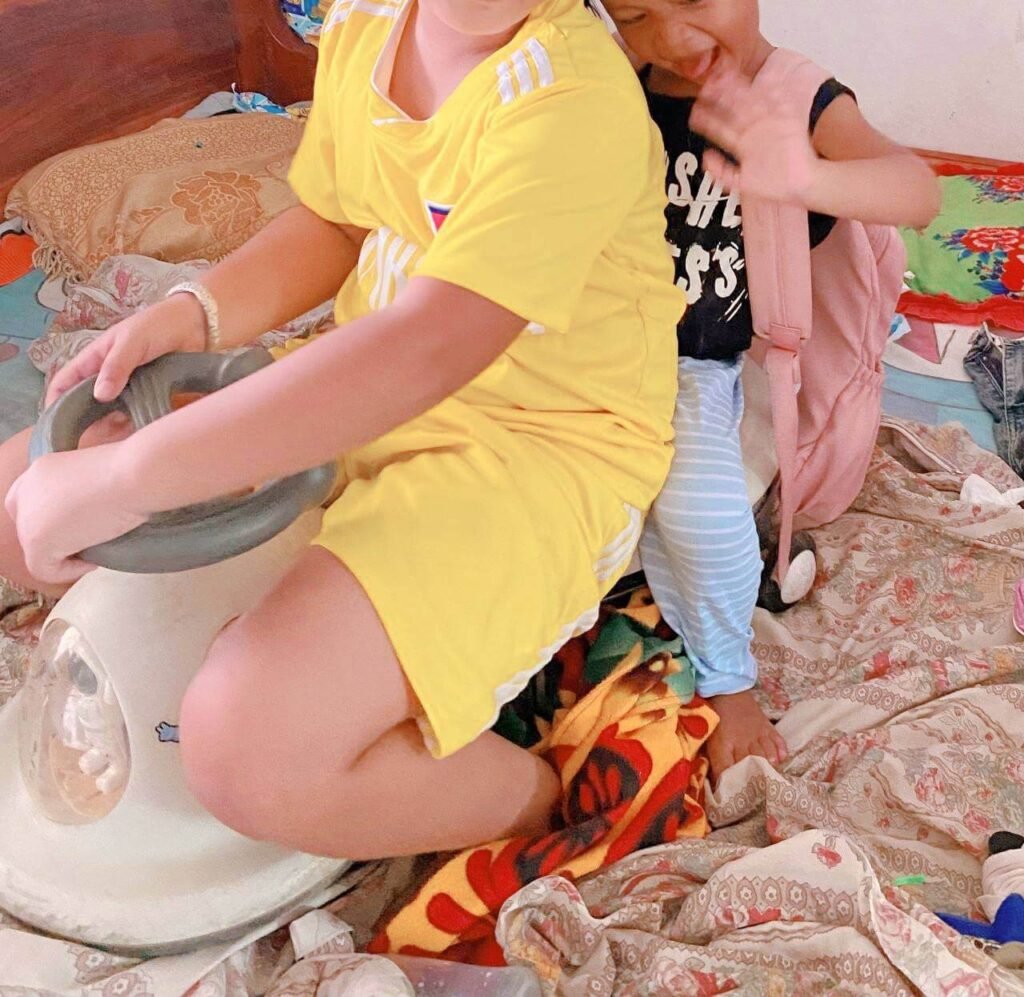
She let her new student climb onto the back of their toy car, and the two of them drove off to school together, laughing the whole way.
The messy bed was still a disaster. Toys were still everywhere.
It was just a small moment on a messy bedroom floor.
But it was a great reminder that sometimes, they really do absorb what we teach them.
Your Home Already Has a Sibling Bonding Program
If you have an older child and a toddler under the same roof, you do not need to build a system for sibling bonding or conflict resolution.
You already have one.
It is running right now, every single day, in the background.
Your job is to teach your older kids well, trust that they absorbed more than you think, and then get out of the way long enough to watch them prove it.
The way your kids interact and learn from each other is one of the most powerful forces shaping who they become.
You planted the seeds. Sometimes the most powerful thing you can do is let them grow.
Frequently Asked Questions
Why do older siblings teach younger siblings better than parents sometimes?
Older siblings operate much closer to a toddler’s level. They use bigger gestures, more physical energy, and a peer-to-peer tone that a parent simply cannot replicate.
Research on peer learning consistently shows that people absorb new information faster from someone near their own level than from an authority figure.
To a toddler, an older sibling is the coolest person in the room, which makes every lesson land faster.
How can I teach my toddler respect through play?
Give your toddler a role, a title, and a mission. Instead of explaining what respect means, create a context where they can act it out.
Assign them a job, let them carry something meaningful, and show them through your own behavior what the value looks like in practice. Toddlers learn by doing and by imitating, not by sitting through explanations.
When should I step back and let my older child handle sibling conflict?
Pause before you intervene whenever the situation is not physically dangerous. Give your older child 20 to 30 seconds to try resolving it first.
Older siblings often de-escalate toddler conflict faster than parents do because they understand what will actually work with their younger sibling. You may be surprised by what happens when you simply wait.
How do I stop a toddler tantrum fast without bribing?
Give the toddler a role instead of a distraction. Toddlers most often tantrum when they feel excluded or powerless.
Handing them a job, a title, or a sense of responsibility shifts their emotional state quickly because it addresses the root cause of the outburst rather than papering over it with a reward.
What are good sibling bonding activities for a toddler and older child?
Let your older child take the lead. Simple activities like reading together, pretend play, or letting the older sibling teach the toddler a skill they already know create powerful bonding moments without any planning on your part.
The older child builds confidence and the toddler gains a role model. You do not need structured activities. You need space for them to interact freely.
At what age can an older sibling start helping teach a younger sibling?
Children as young as five or six can naturally take on a guiding role with a toddler sibling. You do not need to formally assign this. Most older siblings do it instinctively when they are given the space and trust to try. The key is resisting the urge to always step in and take over before they get the chance.
How do family values get passed down to toddlers?
Toddlers absorb values most effectively through observation and roleplay, not instruction. When they see an older sibling model a behavior, they imitate it almost immediately.
The most reliable path for passing down family values is to live them yourself, teach them consistently to your older children, and then trust those older children to carry them forward.
Is it okay to let siblings resolve conflict on their own?
Yes, in most cases. Allowing siblings to work through minor conflicts independently builds problem-solving skills, emotional resilience, and a stronger bond over time.
Step in if the situation becomes physically unsafe or emotionally overwhelming. Otherwise, observing quietly and letting them navigate it is often the most valuable thing a parent can do.
Disclaimer: I am a parent and a university educator, not a licensed child psychologist or pediatrician. This guide is based on my personal parenting experience and educational background. Always consult your child’s teacher or pediatrician for professional advice regarding your child’s educational development.
