


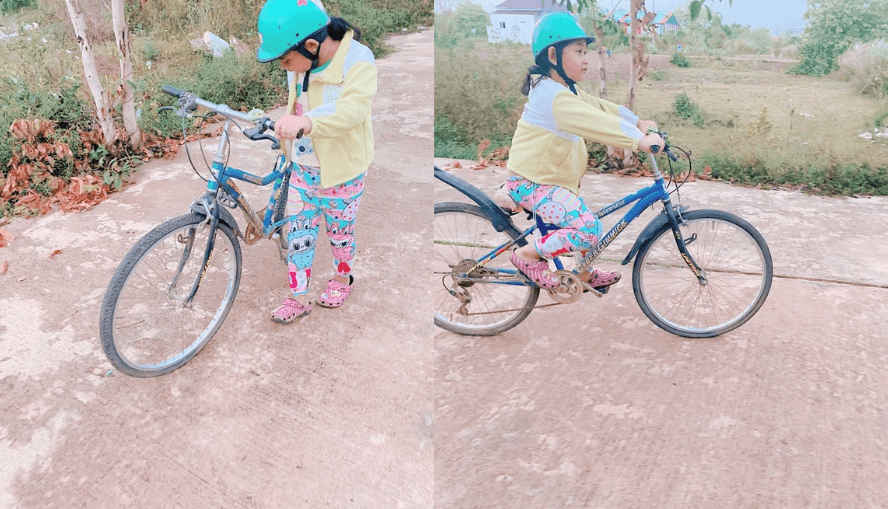
As parents, our deepest instinct is to protect our children from getting hurt.
We watch them reach for things that seem too big, too fast, too risky, and our first word is usually “no.”
That protective pull is real, and most of the time it comes from genuine love.
But last week, I caught myself doing something I wish I had noticed sooner.
In my effort to keep my daughter safe, I was about to steal something from her.
It all started on a Monday morning, when my 8-year-old looked up at my tall adult exercise bicycle and made a surprising request.
“Papa, can I please ride your bicycle?”
I looked at the bike, then looked at her, and panic set in almost immediately. “No, sweetheart, you cannot ride Papa’s bike,” I told her. “It is too high for you.
I am afraid you will fall and get hurt.”
Simple answer. Reasonable concern. Case closed, or so I thought.
Key Takeaways
- Overprotective parenting, even when well-intentioned, can quietly hold children back from discovering what they are truly capable of.
- Setting clear safety rules before letting children try something challenging is not being controlling; it is being a good parent.
- Children who are allowed to struggle and fail before succeeding build genuine confidence, not just temporary happiness.
- Watching a child analyze risk, prepare carefully, and push through failure is one of the most powerful lessons in teaching kids independence.
- The goal is not to protect children from every fall. It is to give them the tools, the safety net, and the space to get back on their feet.
Five Days of the Same Question
When she came home from school on Tuesday, she asked again.
I gave her the same answer.
She asked on Wednesday. Again on Thursday.
Five days in a row, same question, same quiet persistence, no tantrums, no drama, just steady determination.
On Friday evening, right before we were about to start our usual weekend homework routine, she looked at me and asked one more time.
This time, something shifted in me.
I thought about what I was actually saying no to.
Was it truly dangerous, or was I just uncomfortable?
Was I protecting her, or was I protecting myself from the anxiety of watching her try?
I said yes.
The change in her was instant.
She was absolutely thrilled, and that energy carried her straight through her Friday homework faster than she had ever done it, wearing a smile that covered her whole face.
Sometimes, a single vote of confidence can do more for a child than an hour of encouragement.
This is one of the quiet truths behind building confidence in children that parents often do not discuss.
Why Persistence Deserves a Hearing
Most parenting advice focuses on setting limits.
Less is written about what happens when a child keeps pushing back on a limit in a calm, respectful way.
Her persistence was not defiance.
It was her telling me, in the clearest way she knew how, that she believed she could do it.
Children who regularly face that kind of quiet dismissal eventually stop trying.
That matters a great deal when we think about child development and independence.
Setting the Rules Before Letting Her Fly
By Saturday afternoon, she was at my side to remind me of my promise.
I was ready to keep it, but as her father, I also knew that saying yes without a plan would be reckless.
Letting kids take risks does not mean abandoning all structure.
It means agreeing on the structure together, clearly, before anyone gets on a bicycle.
I told her: “Papa agrees, but I have three strict conditions. If even one is missing, we are not doing this.”
Without a second of hesitation, she agreed to every single one.
The 3 Non-Negotiable Safety Rules
- No helmet, no ride. Head protection was absolute. No exceptions, no negotiation, not even for a short stretch.
- Long sleeves and long pants only. Skin protection in case of a fall. She would be fully covered before touching the pedals.
- No busy roads. We would find a quiet, open stretch away from city traffic. A controlled space to learn.
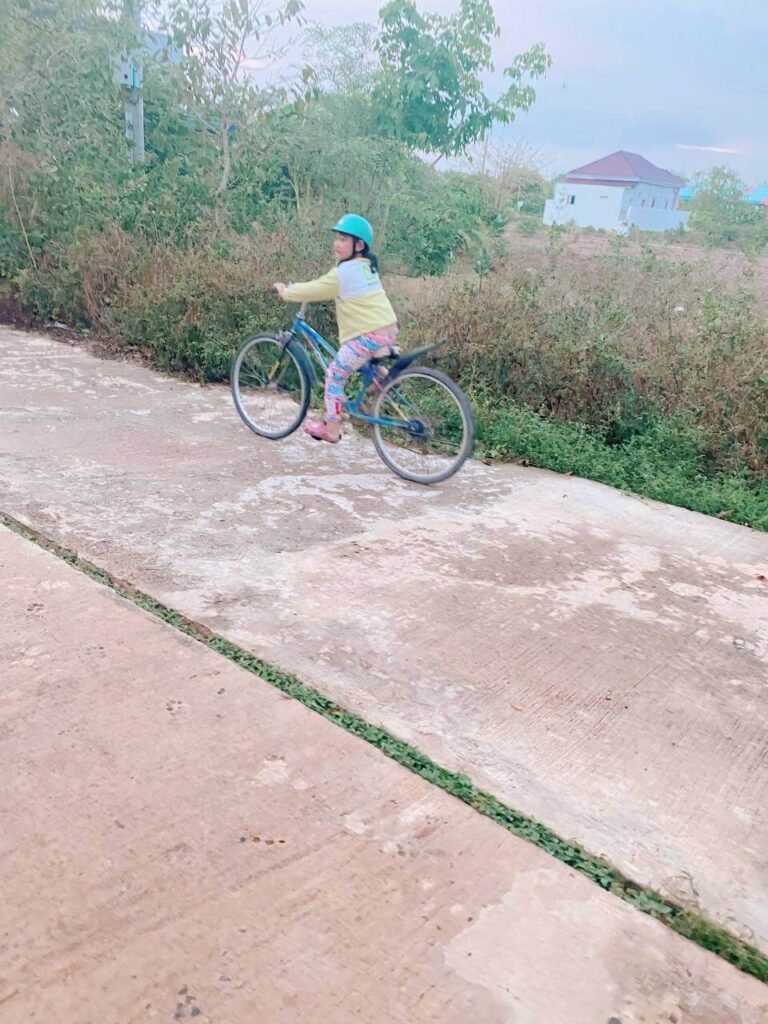
At 5:30 in the evening, we loaded the bicycle and all her gear into the car and drove out to a quiet road on the outskirts of the city.
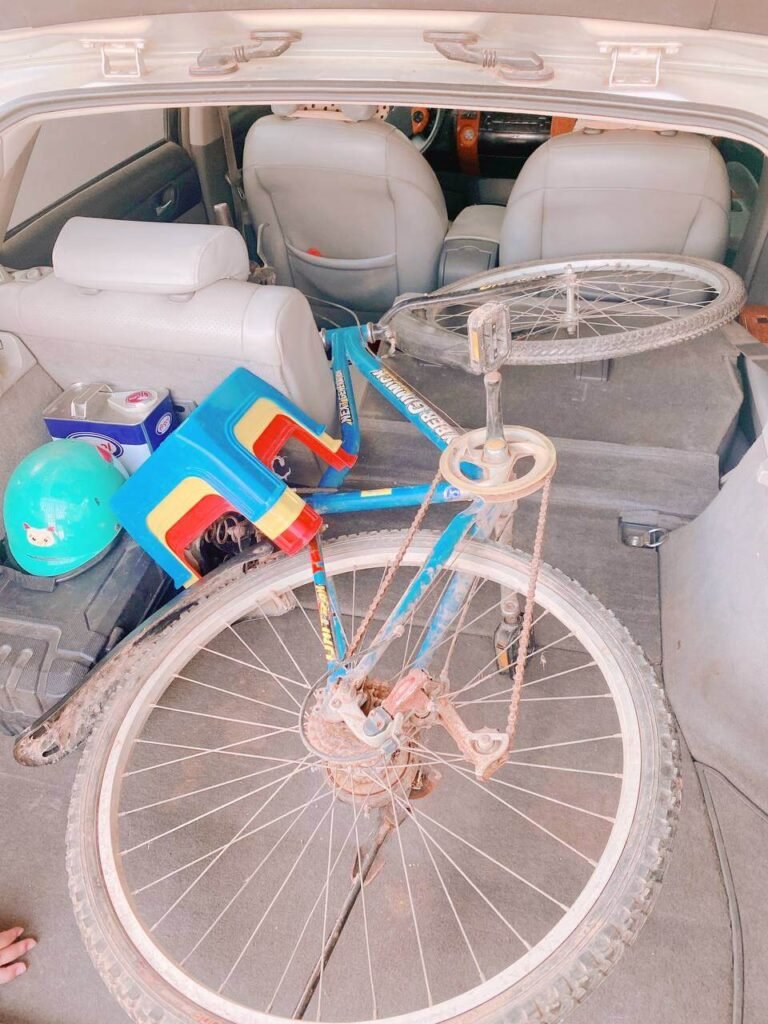
These are exactly the kinds of safety rules for kids’ activities that let a parent feel good about stepping back.
She Did Not Just Hop On: A Masterclass in How to Raise Resilient Children
Once we arrived and she was fully geared up, she walked over to the bicycle.
What she did next is the part of this story I keep thinking about.
She did not hop on.
She crouched down and inspected it. Carefully.
She checked the wheels, studied the chain, pressed on the frame.
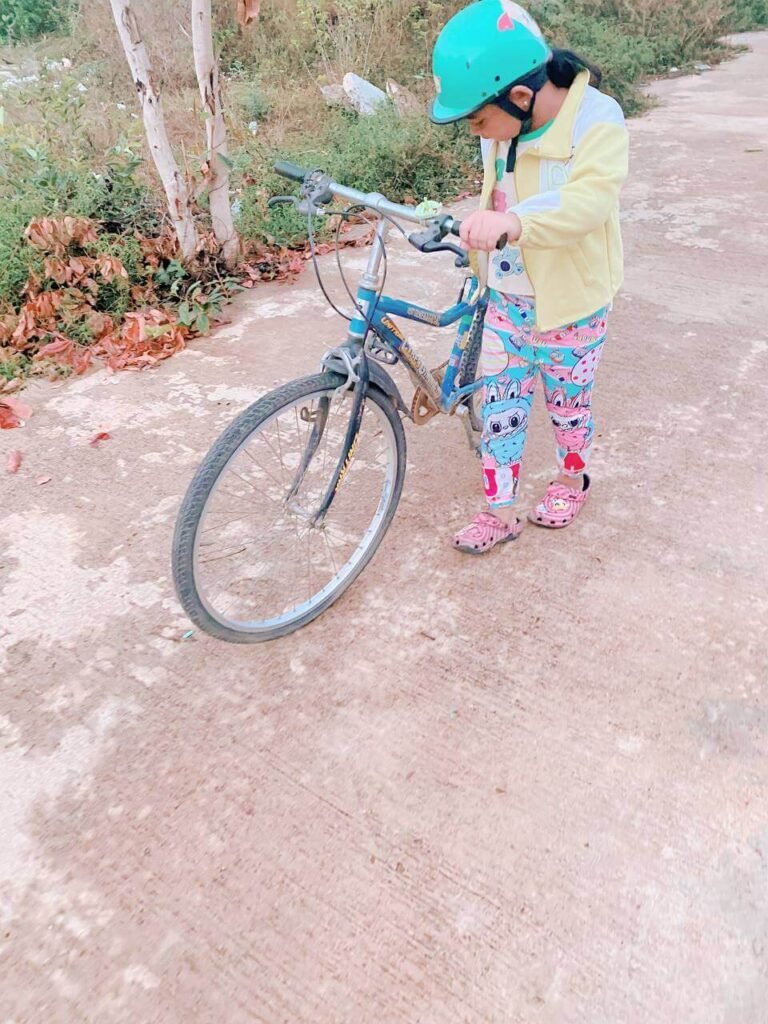
She was assessing it, the way a mechanic might look at a car before a long drive.
“Do you want Papa to hold the bike for you?” I asked.
She looked up at me calmly and said, “No need, Papa.”
Before attempting to ride, she walked the heavy bicycle along the road for about thirty meters. She was testing the weight, finding its balance, and figuring out how it moved.
No one taught her to do this.
She worked it out on her own, from scratch.
“Children are often far more capable, cautious, and resilient than we give them credit for. She analyzed the risk before she ever touched the pedals.”
The Four Attempts That Changed Everything
Then came the part that matters most to this story about kids learning from failure.
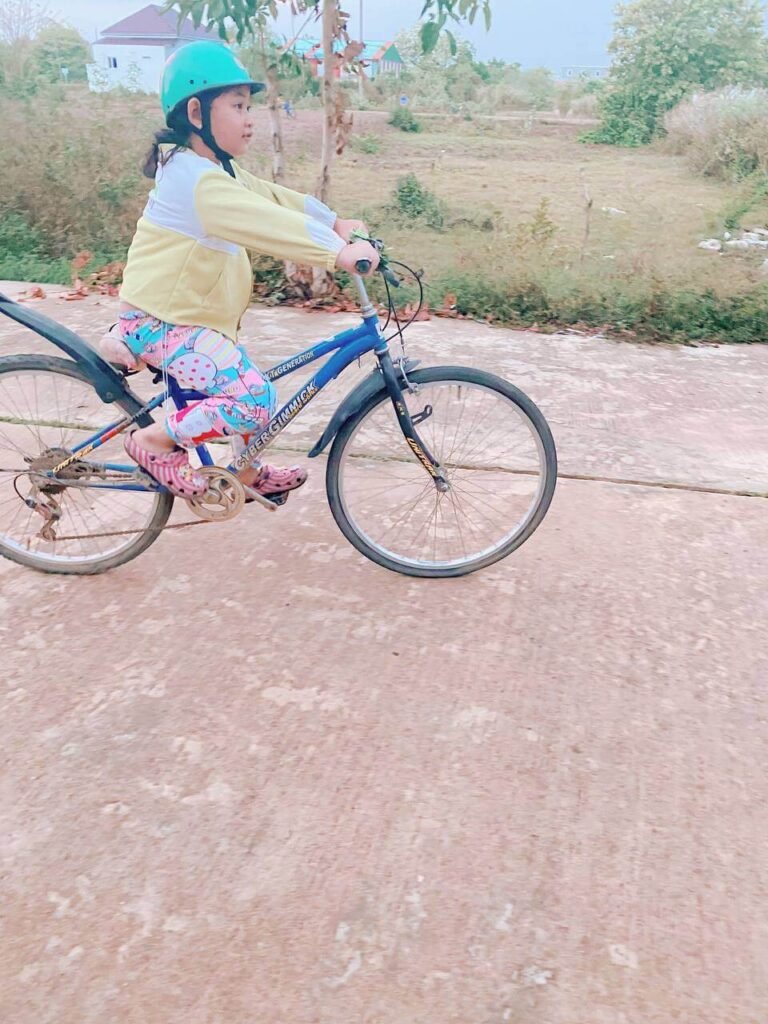
Because the bike was so large, her first attempt did not work.
She adjusted and tried again.
Second attempt, same result.
She examined the bike once more, made her own small corrections, and tried a third time.
Still no balance.
Many children would cry at this point, or ask for help, or simply walk away.
She did none of those things.
On the fourth attempt, something clicked.
She pushed off, found her balance, and began to pedal.
Not wobbly or uncertain. Smooth. Controlled.
She was riding a bicycle nearly twice her size, completely on her own, moving down that quiet road with total confidence.
Watching her, I felt two things at once: enormous pride, and a small sting of humility.
Because I had almost said no to this.
I had almost kept her from discovering, on her own terms, exactly what she was made of.
What Overprotective Parenting Actually Costs
That evening gave me a lot to sit with.
I love my daughter deeply, and that love was the reason I kept saying no.
But love without trust is just control wearing a softer name.
When we stand between our children and every challenge, we are not keeping them safe from the world.
We are keeping them from learning how to handle it.
The signs of overprotective parenting are not always dramatic.
Sometimes it is as simple as saying “you cannot do that” when what we really mean is “I am scared to watch you try.”
My daughter did not need me to hold the bicycle.
She needed me to be nearby, to have the rules in place, and to get out of her way.
She did not jump recklessly into danger.
She studied the risk.
She protected herself.
She practiced the movement.
She failed three times, stood back up, and succeeded on her own timeline.
That is not luck. That is what letting children be independent actually looks like in practice.
What This Story Is Really About
This is not a story about bicycle riding.
It is about what happens when we trust our children enough to let them struggle toward something real.
It is about the difference between protection and paralysis.
And it is about what children’s development at age 8 can look like when we make space for it instead of filling that space with our own fear.
There is a version of this Saturday afternoon where I said no for the fifth time, and my daughter quietly filed that refusal away somewhere.
Where she learned, slowly and without anyone saying so, that her instincts were not to be trusted.
That she needed an adult to green-light every attempt.
That version of the day scares me more than any bicycle fall ever could.
Instead, she came home that evening with something no school lesson or scheduled activity could have given her.
She came home knowing she could figure out a hard thing.
That is the kind of confidence that stays.
How to Raise Resilient Children Starts With One Decision
I did not do anything extraordinary that Saturday afternoon.
I drove to a quiet road. I stood nearby. I watched.
What I did was choose, just this once, to trust my daughter more than I trusted my own fear.
She did the rest.
To every parent reading this who has felt that same pull between protection and permission: the safety rules still matter.
The helmet still goes on.
The crowded street is still off-limits.
But inside that safe structure, there is room for your child to surprise you completely.
Set the rules. Step back. Watch them fly.
Frequently Asked Questions
At what age should I let my child start taking physical risks?
There is no single “right” age, as child development varies. However, around ages 7 to 9, children develop better spatial awareness and risk-assessment skills. Instead of focusing on chronological age, evaluate your child’s emotional maturity, their ability to follow strict safety rules, and their physical coordination for the specific activity.
How do I overcome my own parental anxiety when letting my child try something risky?
Shift your focus from preventing failure to managing actual hazards. Establish non-negotiable safety boundaries beforehand (like helmets or supervision boundaries). Once those baseline safety parameters are met, consciously step back. Remind yourself that allowing your child to navigate minor struggles is essential for building their lifelong coping mechanisms.
What is the difference between a healthy risk and a dangerous hazard for kids?
A healthy risk is a challenge where a child can recognize the danger, assess the situation, and safely attempt to overcome it (like climbing a tree or learning to ride a larger bicycle). A hazard is a source of danger that a child cannot see or manage on their own, such as a busy highway or faulty, broken equipment.
How do I teach my child to handle failure without giving up?
Praise your child’s effort and strategy rather than the final outcome. When they fail, avoid rushing in to fix the problem immediately. Give them the emotional space to feel frustrated, and then ask guiding questions like, “What do you think went wrong?” or “What can we adjust on the next try?” This builds a growth mindset.
Disclaimer: I am a parent and a university educator, not a licensed child psychologist or pediatrician. This guide is based on my personal parenting experience and educational background. Always consult your child’s teacher or pediatrician for professional advice regarding your child’s educational development.
