



If you are raising a 2-year-old, you already know how fast things can change.
One minute they are laughing, the next they are face-down on the floor because you gave them the wrong cup.
Teaching good behaviour to toddlers is not really about rules or punishment.
It is about small habits, repeated every day, until those habits become part of who your child is.
In our home, one room does everything. It is a playroom, a classroom, and my office all at once.
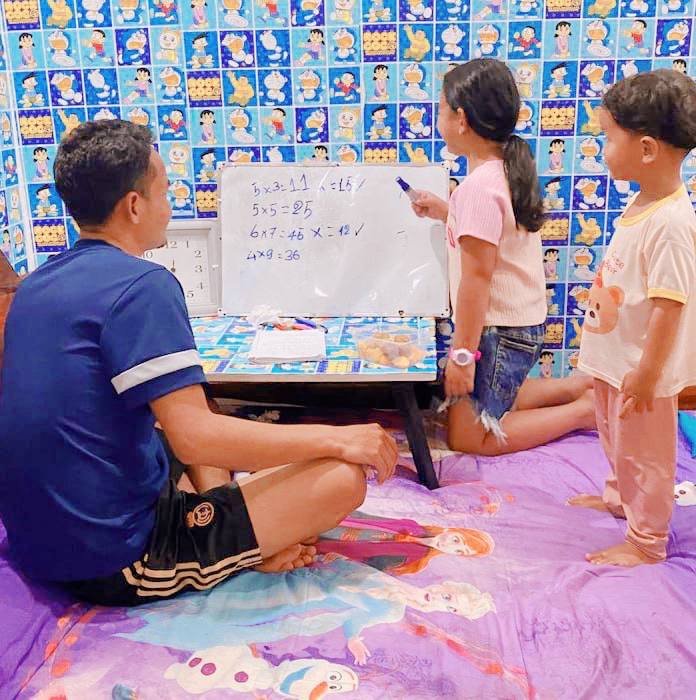
On the walls, I put up a set of cartoon character images, and I use them as visual cues to teach my son real-life lessons every single day.
What started as a small experiment has honestly become one of the most effective parenting tools I have ever tried.
And my son is only 2.
Why Visual Cues for Toddlers Work So Well
Young children learn through what they see, not just what they hear.
Visual learning for toddlers is especially powerful because it gives them something concrete to focus on when they feel overwhelmed.
When you pair a familiar image with a simple lesson and repeat it often, your toddler starts making the connection naturally.
Instead of telling them to calm down in the middle of a meltdown, they already know what calm looks like because they have been seeing it on the wall every day.
Think of it like planting seeds.
You water them daily.
The growth comes slowly, but it comes.
5 Daily Behaviour Lessons for Toddlers Using Character Wall Images
Here is exactly how I use each character to teach my son real skills at home.
Lesson 1: How to Teach a 2-Year-Old to Stay Calm When Something Goes Wrong
I point to an image of Doraemon sitting quietly and ask my son, “What do you do if something bad happens suddenly?”
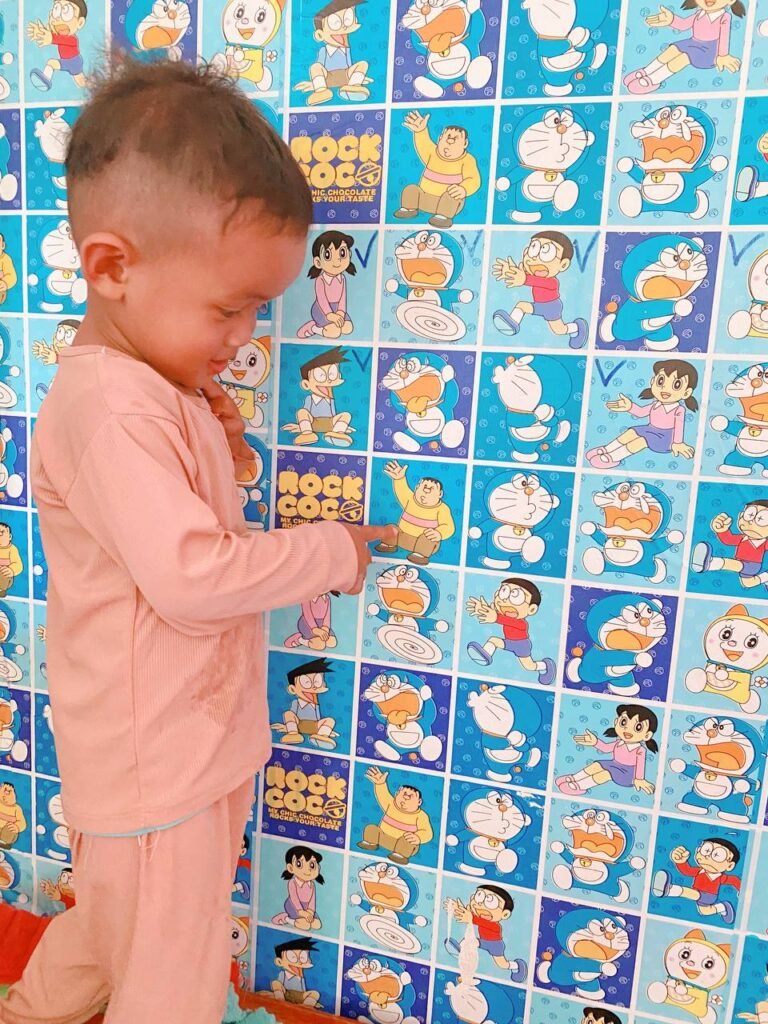
He points to that image every time, without hesitation.
The lesson I repeat is simple.
When something goes wrong, do not panic.
Take a breath. Try to figure it out yourself first.
If you really cannot, then ask for help.
Teaching this kind of calmness early is one of the most valuable investments a parent can make.
Staying calm under pressure does not come naturally, even for adults.
But with daily repetition, it starts to stick.
Lesson 2: Teaching Toddlers Manners When They Want Something
I show my son an image of a character running and screaming with his mouth wide open and ask: “Is this how we ask for things?”
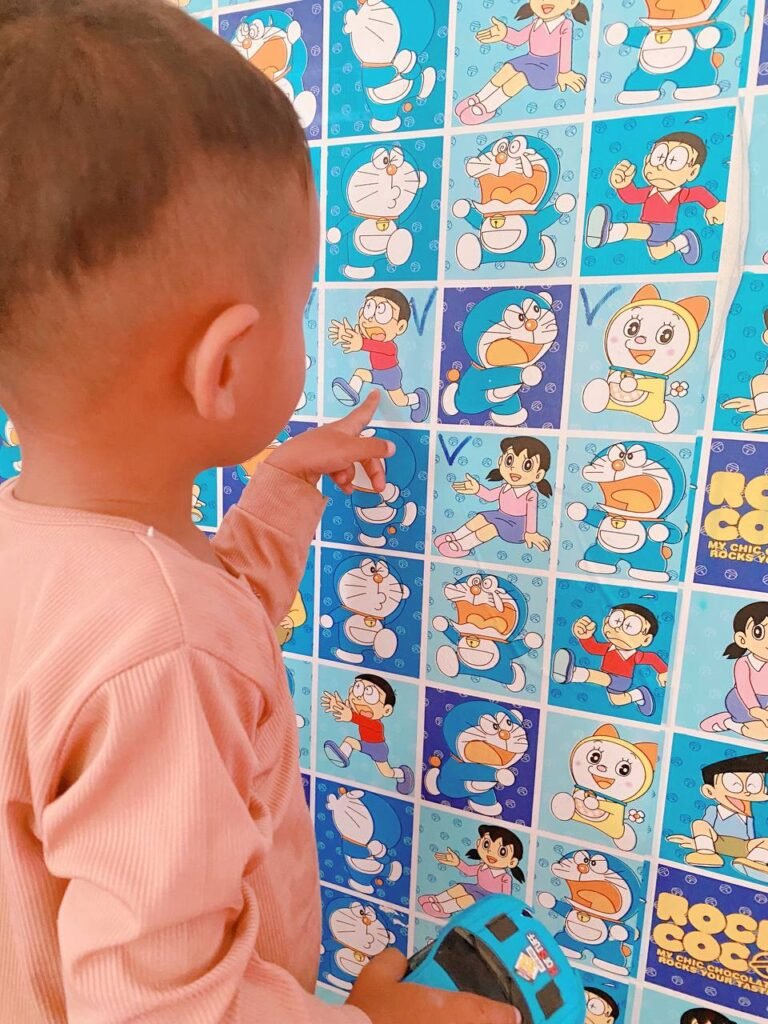
He shakes his head and says no.
The lesson: if you want something, walk up calmly and use your words.
Screaming and throwing yourself on the floor is not how we communicate.
This has genuinely helped with managing toddler tantrums at home.
He still has moments, of course.
But now he has a clear picture in his mind of what the wrong behaviour looks like, and that reference point is more powerful than you would think.
Lesson 3: Finding a Smile When Life Feels Hard
This one is close to my heart.
I ask my son, “What do you do when something feels hard?”
He points to the image of a character sitting and smiling.
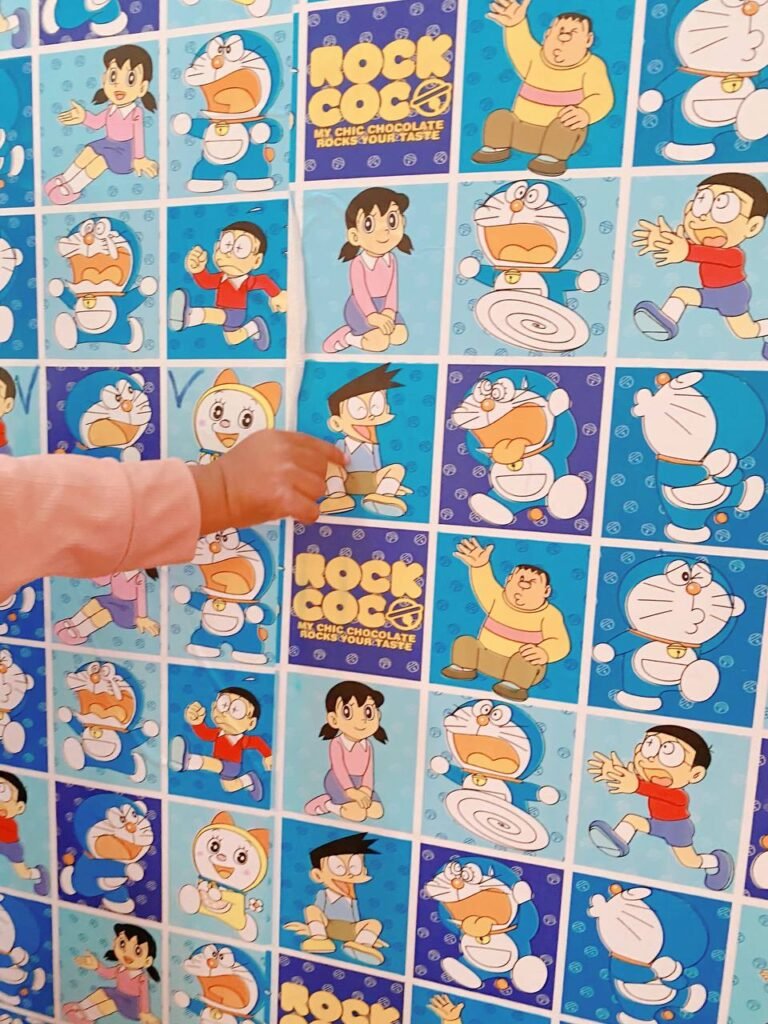
The lesson is this.
It is okay to feel frustrated when the block tower falls or when we have to leave the park.
But instead of throwing ourselves on the floor, we sit down, take a breath, and try again.
Does a 2-year-old fully understand emotional resilience?
No. But the pattern is forming.
When he feels overwhelmed, pointing to that smiling face is his cue to reset.
Building emotional resilience in toddlers starts exactly this way, one small moment at a time.
Lesson 4: How to Stop Toddler Shouting in Public
I point to the image of a character shouting loudly and ask: “What should you never do in a crowded place?”
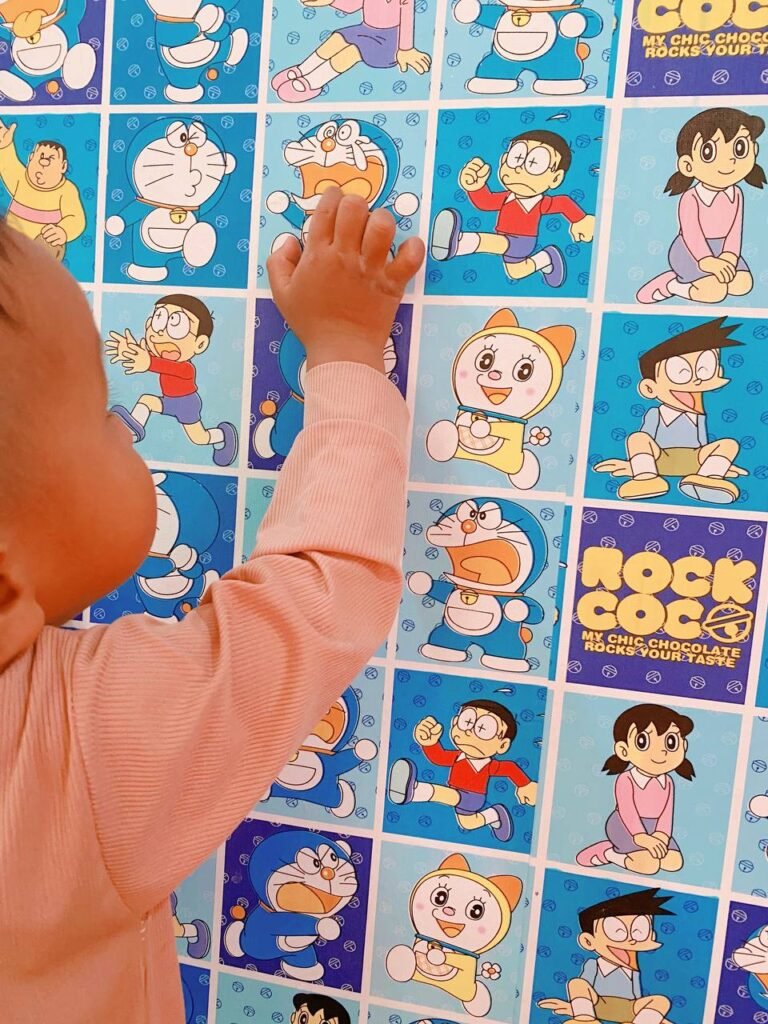
He points right to it.
The lesson: in public spaces, we use our quiet voices.
We do not shout or disturb the people around us.
How we behave in public says something about who we are.
Starting this lesson early means it becomes second nature long before they are old enough to be embarrassed by their own behaviour in public.
If you’re struggling with public outbursts, a consistent visual reminder at home is a great place to begin.
Lesson 5: Being a Good Student
I ask: “How should you act when you go to school?”
He points to Shizuka, a character sitting quietly and paying attention.

The lesson: a good student follows the teacher with their eyes.
They sit with respect. They are there to learn, and learning takes focus.
We are building that foundation right now, long before he ever sets foot in a real classroom.
That foundation will carry him further than any textbook.
The Real Secret: Build a Daily Routine for Toddler Behaviour
I know what some of you are probably thinking.
Can a 2-year-old actually learn all of this?
Honestly, not overnight.
These results did not happen in a day, a week, or even a month.
I have been talking to my son, teaching him, and showing him through my own actions for seven months now.
That last part matters most.
Kids watch everything we do.
You can use the best positive reinforcement strategies in the world, but if they see you shout or quit when things get hard, that is what they will absorb.
A consistent daily routine for toddler behaviour gives your child a rhythm they can rely on.
The images on the wall are just anchors.
The real work happens in every moment you model the lesson yourself.
The images on the wall are just tools. You are the lesson.
How to Start Teaching Toddler Life Skills at Home Today
You do not have to copy this exact method.
Use whatever characters your child already loves, whether that is Peppa Pig, Bluey, or printed photos of animals.
What matters is the daily repetition and the warmth you bring to each moment.
Here is a simple way to get started with your own visual cues:
- Pick 3 to 5 behaviours you want to focus on, such as staying calm, using kind words, or listening quietly.
- Find or print images that represent each behaviour clearly.
- Put them somewhere your child sees every single day.
- Ask the same questions daily until the answers come automatically.
- Always model the behaviour yourself.
Final Thoughts
Parenting a toddler is hard.
There will be bad days, tantrums, tears, and moments where you genuinely wonder if any of this is getting through.
Keep going anyway.
The effort you put in right now is building something that will last a lifetime.
Your child is watching. Your child is learning.
Even on the days when it really does not feel like it.
And one day, when your toddler calmly points to a picture on the wall and tells you exactly what to do when things go wrong, you will know every single moment of it was worth it.
Frequently Asked Questions
At what age can you start teaching a toddler good behaviour?
You can begin as early as 12 to 18 months. At that age, toddlers are already watching and copying everything around them.
Simple, repeated lessons paired with visual cues work well from around 18 months onward. The earlier you build consistent habits, the more natural good behaviour becomes as they grow.
How long does it take for toddler behaviour to improve?
Most parents notice small but real changes within 4 to 8 weeks of consistent daily practice. However, deep behavioural habits take longer to form.
A 3 to 6 month timeframe of daily repetition is realistic before the lessons feel truly automatic for your child. Consistency matters far more than speed.
What are the best visual tools for teaching toddlers at home?
Printed cartoon characters, simple behaviour charts, and photo cards work best. Choose characters your child already loves and connect each one to a specific lesson.
A visual schedule posted at eye level for your toddler also helps reinforce daily routines in a way words alone cannot.
Why does my 2-year-old have tantrums for no reason?
At age 2, toddlers experience big emotions but have very limited language to express them. What looks like a tantrum for no reason is usually frustration, overstimulation, hunger, or tiredness that your child cannot yet put into words.
Teaching them simple tools, like pointing to a calm visual cue, gives them a way to manage those feelings before the meltdown escalates.
How do I stop my toddler from shouting in public?
The most effective approach is to teach the lesson at home before you need it in public. Use a visual cue at home that represents quiet, respectful behaviour and practice it daily.
When your toddler already has a clear mental picture of what quiet behaviour looks like, redirecting them in public becomes much easier. Reacting in the moment without prior practice rarely works consistently.
Can toddlers really learn emotional regulation?
Yes, though not in the way adults understand it. Toddlers cannot fully process or name their emotions, but they can learn simple patterns.
When they feel overwhelmed, a familiar visual cue gives them a concrete anchor to reset, rather than spiralling into a full meltdown. Over months of repetition, this pattern becomes their natural first response to big feelings.
Do I need special equipment or expensive tools to try this method?
Not at all. Printed images from the internet, drawn pictures, or even photos cut from magazines work just as well as anything you could buy.
The method itself costs nothing. What it requires is your time, consistency, and willingness to repeat the lessons daily with warmth and patience.
What if my toddler does not respond to visual cues at first?
That is completely normal. Most toddlers take several weeks of daily exposure before they begin connecting the image to the lesson. Keep the routine gentle and low-pressure. Never force a response.
Over time, curiosity takes over, and the connection forms naturally. If your child shows no response after two to three months, try switching to different images or characters they find more engaging.
Disclaimer: I am a parent and a university educator, not a licensed child psychologist or pediatrician. This guide is based on my personal parenting experience and educational background. Always consult your child’s pediatrician or a qualified specialist for professional advice regarding your child’s behavioral or educational development.
