


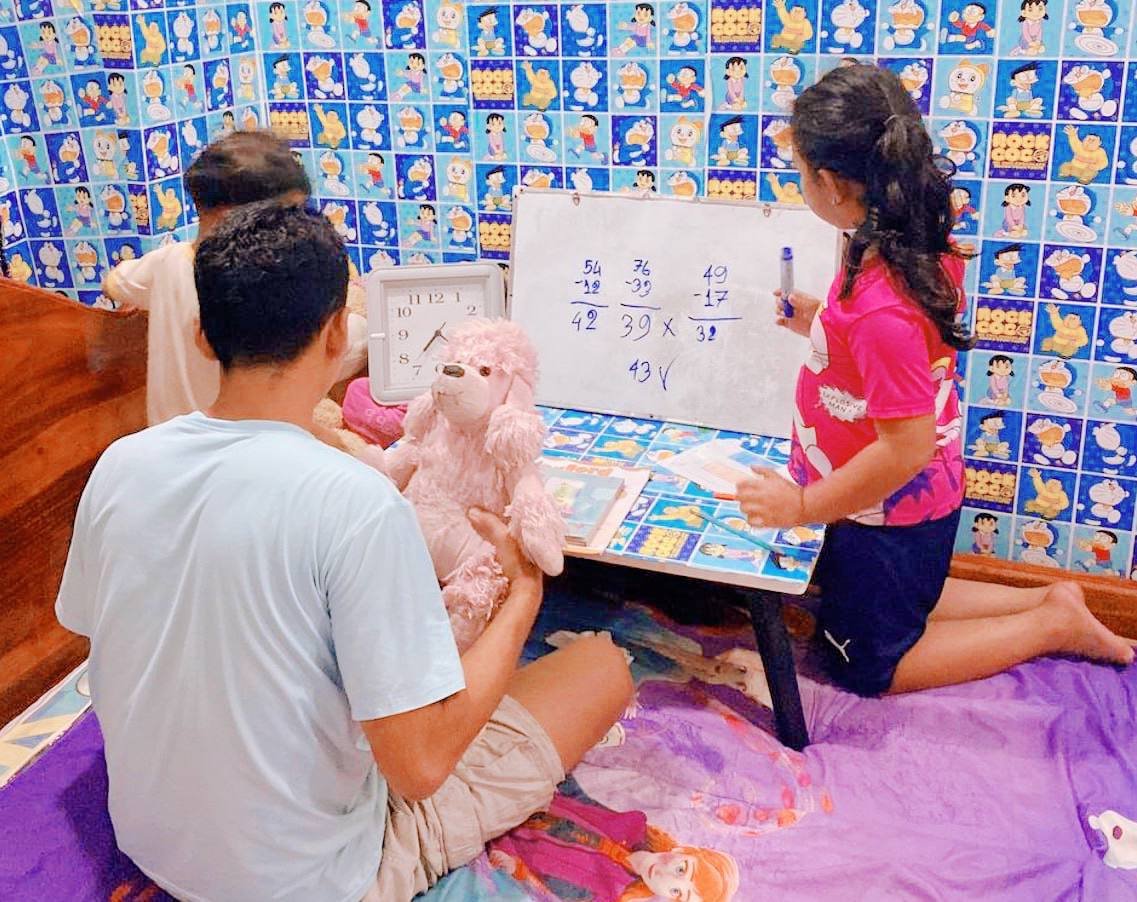
Last Tuesday, I tried to get my daughter to finish her math while the TV was blasting in the background.
Total disaster.
It reminded me of my HR days trying to run a team meeting in a noisy cafeteria.
Nobody gets anything done.
That is when it clicked.
She does not need more discipline.
She needs a proper home learning space.
And no, that does not mean adding a new room to the house.
Here are five practical tips I have picked up as a dad on how to build a home learning space for kids that actually helps them focus, feels less stressful, and makes them want to sit down and learn.
You do not need a dedicated homeschool room or a big budget to make this work.
These are simple, apartment-friendly tweaks that actually get kids to sit down and concentrate.
1. Give your child a dedicated study corner (and let them pick the theme)
Kids learn better when they have a consistent spot to study.
A dedicated place sends a simple signal to the brain: this is where we focus.
For my 8-year-old, I picked a quiet corner away from the main living area.

But to get her to actually want to be there, we leaned into her favorite character: Doraemon. We used a Doraemon pattern on the walls and even across the desk surface.
When she helped pick the theme, she felt like the space belonged to her.
The moment we finished setting it up, her face lit up, and she sat down immediately.
Even a small corner with a good lamp and their favorite characters can turn into a surprisingly powerful place to learn.
The theme is not decoration. It is motivation.
2. Set up a reduced-friction workspace to help kids focus on homework
In HR, we talk a lot about reducing friction, which basically means removing the small obstacles that slow people down before they even start.
The same idea applies to an 8-year-old trying to sit down and study.
If she spends five minutes hunting for a pencil, she has already lost focus before a single problem gets solved.
Before each session, I take a few minutes to prepare her area.
Her whiteboard is out, her current workbook is open, and her pencil case is right there on the desk.
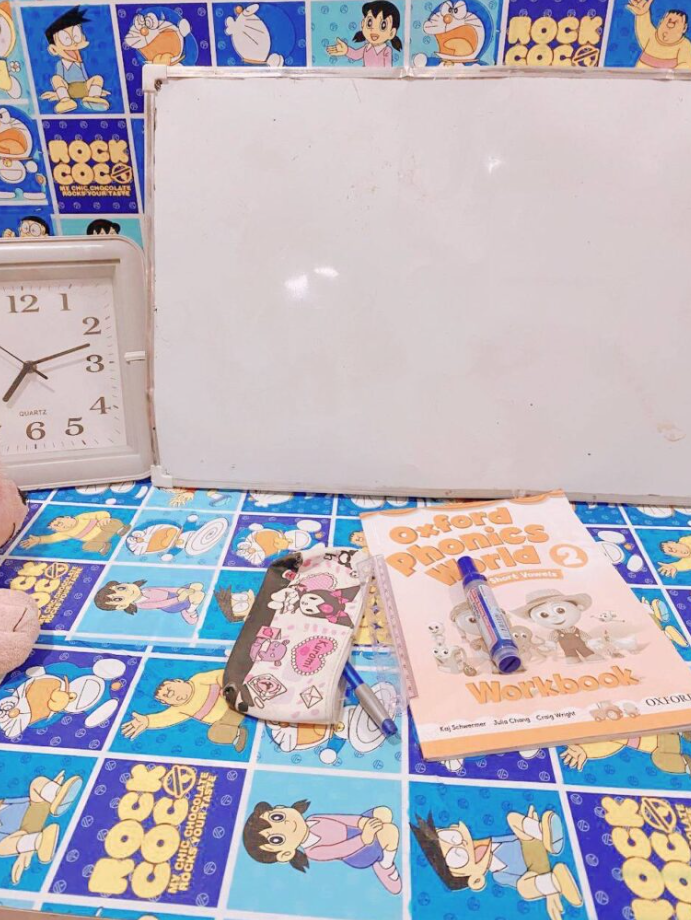
Having everything ready signals that learning time is starting.
I also keep a small clock nearby so she can track time on her own.
One more thing worth mentioning: make sure the setup is ergonomically comfortable.
Feet should touch the floor or a footstool, and a proper task lamp goes a long way in preventing eye strain.
These small details make the space feel intentional rather than improvised.
3. Work with your child’s attention span, not against it
How long should a child study at a time?
For most kids, focused learning works best in 15 to 20-minute blocks, followed by a short movement break.
Children are not built to sit still for long stretches, and pushing through that wall usually makes things worse, not better.
We stand up, stretch, and do a few simple exercises right next to the desk.
Her toddler brother usually crashes the party too, which honestly makes it more fun.
Teachers call these “brain breaks” for a reason.
Short bursts of physical movement help reset children’s concentration, and she always comes back to the whiteboard calmer and ready to work.
Building this rhythm into your daily routine makes a noticeable difference over time.
4. Add a whiteboard to make learning hands-on
A lot of kids resist homework because it feels like sitting alone in silence with a pile of worksheets.
Adding an interactive element to your kids’ study corner changes the whole dynamic.
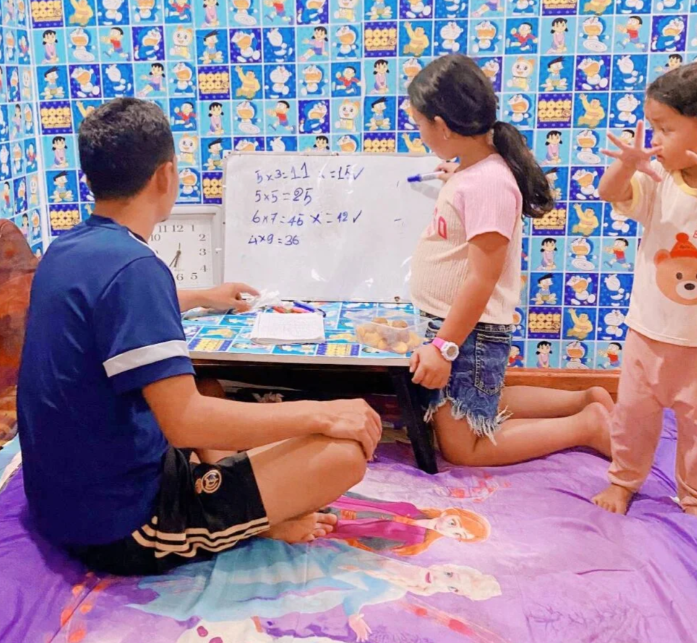
I brought a small whiteboard into our learning space, partly inspired by how we use them in HR training for collaborative problem-solving.
When she is working through multiplication, we map it out on the board together.
Standing up, holding a marker, writing things out big makes learning feel hands-on and far less intimidating than staring at a blank page.
This is also one of the easiest budget-friendly upgrades you can make to a home learning space for kids.
A basic whiteboard costs very little and adds a lot of energy to the room.
5. Handle younger siblings without sending them away
If you have more than one child, you already know that a perfectly quiet study space is basically a myth.
Instead of constantly trying to keep her toddler brother out, we found a way to bring him in.
During whiteboard sessions, he gets his own marker or just sits nearby with something to do.
Giving younger siblings a small role reduces interruptions and turns study time into something the whole family is part of, rather than something being forced on one child.
This approach also helps minimize distractions for kids without creating tension or conflict in the home.
You don’t need a perfect setup
You do not need a big house or a large budget to set up a kids’ study area that works.
You need consistency, a bit of creativity, and a willingness to pay attention to what your child actually responds to.
Start small.
Clear a corner, add a theme they love, or just make sure their supplies are ready before they sit down.
A well-organized kids’ study corner, even one tucked into a small apartment, can do more for your child’s focus than any expensive furniture or dedicated room ever could.
You do not need to get it perfect right away.
The fact that you are thinking about this already puts you ahead.
Frequently Asked Questions
Should I let my child listen to music while they do homework?
It depends entirely on the child and the specific task. Instrumental music or white noise can be great for blocking out household chatter, much like how headphones help adults survive an open office. However, music with lyrics often competes for their brain power during reading or heavy writing tasks. Test out a low-volume instrumental playlist and see how they respond.
What if my kids share a bedroom and distract each other?
If creating separate corners in different rooms is simply not possible, try staggering their homework schedules. Let the older child use the desk while the younger one is busy in the living room. If they must work at the same time, a cheap tri-fold presentation board placed on the desk works wonders as a temporary visual barrier to block their line of sight.
How do I transition my child from playtime to learning time?
Sudden transitions are a common trigger for meltdowns. Instead of abruptly telling them to stop playing, give them a ten-minute warning with a clear visual or auditory cue. Setting a simple kitchen timer or playing a specific cleanup song helps their brain shift gears gradually. This creates a much smoother runway into their focused work time.
Are rolling chairs a bad idea for young children?
Usually, yes. Rolling and spinning chairs introduce a massive, irresistible physical distraction. A stable, static chair is almost always the better choice for concentration. Just make sure it is at the right height.
What if my child suddenly starts hating the study corner?
Sometimes the novelty just wears off. If resistance creeps back in, do not force it. Let them do their reading on the floor with a pillow or practice spelling words while standing at the kitchen counter for a few days. Flexibility is just as important as consistency. You can always guide them back to the desk once the frustration passes.
Disclaimer: I am a parent and a university educator, not a licensed child psychologist or pediatrician. This guide is based on my personal parenting experience and educational background. Always consult your child’s teacher or pediatrician for professional advice regarding your child’s educational development.
