


I spent weeks trying to figure out how to teach my toddler the alphabet.
I bought colorful flashcards.
I downloaded educational apps.
I sat down with him every afternoon, ready to be the patient, enthusiastic dad.
He bolted every single time.
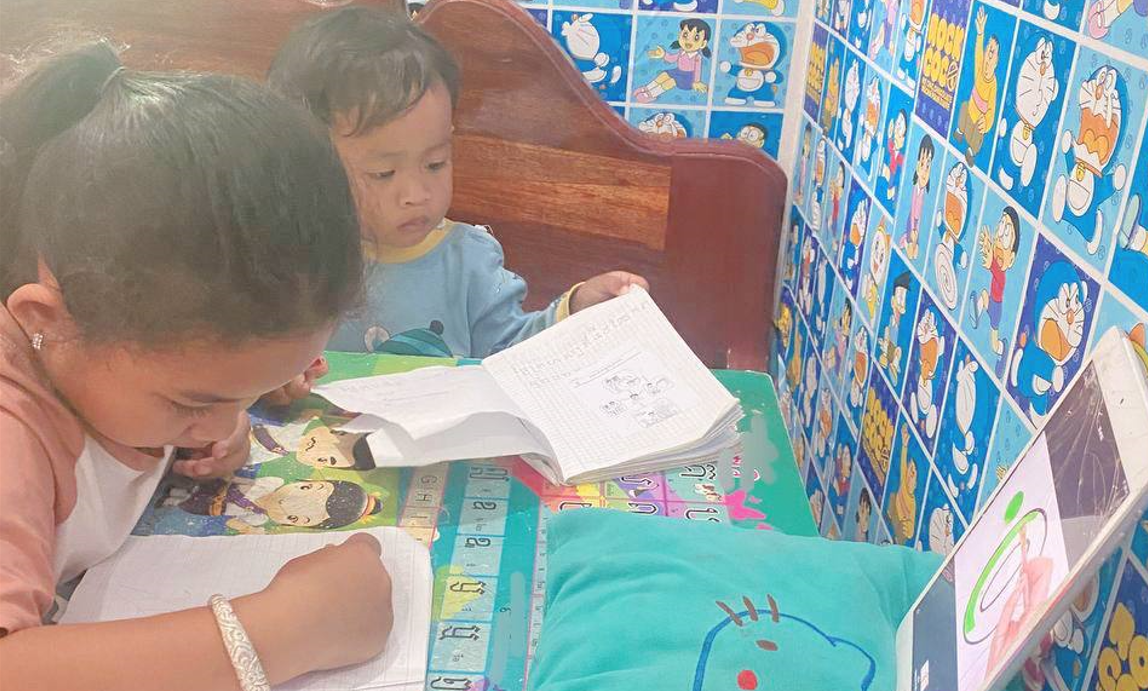
Then one ordinary afternoon, his 8-year-old sister sat at her low alphabet table to practice writing.
Within minutes, my 2-year-old climbed up next to her without being asked.
No bribe. No coaxing. Just curiosity.
He watched her trace letters.
He pointed at them.
He stayed for nearly fifteen minutes without fidgeting.
That moment changed how I think about teaching toddlers their letters at home.
This article shares exactly what I learned — and how you can use the same approach, even if you do not have an older child at home.
Quick Takeaway
- Toddlers learn letters faster by watching people they admire than through direct instruction.
- Older siblings, cousins, or slightly older friends are the most effective “teachers” for toddlers.
- This method is called observational learning or social learning — and it’s backed by child development research.
- You do not need flashcards, expensive apps, or formal lessons to build early literacy.
- The best alphabet learning activities for 2-year-olds feel like play, not school.
- If you have no older child at home, there are simple alternatives that use the same principle.
The Problem with Traditional Alphabet Teaching
Most parents start with what seems obvious: alphabet books, flashcards, tracing worksheets, and letter-matching apps.
These tools are not bad.
But for many toddlers, especially those under age 3, they completely miss the mark.
Here is why.
To a toddler, a parent with a flashcard looks like a teacher running a test.
There is pressure to respond correctly.
There is an expectation.
And toddlers are wired to avoid pressure, not lean into it.
When children feel like they are being watched or evaluated, their natural curiosity shuts down.
They resist. They run. They cry.
And frustrated parents wonder why their toddler is not interested in learning letters when other kids seem to pick them up easily.
The answer is not a better flashcard.
It is a completely different approach.
Why Toddlers Learn Better by Watching Than by Being Taught
Child development researchers call it social learning or observational learning.
It is how humans have passed down knowledge for thousands of years, long before schools or textbooks existed.
Toddlers are natural observers.
They watch everything the people around them do, and they quietly absorb information without anyone prompting them.
This is especially true when the person they are watching is someone they admire or want to be like.
For most toddlers, that means slightly older children.
A 2-year-old looks at a parent and sees an adult in a different world.
They look at a 6 or 8-year-old and see someone just a few steps ahead of them.
That older child feels reachable. Inspiring. Worth copying.
This is the foundation of why sibling teaching works so powerfully for helping toddlers learn the alphabet.
How My Toddler Learned the Alphabet from His Older Sister
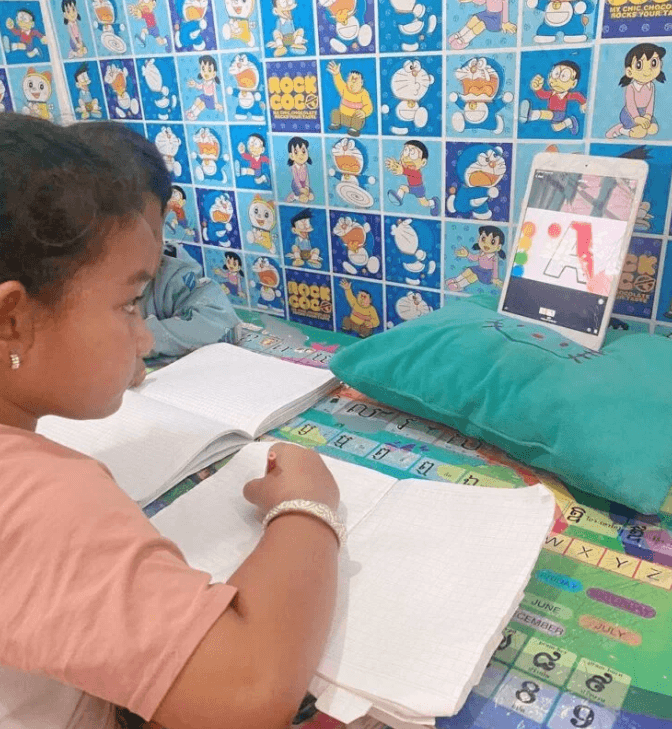
My daughter was practicing letters at her table in our Doraemon-themed learning corner.
She had an iPad showing each letter, and she was copying the strokes into her notebook.
My son watched from across the room at first.
Then he inched closer.
Then he climbed up next to her and sat down.
He watched the screen.
He watched her hand.
He connected the shape on the screen to the shape appearing on paper.
The best moment came when he reached out and pointed at the letter “A” on her page.
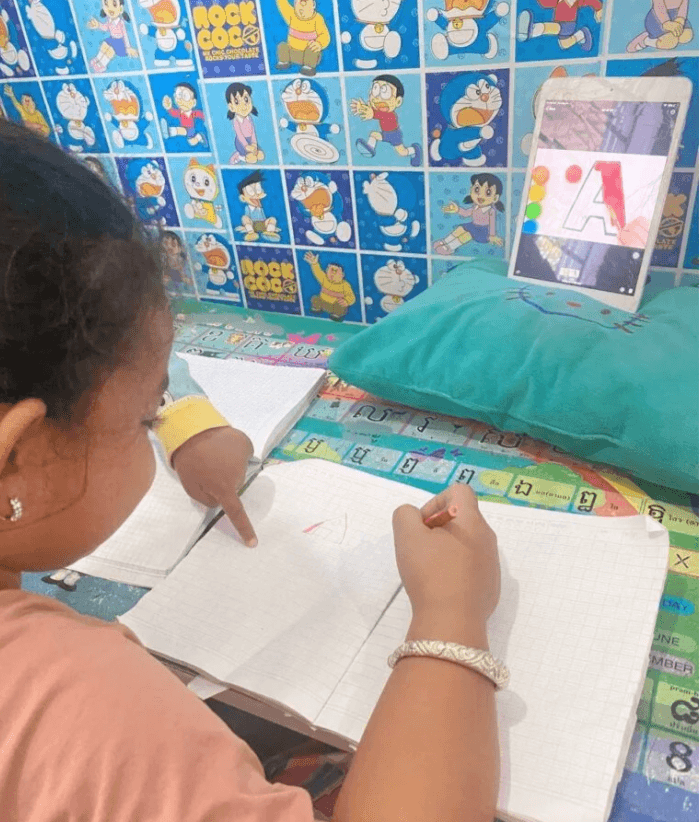
He was not writing.
He had not been asked to participate.
But he was clearly processing what he saw and confirming it for himself.
That small gesture told me everything.
He was not passively watching anymore.
He was learning.
What Makes This Method So Effective for Toddler Alphabet Learning
Three things stood out when I watched them together.
The older child is at their level
My daughter uses simple words, sits at a child-sized desk, and moves at a pace a toddler can follow. I am a six-foot adult. No matter how patient I try to be, I am simply not as relatable as she is.
There is zero pressure
When my daughter practices letters, my son can watch, walk away, or point at things on his own terms. There is no expectation attached. That freedom makes him want to stay, not escape.
He learns through doing and watching, not being told
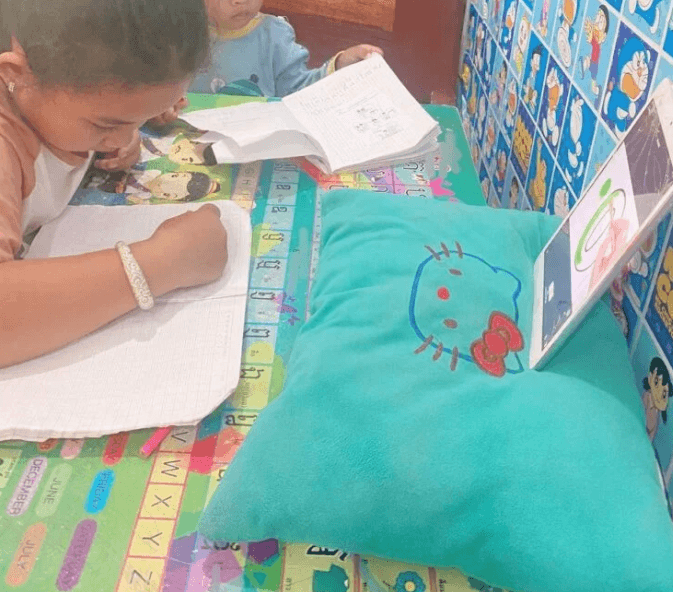
The combination of watching the letter on a screen and watching her hand copy it gives him a complete picture. He is connecting the symbol to the action to the result without anyone explaining anything.
This is the core of play-based learning: toddlers absorb far more when they are engaged on their own terms.
How to Teach Your Toddler the Alphabet Using Observational Learning at Home
You do not need a sibling to make this work.
Here is a step-by-step approach any parent can follow.
Step 1: Find the Right Learning Companion
The “teacher” in this method does not have to be a brother or sister. It can be:
- An older cousin who visits regularly
- A neighbor’s child at the playground
- A friend’s child who is a few years ahead
- A mixed-age playgroup at your local library or community center
- Even an older child on a well-produced educational video
The key is finding someone your toddler naturally watches and wants to imitate.
Step 2: Set Up a Simple, Inviting Learning Space
Create a space that feels comfortable and a little special.
Low furniture helps because your toddler needs to feel like they belong there.
Useful items include:
- A small table or desk at toddler height
- Paper and chunky crayons or markers
- Magnetic letters on a board or refrigerator
- A tablet with a letter tracing app like ABC Kids
- An alphabet table or mat with letters printed on the surface
Add something personal to make the space feel fun.
We used Doraemon stickers and a themed color scheme.
Whatever your toddler loves works just as well.
Step 3: Let Learning Happen Without Forcing It
This is the most important and hardest step. Do nothing.
Do not call your toddler over.
Do not hover. Do not quiz them.
Just let the older child work on their own activities while your toddler is nearby.
Your toddler may watch from a distance at first.
They may drift closer over time.
They may eventually sit down and try to touch the letters or scribble alongside.
All of that counts as learning, even if nothing looks “educational” from the outside.
Alphabet Learning Activities for 2-Year-Olds That Actually Work
Here are activities the older child can do while your toddler observes.
These are designed to feel like play, not school.
- Letter tracing on a tablet. Apps like ABC Kids show proper letter formation with animations. Toddlers are naturally drawn to screens, so they pay close attention when an older child uses one.
- Chalk letters on the sidewalk. Take the activity outside. Let the older child draw large letters on the pavement. The toddler will watch and almost always join in with their own scribbles.
- Magnetic letter play. The older child spells simple words on a magnetic board or the refrigerator. The toddler can hand them letters or try to rearrange them. Both are learning.
- Reading alphabet books aloud. The older child reads to the toddler and points at each letter as they go. This builds letter recognition and a positive connection to books at the same time.
- Building letters with hands-on materials. Use playdough, craft sticks, or string to form letter shapes. Tactile activities are especially effective for toddler learning because they engage more than just sight.
All of these work best when the goal is fun, not performance.
Common Mistakes Parents Make When Teaching Toddler Letters
- Forcing participation. If your toddler does not want to join, let them watch from a distance. Forced participation creates negative feelings around letters and learning. Patience pays off.
- Jumping in to correct or instruct. The moment you take over the session with instructions, you break the natural dynamic. Your job is to set up the environment and step back. The magic happens when kids teach kids.
- Expecting fast results. A 2-year-old will not write the alphabet after one week. They may not hold a pencil correctly for months. That is completely normal and healthy. Look for small signs of engagement: pointing, watching closely, reaching toward letters. Those are wins.
- Comparing your toddler to others. Some toddlers recognize every letter at 18 months. Others take until age 3 or beyond. Both are within the typical range of toddler development milestones. Focus on your child’s trajectory, not someone else’s.
What to Do If You Do Not Have an Older Child at Home
No sibling? No problem.
The observational learning principle still applies.
Here are practical alternatives.
- Playdates with older children. Even one 30-minute session per week with an older child who enjoys drawing or reading can make a meaningful difference over time.
- Mixed-age playgroups. Many libraries and community centers run programs where children of different ages play together. These are worth seeking out specifically for this reason.
- Educational videos with child hosts. Shows and YouTube channels where kids teach letters can replicate the effect. Your toddler sees someone closer to their size having fun with learning, which naturally sparks curiosity.
- You, on their level. You can still use this approach yourself. Sit on the floor. Use a child-sized desk. Speak simply. Make it playful and low-stakes. Work on your own “letters” alongside them, even if you are just doodling. The key is matching their world, not acting like a teacher.
The principle remains the same: toddlers learn best by watching and copying people they relate to.
Realistic Results You Can Expect Over Time
This method is not a shortcut to a perfectly reciting toddler.
Here is what you can genuinely expect.
More willingness to engage
Instead of running away from anything that looks like a lesson, your toddler will start to gravitate toward the learning space.
Natural curiosity about letters
They will begin pointing at letters on signs, books, or packages and asking what they say. This happens without any prompting from you.
Gradual letter recognition
Over weeks and months, they will begin to identify common letters, especially ones in their own name or words they care about.
Better attention span
Even five to ten minutes of focused observation is a significant improvement for most toddlers. That window grows naturally over time.
Positive feelings about learning
This one matters most for the long term. A toddler who associates letters with fun and belonging is far better set up for school than one who learned the alphabet through pressure and repetition.
For my son, the biggest change was simply his willingness to sit still and pay attention.
That foundation made everything else possible.
Tips for Making This Method Work Consistently
- Keep sessions short. Ten to fifteen minutes is enough. Always stop while they are still interested.
- Use the same time each day. Routines help toddlers feel safe and know what to expect.
- Praise the process, not the result. Celebrate when your toddler sits nearby, points at a letter, or watches quietly for a few minutes.
- Avoid quizzing them. Do not ask “What letter is this?” Let them absorb at their own pace without performance pressure.
- Make the space feel special. Use stickers, their favorite characters, or supplies that only come out during this time.
- Join in occasionally. Sit with both children and work on your own writing. Showing that learning is for everyone makes it feel normal and even desirable.
The Best Way to Teach Toddlers the Alphabet Is Often Stepping Back
If you have been struggling to figure out how to teach your toddler the alphabet, the answer might not be a better method or a smarter app.
It might simply be a different teacher.
When my daughter sits at her table, and my son climbs up next to her, neither of them is thinking about learning.
She is practicing. He is curious.
And in that completely ordinary moment, real learning takes place.
Set up the right environment.
Find the right companion. And then get out of the way.
You might be surprised how much your toddler absorbs when the teacher is just the cool kid with the pencil sitting right next to them.
Frequently Asked Questions
At what age should a toddler know the alphabet?
Most children begin recognizing some letters between ages 2 and 4, and many know the full alphabet by age 5. However, toddler development milestones vary widely. A 2-year-old recognizing a handful of letters is completely normal, and so is a 3-year-old who is just beginning. There is no single correct timeline.
How long does this observational method usually take to work?
Using observational and play-based learning methods, most toddlers show noticeable letter recognition within two to three months of regular, low-pressure exposure. Full alphabet recognition typically develops between ages 3 and 5. The goal at age 2 is curiosity and familiarity, not mastery.
What if I want to try teaching them myself without a sibling?
The most effective approach for toddlers is making letter exposure feel like play rather than instruction. Activities like magnetic letter play, chalk drawing, tablet tracing apps, and reading alphabet books with an older child all work well. Observational learning — where your toddler watches someone slightly older — is particularly powerful because it removes performance pressure entirely.
Is it normal for them to completely ignore me when I try to teach them?
Toddlers are not designed to sit still for formal lessons. When learning feels like a test or a task, they naturally resist it. This does not mean something is wrong with your child. It usually means the approach needs to change. Shifting from direct instruction to play-based, observation-led activities often makes a significant difference.
Can toddlers learn letters without flashcards?
Yes. Many toddlers actually learn more effectively without flashcards because traditional drills can feel pressured and unnatural. Letter recognition builds organically through everyday exposure: seeing letters on signs, watching others write, playing with magnetic letters, and listening to alphabet books read aloud. The key is consistency and a low-stakes environment.
What if my toddler has no older sibling to learn from?
The observational learning approach does not require a sibling. Older cousins, children from playdates or mixed-age playgroups, and even child-hosted educational videos can serve the same role. You can also adapt the method yourself by getting on their level physically and making the activity feel like play rather than teaching.
How do I know if my toddler is actually learning?
Early signs of alphabet learning are often subtle. Watch for your toddler pointing at letters on signs or books, repeating sounds they hear associated with letters, lingering near learning activities instead of walking away, or attempting to scribble shapes that resemble letters. These small behaviors indicate that learning is actively happening, even without any visible “output.”
Disclaimer: I am a parent and a university educator, not a licensed child psychologist or pediatrician. This guide is based on my personal parenting experience and educational background. Always consult your child’s teacher or pediatrician for professional advice regarding your child’s educational development.
