


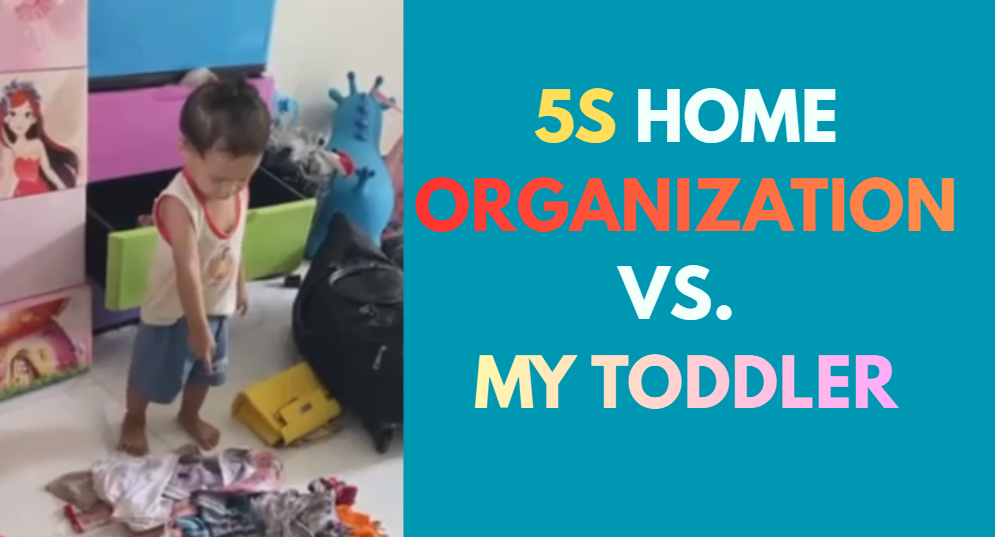
I teach 5S at work.
That Japanese organizing method: Sort, Set in Order, Shine, Standardize, Sustain.
Clean desk, clear mind, better productivity.
It works beautifully at the office.
Then I get home.
My two-year-old looks at my organized drawers and thinks: “Challenge accepted.”
If you have ever wondered how to stay organized with a toddler while also not losing your mind, this article is for you.
Because it turns out, the answer has less to do with better systems and more to do with understanding what your toddler is actually trying to tell you when they empty every drawer you just filled.
Quick Takeaway
- Toddlers who copy your chores are showing healthy developmental behavior called modeling — not defiance.
- Staying organized with a toddler means lowering your expectations, not your standards.
- The 5S workplace method can be adapted for home life with young kids when you accept that “Sustain” now means “keep trying.”
- Teaching toddlers to help with household chores builds independence, coordination, and confidence — even when it looks like chaos.
The Day My Toddler “Helped” With Laundry
Last Tuesday, I was putting away clean clothes.
I have these plastic drawers — blue, pink, and green — and each one has a specific job.
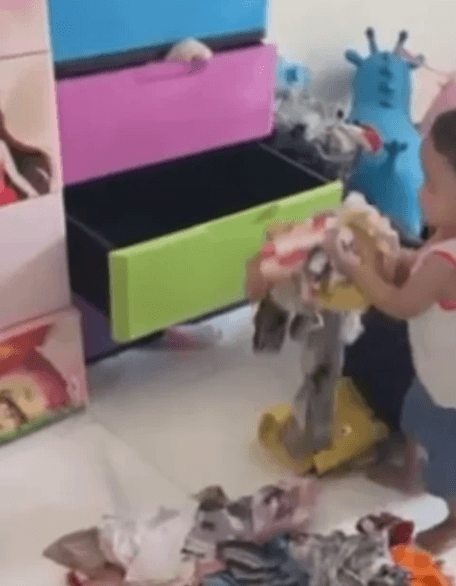
Shirts go in the green one.
I opened the drawer.
My son spotted it from across the room.
What I saw: An open drawer waiting for folded clothes.
What he saw: A fun new game called “Empty Everything Onto The Floor.”
Here is the thing about these little ‘helpers’: they genuinely think they are doing a great job.
My son was not being naughty.
He was focused.
Both hands are gripping a tiny shirt.
Carefully walking it from the drawer to the floor.
One piece at a time.
He saw me moving clothes.
So he moved the clothes too.
We just had very different ideas about where those clothes should end up.
Why Toddlers Copy Parents: The Science Behind Toddler Helping Behavior
When your toddler copies what you are doing, they are not trying to ruin your day.
They are showing you something genuinely remarkable: they want to be like you.
Child development researchers call this modeling — and it is how children learn everything from language to manners to work habits.
The moment a toddler picks up a sock and carries it somewhere, they are engaging in a form of purposeful imitation that signals real cognitive and emotional development.
There is also a concept called agency that is worth understanding.
When your two-year-old discovers they can make things happen — drop a shirt, and it falls, carry something, and it moves — that is a foundational developmental milestone.
You are watching your child figure out that they have an effect on the world.
So when you ask, “Why does my toddler dump everything out?” the real answer is: because they are doing science.
And you are their favorite experiment.
The catch? They do not understand the goal yet.
- You are organizing. They think you are playing with clothes.
- You are cleaning. They think you are making interesting piles.
- You are teaching them to help. They think they already are.
And honestly? They kind of are.
What Happened When I Did Not Stop Him
In the photos from that afternoon, you can see my son pointing at the pile he made.
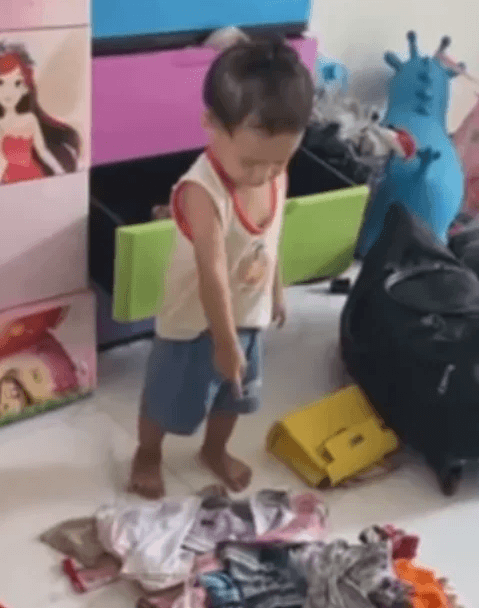
He looked genuinely proud.
My first reaction was frustration.
I had just spent 15 minutes folding those shirts.
But then I stopped myself.
If I get angry right now, what does he take away from that? “Don’t help Dad. It is safer to just watch TV.”
That is not the lesson I want to teach.
So I let him finish. Yes, really.
For a toddler, pulling clothes out of a drawer is not making a mess. It is a learning experience.
He was figuring out that things fall when you drop them, that fabric feels different from plastic, and most importantly, that he can make things happen.
Those are not small discoveries.
Those are the building blocks of independence.
I sat down on the floor next to the laundry pile.
My son climbed into my lap, holding a sock.
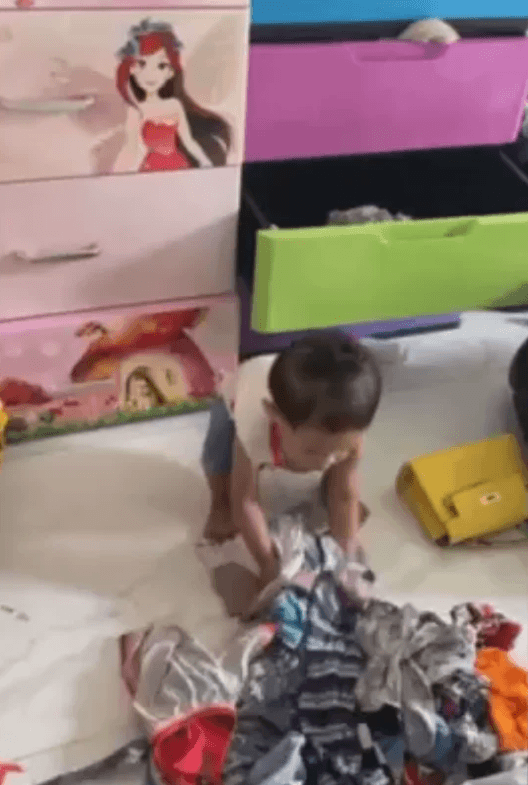
“Help Dada?” he said.
Yeah, buddy. You helped.
How to Stay Organized With a Toddler (The Realistic Version)
Let me be straightforward about using the 5S method at home with young kids.
It does not work the same way it does at the office.
At work, 5S means everything has a place and stays there.
At home with a toddler, 5S means “5 Seconds of Order Before Chaos Begins.”
But that does not mean organization is impossible.
Here is what actually works when you are trying to keep a house functioning with a small human actively undoing everything you do:
1. Lower the bar without losing the goal
Your home does not need to look like a showroom. It just needs to work for your family.
“Clean enough” and “magazine-worthy” are not the same thing, and confusing them will only stress you out.
2. Pick your battles by room
The living room can be a disaster zone.
The kitchen stays clean because safety matters there. You do not have to be consistent across every room — you just have to be intentional about which spaces actually need order.
3. Turn cleanup into a game
After the laundry situation, I said, “Okay! The floor is full! Let’s put everything in the blue drawer!” We compromised.
The green drawer was a lost cause that day, and that was fine.
Making cleanup a game is far more effective than a rigid routine at this age.
4. Give them kid-sized jobs
He cannot fold shirts, but he can carry them.
He cannot organize, but he can drop things into bins.
That counts as participation, and it builds real habits.
Start small and let the tasks grow with your child.
5. Accept the reset
You will clean up the blocks.
They will dump the toy box.
You will organize the books.
They will build what they call a “reading fort,” which is just a pile of books on the floor, but they are extremely proud of it.
This is not defiance.
This is how young children learn independence at home.
The 5S Method at Home With Kids: What Actually Works
So here is my honest, field-tested version of 5S for families with toddlers:
- Sort: Separate what actually needs to be perfect (the medicine cabinet, sharp objects, anything safety-related) from what can be wonderfully messy (the toy corner, the book basket, the craft bin).
- Set in Order: Put things where kids can reach them. Children make far less mess when they are not digging through shelves to find what they want. Accessible storage is a game-changer for home organization with toddlers.
- Shine: Clean what actually matters. Sticky floors? Absolutely. Dusty bookshelf? Maybe next week.
- Standardize: Keep routines simple and repeatable. “After dinner, toys go in the bin” is a standard that a two-year-old can learn. Do not over-engineer it.
- Sustain: Accept that some days you will nail it. Other days, there will be laundry on the floor and a sock in the dog bowl. Both are fine. Sustainable family systems are flexible ones.
A Note on the “Clean Desk Policy” at Home
At work, I enforce a clean desk policy.
Papers filed.
Computers shut down.
Everything was reset for the next day.
Try enforcing that with a toddler.
The truth is, parenting without perfection is not a failure of standards.
It is a realistic acknowledgment that your home is a living space, not a showroom.
The mess is evidence that children are learning, exploring, and growing.
Crayon marks on the table mean someone was creating.
A pile of shoes by the door means a family actually lives there.
The goal is not a perfectly organized home.
The goal is a home that works, a child who is developing well, and a parent who is not burned out from fighting a battle they will never win.
The Laundry Will Still Be There Tomorrow
If you are trying to figure out how to stay organized with a toddler, here is the most honest thing I can tell you: Be kind to yourself.
Your house will not look like a magazine.
Your systems will not run like a corporation.
And sometimes the best thing you can do is close the bedroom door, leave the mess for later, and just play with your kid.
Because they are only little once.
The laundry will still be there tomorrow.
The moment your toddler climbs into your lap holding a single sock, wanting to help?
That one does not come back.
Frequently Asked Questions
Why does my toddler dump everything out of drawers and bins?
Toddlers dump things out because they are exploring cause and effect — one of the core cognitive tasks of early childhood. Dumping objects out lets them see what happens, feel different textures, and practice motor control. It looks like making a mess, but it is genuinely how they learn. This behavior typically peaks between 18 months and 3 years and gradually decreases as their fine motor and organizational skills develop.
Is it okay to let my toddler make a mess while “helping”?
Yes, in most cases, it is not only okay but beneficial. Allowing toddlers to participate in household tasks, even imperfectly, builds their sense of independence, confidence, and belonging in the family. The key is to stay present, keep the environment safe, and reframe the mess as part of the learning process rather than a problem to prevent.
How do I clean the house with a 2-year-old at home?
The most effective approach is to involve them rather than work around them. Give your toddler a small, safe task to do alongside you — carrying socks, dropping laundry into a basket, wiping a surface with a damp cloth. Accept that your efficiency will drop, but their engagement and development will increase. Clean in short bursts during nap time for anything that genuinely requires concentration.
What chores can a 2-year-old actually do?
At age two, toddlers can carry lightweight items, drop things into bins or baskets, wipe surfaces with a cloth, put their shoes near the door, and help “stir” or “pour” during simple cooking tasks. The goal is not a completed chore — it is building the habit and the feeling that they are a contributing member of the household.
Why does my toddler copy everything I do?
Toddlers copy their parents because imitation is their primary learning mechanism. This is called modeling, and it is how children acquire language, social behaviors, emotional regulation, and practical skills. When your toddler follows you around the house and mimics your actions, they are paying you the highest possible compliment: they want to be exactly like you.
How can I encourage my toddler to clean up?
Start with one simple, repeatable task. Make it part of a routine (“after dinner, we all pick up toys”) so it becomes expected rather than optional. Use positive, enthusiastic language rather than criticism when they do not do it perfectly. Keep the task matched to their ability — a 2-year-old should never be expected to fold laundry, but they can absolutely put it in a pile. Celebrate the effort, not just the result.
Disclaimer: I am a parent and a university educator, not a licensed child psychologist or pediatrician. This guide is based on my personal parenting experience and educational background. Always consult your child’s teacher or pediatrician for professional advice regarding your child’s educational development.
