


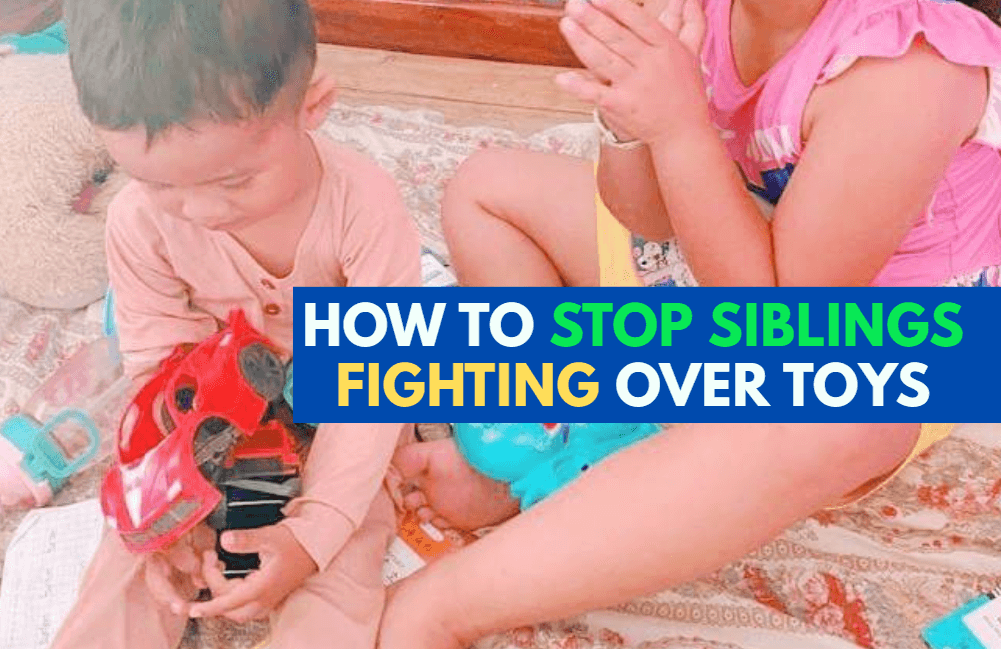
One second, everything is fine.
Next, someone is screaming, a toy truck is skidding across the floor, and you are already halfway out of your chair before you even know what happened.
If you have ever dealt with kids fighting over toys, you know that feeling.
It is exhausting, it is repetitive, and no matter how many times you say “just share,” nothing sticks.
You are not doing it wrong.
The approach just needs to change.
I am a dad of two.
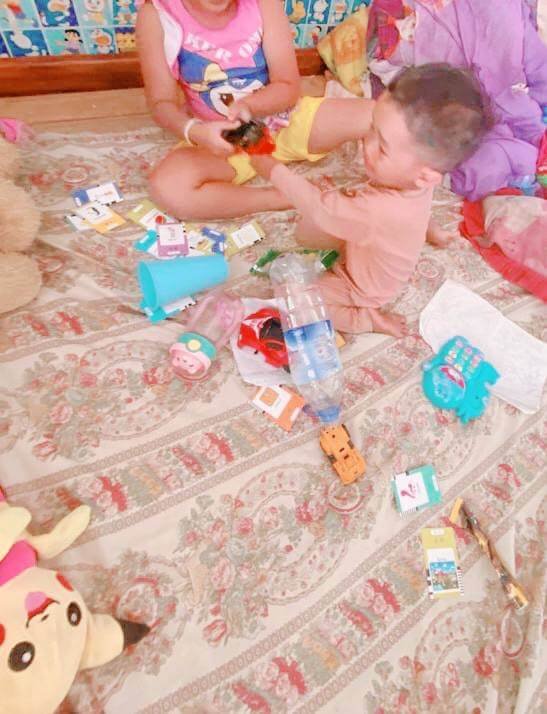
My son just turned two, and my daughter is eight.
They love each other deeply and fight like it is a competitive sport.
I also work in a university Human Resource Development department, where I help managers handle workplace conflict every single day.
At some point, it hit me: why was I using completely different skills at work than at home?
So I started applying real conflict resolution strategies to our playroom.
The difference showed up almost right away.
Here is what actually works when your kids are at each other’s throats over a toy.
Why Telling Kids to “Just Share” Does Not Work
This is the first thing worth understanding if you want to stop sibling rivalry at home for good.
The problem is not that your kids are bad.
The problem is that “just share” is not a strategy. It is a wish.
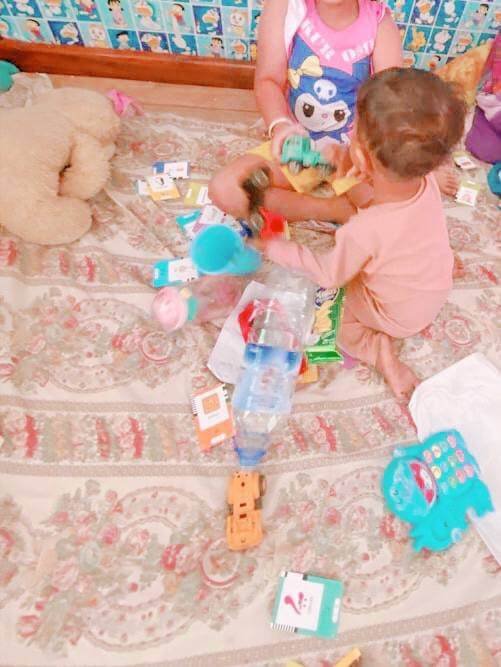
A toddler and an older sibling are not living in the same developmental world.
My eight-year-old builds detailed, imaginative games with specific rules.
She has a plan.
My two-year-old sees something shiny and his brain just says, “I need that. Right now.”
When you force your older child to hand over a toy to stop a toddler from crying, a few things backfire.
The older child feels punished for something she did not do.
The toddler learns that grabbing and crying get results.
Neither one learns anything useful, and the whole cycle repeats ten minutes later.
To deal with siblings fighting over toys the right way, you have to change the system, not just referee the moment.
The HR Approach: Sibling Conflict Resolution Tips That Actually Work
In workplace conflict resolution, we never just tell two people to “be nice” and walk away.
We use a structured process to help people feel heard, lower the tension, and find a solution they both had a hand in creating.
That same process works surprisingly well in the playroom.
Here is the three-step method I use every time a fight breaks out in our house.
Step 1: Walk In and De-Escalate First
Before anything else, stop the chaos. Nobody learns anything mid-meltdown.
I do not yell from the other room.
I walk in, get down to their level, and sit on the floor.
That one move signals to both of them that an adult is here to help, not punish.
I do not grab the toy. I do not lecture.
I just sit with them and let the volume come down on its own.
It usually takes about thirty seconds once they see I am calm.
If you have been wondering how to handle sibling fights without yelling, this is where it starts. Your calm is contagious.
So is your panic.
Step 2: Let Both Kids Tell Their Side
This is what I call giving both sides the floor. In a real HR mediation, each person gets uninterrupted time to explain what happened from their perspective.
Mediating children’s arguments works the same way.
I turn to my daughter first and let her talk without jumping in.
She needs to feel like what she was doing mattered and that someone actually heard her.
For my two-year-old, who does not have the vocabulary yet, I narrate his side for him.
I look at him and say something like: “You saw that red truck, and you really wanted to hold it.
It looked like so much fun.”
Something shifts when he hears that.
He is not in trouble for wanting. He is seen.
Validating a toddler’s feelings is not the same as giving in to them.
It just takes the fire out of the moment.
Step 3: Help Them Negotiate, But Do Not Solve It for Them
This is the piece most parents skip, and it is the most important one if you want to know how to teach kids to share without forcing it.
I do not hand down a verdict.
I ask my daughter, “How can we help your brother feel included without ruining the game you are building?” Nine times out of ten, she comes up with something herself.
She might offer him a specific truck to drive in her game.
She might set a five-minute timer and let him know when his turn is coming.
When kids negotiate their own truce, they actually follow through on it.
When a parent just dictates the outcome, someone always feels cheated.
Give Your Older Child the Right Words
One of the most effective ways to stop kids fighting at home is to give your older child language that actually works.
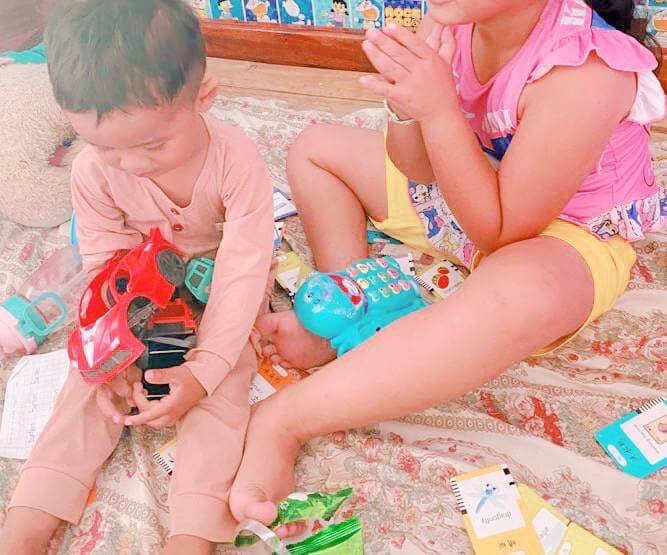
Grabbing and pushing happen when kids do not have a better tool available.
I practiced a simple script with my daughter.
When her brother comes for something, she is not ready to give up; she holds out her hand and says, “I am using this right now.
You can have it when I am done.” That is it. Clear, calm, firm.
It took a few weeks to feel natural to her.
But once it did, the physical wrestling matches dropped noticeably.
She felt like she had real power to protect her space without needing me to step in every single time.
Teaching your older kid to set boundaries is not just good for sibling peace.
It is a life skill they will use in school, in friendships, and eventually at work.
This is one of the most practical ways to teach kids empathy and self-advocacy at the same time.
The One Thing That Makes All of This Stick
Consistency.
I know that is not the exciting answer.
But if you are wondering what to do when siblings fight all the time, the honest truth is that one good mediation session does not change the pattern.
Doing it the same calm way, every single time, over weeks and months, is what actually rewires how they handle conflict together.
There will be days when you are tired, and you just want them to stop.
That is real.
On those days, even just walking into the room, sitting down, and staying quiet is enough.
You do not have to run a perfect three-step mediation every time.
You just have to show up consistently.
My kids are not perfect.
We still have bad days.
But they fight less, and when they do fight, it resolves faster because they have internalized a framework for working it out.
Practical Tips for Toddler and Older Sibling Toy Fights
Beyond the mediation steps, a few small changes to your environment can cut down on how often these fights start in the first place.
These are especially helpful when you are dealing with an age gap sibling rivalry, where the kids are simply not on the same developmental level.
- Create Some “Mine” Space. Not every toy needs to be shared. Give your older child a shelf or bin that is fully hers. When she knows certain things are off-limits and that rule is actually enforced, she becomes more willing to share everything else.
- Use a Visual Timer for Kids. Toddlers have almost no concept of time. Saying “five minutes” means nothing to a two-year-old. A visual timer they can watch counting down makes waiting feel real and manageable. We have a simple sand timer. My son watches it as if it were the most important thing in the world.
- Narrate What You Are Doing. When you step in to mediate, say out loud what you are doing and why. “I am going to sit with both of you so we can figure this out together.” Narrating the process teaches them the process. Over time, they start doing it themselves. This is one of the simplest conflict resolution strategies for children that parents overlook.
- Praise the Moments When It Goes Right. We are quick to respond to conflict and slow to notice cooperation. When your kids work something out on their own, name it. “I noticed you offered him a trade just now instead of pushing him away. That was really mature.” Specific praise like that actually sticks.
You Are Already Doing Better Than You Think
If you are here looking for ways to handle toy fights and stop sibling rivalry at home, you are already the kind of parent who wants to do this thoughtfully.
That matters more than getting the steps exactly right every time.
The goal is not to raise kids who never fight. It is to raise kids who know how to work through a fight.
That is a skill that will serve them long after the toy truck days are behind them.
Start small.
Walk in. Sit down. Listen. Let them find the answer together. That is where it begins.
Frequently Asked Questions
Should I make my older child share with a toddler?
No, and here is why forcing sharing usually backfires. When you make your older child hand over a toy to stop a toddler from crying, your older child feels punished for something she did not do, and your toddler learns that grabbing and crying is a winning strategy.
Neither outcome is helpful. Instead of forcing it, try coaching your older child to say “I am using this right now” and using a visual timer so the toddler understands that a turn is coming. This builds real sharing skills rather than resentment.
How do I stop sibling fights without yelling?
The most effective first step is to physically walk into the room and sit down on the floor at their level rather than yelling from another room. Your calm presence signals that help has arrived.
Once you are there, let both kids speak without interrupting, and help them find their own solution rather than deciding for them. Parenting without yelling in these moments is less about willpower and more about having a calm, repeatable process you trust.
How do I teach kids to share without forcing them?
The key is to stop treating sharing as an obligation and start treating it as a skill to practice. Give your older child specific language to set boundaries (“I am using this right now”). Create designated personal items that are never required to be shared.
Use a visual timer so the younger child can see that a turn is on the way. When kids feel their belongings are safe and their boundaries are respected, they become far more willing to share voluntarily.
What should I do when siblings fight all the time?
Frequent sibling fights usually mean the same dynamic is repeating without a new framework in place. Start by looking at the environment: do both kids have some items that belong only to them? Are they getting individual one-on-one time with you?
Then commit to a consistent mediation process every time a conflict happens. One good conversation does not change the pattern. Repeated, calm responses over several weeks are what actually shift how siblings handle conflict together.
Does age gap affect sibling rivalry over toys?
Yes, age gap sibling rivalry is real and mostly comes down to developmental differences. A toddler operates on impulse and has very little understanding of waiting or fairness. An older child plans, builds, and has a strong sense of ownership.
These differences mean that what feels fair to one child is invisible to the other. Acknowledging each child’s developmental stage, rather than applying the same expectations to both, is the most effective starting point for reducing toy fights between kids who are far apart in age.
Disclaimer: I am a parent and an HR/education professional, not a licensed child psychologist or occupational therapist. This guide is based on my personal parenting experience. Always consult your child’s pediatrician for professional advice regarding your child’s behavioral development or potential sensory processing issues.
