


It is 5:00 PM on a Thursday.
My toddler needs to burn off energy before dinner, and we are already running late.
I am standing by the front door with my shoes on, checking my watch.
My son is in his room, moving away from the door instead of toward it.
In our house, we have always kept teaching toddler safety rules simple.
One rule above all: no helmet, no bike.
My son knows this rule by heart.
The moment we say “bike ride,” he usually runs to grab his blue helmet without being asked.
It took consistent repetition to get to this point, but now the habit is automatic.
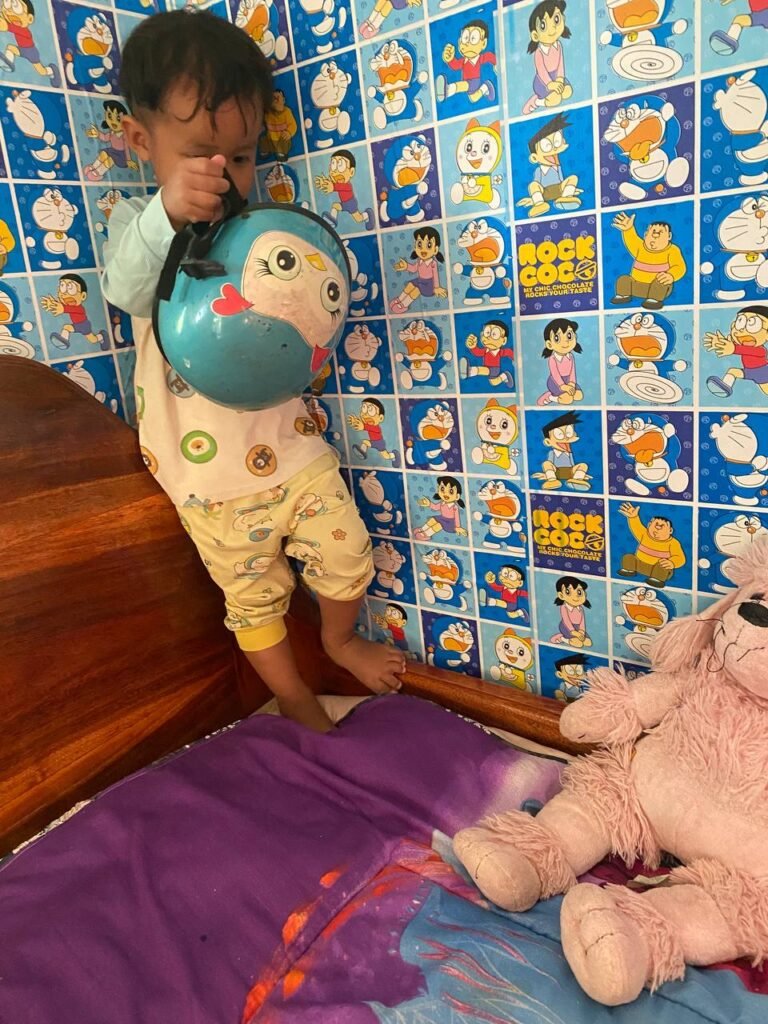
He will not touch his bike without it.
So when he grabbed his helmet that afternoon, I thought we were ready.
I was wrong.
Quick Takeaway
Teaching this rule works best when it is simple, consistent, and tied to ownership. Let your child choose their own helmet, model the behavior yourself, and celebrate every win without exception.
When kids internalize a safety rule, they do not just follow it for themselves. They apply it to everything they care about, and that is where the real lesson lives.
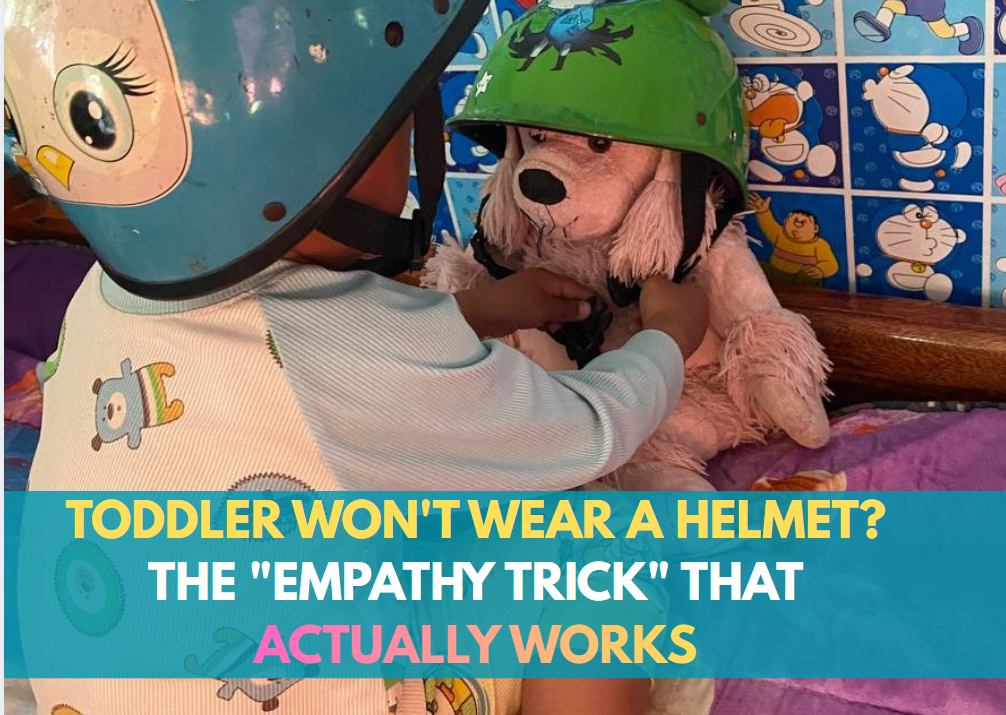
Why My Son Put a Helmet on a Stuffed Dog
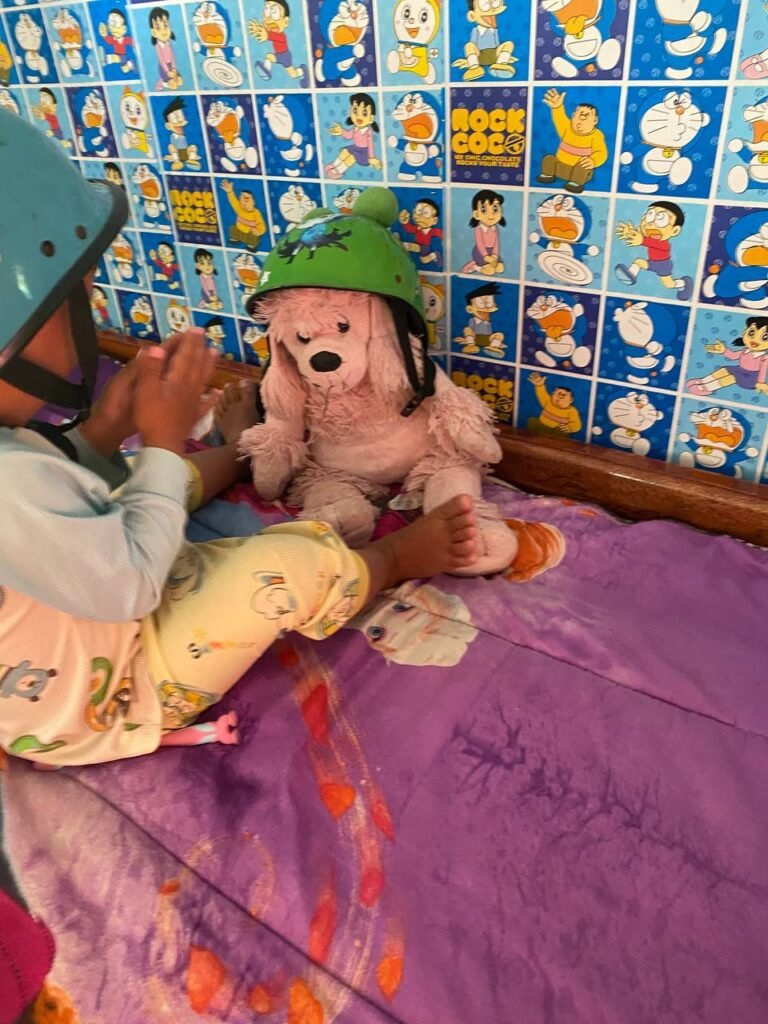
Instead of heading to the door, my son stopped and looked at his bed.
His favorite pink stuffed poodle was lying there.
And suddenly, he had a problem.
His friend was not wearing a helmet.
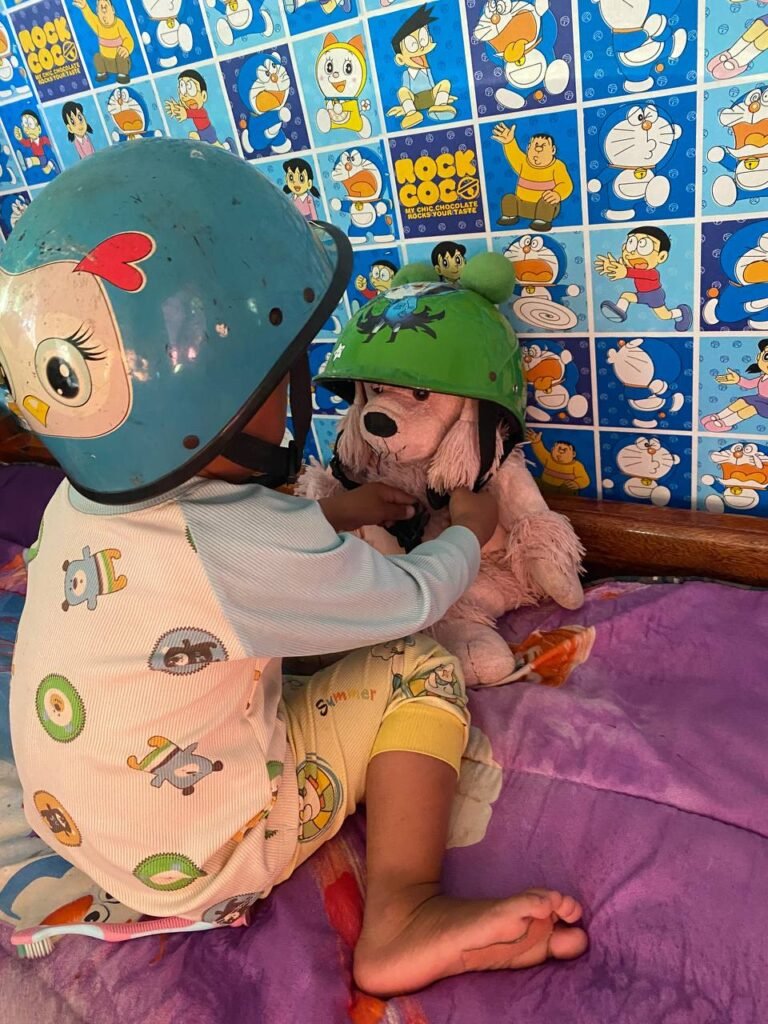
I watched him pick up the dog and reach for a green helmet.
“Buddy, come on,” I said. “The dog does not need a helmet. Let us just go outside.”
He looked at me, shook his head, and said very seriously: “No. No!”
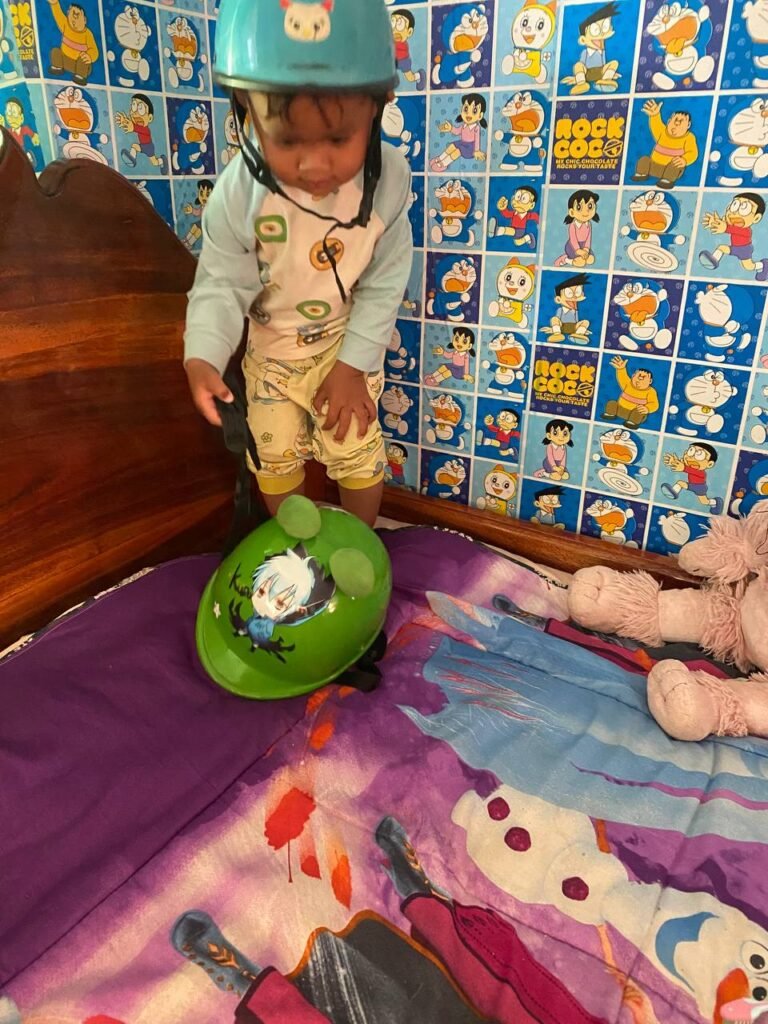
Here is what I did not understand at first.
When you spend time teaching toddler safety rules, they do not just learn “I need to protect myself.”
They learn that we protect the people and things we care about.
In my son’s mind, the rule applied to his pink poodle, too.
Putting a helmet on a stuffed dog is not easy when you are a toddler.
The helmet is too big, the dog’s head is soft, and the straps do not clip easily.
I watched the clock. One minute. Two minutes. Three minutes.
At first, I was frustrated because we were losing daylight.
But the whole time, he was completely focused.
By minute three, I stopped being impatient and started paying attention.
He was not being difficult.
He was being responsible.
He was taking care of something he loves.
This is one of those slow-down parenting moments that you cannot plan.
I could have grabbed the dog and dragged him outside to save three minutes.
We would have lost a much more important moment.
How We Built the No Helmet, No Bike Rule for Toddlers (What Actually Worked)
If your toddler won’t wear a bike helmet without a fight, you are not alone.
Bike safety for toddlers under age four is one of the most common struggles parents bring up in parenting groups, and most of the advice out there is either too vague or too complicated.
Here is exactly what worked for us to turn helmet-wearing into an automatic toddler bike helmet habit:
Keep the rule simple and non-negotiable
“No helmet, no bike” is easy for a toddler to understand.
No exceptions means no confusion.
The moment you make one exception, the rule becomes a negotiation.
Consistency is the foundation of child helmet injury prevention at this age.
Let them choose their own helmet
My son picked his helmet himself.
When kids feel ownership over their gear, they are far more excited to use it.
Letting kids choose their own helmets is one of the simplest ways to build buy-in before you even leave the house.
Model the behavior yourself
If you ride a bike, wear yours too.
Toddlers copy everything we do, not everything we say.
Modeling safety behavior for your children sends a signal that helmets are not a punishment.
They are just what people who ride bikes do.
Celebrate every win out loud
When my son grabs his helmet without being asked, I make a big deal out of it.
Positive reinforcement for toddler safety habits is not just feel-good advice. It is backed by child development research.
Praising the specific behavior (“You grabbed your helmet all by yourself!”) reinforces it far more effectively than a general “good job.”
The Walk We Almost Missed
We finally made it outside.
My son climbed on his bike, helmet strapped tight, and took off down the sidewalk with total confidence.
Tucked carefully with us was one pink stuffed poodle, also wearing a helmet.
Parenting is full of moments where we are rushing.
Hurry up. Eat faster. Let’s go. We are late.
But that day, when my toddler said “No” to leaving without protecting his stuffed dog, he was actually saying “Yes” to empathy and responsibility.
The no helmet, no bike rule for toddlers started as a bike safety rule in our house.
But watching my son apply it to something he loved showed me it had become something bigger: a value.
The walk could wait three minutes.
The lesson was right on time.
Frequently Asked Questions
At what age should toddlers start wearing a bike helmet?
Children should wear a helmet as soon as they start riding anything with wheels, including balance bikes, tricycles, and scooters.
For most children, that starts between 18 months and 2 years old. Starting early is the single best way to build a lifelong toddler bike helmet habit before resistance has a chance to form.
What do I do if my toddler won’t wear a bike helmet at all?
If your toddler won’t wear a bike helmet, start with ownership. Let them pick their helmet at the store, decorate it with stickers, or put it on a stuffed animal first as a game. Pair that with a firm no-exceptions rule: no helmet means no ride, every single time.
Avoid bribing or debating. Calmly state the rule and wait. Most toddlers adapt within one to two weeks of consistent follow-through.
How do I make the helmet rule stick without battles?
Keep the rule the same every day. Toddlers thrive on predictable structure, and a rule that applies 100% of the time is easier for them to accept than one that changes.
Put the helmet near the bike so it is always visible before the ride begins. This removes the decision from the moment and makes wearing it feel automatic.
Can letting my toddler choose their own helmet really make a difference?
Yes, significantly. When children feel ownership over an object, they are more motivated to use it correctly.
Letting kids choose their own helmet, whether by color, character, or style, turns the helmet from “something my parent makes me wear” into “my helmet.” That shift in identity is a powerful motivator for toddlers.
Is it normal for toddlers to apply safety rules to toys and stuffed animals?
Completely normal, and actually a positive sign of development. Empathy in toddlers often shows up through play and role modeling.
When a child helmets a stuffed animal or buckles a doll into a car seat, they are practicing the values you have taught them. It is one of the clearest signs that a safety habit has moved from compliance to genuine understanding.
How long does it take to build a consistent bike helmet habit in toddlers?
Most families see consistent, fight-free helmet wearing within two to four weeks of daily practice and firm, calm enforcement.
The key variables are consistency (no exceptions), ownership (their own helmet), and positive reinforcement (celebrating when they do it right). Children who help choose their helmets tend to build the habit faster.
Disclaimer: I am a parent and a university educator, not a licensed child psychologist or pediatrician. This guide is based on my personal parenting experience and educational background. Always consult your child’s teacher or pediatrician for professional advice regarding your child’s educational development.
