


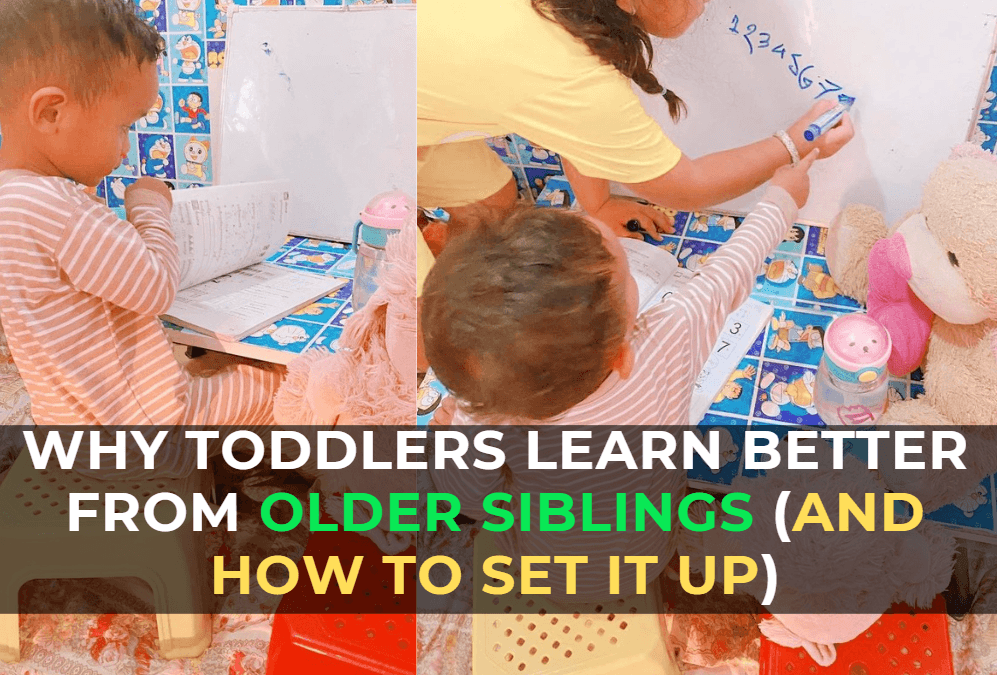
If your kids have a big age gap, you actually have a secret weapon for teaching your toddler. You just have to step back and let them take over.
I always thought it was my job to teach my toddler his numbers. But recently, I discovered a secret weapon hiding in plain sight: his 8-year-old sister.
Here is how handing over the whiteboard marker completely changed how we learn at home.
A Long Monday and a Lightbulb Moment
This past Monday was a tough one.
Between university lectures and a visit to the Provincial Teacher Training Center (PTTC) in Battambang to review new teacher training programs, I came home late and completely drained.
My daughter had already finished dinner and was waiting for me to help with her daily exercises.
All I could manage was, “Daddy is so tired, sweetheart. Let me take a cool shower first.”
That moment reminded me of something I already knew from my professional life but had forgotten to apply at home: you don’t have to do everything yourself.
Stop Doing It All Yourself (Your Sanity Depends on It)
In any well-run organization, a manager who insists on personally handling every new hire’s onboarding will burn out fast.
Smart teams build peer mentorship programs, where experienced members guide the newer ones.
It works because learning from a colleague feels different from learning from a boss.
The same logic applies at home.
If your kids have an age gap of four years or more, you already have a peer mentorship program under your roof.
In our case, that’s a six-year gap between our 8-year-old daughter and our 2-year-old son.
Once I stopped trying to run every “training session” myself and handed the whiteboard marker to her, everything changed.
Why Toddlers Learn Better From Older Siblings Than From Parents
Every time I try to teach my 2-year-old his numbers or new words, it turns into a battle of wills.
To him, I’m an authority figure, and toddlers are wired to push back against commands.
When I point to a flashcard and say, “Repeat after me: Four,” he hears an order, not an invitation.
When his big sister does the exact same thing, his reaction is completely different.
Experts call this ‘lateral influence,’ but to me, it just means my toddler doesn’t feel like he’s being bossed around.
He doesn’t see his sister as a strict authority figure; he just sees a really cool bigger kid he wants to copy.
When my daughter pulls out the whiteboard, she isn’t giving instructions. She’s starting a game. And he wants in.
That’s the core reason sibling teaching works so well: the dynamic is collaborative, not hierarchical.
How to Set Up a Sibling Learning Space at Home
You wouldn’t expect a mentor to succeed without the right environment.
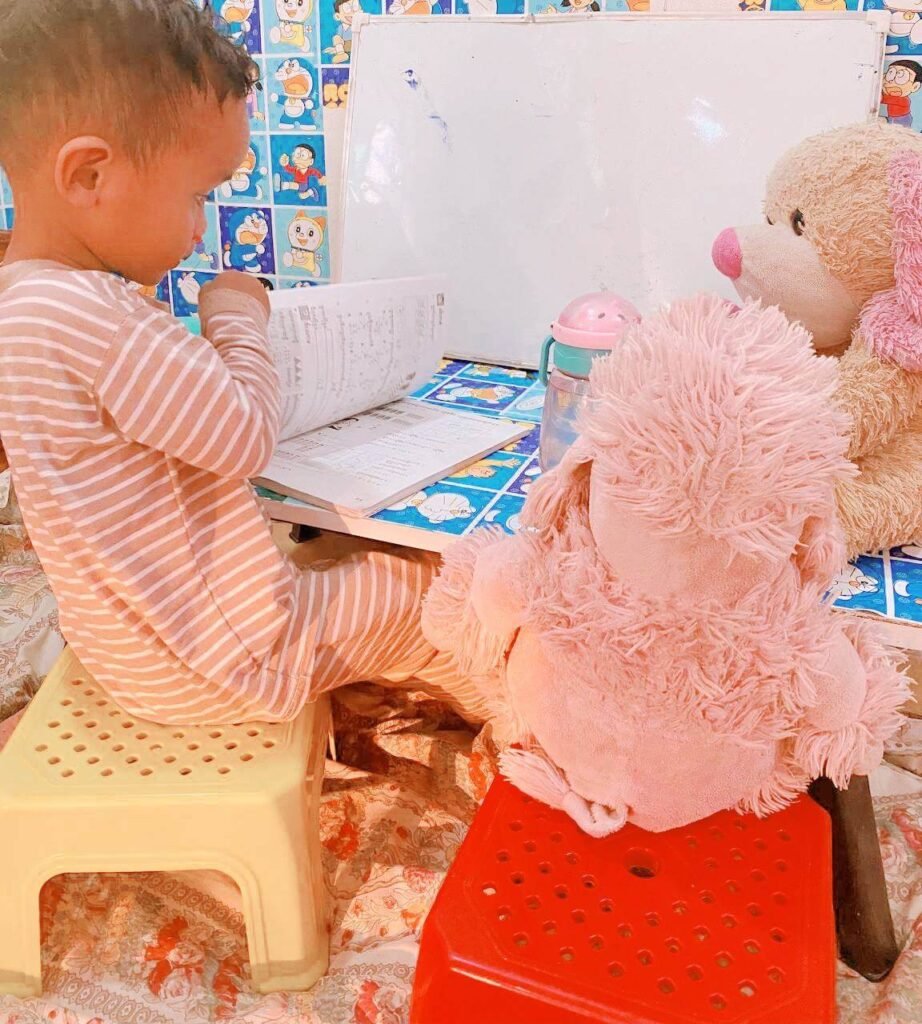
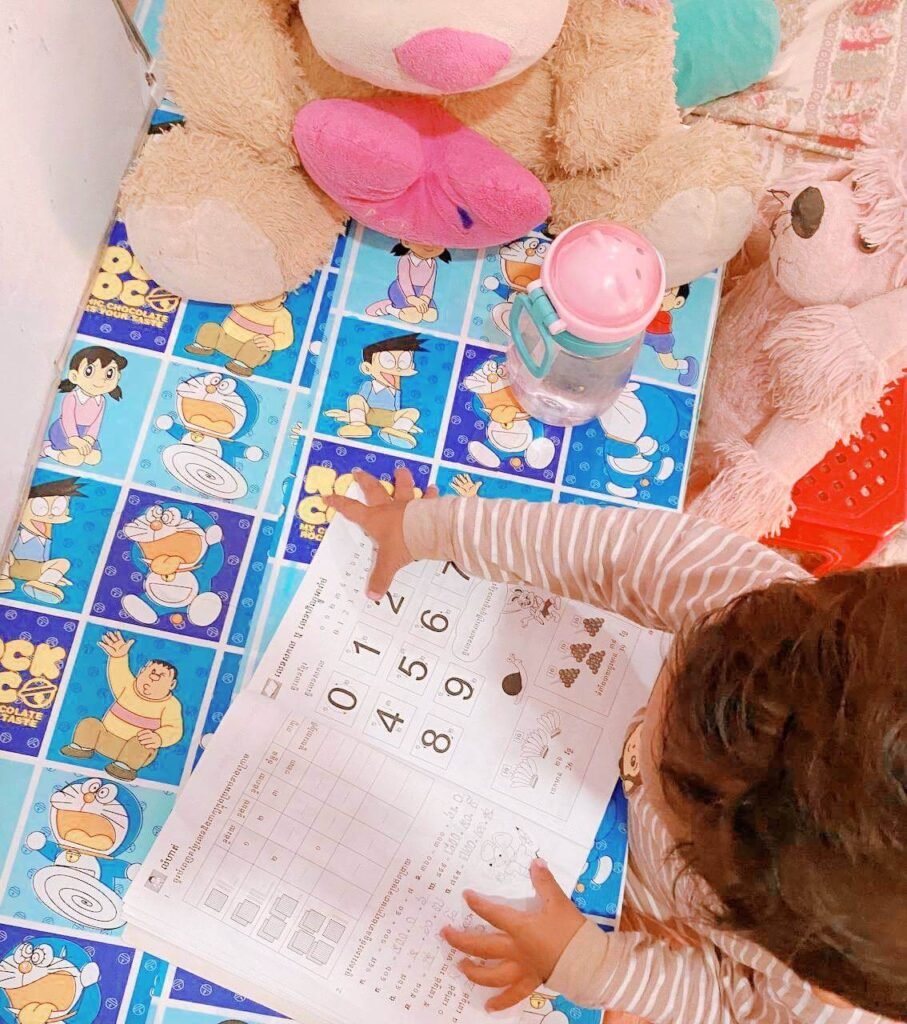
Setting up a simple sibling learning space takes almost no effort or money.
Here’s what we use:
- A low, child-height table (ours is a Doraemon-themed one, but any small table works)
- A whiteboard and markers for the “teacher”
- An exercise book or activity sheets for the younger child
- A few stuffed animals or toys to act as “classmates” and keep the atmosphere playful
The goal is to make it feel like play, not a lesson.
When the space feels relaxed and fun, both kids engage naturally and stay focused longer.
What Sibling Peer Learning Actually Looks Like
The magic starts when you step back and let it happen.
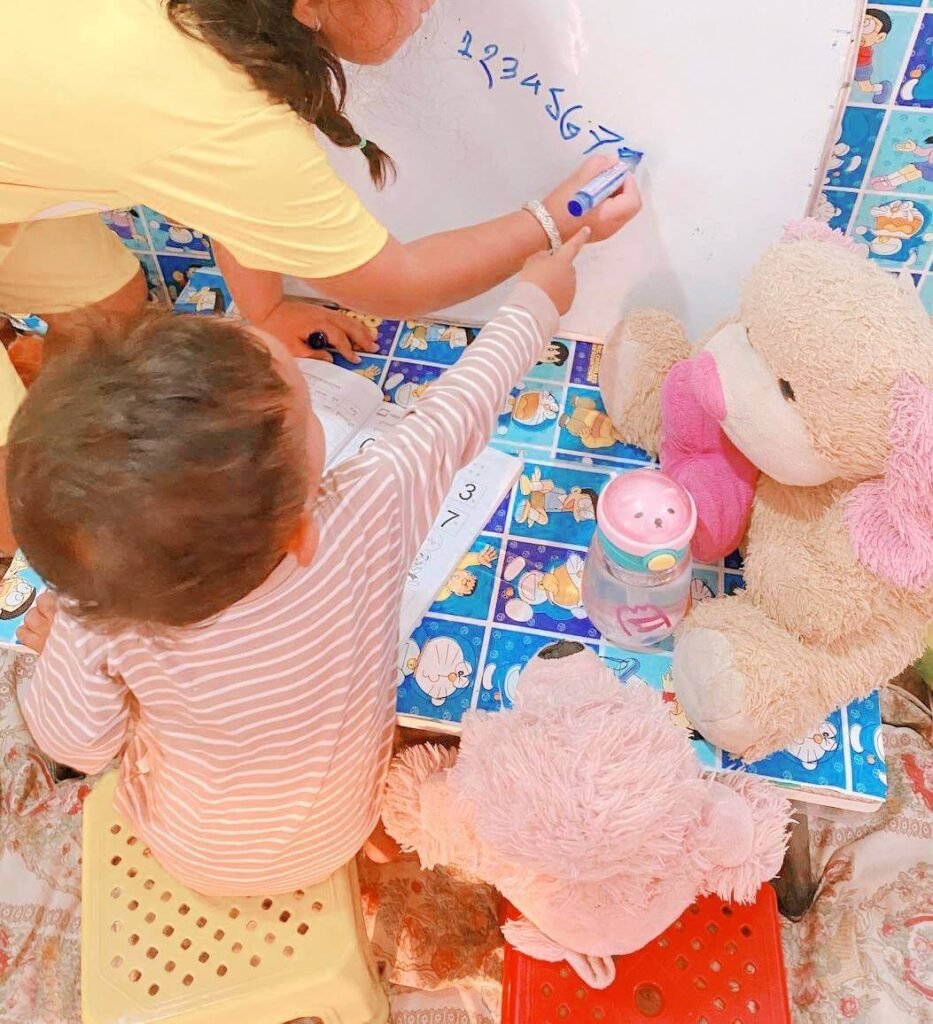
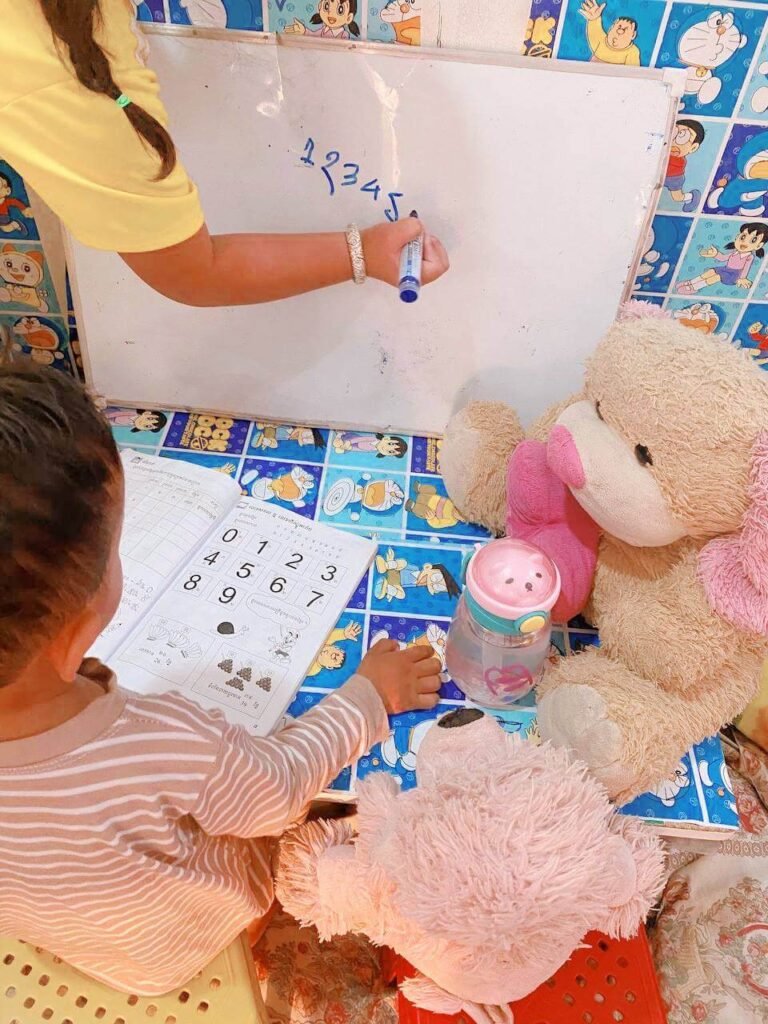
My daughter began writing numbers 1 through 7 on the board. I gave her no instructions on how to teach.
She found her own approach, speaking in a patient, encouraging voice that honestly sounded a lot like mine and my wife’s.
When she pointed to a number and asked her brother to find the match in his workbook, there was no resistance at all.
He pointed along eagerly, matching each number with a big smile.
No curriculum. No pressure. Just one kid showing another how something works.
That’s sibling peer learning at its most natural.
3 Reasons Older Siblings Make the Best Toddler Teachers
No authority barrier
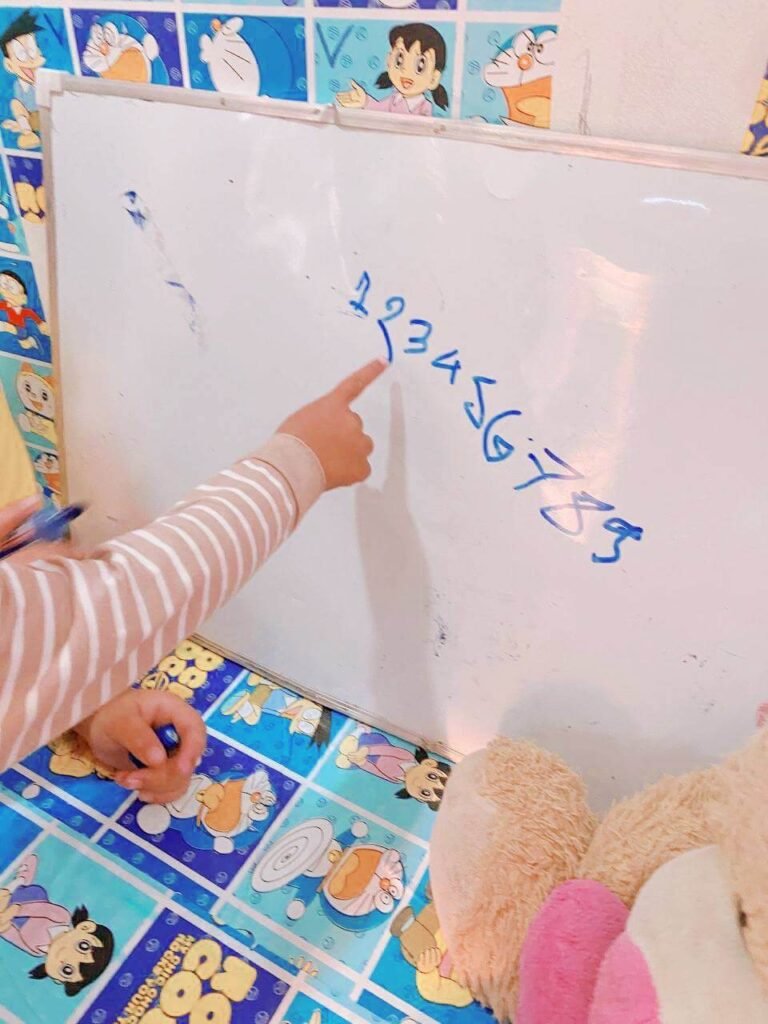
Toddlers don’t push back against older siblings the way they push back against parents. Learning feels like play, not a task.
Natural language matching
Older kids instinctively speak closer to a toddler’s level, which makes new concepts easier to absorb and repeat.
Confidence building for both children
The older child develops leadership, patience, and communication skills. The younger one gains knowledge from someone they genuinely trust and look up to.
You Don’t Have to Be the Only Teacher at Home
If your kids have an age gap of four years or more, you have everything you need.
Set up a small space, hand your older child a whiteboard marker, and get out of the way.
The results might genuinely surprise you. They certainly surprised me.
Sometimes the best teacher in the room isn’t the tired dad with a background in education.
It’s the 8-year-old armed with a whiteboard marker and a lot of patience.
Have you ever tried letting your older kid take the reins? Let me know how it went in the comments!
Disclaimer: I am a parent and a university educator, not a licensed child psychologist or pediatrician. This guide is based on my personal parenting experience and educational background. Always consult your child’s pediatrician or a qualified specialist for professional advice regarding your child’s behavioral or educational development.
