


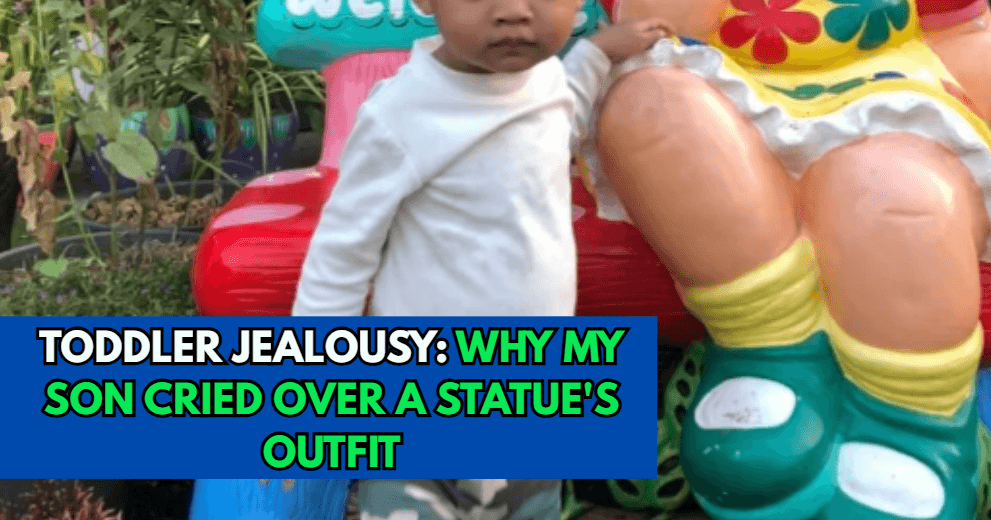
It was supposed to be a relaxing afternoon.
My son and I headed to a beautiful garden for some fresh air, a look at the flowers, and a quick photo for Grandma. Simple plan, right?
Yeah… not quite.
What started as a peaceful little outing turned into a full-on wardrobe crisis. And the culprit?
A plastic statue in a flower dress.
The Setup (And the Statue)
My little guy, whom I lovingly call my “Chief Negotiator,” was in a great mood at first.
He was running down the garden paths, pointing at butterflies, just doing his thing.
Then we found the perfect photo spot: a bench with a statue of a little girl sitting on it.
She was wearing a bright yellow dress covered in red flowers. Very cute. Very colorful. Very… not what my son was wearing.
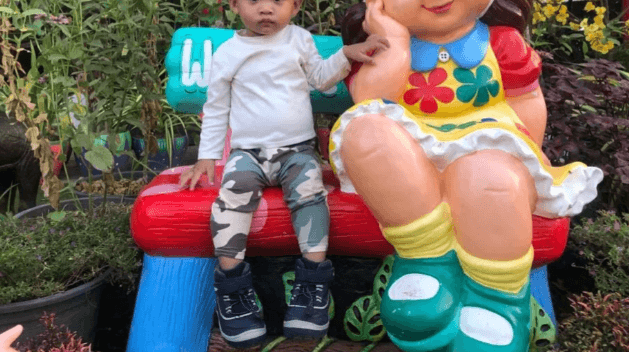
I sat him down next to her and said, “Look! A new friend! Give Grandma a big smile!”
Instead of smiling, his face just fell. Bottom lip trembling, eyes filling up with tears.
I was genuinely confused. Was he scared? Did the statue seem too big?
“Buddy, why are you upset?” I asked.
He wasn’t scared at all. He pointed one little finger straight at her dress.
Why the Tantrum Actually Happened
That’s when it clicked. He wasn’t frightened. He was jealous.
He looked at her outfit, looked down at his plain white top and camo pants, and decided this was not okay.
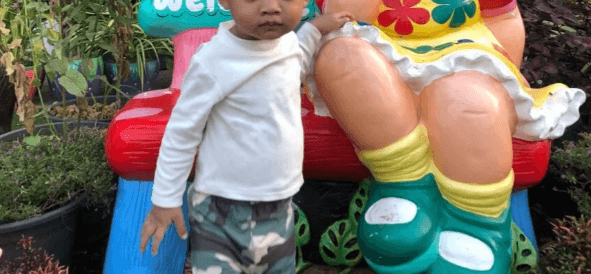
In his mind, this motionless plastic girl was wearing the coolest thing he’d ever seen, and he was stuck in basics. It wasn’t a photo op to him.
It was a competition, and he felt like he was losing.
Toddler Logic: Why It Actually Makes Sense
I know, from the outside it sounds a little funny. I saw painted plastic. He saw a kid with a better outfit.
But that’s exactly how toddlers process the world.
They aren’t separating “real” from “pretend” the way we do. He saw someone wearing something amazing, and he wanted it.
Didn’t matter that she couldn’t move or talk. His feeling was simple: that’s not fair.
When you look at it from his perspective, the meltdown makes total sense. He felt underdressed and left out.
Young kids are deeply driven by emotion and comparison, and they don’t have the words yet to explain that clearly. So they cry.
How We Handled the Public Meltdown
First, I tried explaining. “Buddy, that’s a statue. She’s not real. Her dress is painted on, she can’t take it off.”
He didn’t buy it. He actually reached over and tugged on her dress to check.
Since we were in public, I had to think fast.
I skipped the perfect photo idea and just focused on him.
I acknowledged what he was feeling (“I know, her shirt is really pretty”) and tried pointing out some real flowers nearby that matched her dress colors.
Eventually, we just had to move on. We didn’t get the smiling Grandma photo that day. And honestly, that was fine.
His feelings mattered more than the shot.
When Your Toddler Is Jealous of Someone Else’s Clothes
If your toddler has ever melted down over what someone else is wearing, you’re not alone. It’s actually a healthy sign of development.
They’re starting to figure out fairness, building their own sense of identity, and learning that what they wear means something to them.
When a toddler cries over a statue’s outfit or refuses to get dressed at home, they’re not trying to make your life harder.
They’re just dealing with big emotions using a very small toolkit.
Looking Back: Why It Made Perfect Sense
When I got home and looked at the photos again, the whole thing made more sense.
A little reading on toddler behavior confirmed what I suspected: my son wasn’t just being difficult.
He was actually hitting some real developmental milestones right there on that bench.
- He wanted control. Toddlers have almost no say over their own lives. Clothes are one of the few things they can actually have an opinion about. He didn’t pick his outfit that day, and next to a “kid” in a bright, fun dress, he felt like he’d lost before the photo even happened.
- The magpie effect. Look at how vivid that yellow dress is against the background. Toddler brains are drawn to high-contrast, bright colors. Her dress was literally more visually stimulating to him than his white shirt. He wasn’t being dramatic. His brain was just doing its thing.
- Copycat behavior. When he pointed at her dress and then at his shirt, he was trying to mirror her. That’s actually a sweet little sign of social awareness and early empathy. He saw a “friend” and wanted to match her.
What I Learned from the Garden Meltdown
I walked away from that afternoon with one solid reminder: always expect the unexpected.
I never would have guessed a garden statue would be the source of a meltdown. But now I know, anything bright and colorful is fair game.
Whether it’s a public meltdown over a statue or a battle about getting dressed at home, it’s worth pausing and asking why.
Sometimes the answer is just, “I really wanted the flower shirt.”
And honestly? I get it. That statue had great style.
Next time we visit a garden, I might just let him wear whatever he wants. Even if it’s pajamas.
Disclaimer: I am a parent and a university educator, not a licensed child psychologist or pediatrician. This guide is based on my personal parenting experience and conflict resolution background. Always consult your child’s pediatrician for professional medical or psychological advice regarding your child’s behavior and development.
