


Teaching your toddler the alphabet doesn’t have to feel like a daily battle.
No flashcards. No forced sit-down lessons.
Sometimes the best teacher isn’t you at all… It’s their older sibling.
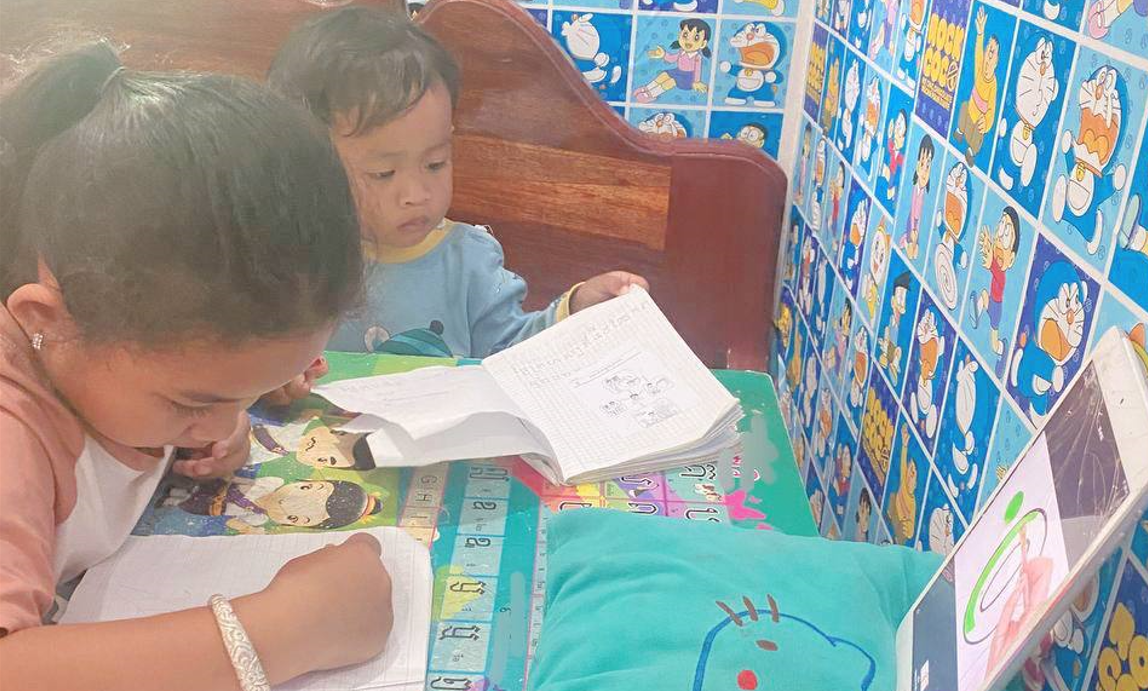
I figured this out watching my 2-year-old son pick up letters from his 8-year-old sister, completely on his own terms.
The Problem with Traditional Teaching Methods
Every time I tried teaching my toddler letters with flashcards or workbooks, he bolted.
To him, I was just boring Dad trying to make him do something he didn’t want to do. Sound familiar?
Most parents go through this. We buy alphabet books, colorful flashcards, and educational apps. And our toddlers couldn’t care less.
They’re too busy being toddlers to sit still for anything that feels like a lesson.
That’s when I noticed something: my son learns way better from his older sister than from me.
How My Toddler Learns from His Older Sibling
One afternoon, my daughter sat down at her low green alphabet table in our Doraemon-themed corner to practice writing.
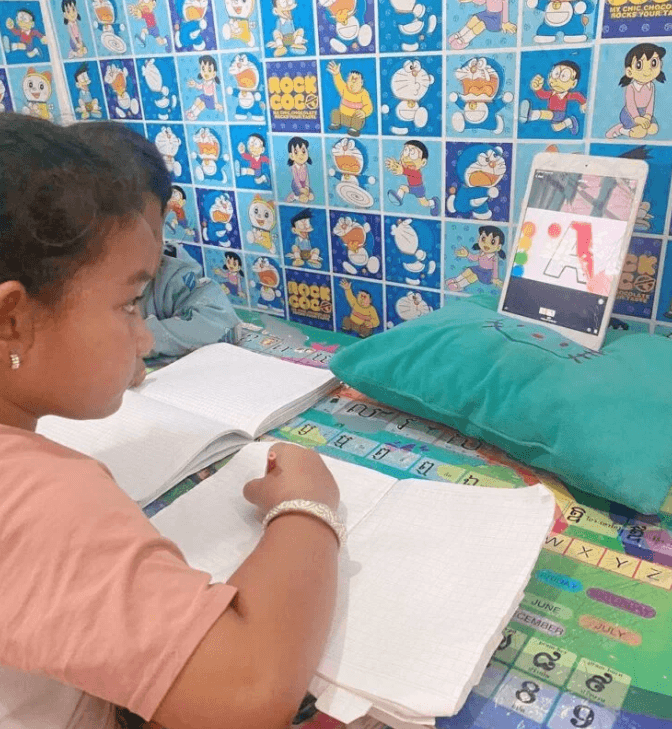
Within a few minutes, my son climbed up next to her.
Nobody told him to. No snack bribes. He just wanted to be near her, doing what she was doing.
Experts call this “learning through observation.” Toddlers naturally want to copy the people they admire. And who do they admire most?
Older siblings and kids just a few years ahead of them.
What Makes Sibling Learning So Effective?
Watching them together, I noticed three things that made this work:
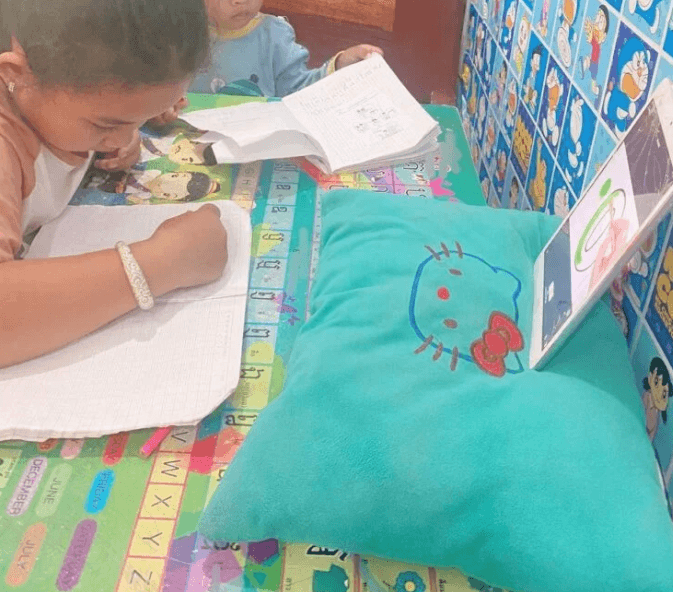
- The older child is closer to their level. My daughter sits at a kid-sized desk, uses simple words, and moves at a pace that actually makes sense to a toddler. I’m a 6-foot adult. Of course, he finds her less intimidating.
- There’s no pressure. When I teach, I have expectations. When my daughter practices her letters, my son can just watch. If he gets bored and walks off, that’s fine. But usually he stays because he actually wants to.
- He learns by watching, not by being told. My daughter uses an iPad showing the letter, then copies it into her notebook. My son watches the screen, watches her hand, and connects the dots himself. That shape on the screen becomes that shape on paper.
A Real Example: Teaching Toddler Letters Without Flashcards
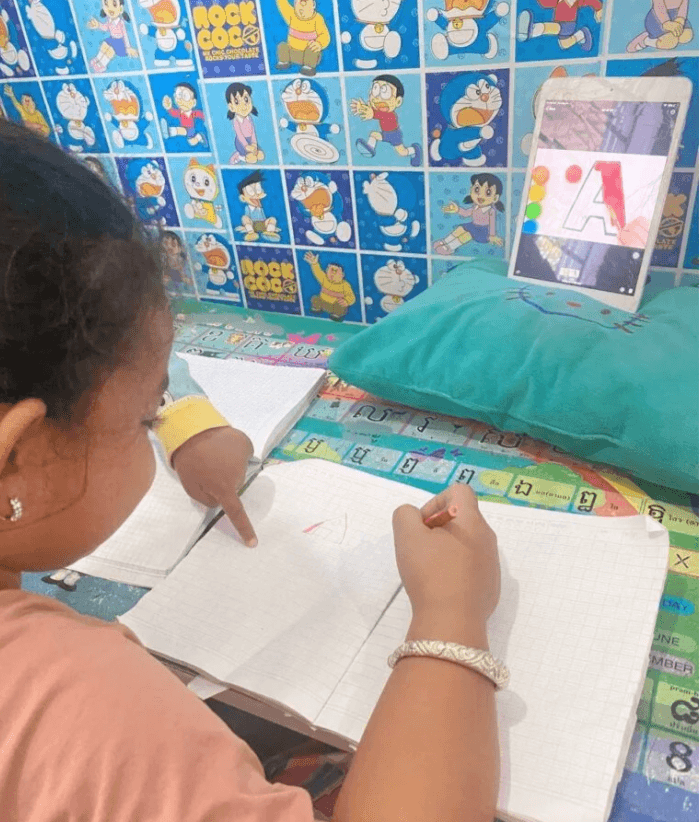
The best moment came when my son reached out and pointed at the letter “A” on his sister’s paper. Like he was checking her work. “Hmm, is this line straight enough?”
That small action told me everything. He wasn’t just watching anymore.
He was actively processing what he saw. By pointing at the letter, he was confirming his own understanding without holding a pencil or sitting through any kind of formal lesson.
This is what makes learning through observation so powerful for toddler learning activities at home.
You don’t need expensive programs or special teaching skills. You just need the right environment.
How Parents Can Use This Method at Home
Step 1: Find the Right “Teacher”
Your toddler’s teacher doesn’t have to be a sibling. It could be an older cousin who visits regularly, a friend’s child who’s a few years ahead, a neighbor’s kid at the playground, or another child at daycare.
The key is finding someone your toddler admires and wants to copy.
Step 2: Create a Learning Space
We use a low table with the alphabet and months printed right on the surface.
Having letters visible under their hands helps with shape recognition even when they’re not officially “studying.”
Set up a simple space where the older child can work on alphabet activities.
A small desk at toddler height, paper and crayons, a tablet with letter tracing apps, or magnetic letters all work well.
Make it comfortable and inviting. Add their favorite stickers or characters, as we did with Doraemon.
Step 3: Let It Happen Naturally
This is the hardest part: stepping back. Don’t force your toddler to join. Don’t hover. Just let the older child do their thing and see what happens.
Your toddler might watch from a distance at first, then slowly move closer, then eventually sit right next to them and start pointing at letters or trying to draw.
All of that is learning. Even if they never pick up a pencil, they’re absorbing information just by watching.
Alphabet Learning Activities for Toddlers That Work
Here are some activities the older child can do while the toddler watches:
- Letter tracing on tablets. Apps like ABC Kids show the proper way to write each letter. Toddlers love screens, so they’ll naturally pay attention.
- Drawing letters with chalk. Take it outside. Let the older child draw big letters on the sidewalk. The toddler will watch and usually end up joining in with their own messy scribbles.
- Playing with magnetic letters. The older child can spell simple words on a fridge or magnetic board. The toddler can hand them letters or try to copy the arrangement.
- Reading alphabet books together. The older child reads to the toddler, pointing at each letter. This builds both letter recognition and a love of books.
- Making letter crafts. Form letters with playdough, craft sticks, or string. Hands-on and fun for both kids.
These work best when they feel like play, not school.
Common Mistakes Parents Make
- Forcing participation. If your toddler doesn’t want to join, that’s fine. Forced learning creates negative associations. Let them watch until they’re ready. Just give them space.
- Taking over the lesson. The moment you jump in with corrections, you break the natural flow. The magic happens when kids teach kids. Stay nearby but quiet.
- Expecting too much too fast. Your 2-year-old won’t write perfect letters after one session. They might not even hold a pencil correctly. That’s completely normal. Celebrate the small stuff.
- Comparing progress. Every toddler learns at their own pace. Your neighbor’s kid might know the alphabet at 18 months. Yours might take until age 3. Both are totally fine. Focus on your child, not the milestones.
What If You Don’t Have an Older Child?
Not everyone has a built-in sibling to help. Here’s what you can do instead:
- Playdates with older kids. Even 30 minutes a week with an older child can make a difference.
- Mixed-age playgroups. Libraries and community centers often host these. Worth looking into.
- Educational videos with kid hosts. Shows where kids teach letters can have a similar effect. Your toddler sees someone closer to their age having fun with learning.
- You can still play the role. Get on the floor. Use a child-size desk. Speak simply. Make it playful. The key is matching their level, not acting like a teacher.
- The principle is the same either way. toddlers learn best by watching and copying people they relate to.
Why Learning Through Observation Works
Scientists call this “social learning,” and it’s how humans have learned for thousands of years.
Before schools and textbooks existed, children learned by watching the people around them.
For toddlers specifically, it works because they’re naturally curious about what others are doing, they learn better through action than through explanation, they trust slightly older kids, and there’s no pressure or fear of getting it wrong.
When my son watches his sister write the letter “A,” he’s not just seeing shapes.
He’s learning that letters matter, that practice is normal, and that learning can actually be fun.
The Real Results You Can Expect
Let me be straight with you: your toddler won’t learn the whole alphabet in a week. This isn’t a shortcut. But here’s what you can realistically expect over time:
- More engagement. Your toddler will want to be near the learning activity instead of running away from it.
- Natural curiosity. They’ll start asking questions about letters on their own, without you having to prompt them.
- Letter recognition. Gradually, they’ll start recognizing common letters, especially ones from their name or favorite words.
- Better focus. Even 5 to 10 minutes of attention is more than you were getting before.
- Positive associations. This one matters most. Your toddler will connect learning with fun, not frustration.
For my son, the biggest change wasn’t perfect letter writing. It was his willingness to sit and actually pay attention. That’s the foundation everything else builds on.
Tips for Making This Method Work
- Keep sessions short. Ten to fifteen minutes is plenty. Stop while they’re still interested.
- Make the space appealing. Add stickers, favorite characters, or special supplies that only come out during learning time.
- Praise the process, not perfection. Celebrate when your toddler sits still, points at a letter, or even just watches quietly.
- Be consistent. The same time each day works well. Routines help toddlers know what to expect.
- Don’t quiz them. Resist asking “What letter is this?” Let them absorb at their own pace.
- Join in sometimes. Sit with both kids and work on your own “letters,” even if it’s just doodling. Show them that learning is for everyone.
Let Kids Teach Kids
Teaching a toddler the alphabet doesn’t require expensive programs, endless flashcards, or any formal teaching experience.
Sometimes the best thing you can do as a parent is set up the right environment and get out of the way.
When my daughter sits at her table, and my son climbs up next to her, something simple and real happens.
She’s not trying to teach him. He’s not trying to learn. They’re just two kids hanging out together. And somehow, in that ordinary moment, actual learning takes place.
So if you’re stuck trying to figure out how to teach your toddler the alphabet, just look for a ‘senior associate’ in their life.
Let them shadow an older kid. Make learning feel like play, not work.
You might be surprised how much better your toddler learns when the teacher isn’t you… It’s just the cool kid with the pencil.
Disclaimer: I am a parent and a university educator, not a licensed child psychologist or pediatrician. This guide is based on my personal parenting experience and educational background. Always consult your child’s teacher or pediatrician for professional advice regarding your child’s educational development.
