


I want to tell you about the day my two children gave me the most honest performance review of my career.
Not my university career.
Not my research career.
My career as a father.
It lasted approximately four seconds.
It was delivered by an 8-year-old girl who had just walked through the front door.
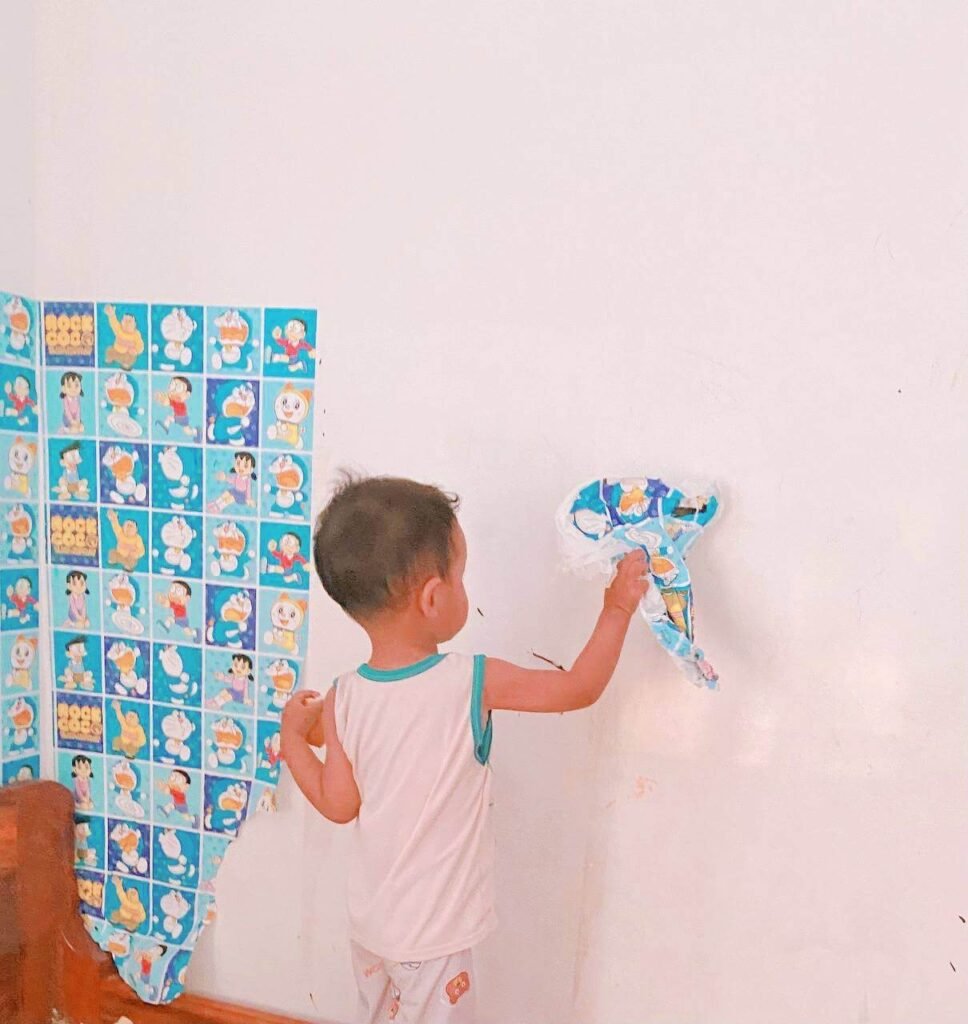
And it left me standing in silence, looking at a wall covered in torn Doraemon stickers, knowing with complete certainty that she was right.
If you have ever wondered why your child seems distracted during homework, less interested in the books on the shelf, or strangely drawn to taking things apart, this story might answer a question you did not know you were asking.
It is also a practical guide to creating a kids’ learning environment at home that keeps working long after the initial excitement wears off.
Quick Takeaway
- Kids’ learning environments at home have expiration dates. What motivates a child in month one may bore them by month three.
- Children communicate environmental dissatisfaction through behavior, not words. Tearing things apart, zoning out, and reduced engagement are all signals.
- You do not need to renovate. Small changes like rearranging furniture, swapping a poster, or adding a plant can completely reset how a space feels.
- Your youngest child often notices when a space has stopped working before you do.
- Ask your children what they want the room to look like. Ask before you decorate, not after.
The Investment That Stopped Paying Off
Three days.
That is how long it took, from the initial purchase to the final sheet pressed flat against the wall, to cover our learning room with Doraemon wallpaper stickers.
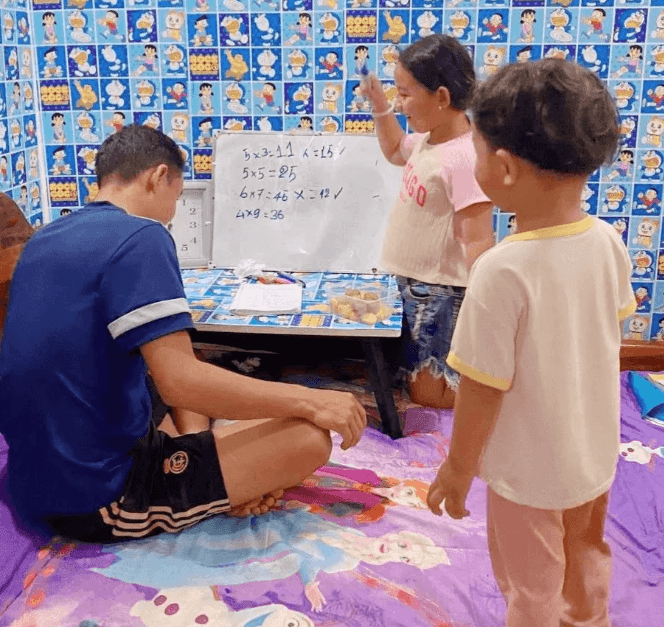
Before I bought them, I asked both children directly.
I asked the Assistant Manager, my 8-year-old daughter.
I asked the Head of Negotiations, my 2-year-old son.
The question was simple: Do you love these pictures?
The answer, from both of them, was an immediate and enthusiastic yes.
So I bought them. I planned the layout. I cleaned the walls.
I pressed each sheet into place carefully, working around the furniture, aligning the edges, and smoothing out the bubbles.
Three days of work are spread across shopping, preparation, and installation.
For three months, those Doraemon characters covered our walls.
Nobita, Doraemon, and Shizuka looked down at us while we did homework, read together, and the children went about their various activities in Battambang.
Three months of learning. Three months of stories. Three months of warm, ordinary family moments set against that familiar blue backdrop.
And then, one afternoon, my son decided he was done with it.
When a Toddler Destroying Things Is Actually Feedback
I did not see it coming.
I was in another part of the house when the Head of Negotiations began his wall review.
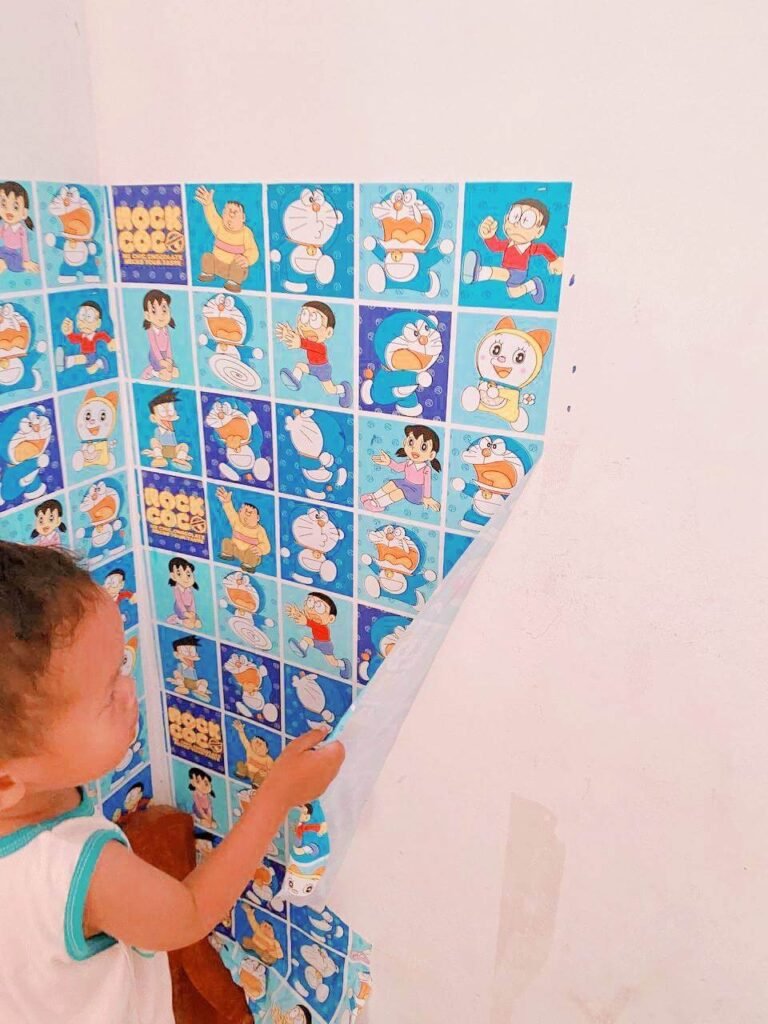
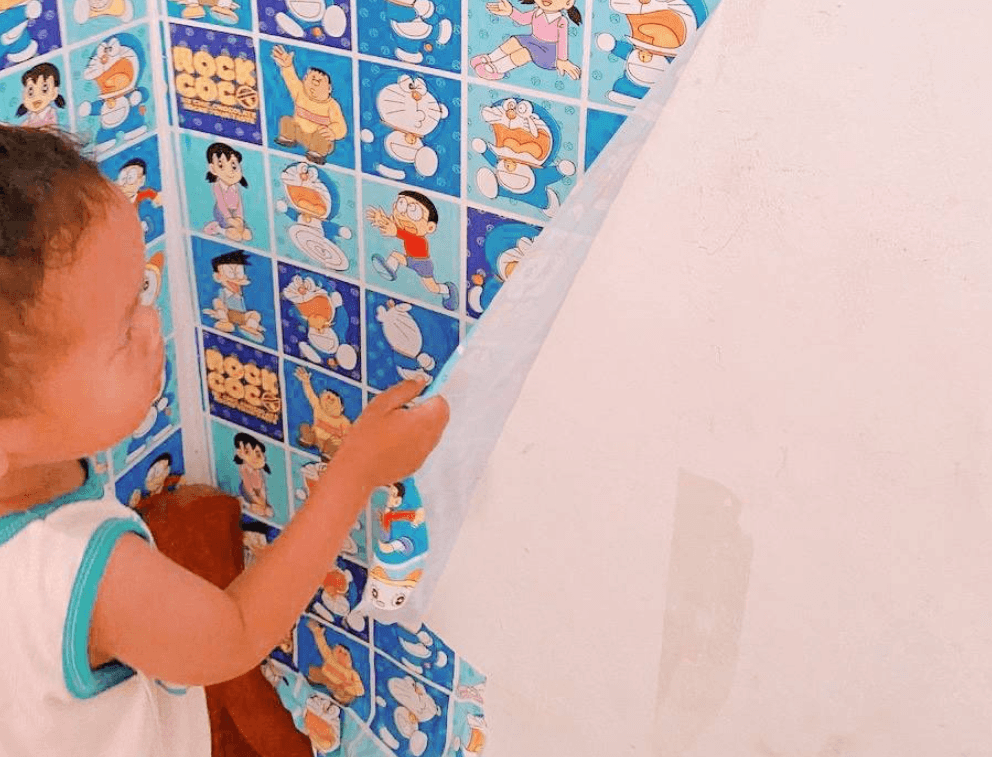
By the time I reached the room, he had already made a significant start.
He was standing at the wall, peeling a sheet of Doraemon wallpaper away from the surface with the calm, focused energy of someone who has made a decision and is executing it without hesitation.
I told him to stop.
He did not stop.
I told him again.
I explained, in the patient tone I reserve for situations that require de-escalation, that we do not tear things off walls.
That those stickers had taken a long time to put up.
That Doraemon was, by his own previous testimony, a character he loved.
He peeled another sheet.
I looked at his face carefully in that moment.
And I want to be honest about what I saw.
He did not look excited.
He did not look rebellious.
He did not look like a toddler enjoying the sensation of destruction for its own sake.
He looked bored.
Not bored in the way a child is bored when there is nothing to do.
Bored in the way a person is bored when the environment around them has stopped offering anything new.
The kind of boredom that settles in slowly, over weeks and months, until one day the person simply reaches out and starts dismantling the thing that has stopped working for them.
I had seen that look before.
In university classrooms. In organizational consultations.
In the faces of capable people sitting in environments that had stopped growing with them.
I just had not expected to see it on a 2-year-old peeling Doraemon off a wall.
This is one of the most misread toddler behavioral cues in parenting.
When a child tears things, dismantles toys, or strips items off shelves, the instinct is to correct the behavior.
But sometimes the behavior is the message.
Your child is telling you something the only way they know how: the space has stopped feeling interesting.
The Six Words That Changed How I Think About Home Learning Spaces
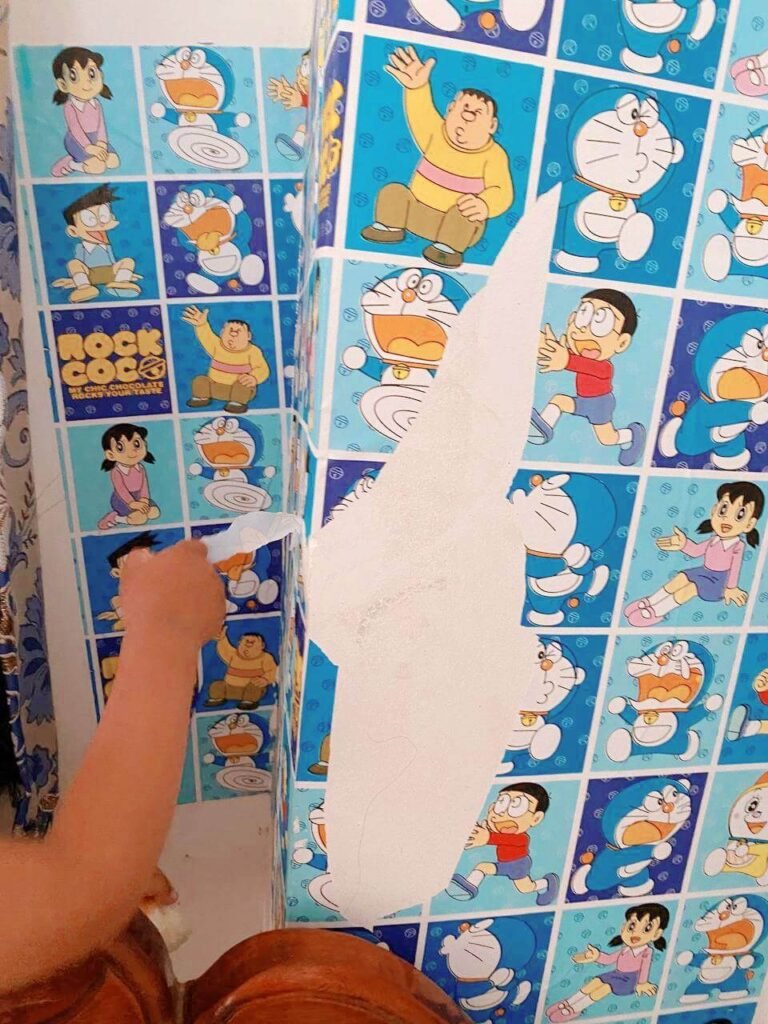
When the Assistant Manager came home from school, she stopped in the doorway.
She looked at the wall.
She looked at the torn sections on the floor.
She looked at her brother. She looked at me.
“Who tore all the Doraemon off the wall?”
I looked at her. “Do you really not know, or are you just pretending not to know?” I pointed to her brother. “Look there. That is the culprit.”
I said it lightly. I even laughed a little.
She looked at her brother for a moment.
Then she looked back at the wall.
And then she said six words I was not prepared for.
“Mr. Boy did a great job.”
I did not respond immediately.
I stood there, looking at the wall, and I thought about what she had just said.
She had not said it to be funny.
She had not said it to defend her brother or deflect blame.
She had said it with the calm, matter-of-fact certainty of someone stating an obvious truth.
And I realized, standing in that room with torn Doraemon characters around my feet, that she was absolutely right.
They were both right.
And I was the one who had been wrong.
Why Kids’ Learning Environments at Home Go Stale (And Why Parents Miss It)
In organizational behavior, there is a well-documented phenomenon called Environmental Stagnation.
It is the gradual process by which a workspace that was once stimulating and motivating becomes invisible through familiarity.
It does not happen suddenly.
It happens slowly, over weeks and months, as the brain processes the same visual information so many times that it stops registering it at all.
The posters on the wall become wallpaper.
The wallpaper becomes the background. The background becomes invisible.
And an invisible environment is not a neutral environment.
It is a draining one.
This matters deeply when you are trying to build a functional kids’ learning environment at home.
Children’s brains are wired for novelty.
They need new stimulation to stay engaged, and not just new content but new surroundings. The physical space shapes the mental space.
When one stops changing, so does the other.
For three months, I had been teaching in a room that had stopped changing.
The same Doraemon characters in the same positions on the same walls, day after day.
I had installed them to create a warm, stimulating home learning space for our children.
And for a while, they had done exactly that.
But I had not changed anything since.
I had fallen into what I now call the Familiarity Trap: the parenting error of confusing the absence of complaints with the presence of satisfaction.
Nobody told me the environment had stopped working.
My son could not articulate it in words.
My daughter had simply adapted, the way capable people always adapt to environments that are no longer optimal.
But the Head of Negotiations, in his own direct and efficient way, had filed his feedback.
He had peeled Doraemon off the wall.
5 Signs Your Child’s Study Setup Has Gone Stale
Before a child can tell you in words that their space has stopped feeling interesting, they will tell you in behavior.
Here are the signals to watch for.
1. They seem distracted during activities that used to hold their attention
If your child could once sit quietly at the desk for 20 minutes and now drifts after five, the content is not always the problem.
The container might be.
2. They are drawn to dismantling or rearranging things
A toddler destroying things in their learning room is not always a behavior problem.
It is often environmental feedback delivered without words.
3. They prefer to do schoolwork or play in other rooms
When a child consistently migrates away from their designated learning space, the space itself is telling you something.
4. They stop noticing or commenting on the decor
In the first weeks of a new setup, children point things out, ask questions, and interact with the environment.
When that stops, the environment has become invisible to them.
5. Engagement drops without an obvious reason
No illness, no friendship problems, no change in routine, but something feels off. Check the room before you check the schedule.
What This Means for Your Playroom or Homework Station
Whether your space is a bedroom, a study corner, a living room, or a single mat on the floor, here is what that afternoon with torn Doraemon stickers taught me.
Learning environments have expiration dates
What stimulates and motivates at the beginning of a season will not necessarily do so three months later.
Build a habit of reviewing and refreshing your child’s learning space regularly.
Not just when something breaks.
Before it goes stale.
A useful rule: review the space every six to eight weeks.
Not to renovate. Just to look at it with fresh eyes and ask whether it is still doing its job.
Silence is not satisfaction
Your child may not be able to tell you that the room has stopped feeling interesting.
They will tell you in other ways: through reduced engagement, through distraction, through peeling things off walls.
Learning to read those behavioral signals early is one of the most practical skills in intentional parenting.
Small changes create large effects
You do not need to renovate.
Moving furniture, swapping a poster, adding a new plant, or simply rearranging the bookshelves can completely reset the visual environment.
The brain responds to novelty.
Even in the same room with the same furniture, a small change can give a child a genuinely new perspective.
Give their brain something new to process.
Listen to your youngest stakeholders
The Head of Negotiations could not write a memo.
He could not schedule a feedback session.
He could not articulate in words what he needed.
But he communicated clearly, directly, and effectively.
The question was whether I was paying attention.
Children notice when a space has stopped working before most adults do.
Their threshold for environmental stagnation is lower, because their brains are still in a high-demand period of development that actively requires novelty and new stimulation.
When a child gives you honest feedback, receive it
My daughter did not say what she thought I wanted to hear.
She said what she actually believed.
That is the rarest and most valuable kind of feedback there is.
Do not deflect it.
Stand still and listen to it, even when, especially when, it comes from an 8-year-old standing in a doorway looking at a wall full of torn Doraemon stickers.
A Note on Negligence
I use that word deliberately. Negligence.
Not failure, not mistake, not oversight.
Negligence, in parenting terms, is the gap between what we know we should do and what we actually do.
I know that learning environments need to change.
I teach this to my university students.
I have written about it in academic papers.
And I left the same wallpaper on the same walls for three months without once asking my children whether it was still working for them.
My son asked the question on my behalf.
He just asked it with his hands.
How to Refresh Your Child’s Learning Environment at Home Without a Renovation
You do not need a big budget or a free weekend.
Here are practical, low-cost ways to reset a home learning space that has gone stale.
- Rotate what is on the walls. Store some items and bring back older ones after a few months. Familiarity can turn back into novelty with enough distance.
- Change the orientation of the furniture. Moving the desk to face a different direction costs nothing and changes how the room feels entirely.
- Introduce a living element. A small plant or a new set of colorful supplies can re-anchor a child’s attention to the space.
- Let the child choose one thing. One new poster, one small decoration, one repositioned shelf. When children have ownership over the space, they invest in it differently.
- Adjust the lighting. A clip-on reading lamp or a soft-colored nightlight can transform how a corner feels, especially for evening reading or quiet time.
- Declutter rather than add. Sometimes a space has not gone stale because it needs more. It has gone stale because it has too much. Removing five items can make a room feel new again.
What Came Next
That evening, after the walls were cleared and the torn stickers swept up, I sat with both children and asked a question I should have asked months earlier.
“What would you like the room to look like now?”
The Assistant Manager had several specific ideas.
The Head of Negotiations pointed at various walls and made sounds that I interpreted as architectural recommendations.
We have not yet decided what goes up next.
But we will decide together this time.
All three stakeholders.
Before the purchase, not after.
And whatever we choose, I have already made a note in my mental calendar: review in eight weeks.
Not because something will be broken.
But because good environments need tending, the same way good relationships do.
My son taught me that.
In the most direct way available to him.
Conclusion: Growing Alongside Your Child
Creating a strong kids’ learning environment at home is not a one-time project.
It is an ongoing relationship between a child and the space they grow in.
My 2-year-old understood this before I did.
He did not have the vocabulary to say: “Dad, this room has stopped being interesting and I need something to change.”
So he communicated the only way available to him.
He peeled Doraemon off the wall.
And his 8-year-old sister, in six quiet words, confirmed what I should have already known.
The best thing I did that afternoon was not stopping him.
It was sitting down that evening and finally asking the question I should have asked months earlier.
Your child’s learning space at home is not a backdrop.
It is a tool. And like any tool, it needs regular attention, adjustment, and care.
Start by looking at the room right now.
Ask yourself honestly: when did I last change something?
If you cannot remember, that is probably your answer.
Frequently Asked Questions
How often should I rearrange my child’s study area or playroom?
A good general guideline is every six to eight weeks. You do not need to overhaul the entire room. Rotating wall decor, moving furniture, or adding one new element is usually enough to reset the visual experience for your child.
How do I know if my kid’s homework station needs a refresh?
Watch for reduced engagement during activities that used to hold their attention, a preference for working in other rooms, taking things apart or rearranging them without an apparent goal, and a general drop in enthusiasm that has no obvious cause like illness or a change in routine.
Why does my toddler keep tearing things off the walls?
While it can be a sensory behavior, it is often environmental feedback. Toddlers communicate dissatisfaction with their surroundings through action rather than words. If a toddler repeatedly targets the same area, consider whether that part of the room has become visually stale or no longer engaging.
Do I need a big budget to fix environmental stagnation?
Rarely. Rearranging furniture, rotating existing decor, decluttering, or letting your child choose the placement of items they already own are all free. Novelty does not require a budget. It requires attention.
How can I make a room more engaging for a 2-year-old?
Keep it simple, changeable, and child-involved. Toddlers respond strongly to visual novelty, accessible materials, and spaces that feel theirs personally. Rotate toys and decor regularly, allow some level of ownership over the space, and pay attention to behavioral cues that signal the environment has stopped working.
What is the best way to set up a desk or learning corner for kids?
The best setup is one your child actually wants to be in. That means good lighting, minimal clutter, materials they can access independently, and a visual environment that changes often enough to stay interesting. Involve your child in small decisions about the space and review it every couple of months to keep it feeling fresh.
How does a child’s physical environment affect their learning?
Research in environmental psychology consistently shows that the spaces we learn and work in affect our cognitive engagement, mood, and concentration. For children, whose brains are in a high-demand period of development, a stimulating and regularly refreshed environment supports better attention spans, more creative play, and stronger motivation to engage with learning activities.
Is it a problem if my child prefers to study in the living room instead of their learning corner?
It can be a useful signal. Children often migrate to where they feel most comfortable and stimulated. If your child consistently avoids their designated learning space, it may be worth refreshing that space rather than insisting they use it as-is.
Disclaimer: I am a parent and a university educator, not a licensed child psychologist or pediatrician. This guide is based on my personal parenting experience and educational background. Always consult your child’s teacher or pediatrician for professional advice regarding your child’s educational development.
