


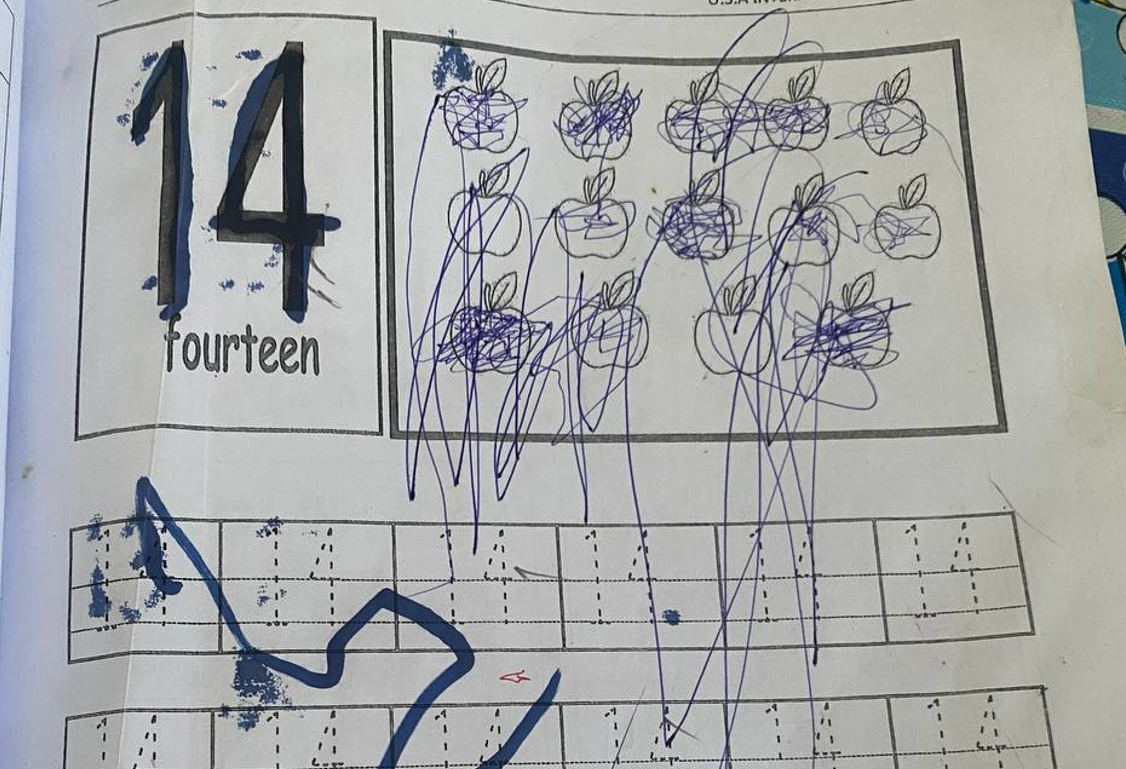
Does your 2nd grader hate writing so much that even five minutes of handwriting practice ends in tears, crossed arms, and a slumped-over child who insists they “can’t do it”?
You are not alone, and you are not doing anything wrong.
My 8-year-old loves reading.
She picks up math without much trouble.
But the second she has to put a pencil to lined paper, the meltdown begins.
After a lot of trial and error, I found five low-stress strategies that genuinely helped her.
Before we get into those, here is the most important thing to know: second-grade writing struggles are completely normal.
The way writing is taught at this age asks a lot of a child’s developing brain and body all at once, and when it feels too hard, kids shut down.
Here is what is really going on, and what you can do about it.
Quick Takeaway
- It is completely normal for 2nd graders to struggle with or resist writing. Fine motor skills, focus, and letter formation are still developing at ages 7 and 8.
- The most effective strategies are short practice sessions (7 to 10 minutes), confidence-building activities like tracing and rainbow writing, and weaving writing into everyday life.
- Messy handwriting in second grade does not mean something is wrong. Progress and confidence matter more than perfection at this stage.
- If your child shows signs of extreme difficulty (severe pain when writing, very slow output, or letter reversals after age 8), talk to your child’s teacher or a pediatric occupational therapist about a possible evaluation.
Is It Normal for a Second Grader to Struggle with Writing?
Yes, completely.
Writing is one of the most cognitively demanding tasks a young child can do, and most parents are surprised to learn just how much is happening at once.
By second grade, kids are expected to hold their pencil correctly, form letters the right size, maintain proper spacing between words, keep their letters on the baseline, and express a complete idea on paper.
That is not one skill.
It is five or six skills happening simultaneously, and their brains and hands are still in the middle of developing all of them.
What a typical 2nd grader should be able to write
By the end of second grade, most children can write several sentences on a topic, spell common sight words correctly, and use basic punctuation.
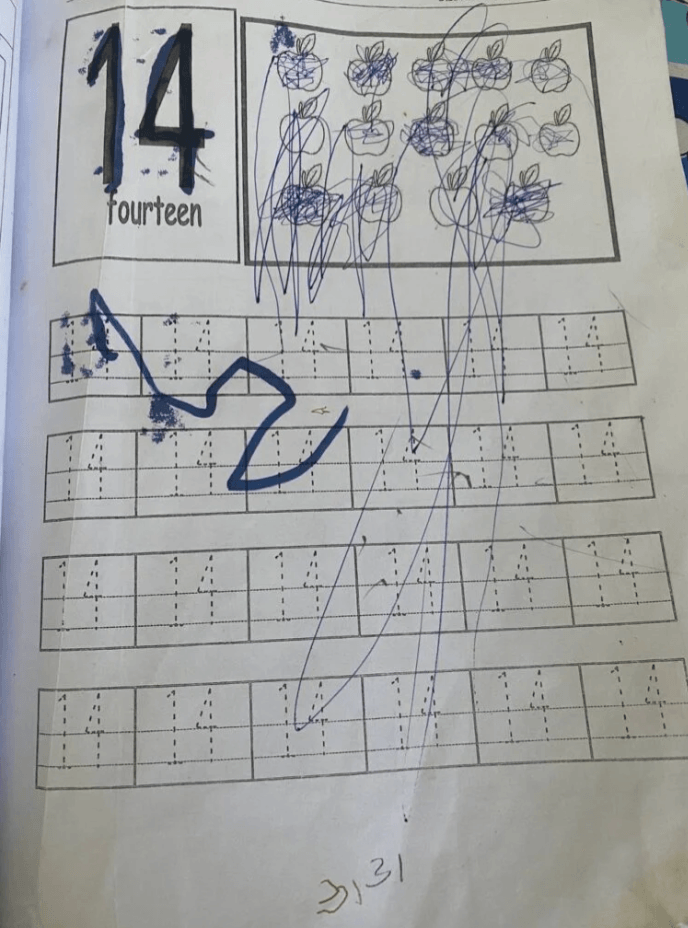
But the handwriting itself is still being refined.
Wobbly letters, inconsistent sizing, and eraser marks everywhere are all age-appropriate.
If your child’s writing looks messy but they are making effort and gradual progress, that is exactly where they should be.
When to be concerned vs. when to relax
Most second graders who resist writing are experiencing a confidence and stamina issue, not a developmental disorder.
However, if your child shows several of the following signs, it may be worth talking to their teacher or requesting an occupational therapy evaluation:
- Extreme or unusual pencil grip that causes visible discomfort
- Complaints of hand pain after writing just one or two sentences
- Letter reversals (writing b as d, or p as q) that persist past age 8
- Writing output that is significantly slower than their peers
- Avoidance so intense it disrupts daily functioning.
This combination of signs can sometimes point to dysgraphia, a specific learning difference that affects the physical act of writing.
Dysgraphia is not a reflection of intelligence, and children with it can absolutely thrive with the right support.
If you are concerned, ask your school counselor or pediatrician about a formal assessment.
Why Writing Feels So Hard at This Age
Before jumping into solutions, it helps to understand why this age group struggles so much with writing specifically.
Fine motor skills are still developing
The small muscles in a child’s hand that control pencil movement are not fully mature in early elementary school.
Writing builds hand stamina over time, and at this stage, their muscles are still getting stronger.
Asking a second grader to write for 30 minutes straight is a bit like asking an adult to do a plank for 30 minutes on their first day at the gym.
The cognitive load problem
When a child is still thinking about how to hold their pencil and whether their letters are the right size, they have very little mental energy left for what they actually want to say.
This is called cognitive load, and it is one of the biggest reasons why kids who hate writing struggle to express their ideas on paper.
The mechanics get in the way of the message.
Perfectionism makes it worse
Many children who resist writing are not lazy.
They are perfectionists who are acutely aware that their output does not match their expectations.
When a child who loves reading sees their own messy, wobbly writing next to the neat text in their books, they feel the gap.
That gap feels shameful.
Shutting down is their way of protecting themselves from that feeling.
5 Strategies That Helped My 2nd Grader Stop Dreading Writing
These are the five approaches that actually shifted things in our home.
They are low-pressure, easy to implement, and do not require any special equipment beyond things you probably already have.
1. Go Back to Tracing, Even in 2nd Grade
I know what you are thinking.
Tracing sheets?
That is for kindergarteners.
Here is the thing: tracing is not baby stuff.
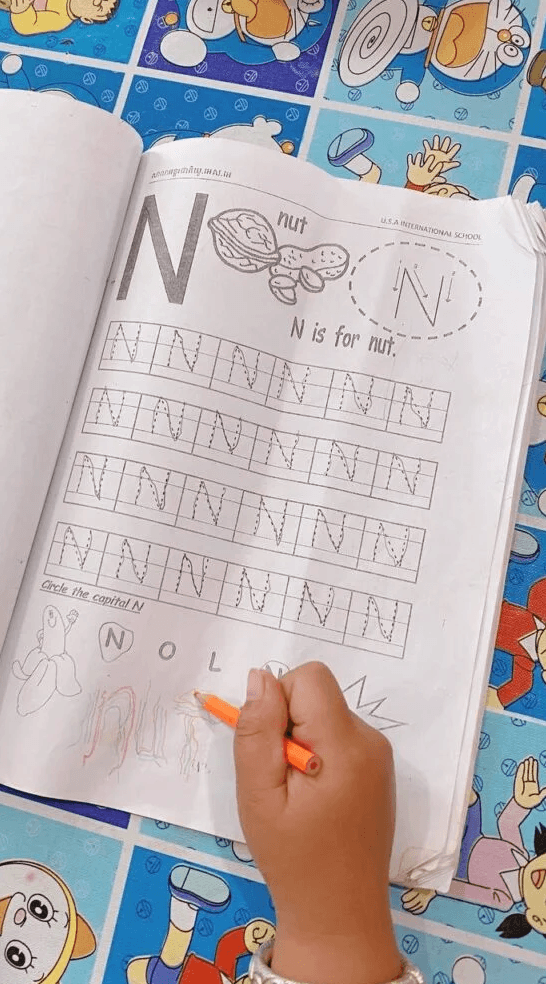
It is one of the best ways to build the fine motor skills and letter formation habits that second graders need, without the pressure of producing something from scratch.
When my daughter traced instead of writing from a blank page, she stopped freezing up.
She had a starting point, and that made all the difference.
If you are printing tracing sheets at home, look for ones with a dotted middle guideline.
That middle line acts like a guardrail and shows kids exactly how tall their lowercase letters should be, which directly helps with messy handwriting and spacing issues.
Use tracing as a warm-up before any independent writing, not as a punishment or a step backward.
2. Let Them Scribble. It Is Not Wasted Time.
After about 15 minutes of trying to write neatly, a child’s brain is done.
That is usually when the crying kicks in.
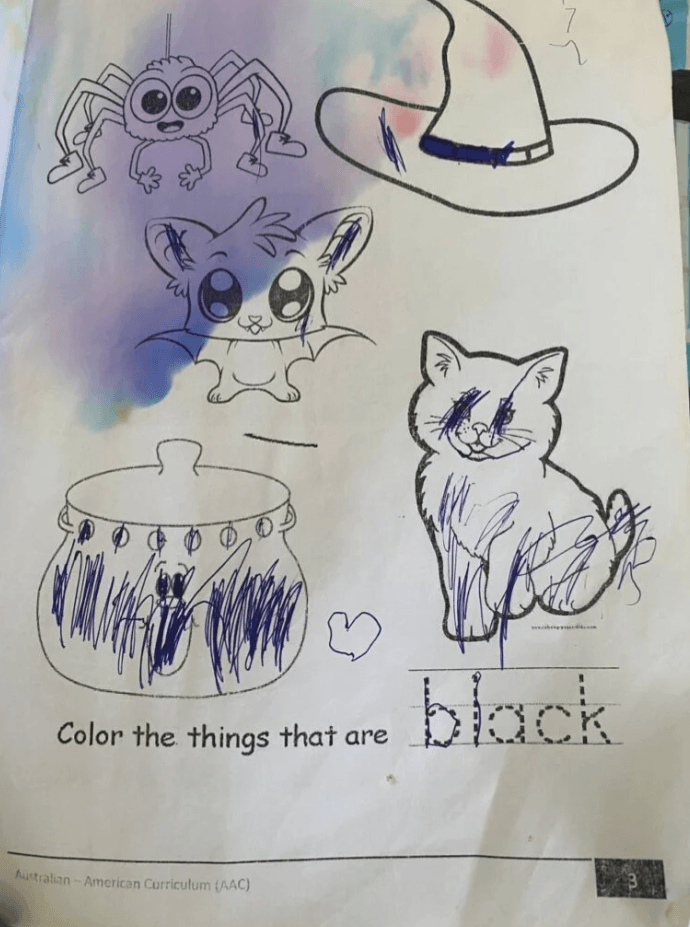
I used to get frustrated when my daughter scribbled all over her coloring pages.
But scribbling is actually a healthy stress release and a legitimate fine motor activity.
It keeps the hand moving without any performance pressure attached.
Our household rule is simple: work hard, scribble hard.
After every row of handwriting practice, she gets two minutes to color however she wants. Messy is completely fine.
The point is to end the session on a positive note and keep writing from feeling like a punishment.
3. Try Rainbow Writing
This is a classic teacher trick, and it works just as well at home.
Here is how it works: write a word in light pencil, their name, a spelling word, whatever they are practicing.
Then ask your child to trace over it three times, each time with a different colored marker or crayon.
By the end, the word looks colorful and satisfying.
The secret is that your child just practiced writing that word three times without a single complaint.
Rainbow writing is so effective because it turns repetition into something that genuinely feels like play.
4. Use a Timer to Keep Sessions Short
One of the most common things parents say is: “My child says their hand hurts after just a few minutes of writing.”
That complaint is real and valid, not an excuse.
Writing builds hand stamina gradually, and forcing long sessions only makes a child dread it more.
We use what I call the Commercial Break method.
Set a timer for 7 minutes.
Write as much as you can.
When the timer goes off, stop.
No questions asked.
Knowing there is a clear ending point takes so much pressure off.
My daughter focuses better now because she knows the hard part will not last forever.
It is a simple, low-stress way to build writing stamina without turning every homework session into a battle.
As their endurance grows, you can slowly extend the timer.
But start short. Seven minutes of focused, willing practice is worth more than 30 minutes of tears.
5. Connect Writing to Real Life
Here is something I wish someone had told me earlier: if writing only happens during homework time, of course, your child is going to hate it.
It becomes associated with pressure, performance, and being evaluated.
The fix is simple.
Weave writing into everyday moments so it feels useful and real rather than like a chore.
Some examples that have worked well for us:
- “Can you write ‘eggs’ on the grocery list?”
- “Can you leave a note on the door so Dad remembers his keys?”
- “Want to write a thank-you card for Grandma?”
She loves these moments.
She feels capable and helpful, not tested.
And without even noticing, she is practicing handwriting every single day.
How to Help a 2nd Grader Who Hates Writing: What the Research Supports
Occupational therapists who specialize in pediatric fine motor development generally recommend the same core principles: keep practice sessions short and consistent, prioritize grip and posture before content quality, and use multi-sensory activities (like rainbow writing or writing in sand) to build muscle memory without pressure.
The most important thing you can do is protect your child’s motivation.
A child who still wants to try at the end of second grade is ahead of a child who has learned to hate writing entirely.
Progress over perfection, always.
One Last Thing
I look at my daughter’s workbooks sometimes, the crossed-out words, the wobbly letters, the eraser marks everywhere, and I remind myself: she is only 8.
She is working through a demanding curriculum and doing her best with the tools she has.
If your 2nd grader hates writing right now, that does not mean they always will.
With shorter sessions, a little creativity, and a lot of patience, most kids find their footing.
The goal at this stage is not perfect penmanship.
The goal is to make sure they do not grow up hating the idea of picking up a pencil.
Protect their confidence.
Celebrate the messy progress.
And remember: they are only 8.
Frequently Asked Questions
Is it normal for a 2nd grader to have messy handwriting?
Yes, completely normal. Second graders are still developing the fine motor control and muscle memory needed for consistent handwriting. Most children reach a more stable baseline in third or fourth grade. Messy handwriting at age 7 or 8 is expected, not a red flag.
Could my child have dysgraphia?
Dysgraphia is a specific learning difference that makes the physical act of writing difficult. Signs include an extreme pencil grip, pain when writing, letter reversals past age 8, and output that is much slower than expected. If you notice several of these signs together, talk to your child’s teacher or ask for a referral to a pediatric occupational therapist for an evaluation.
How long should a 2nd grader practice handwriting each day?
Short and consistent beats long and occasional. Ten to fifteen minutes of focused practice daily is far more effective than one 45-minute session per week. Always aim to end the session before your child hits a wall.
When should I talk to a doctor or occupational therapist about writing struggles?
If your child experiences pain when writing, shows significant delays compared to classmates, or has not made any progress despite consistent practice over several months, it is worth talking to their pediatrician or requesting an occupational therapy screening through their school.
Disclaimer: I am a parent and a university educator, not a licensed child psychologist or pediatrician. This guide is based on my personal parenting experience and educational background. Always consult your child’s pediatrician or a qualified specialist for professional advice regarding your child’s behavioral or educational development.
