


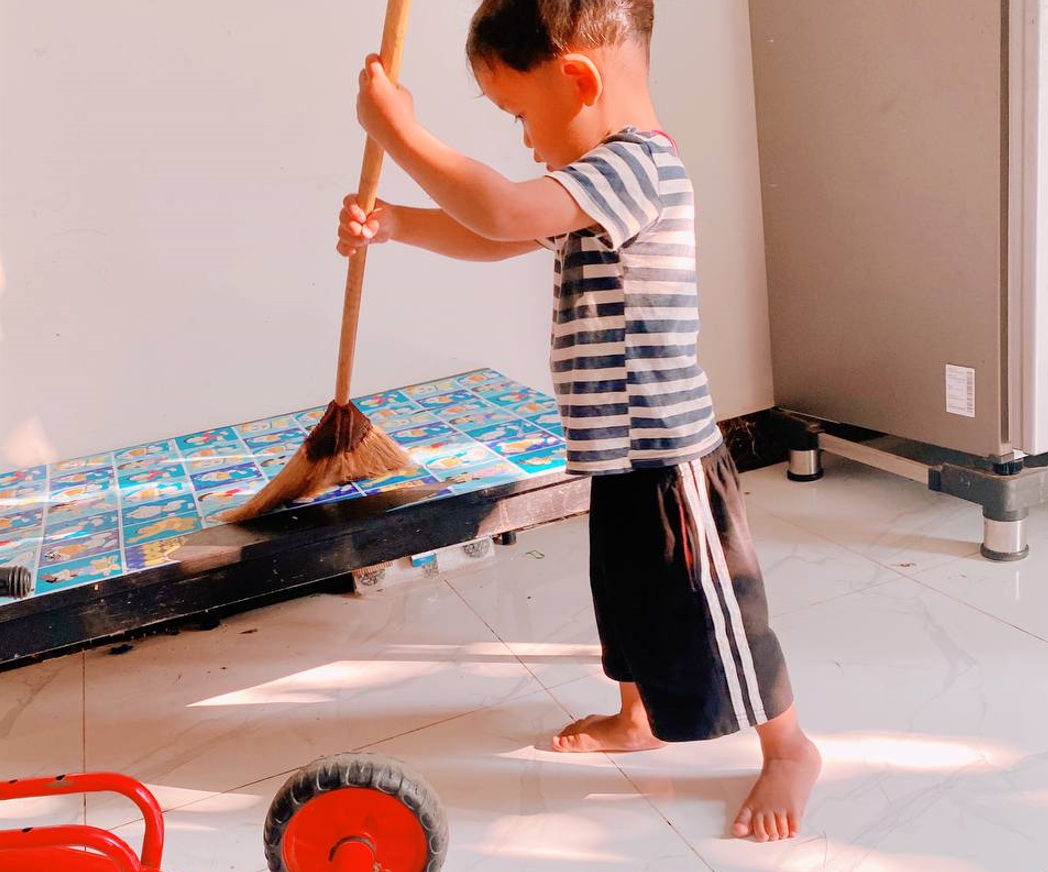
It was 8:45 in the morning.
I had just finished cleaning the kitchen.
The floor was spotless, every counter wiped down, and I was feeling pretty good about it.
Then my 2-year-old woke up.
He shuffled into the kitchen, rubbed his eyes, and spotted the cleaning rag in my hand.
Something lit up in him.
No request for breakfast. No cartoons.
Just one thing on his mind: he wanted to help.
That moment turned into one of the best lessons I have had as a parent.
If you have been wondering whether chores for 2-year-olds are even realistic, or whether your toddler helping with housework is worth the extra mess, this is for you.
Quick Takeaway
- Toddlers as young as 2 can start simple chores like sweeping, wiping tables, and sorting laundry.
- Letting your child help with housework builds confidence, coordination, and a sense of responsibility.
- Chores for 2-year-olds do not need to be perfect. The goal is participation, not cleanliness.
- Montessori practical life activities are built on this exact idea: simple tasks teach kids to care for their space.
- Child-size tools make a real difference. When the broom fits their hands, they feel successful instead of frustrated.
- Expect to clean twice. The time spent is an investment in your child’s independence.
The Kung Fu Broom Master
He marched straight to the corner where I keep the broom, grabbed it with both hands, and struck a pose that looked like it belonged in a martial arts movie.
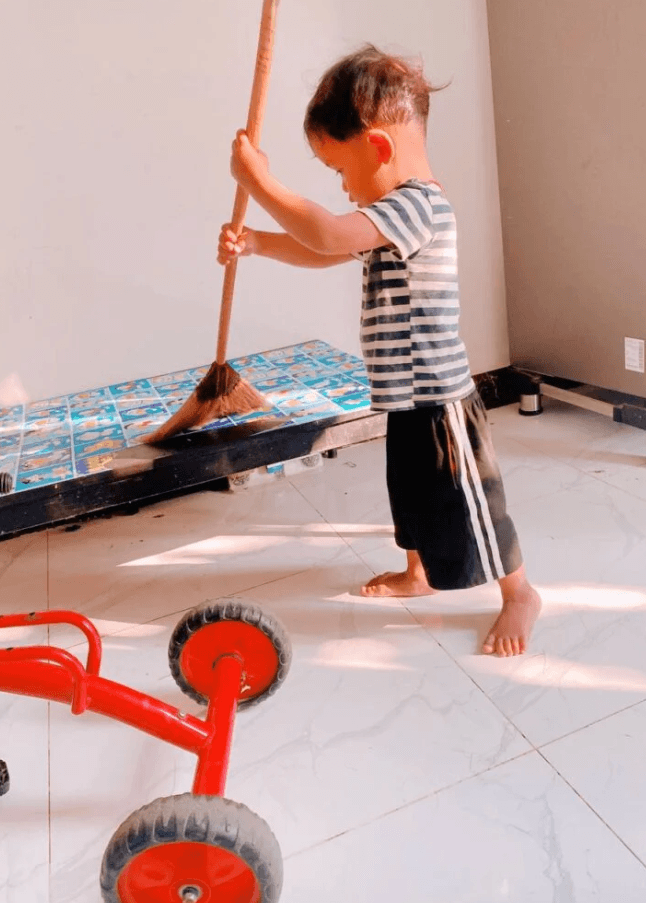
Completely serious face.
This was not playtime.
He was ready to work.
What followed actually taught me a lot about how toddlers think.
His version of cleaning meant touching everything with the broom.
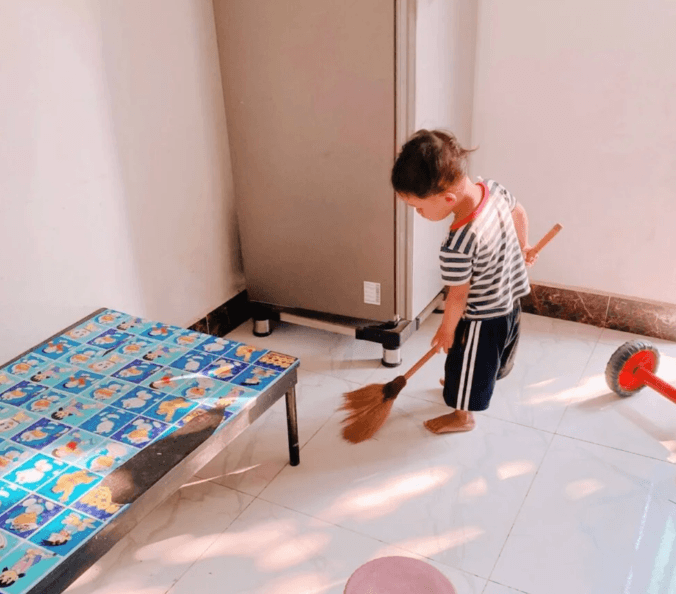
He swept around his little eating table.
Swish. He inspected the refrigerator door for dirt or maybe snacks.
Swish. He checked every corner like a tiny professional on the clock.
He did not sweep dirt into a pile the way adults do.
He moved it from one spot to another.
But in his mind, he was doing exactly what I was doing.
He saw me taking care of our home, so he wanted in on that.
Why Toddlers Want to Help (And What It Actually Means)
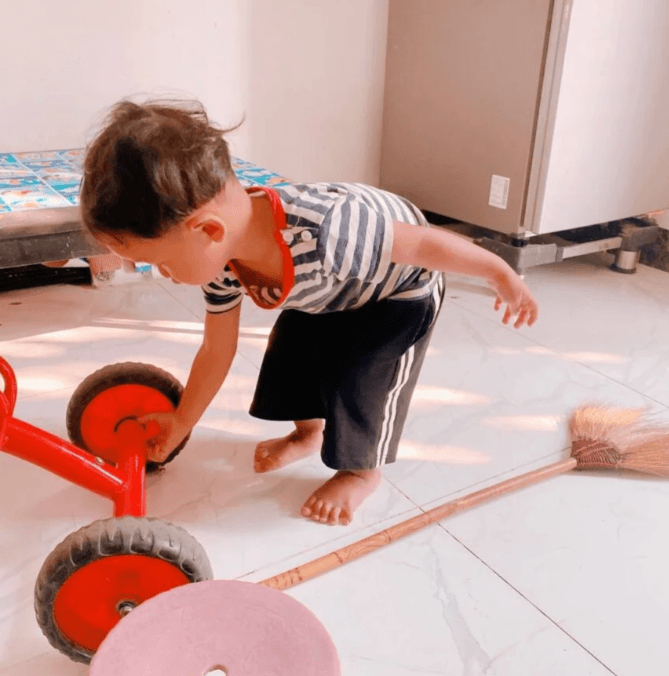
Halfway through his kitchen inspection, he noticed his red tricycle in the corner.
Suddenly, that needed cleaning too.
He crouched down, studied the wheels carefully, and tapped them with the broom bristles.
Very thorough. Very serious.
This is completely normal toddler thinking.
Once they grasp an idea like “we clean things,” they want to apply it to everything they love.
If the floor gets cleaned, why not the bike?
What looks like chaos is actually your child working through a concept.
They are connecting what they observe to what they do.
That is early cognitive development in action.
The Honest Truth About Letting Toddlers Help with Chores
Here is the part no one tells you upfront: your house usually gets messier, not cleaner.
My kitchen was perfect before he started.
Five minutes into his helping session, things were knocked over, toys had migrated into the clean area, and the dust I had swept up was now scattered back across the floor tiles.
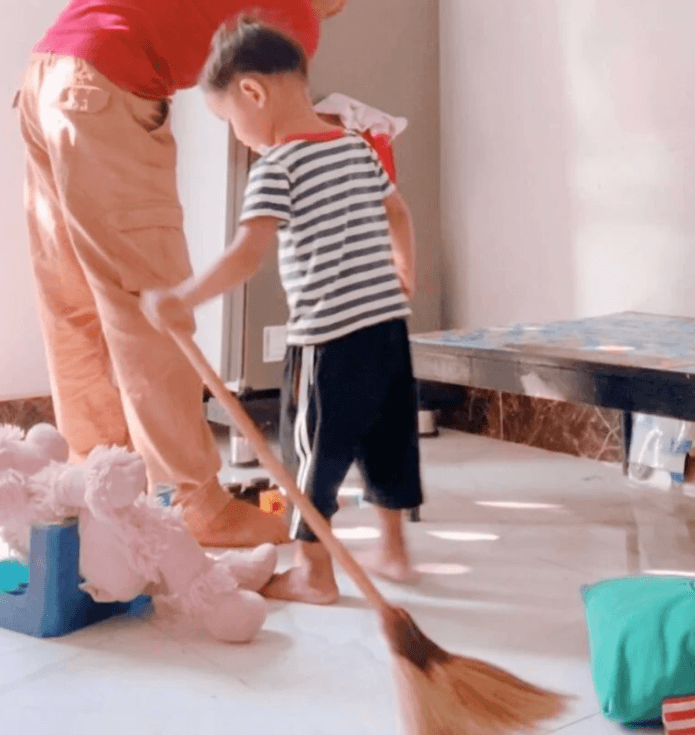
We stood there together.
I was tired.
He was still sweeping happily right in the middle of the new mess he had made.
The easier call would have been “No, sweetie, go play.”
Clean floor stays clean.
Job stays done.
But stopping him would have sent the wrong message.
He would learn that cleaning is an adult business, not something the whole family does together.
The Hidden Developmental Benefits of Helping Out
By letting him do his kung fu sweeping and mess up my clean floor, I was giving him something far more valuable than a tidy kitchen.
- He felt capable. Look at how he stood holding that broom. His whole body said confidence. That feeling matters enormously for young children, and it does not come from being told to go play while the adults handle things.
- He was building real skills. Moving a broom that is twice his height takes genuine effort. Balancing, coordinating, adjusting. Every time he helps, he is practicing those things without even knowing it.
- He was learning how to care for his environment. There is a well-known teaching approach called Montessori that takes this seriously. They call these “practical life” activities. Simple tasks that teach kids to look after their space and become more independent over time.
- He was learning that contributing matters. When a child sees themselves as a useful part of the family, it shapes how they see themselves in every other situation, too.
Safe & Simple Tasks to Introduce First
Not sure what chores are actually realistic for a 2-year-old? Keep it simple.
Here are the best starting points.
- Sweeping is a natural first chore. A child-size broom for sweeping makes a huge difference here. Regular brooms are too heavy and too tall for little hands. When the tool actually fits them, they feel successful instead of frustrated.
- Wiping the table with a damp cloth is easy to teach and feels satisfying for toddlers. Give them their own little cloth and let them go.
- Dropping toys into a basket is something most 2-year-olds can do reliably. Make it a game by counting items together.
- Carrying light things like napkins, plastic plates, or folded washcloths gives them a meaningful role at mealtimes.
- Tossing laundry into the washing machine is a favorite. The combination of a big machine and a clear task is very appealing to toddlers.
- Putting books back on the shelf after reading together is a simple wind-down habit that builds over time.
The right tools matter as much as the right tasks.
Child-size equipment, low shelves, and accessible baskets all make it easier for toddlers to participate and succeed independently.
Why the Montessori Method Encourages Early Responsibility
The Montessori method has long recognized what many parents discover by accident: young children have a deep drive to be useful.
Montessori practical life activities for 2-year-olds are built around simple, real tasks.
Pouring water, folding cloths, sweeping, wiping surfaces.
Not toy versions of these tasks, but the actual things.
The reasoning is straightforward.
When children do real work, they develop real confidence.
They learn to focus, to follow a sequence, and to care for their environment.
These are not just chores.
They are the foundation of independence.
You do not need a Montessori school to apply this at home.
You just need to say yes when your toddler wants to help, give them the right tools, and step back enough to let them try.
How to Build Toddler Chores Into a Daily Habit
Give your child chances to help every day, even in small ways.
Stirring cold foods while you cook.
Bringing you socks while you get dressed.
Helping to carry groceries from the front door.
These small moments add up.
Helping becomes normal for them instead of something special or unusual.
The language you use matters too. Instead of “go play while I clean,” try “want to help me clean?”
That second version includes them.
It makes the whole thing feel like something you do together rather than something they are excluded from.
When they help, thank them genuinely.
Focus on the effort, not the result. “You worked so hard helping me today, thank you!”
Even if the floor is not actually cleaner, the attempt matters, and they need to know that.
What to Realistically Expect
- You might need to clean twice. Once on your own and once after they help. Think about what is really happening, though. You are not just cleaning a floor. You are building their confidence, showing them they are capable, and teaching them that contributing matters.
- Tasks will take longer. A five-minute job can stretch to fifteen. That extra time is worth something. You are raising a kid who will grow up knowing how to take care of their space.
- They will wander off halfway through. That is completely fine. A 2-year-old has a short attention window. Celebrate whatever they did before moving on, and keep the pressure low.
- Things will get messier before they get cleaner. Set your expectations at participation rather than perfection, and the whole experience becomes much more enjoyable for both of you.
The Real Cleanup Story
Did I clean the kitchen a second time that morning?
Yes.
Was it worth watching him inspect the refrigerator and scrub his tricycle like a tiny professional?
Not even a question.
That morning reminded me of something simple.
When my 2-year-old wants to help, the mess is not the point.
The extra time is not the point.
What matters is that look on his face: completely determined, holding that broom like he owned the place.
If your toddler wants to help with chores, say yes.
Even at 8:45 in the morning.
Even if it takes longer, and even if you end up cleaning the same spot twice.
The floor can always be cleaned again.
But the moment your child feels capable, confident, and like a valuable part of the team?
That is worth protecting.
Start small, stay patient, and celebrate every little effort they make.
Frequently Asked Questions
When should toddlers start doing chores?
Most children are ready to start simple chores between 18 months and 2 years old. At this age, they naturally want to imitate what adults do. That drive is the perfect window to introduce age-appropriate tasks before it becomes a chore they want to avoid.
Is it normal for a 2-year-old to want to help with cleaning?
Very normal. Between ages 1 and 3, children are natural imitators. They pay close attention to what the adults around them are doing and have a strong desire to copy it. Wanting to sweep or wipe is a healthy developmental sign of early cognitive connection.
Are regular household cleaning supplies safe for toddlers to use?
No. When toddlers are helping to wipe tables or clean floors, stick to a cloth dampened with just plain water, or a highly diluted, food-safe vinegar solution. They will likely put their hands in their mouths, so avoid giving them access to chemical sprays.
What if my toddler gets frustrated trying to help?
Step in gently to guide their hands or simplify the task. For example, if they cannot sweep dirt into a pile, just ask them to “brush the floor.” The goal at this age is building confidence, so never force the completion of a chore if it turns into a meltdown.
Disclaimer: I am a parent and a university educator, not a licensed child psychologist or pediatrician. This guide is based on my personal parenting experience and educational background. Always consult your child’s teacher or pediatrician for professional advice regarding your child’s educational development.
