


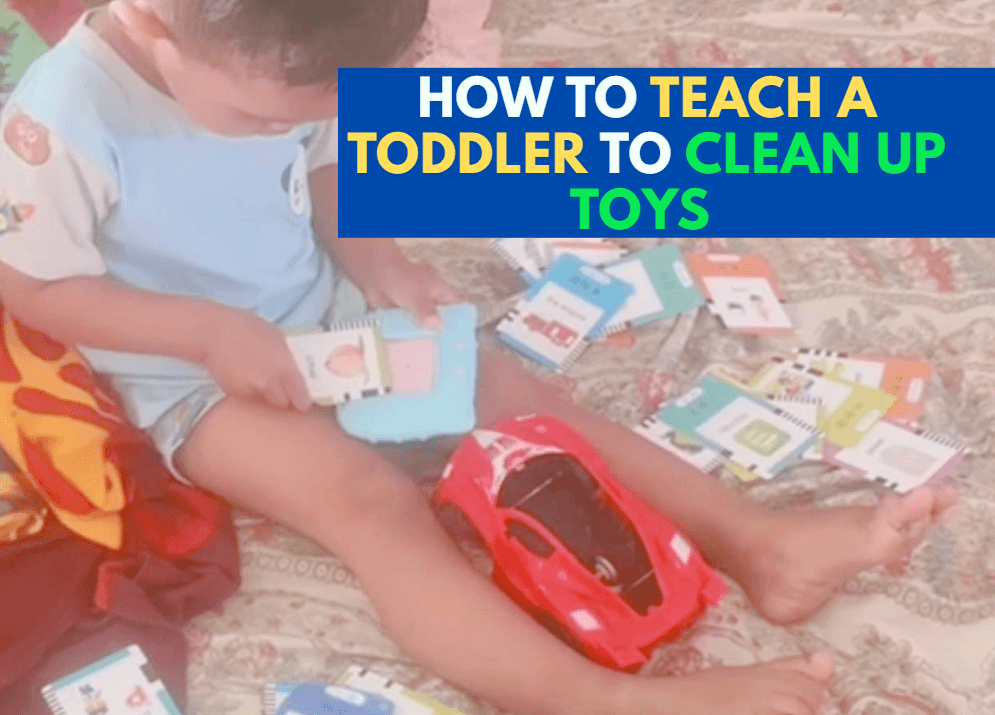
If your toddler’s play area looks like a disaster zone by 3 PM, you aren’t alone.
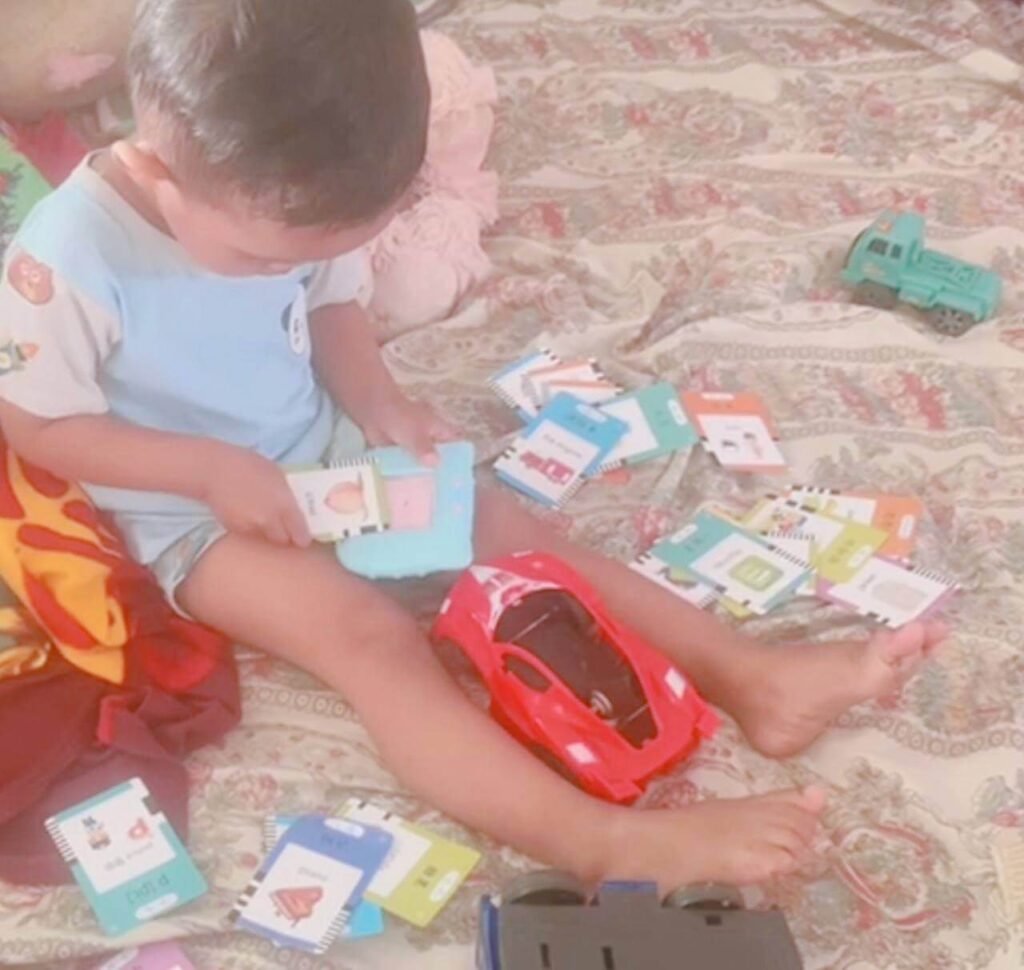
We constantly had cards everywhere, toy cars in random piles, and a giant Pikachu plush shoved into the corner.
Telling a 2-year-old to “clean up your toys” without any prep is basically setting yourself up for a frustrating standoff.
Toddlers don’t naturally understand order. They just want to dump all their toys on the floor and move on.
The truth is, you really can teach a toddler to clean up. I know because I did it with my 2-year-old son.
Watching him carefully pack his cards back into their little bag, all by himself, was one of my best parenting wins.
It wasn’t magic or a trick. It was slow, consistent, and intentional. Here’s exactly how we did it.
Why Your Toddler Won’t Clean Up Toys (And Why That’s Normal)
A 2-year-old’s brain is not yet fully wired for organization.
Language comprehension is still developing, and abstract instructions like “put your toys away” often don’t land the way we think they do.
Think of it like starting a new job. If your manager shouts directions from across the room without showing you what to do, you will struggle.
Toddlers learn new skills in the same way adults do: they need to see it, do it, and repeat it many times before it becomes a habit.
So if your toddler refuses to clean up right now, you’re not failing. You just haven’t finished the teaching phase yet.
How to Get Your Toddler to Clean Up Toys: A Step-by-Step Approach
This is the exact process I used with my son. It’s not a one-week fix, but if you commit to it, it works.
Step 1: Stop Talking, Start Showing
This changed everything for us. I kept saying “put the cards away, put the cards away,” and getting absolutely nowhere.
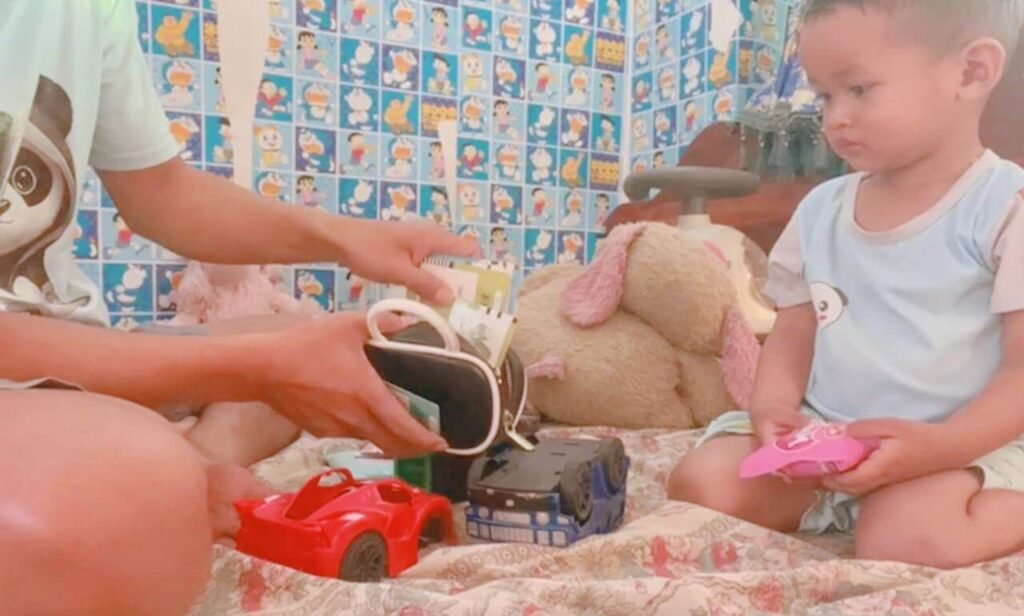
When I stopped narrating and started physically demonstrating, everything changed. I’d sit on the floor next to him, pick up the cards one by one, and place them into the bag while he watched.
No lecture. No long explanation. Just the action, done slowly and clearly, right in front of him.
At first, I did all of it. Then I’d do most of it and hand him one card to drop in. Then half and half. Then he’d do most of it while I guided.
The key is breaking it into steps small enough that he could actually follow along and succeed.
Step 2: Deal With Frustration Before It Becomes a Meltdown
As soon as cleanup gets difficult, toddlers usually melt down.
My son would get overwhelmed if a card wouldn’t slide into his blue reading machine, and that frustration would spill over into the whole cleanup routine.
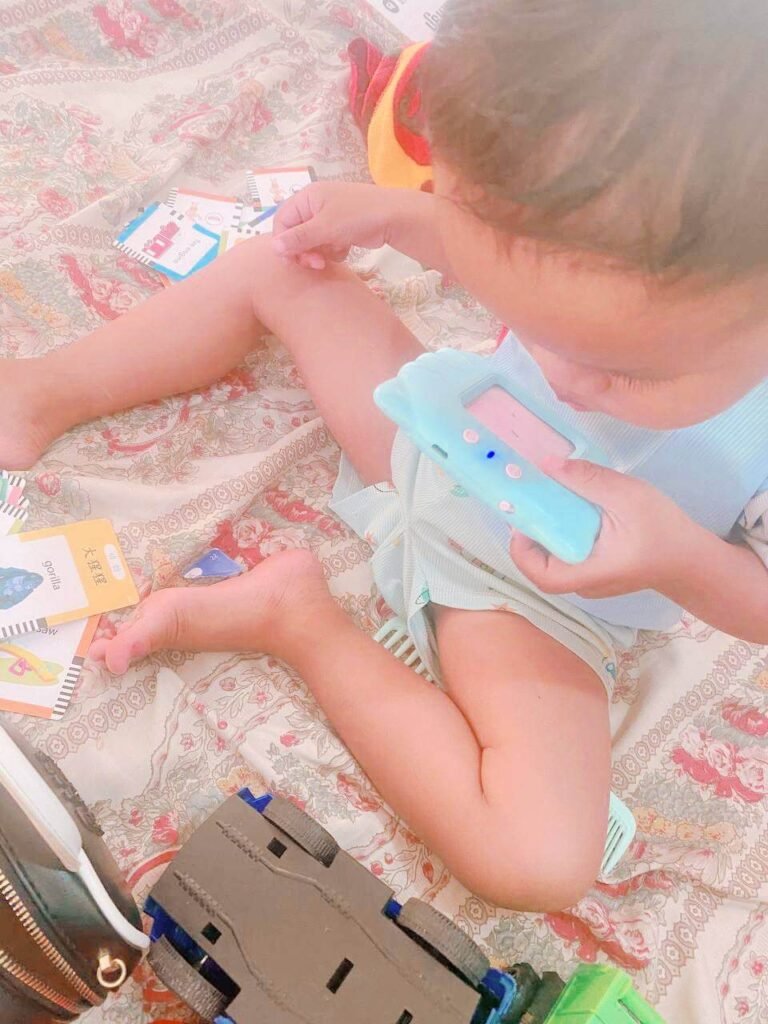
Instead of taking the toy away or pushing through it, I learned to redirect the frustration.
I showed him how to look closely at the slot or gently blow into it when he got stuck. That small action was enough to break the spiral and bring him back to calm.
Once he had a way to handle the hard moments, he stopped throwing things and started problem-solving instead.
Step 3: Let the Messy Process Happen
In the beginning, his cleanup attempts were honestly a mess. He’d grab huge handfuls of the cards and try to jam them all in at once.
Every instinct I had was screaming at me to just fix it so the cards wouldn’t bend.
I had to resist that urge. When you swoop in and redo everything your toddler just did, you’re telling them their effort wasn’t good enough.
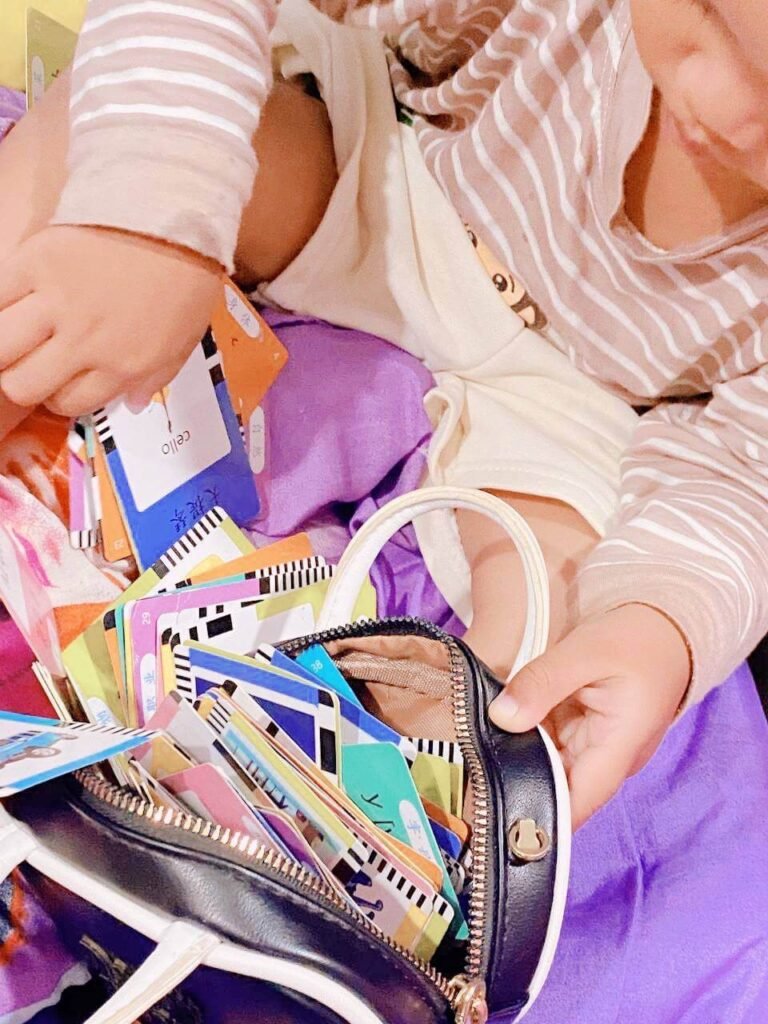
Let them do it imperfectly. Clap for the effort, even if the bag is overflowing. The precision comes with practice. Right now, the goal is just building the habit.
Step 4: Commit to the 3-Month Rule
I want to be honest about the timeline because most parenting advice skips this part.
My son didn’t clean up after one demonstration. Not after a week. Not even reliably after a month.
It took more than three months of consistent daily practice before it became something he just did on his own.
Every single time he played with those flashcards, I sat with him and modeled the cleanup. Every time.
That kind of repetition is what turns a new behavior into a real habit for a toddler.
If you try this for two weeks and give up because it’s not working yet, it won’t work. But if you stick with it, one day you’ll look over, and your kid will just be packing up their own toys.
It’s one of the best feelings.
Practical Tips to Make Cleanup Easier for 2-Year-Olds
These small adjustments made a real difference in our house.
- Keep storage simple and accessible. Low bins, clear containers, and labeled spots make it easy for little hands to figure out where things go. If putting something away takes too many steps, they won’t do it.
- Use a cleanup song. A short, consistent signal helps toddlers understand that playtime is wrapping up. It creates a transition ritual that they actually respond to well.
- Keep your expectations age-appropriate. A 2-year-old cleaning up doesn’t look like a tidy room. It looks like most things are roughly where they belong, and they participated in the process. That counts.
- Celebrate the small wins out loud. Specific praise goes a long way. Instead of “good job,” try “You put all your cards back in the bag! That was really helpful.” Toddlers love knowing exactly what they did right.
- Be consistent with timing. Cleaning up at the same point every day, like right before snack or before bath, helps your toddler know what’s coming. Predictability makes everything easier at this age.
What to Do When Your Toddler Refuses to Clean Up
Even when you’re doing everything right, some days your toddler will just refuse. That’s normal.
Here’s how to handle it without turning it into a power struggle.
- Give them a choice, not a command. Instead of “clean up your toys right now,” try “Do you want to put the blocks away first or the cars?” Toddlers crave autonomy. A small choice makes them feel in control while still moving toward the goal.
- Get down on their level and do it with them. Asking a toddler to clean up while you stand over them watching isn’t going to go well. Sit down, start putting things away yourself, and invite them to join you.
- Acknowledge the feeling. Sometimes they’re just tired or overstimulated. A quick “I know you don’t feel like cleaning up right now. It’s hard when you’re tired” before asking again can take the edge off the resistance.
- Stay calm and stay consistent. The cleanup still needs to happen, even if it takes longer or gets messier. Letting it slide when they push back teaches them that resistance gets them out of it.
Why the 3-Month Wait Is Worth It
Teaching a toddler to clean up toys doesn’t happen in a week. It’s a slow build. It requires you to show up, sit on the floor, and model the behavior day after day until it finally clicks.
But when it does click… when you watch your 2-year-old pick up every single flashcard and carefully zip them into their bag without any prompting from you, it is such a huge relief.
You’re not just teaching your child to put away toys. You’re teaching them to follow through, to take care of their things, and to be part of the household. Those lessons stick.
It might take three months, and some days will completely fall apart. Cut yourself some slack, stay consistent, and eventually, they will get the hang of it.
Disclaimer: I am a parent and a university educator, not a licensed child psychologist or pediatrician. This guide is based on my personal parenting experience and educational background. Always consult your child’s teacher or pediatrician for professional advice regarding your child’s educational development.
