


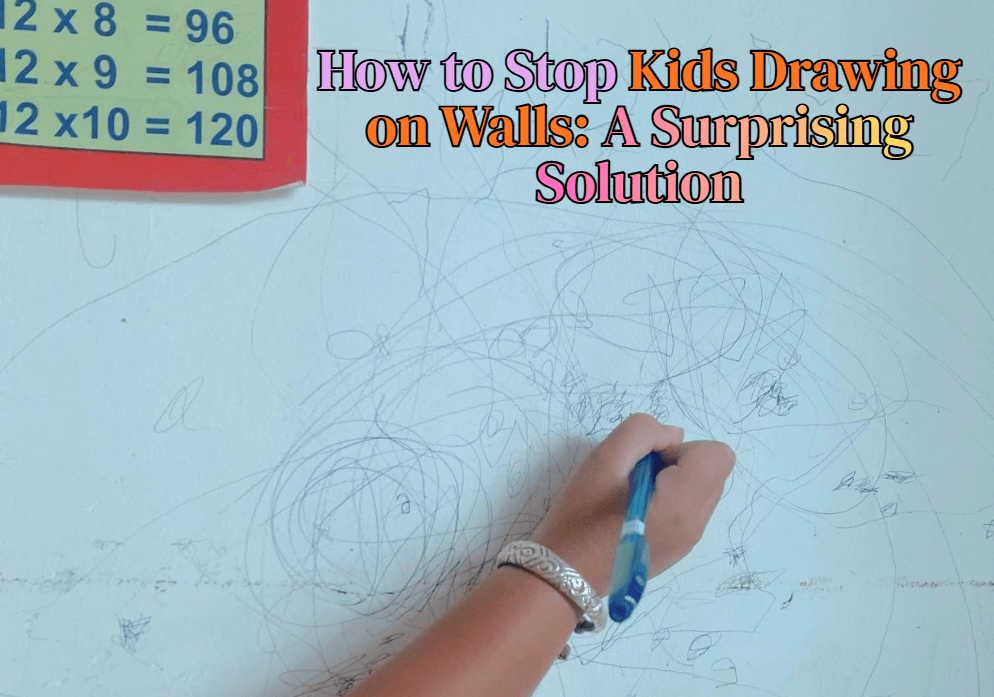
It was a Tuesday morning. I’m usually at the university working in Human Resource Development, but a graduation ceremony gave me an unexpected morning at home.
I wasn’t ready for what I found in my daughter’s bedroom.
Blue ink, all over the white wall, right underneath her educational posters. My stomach dropped the second I saw it.
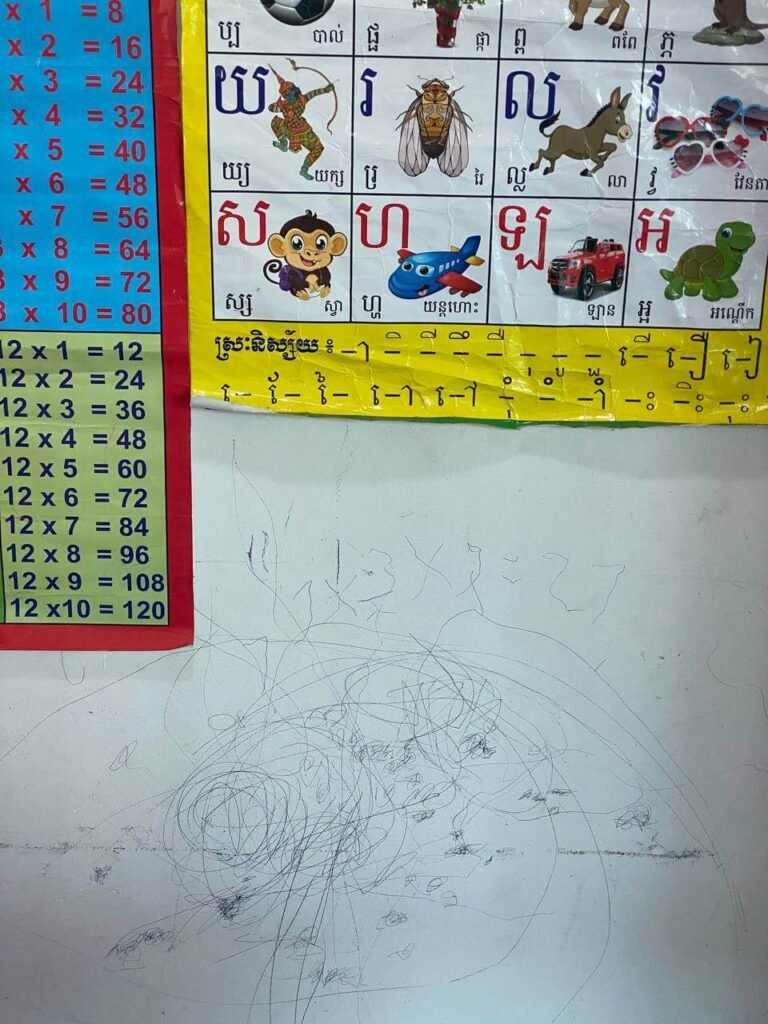
My first instinct was frustration.
The kind that rises fast before your brain catches up. But I walked closer and actually looked at what she had written. And just like that, everything shifted.
I sat down on her bedroom floor and whispered to myself, “Oh, sweetheart. This is my fault, not yours.”
So if your kid just turned your freshly painted wall into their personal studio, take a breath and keep reading before you say a word to them.
Why Kids Draw on Walls
Most parents see scribbles on the wall and jump straight to “bad behavior.”
Honestly, that makes sense. Repainting is expensive and a huge hassle, so it feels intentional.
But in most cases, wall drawing is a completely normal part of child development.
Kids don’t think about which surfaces are off-limits and which aren’t.
They just think, “I have something to express, and this is the biggest blank space in front of me.” It’s not defiance.
It’s creativity with nowhere to go.
What I Found on My Daughter’s Wall
When I leaned in and actually read the blue scribbles, I spotted it right in the middle: 3 x 9 = 27.
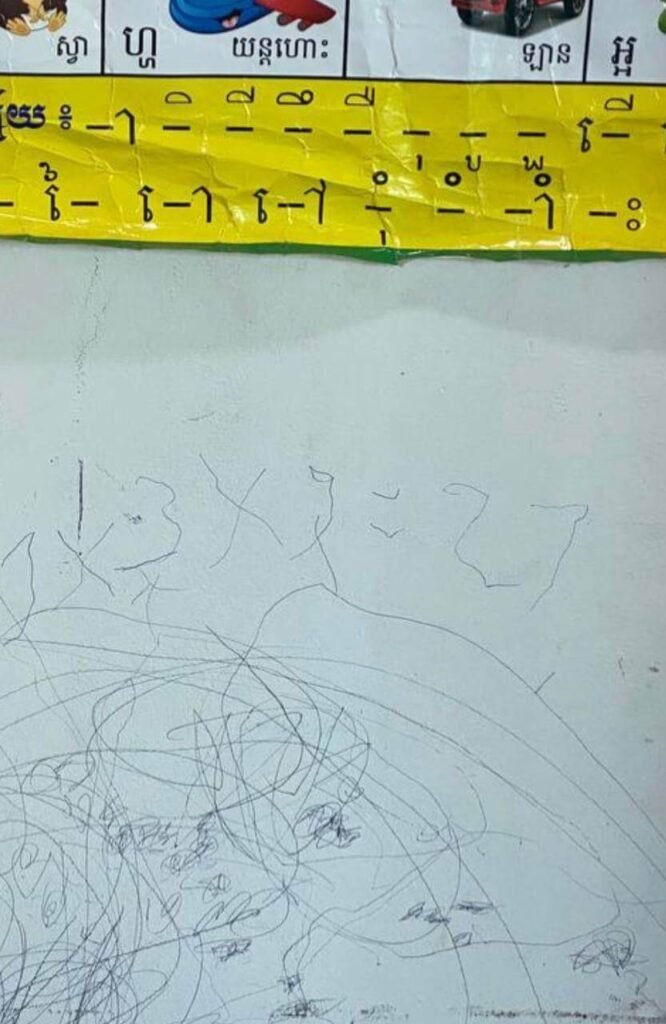
She wasn’t wrecking her room. She was running a solo study session.
I looked up at the wall above the mess.
Her multiplication tables, her Khmer and English alphabet charts, the little monkey, the airplane, the red truck… all hanging right there.
She had already turned her bedroom corner into a mini classroom.
The only thing missing was somewhere to actually write and work things out. So she made her own space.
What to Do When It Happens to You
Before you react, before the lecture, before you grab the cleaning spray, work through these steps first.
1. Look before you speak.
Is it random scribbles, or is there something behind it? Letters, numbers, a story, a map? This really matters.
A kid working through a math problem is in a totally different headspace than one drawing out of boredom or frustration.
Understanding the “why” is the most important thing you can do in that moment.
2. Ask yourself what they were missing.
Usually, there’s something simple behind it: a dedicated space to create or practice, the right tools (paper, a whiteboard, art supplies), or a clear understanding of where drawing is actually allowed.
Honestly, my daughter had all those great educational posters up, but I never gave her a surface to interact with her learning. That was on me.
3. Talk it out calmly. Seriously, no yelling.
Once you know what happened, sit down and talk.
When kids get screamed at for something they genuinely didn’t know was wrong, they don’t learn “don’t draw on walls.” They just learn to hide things from you.
Try something like: “I can see you were practicing your math! I love how hard you’re working. But walls aren’t for writing. Let’s find a better spot for you.”
That stops the behavior without turning it into a power struggle.
4. Fix the actual root cause.
That same afternoon, I went out and bought a whiteboard and a dry-erase marker. I mounted it right below her posters, exactly where she had been trying to work.
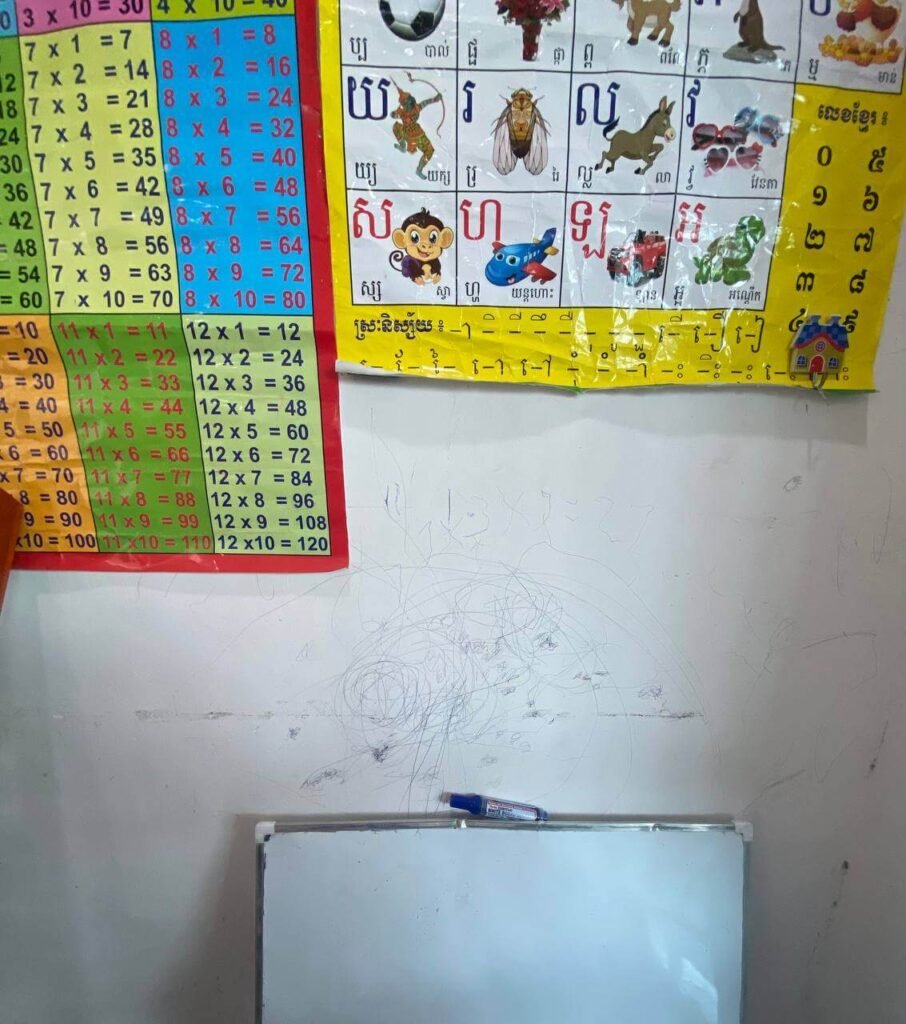
She hasn’t touched the walls since.
How to Keep Walls Clean for Good
Setting boundaries matters, but punishment alone only solves half the problem. Here’s what actually works long term:
Give them a real spot to create. A whiteboard, an easel, or a big roll of butcher paper gives kids a clear “yes” instead of just a bunch of “no’s.”
Keep supplies within reach. If they have to ask an adult every time they want to draw, they’ll just grab the nearest pen. Put paper and crayons somewhere they can actually get to them.
Be consistent. A calm reminder works way better than one big blowup. “We write on paper and the board, not on walls.” Say it every time, without drama.
Praise the good behavior. When you catch them using the whiteboard, make a big deal of it. “Look at you filling that whole board up!” It reinforces the habit fast.
Is This Normal? Understanding the “Why” by Age
For toddlers between 2 and 6, drawing on walls is extremely common.
They just don’t understand property boundaries yet. But when an older kid does it, like my 8-year-old, it’s easy to assume something is wrong.
Context is everything, though.
An older child drawing on walls isn’t automatically being difficult. Often, they’re just deeply focused on something, and their environment doesn’t have the right setup for them to do it properly.
If the behavior keeps happening after you’ve set up a workspace and talked it through, it might be worth checking in about frustration or attention. But most of the time, they just need a proper place to work.
A Quick Note on Cleaning Up
Once you’ve sorted out the emotional side and set up a new workspace, you still have to deal with the wall.
For most markers, a Magic Eraser works well. For crayons, a little WD-40 or rubbing alcohol on a cloth usually handles it.
If your child is old enough, let them help you clean it up, not as a punishment, but as a natural lesson in responsibility. Keep the tone matter-of-fact, not heavy.
A kid who draws on walls is a kid trying to create, practice, or express something.
That instinct is worth protecting. Our job as parents isn’t to shut it down; it’s to point it toward the right tools.
Think of it this way: if you hired a talented architect but gave them no paper, you wouldn’t be shocked when they started sketching on napkins. Go get your little architect a whiteboard.
My daughter uses hers almost every day now, for multiplication tables, little drawings, and spelling practice.
The wall is white again. And honestly? I’m kind of glad it happened.
Disclaimer: I am a parent and a university educator, not a licensed child psychologist or pediatrician. This guide is based on my personal parenting experience and educational background. Always consult your child’s teacher or pediatrician for professional advice regarding your child’s educational development.
