


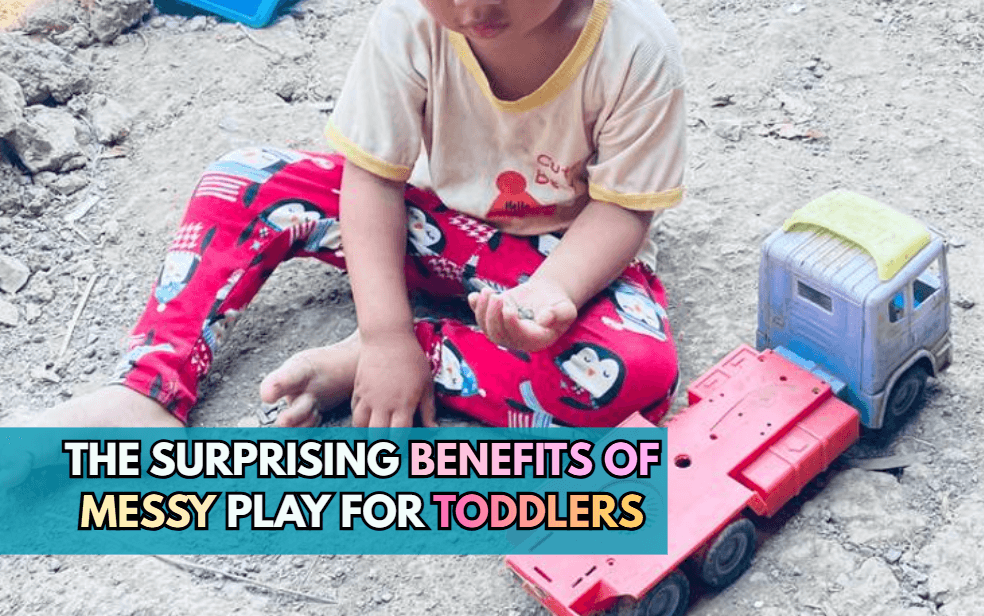
I never planned to end up in the dirt that Sunday afternoon.
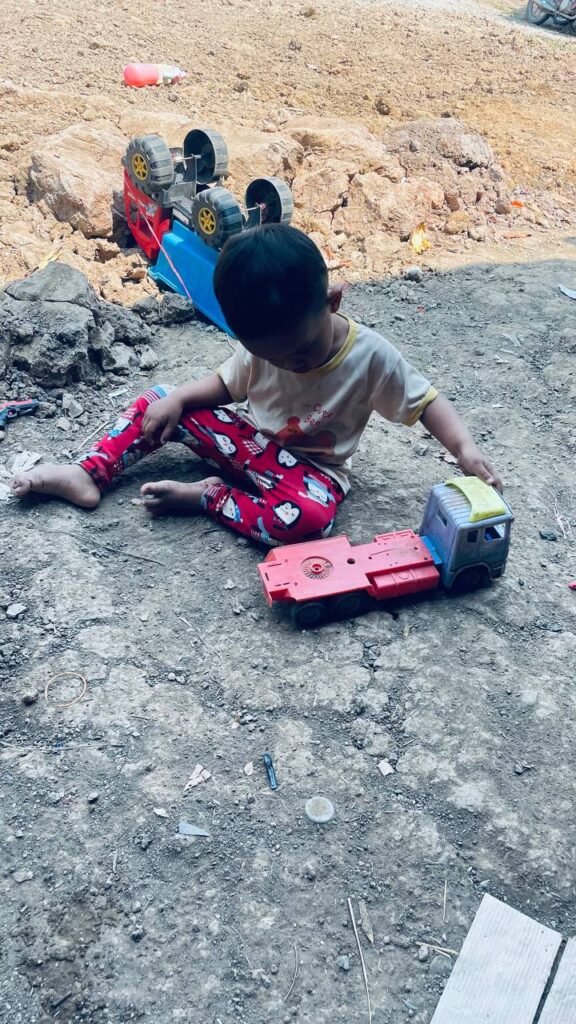
But there I was, sitting beside my two-year-old at my grandmother’s place in the country, watching him scoop tiny clumps of earth with his bare hands and load them onto a cracked old flatbed toy truck.
Two brand-new dump trucks sat behind him, completely ignored. The play mat I’d carefully laid out was pushed to the side.
He wanted the broken truck. He wanted the dirt.
My first instinct was to redirect him. But something made me stop and just watch. And the longer I watched, the more I realized he wasn’t just making a mess.
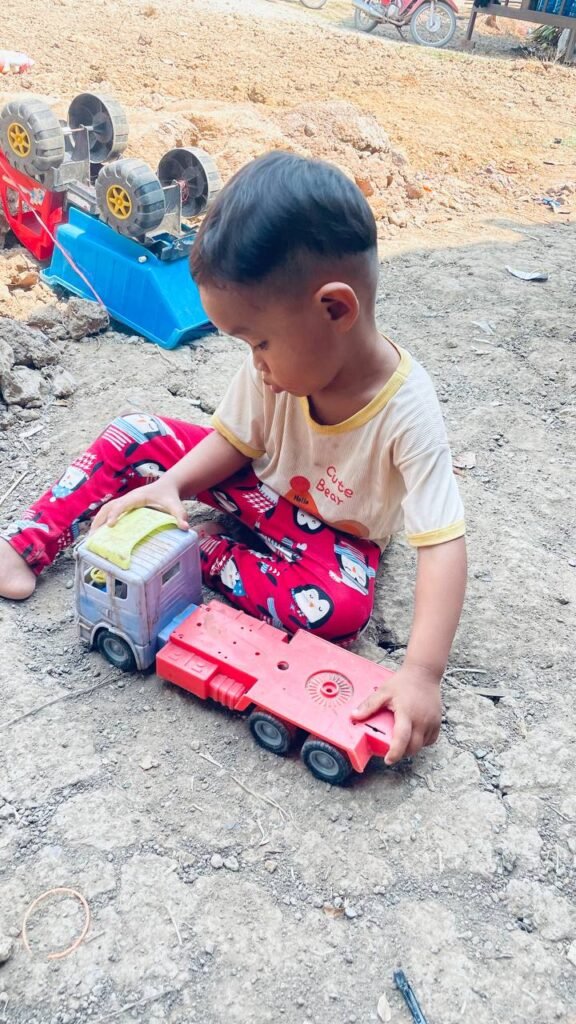
He was learning. Deeply, seriously, actively learning.
That afternoon, honestly, changed the way I think about letting kids get messy.
If you’ve ever wondered whether all that dirt and chaos is actually doing anything useful, here’s what I found out.
It Started With a One-Minute Stop on the Way to School
The week before our visit, my son and I passed a road repair crew on the way to drop off his older sister at school.
I pulled over for maybe sixty seconds so he could watch from the window. A real excavator scooping dirt. A real dump truck waiting to be loaded. Engines rumbling.
I didn’t think much of it at the time. But at grandma’s house, there he was, recreating that exact scene from memory.
The scooping motion. The loading sequence. Even the engine sound he made with his mouth.
He’d stored all of it and was playing it back through the only tools available: a broken toy and a patch of dirt.
He wasn’t just making a mess (the science-y part)
There’s a name in child psychology for what he was doing: observational learning.
Kids watch the world, store those experiences, and replay them through play. It’s one of the main ways their brains build understanding.
When kids are allowed to play freely, especially with sensory materials like dirt, sand, water, or mud, several things happen at once.
They test cause and effect. They build memory pathways. They problem-solve in real time.
Unstructured, hands-on play isn’t just a way to keep them occupied. It’s genuinely foundational to how kids learn to think.
Why He Picked the Broken Truck
Here’s something that surprised me when I looked into it.
There’s a real developmental reason toddlers often gravitate toward simple or broken objects over shiny new toys.
Battery-operated toys tend to repeat a single action over and over. They don’t ask much of the child.
A broken or open-ended toy, on the other hand, requires the kid to fill in the gaps.
My son needed a flatbed truck, so he turned a cracked piece of plastic into exactly that.
That mental leap, imagining what something could be and then actually using it that way, is precisely the kind of thinking that builds creativity and problem-solving.
The toy doesn’t do everything for them, so their imagination has to kick in. That’s not a limitation.
That’s the whole point.
Why is the dirt better than the shiny new toys?
I used to think sensory play was mainly about textures, kind of a nice extra.
Now I understand it touches nearly every area of development.
- Fine Motor Skills: Watching my son pinch small clumps of dirt and carefully transfer them onto the truck was a real workout for his fine motor skills. That precise grip, which controls exactly how much he picks up and where he places it, requires genuine muscular coordination. It’s the same kind of development that later supports holding a pencil, using scissors, and buttoning a shirt.
- Core Strength and Spatial Awareness: He was sitting on uneven ground, reaching across his body, adjusting his balance as he moved the truck around. None of that looks dramatic, but it was building core strength and spatial awareness in ways a chair and a flat table simply can’t replicate.
- Tactile Processing: Dry country soil feels completely different from playdough or sand. Feeling that difference, rough, crumbly, slightly cool, helps kids build a mental library of how textures work. That tactile feedback is part of how toddlers make sense of the physical world around them.
Why a Little Dirt is Actually Good for Them
Getting outside and getting dirty doesn’t need to be complicated.
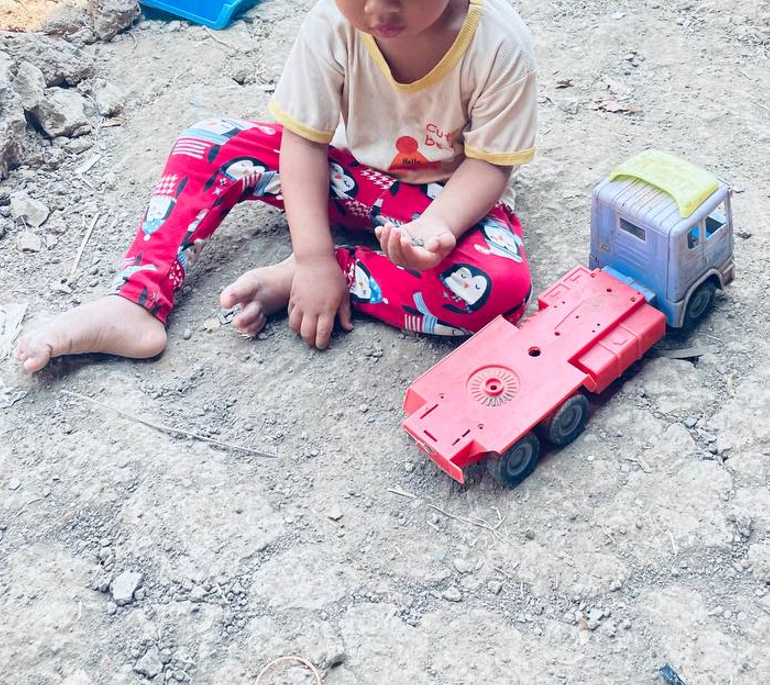
Sometimes the best option is right there in the backyard or at a family member’s place.
The benefits of playing in the dirt have even caught the attention of researchers beyond child development.
I’ve even read about something researchers call the ‘hygiene hypothesis‘—the idea that regular contact with outdoor soil actually helps train and strengthen a child’s immune system.
Kids who play in dirt are exposed to a wide variety of microbes that help build the body’s defenses over time.
That doesn’t mean dirt is always safe or that supervision isn’t needed. It simply means a little mess isn’t the enemy we sometimes treat it as.
Age two is a huge window for sensory exploration.
Letting them get their hands dirty right now helps wire the neural pathways that support learning for years to come.
How we actually handle the mess (without ruining the car)
Letting your toddler play in the dirt sounds great in theory, right up until it’s time to strap them into a clean car seat.
I’m all for sensory play, but I also hate cleaning mud out of my floor mats.
Here’s how we actually make it work in real life.
- The 10-Second Pre-Sweep: Before he sits down, I do a quick scan of the dirt patch. I’m looking for the obvious stuff: ant hills, sharp rocks, anything left by a stray cat. Once the area is cleared, I can sit back and let him dig without hovering over him the whole time.
- Bring the “Trash” Toys: Leave the expensive battery-operated dump truck at home. As my son proved, they won’t want it anyway. Grab an empty yogurt container, a wooden spoon you don’t care about, or that broken flatbed truck from the bottom of the toy bin.
- The Decontamination Strategy: If we’re at the park or grandma’s house, the messy clothes come off before we get in the car. I keep a dedicated pack of baby wipes in the trunk. A quick wipe-down of hands and face is usually enough to get them into the car seat without wrecking the upholstery.
- Straight to the Tub: If we’re playing in the backyard, the rule is simple: muddy clothes stay on the porch, and the kid goes straight into the bathtub. Setting a clear boundary around where the dirt stops keeps the chaos manageable.
One question I kept coming back to was whether this kind of play has real, lasting effects. The short answer is yes.
It isn’t just about the moment of play. It’s about what gets built during those moments.
When a two-year-old figures out that wet dirt behaves differently from dry dirt, they’re learning cause and effect.
When they load too much onto the truck, and it falls off, they’re learning physics and problem-solving.
When they come back to the same scenario again and again, they’re building memory and focus.
These aren’t small things. These are the building blocks of the kind of thinking that shows up in school, in relationships, and throughout life.
I went to my grandmother’s house that Sunday, thinking I was just visiting family.
I left with a completely different perspective on what it actually means to let my kid play.
My son didn’t need the new toys.
He didn’t need the clean play mat. He needed a broken truck, a patch of dirt, and sixty seconds of watching real machines work. His brain did the rest.
The next time your toddler heads straight for the mud or picks up the most random object in the yard, try to resist the urge to redirect right away. Crouch down beside them.
Watch what they’re doing. You might be surprised at how much is actually going on.
It isn’t about tolerating the mess. It’s about trusting that the mess is doing something important.
Disclaimer: I am a parent and a university educator, not a licensed child psychologist or pediatrician. This guide is based on my personal parenting experience and educational background. Always consult your child’s teacher or pediatrician for professional advice regarding your child’s educational development.
