


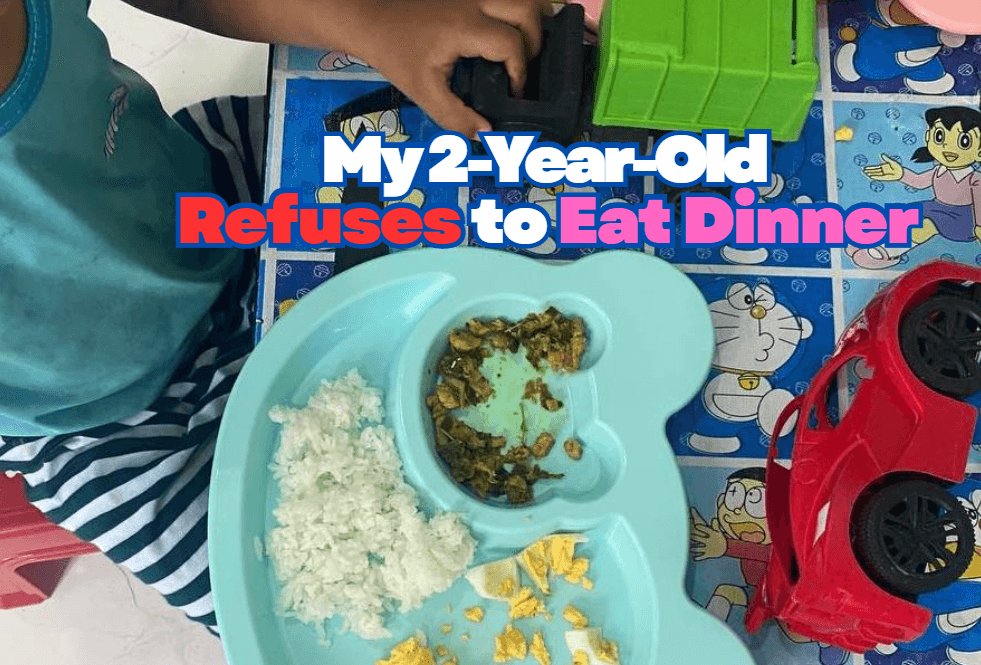
If you’ve ever sat at the dinner table completely exhausted, watching your toddler clamp their mouth shut and refuse every single bite, I want you to know something: you are not failing as a parent.
You’re just dealing with one of the most universal and maddening parts of raising a little kid.
My 2-year-old used to refuse to eat dinner every single night.
Now he doesn’t. And honestly, I didn’t figure it out.
My 8-year-old daughter did.
I’m a professor who teaches conflict management and leadership to working adults.
I never expected a toddler to be the one to humble me.
But one Wednesday evening, somewhere between 6:30 and 7:00 PM, my son won the standoff, I ran out of moves, and my daughter quietly solved the whole thing in about two sentences.
Here’s exactly what happened, what I learned about toddler dinner refusal, and the simple shift that actually works when your toddler refuses dinner but happily eats snacks all day long.
Why Toddlers Refuse to Eat Dinner (And Why It’s Rarely About the Food)
Most parents assume the problem is the food itself.
Too many vegetables. Wrong texture.
Looks weird. But with toddlers, dinner refusal is almost never just about what’s on the plate.
Between ages 1 and 3, kids are going through a big developmental push toward independence.
They’re figuring out that they’re their own person, separate from you, and one of the very few things they actually have control over is what goes into their mouth.
So when you set down a bowl of soup and say, “Eat this,” you’re not starting a food conversation.
You’re starting a power struggle.
That was the piece that took me way too long to figure out.
Common reasons your toddler refuses dinner:
- They want to feel in control of something
- They filled up on snacks or milk too close to dinner (snack timing matters more than most parents realize)
- They’re overtired and overstimulated by the time you sit down to eat
- The texture, smell, or look of the food bothers them
- They’re picking up on your stress around mealtime
- They’re simply not hungry right now
Understanding why this happens doesn’t make the evening less frustrating.
But it does change how you respond.
The Night Everything I Tried Failed
My son sat down in front of his little blue bear-shaped plate, looked at the vegetable soup, and went completely still.
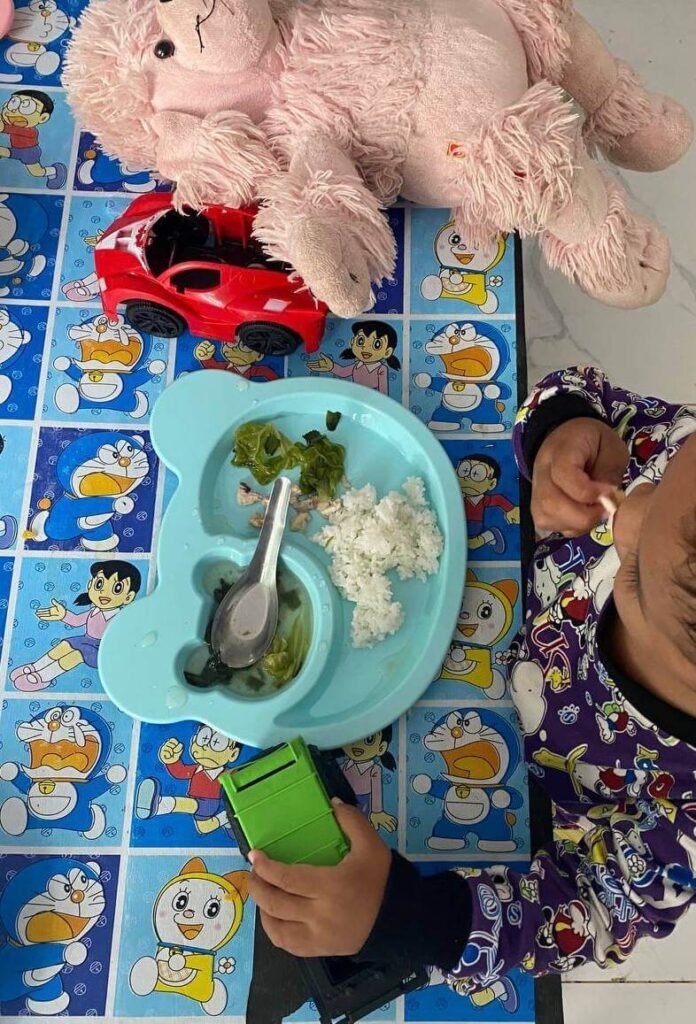
Mouth shut. Arms crossed. Done.
I tried everything.
I brought out his pink poodle toy and his favorite red plastic car to make the table feel more fun.
He shook his head.
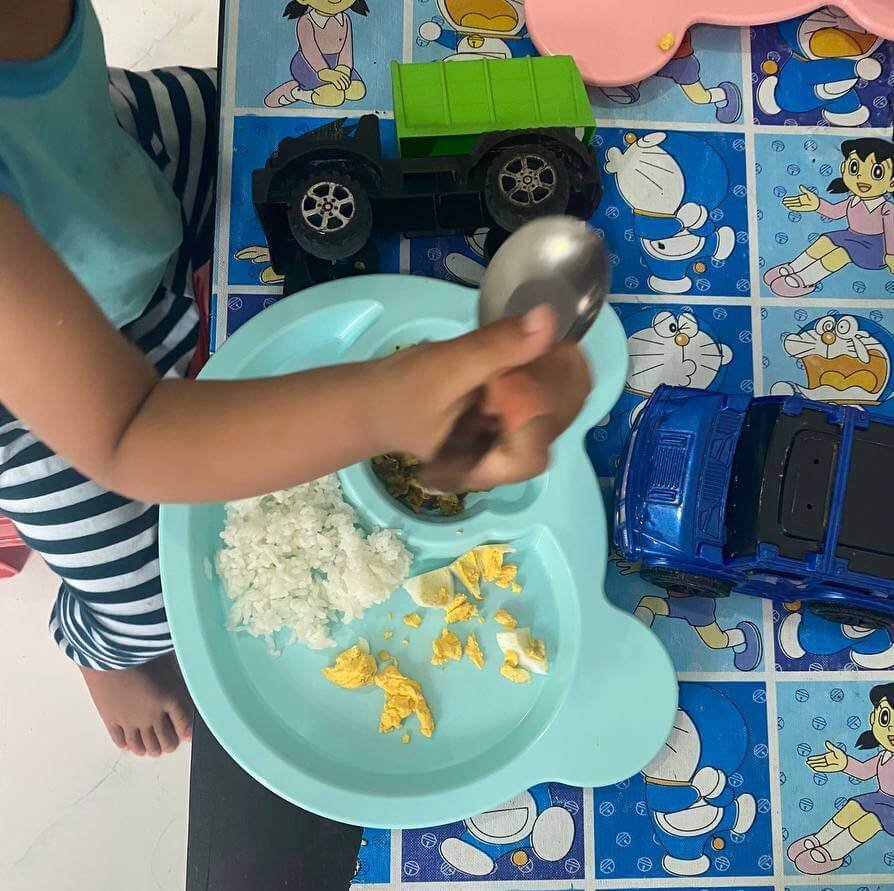
I swapped the soup for boiled duck eggs and rice, figuring maybe the soup was the issue.
I added his green dump truck as a bonus incentive. Still nothing.
Every time I tried to spoon-feed him, he turned his head and pointed at his older sister.
After ten minutes, I was out of ideas, and my own dinner was getting cold.
In a last attempt, I moved his food to a pink plate and shifted him to a different spot at the table.
Still nothing.
Why the Usual Tactics Don’t Work
Bribes. Swapping the food. Toy incentives.
These are the moves most parents reach for first during a toddler mealtime power struggle, and I reached for all of them.
The problem is that every one of those tactics was coming from me, the authority figure at the table, and that was exactly the issue.
In the field of human resource development, this is called top-down management.
When the person with authority keeps pushing for compliance, and the other person desperately wants to feel independent, you hit a wall almost every time.
This is just as true at a toddler’s dinner table as it is in an office meeting.
The Trick My 8-Year-Old Used to Get Him to Eat
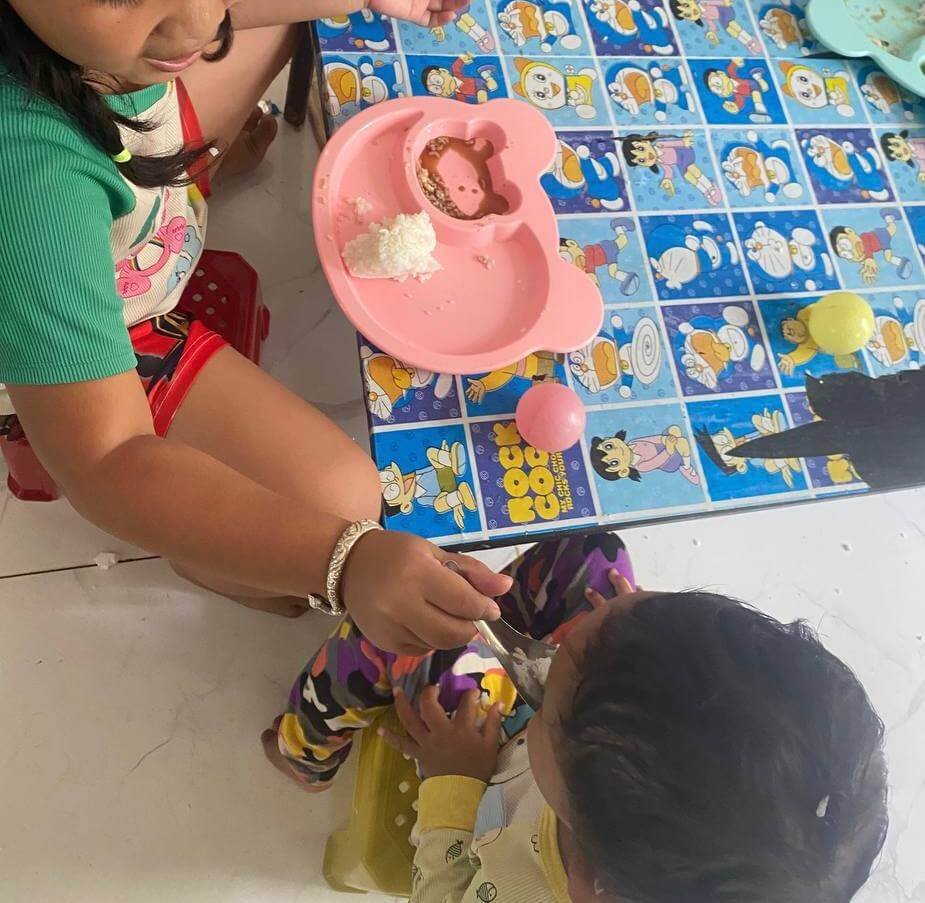
That’s when my daughter stepped in.
She didn’t yell. She didn’t offer a toy. She just called him over to sit next to her, softened her voice, and started pretending to be a mama.
“Sweetie, what’s wrong? Why aren’t you eating?
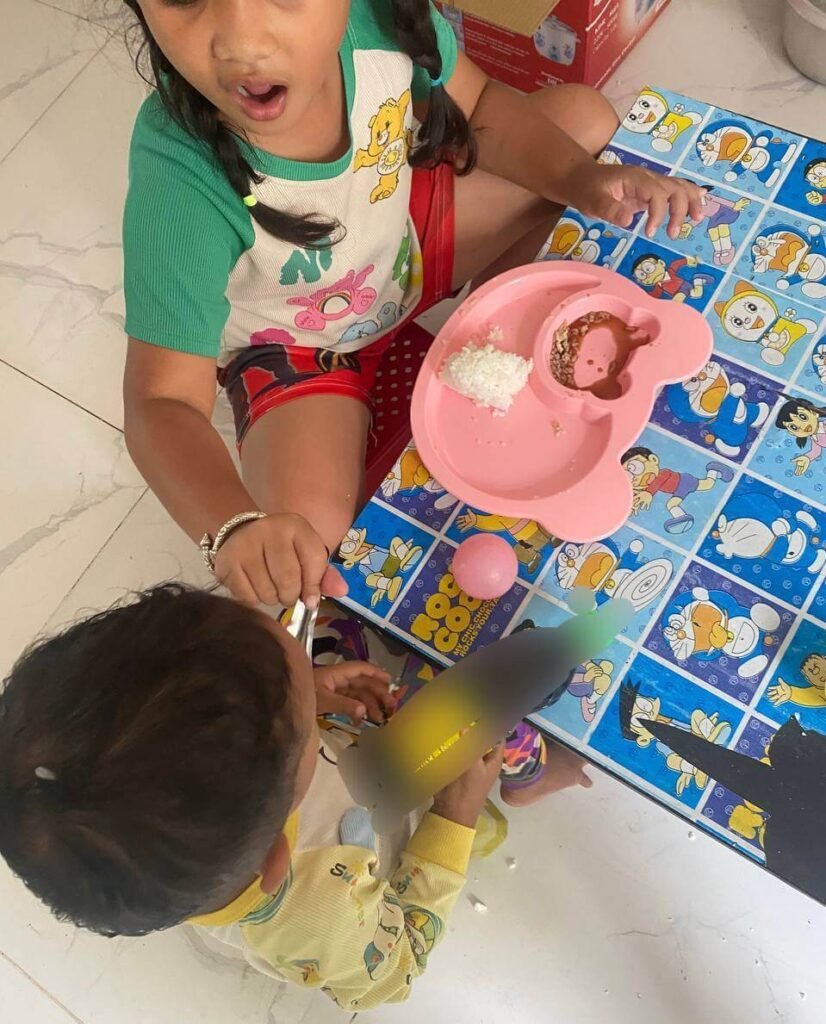
Try opening your mouth as Mommy does.”
He opened his mouth immediately.
He let her feed him.
He ate his duck eggs and rice without a single battle.
I sat there staring at both of them.
She had solved in two sentences what I had failed to solve in ten minutes.
The Science Behind Why This Works
What my daughter used, without even knowing it, is something researchers call peer-to-peer modeling.
Studies consistently show that young children often respond faster and more willingly to someone they see as a peer or playmate than to an authority figure telling them what to do.
To my son, his big sister isn’t a boss.
She’s someone inside the same world he lives in.
When she invited him into a pretend game instead of telling him to eat, the toddler’s mealtime power struggle disappeared completely.
He wasn’t being told to do something.
He was playing.
That shift from pressure to play is one of the most effective tools you can use with a picky-eater toddler, and you don’t need a sibling to pull it off.
How to Get Your Toddler to Eat Dinner Without Fighting
These aren’t magic tricks.
They’re small shifts in how you set the situation up.
If you’re wondering how to get your toddler to eat dinner without a battle every night, start here.
1. Step Back When Things Escalate
Your instinct is to push harder when a toddler refuses dinner.
But the more pressure you apply, the more resistance you get.
If dinner is turning into a standoff, physically step back.
Take a breath.
Stop making eye contact for a moment. Sometimes your presence and intensity alone are fueling the refusal.
2. Use a Sibling as the “Special Helper”
If you have an older child at home, you have a tool most parenting books never mention.
Ask them if they want to be the special dinner helper tonight.
Let them hold the spoon.
Encourage them to use a gentle, playful voice.
When it works, praise them openly: “Wow, look what a great helper you are.
He really listens to you.” It builds their confidence and makes them want to do it again.
3. Turn Mealtime Into a Game
Toddlers live in imaginative worlds.
If the dinner table feels like a place of conflict, change the whole frame.
Let the spoon be an airplane. Pretend the broccoli is trees a dinosaur needs to eat.
Let your child feed a stuffed animal first before taking a bite themselves.
The goal is to make eating feel like participation in something fun, not compliance with a rule.
4. Give Them Small Choices
Control is a core need for toddlers at this stage.
One of the simplest ways to reduce mealtime battles is to hand them a version of control that works for you.
Ask if they want their eggs on the left side or the right.
Ask if they want the blue spoon or the red one.
These tiny choices help them feel like they have some say in what’s happening, which lowers the need to say no to everything else.
5. Check Your Snack Timing
If your toddler won’t eat dinner but eats snacks all day without hesitation, look carefully at how close snack time is to dinner.
A lot of toddlers who seem like picky eaters at the table are simply not hungry because they had crackers or milk an hour before.
Try moving snack time earlier and see if that changes things.
Getting snack timing right is one of the fastest fixes parents overlook.
6. Introduce New Foods Without Pressure
The key phrase here is exposure without expectation.
Put a small amount of something new on their plate alongside food they already like.
Don’t make a big deal of it.
Don’t ask them to eat it.
Just let it be there.
Research shows toddlers often need to see or smell a new food many times before they’re willing to try it.
Repeated, low-pressure exposure works far better than one big push.
What to Avoid During a Dinner Standoff
Just as important as what to try is knowing what tends to make things worse.
- Forcing them to eat. Forcing a child to eat when they’re not hungry can create a negative relationship with food that lasts well past toddlerhood.
- Making a separate “kid meal” every time. If your toddler learns that refusing dinner gets them something better, the refusal becomes a strategy.
- Showing big frustration at the table. Toddlers pick up on adult stress fast. A tense dinner table makes them less likely to eat, not more.
- Skipping meals as punishment. This can create anxiety around food. Keep dinner calm and consistent, even when it doesn’t go perfectly.
When to Talk to Your Pediatrician About Picky Eating
Some degree of picky eating is completely normal, and most kids grow through it.
But there are times it’s worth bringing up with your child’s doctor.
Reach out if your toddler is losing weight or not gaining appropriately, gagging or vomiting on a wide range of textures, limiting themselves to only 5 to 10 foods total, or showing real distress or anxiety around mealtime that goes beyond typical toddler resistance.
A pediatrician or feeding therapist can help you figure out whether you’re dealing with a phase or something that needs a bit more support.
The Real Lesson from a Toddler Who Refused to Eat
My son ended that meal with a duck egg on his cheek and a small mountain of rice in his hair.
But he ate. And my daughter, who is eight years old and has no training in child psychology or HR, figured out what I couldn’t: sometimes you stop a toddler dinner battle not by pushing harder, but by changing the whole game.
If your 2-year-old refuses to eat dinner tonight, take a breath before you do anything else.
You’re not doing it wrong.
You’re just dealing with a tiny, independent human being who’s working very hard to figure out who they are.
Give them a little room.
Change the frame.
Let someone else hold the spoon for a minute.
And if you’ve got rice in your hair tomorrow morning, wear it proudly.
It means you showed up and kept trying.
That’s really all any of us can do.
Frequently Asked Questions
Why won’t my toddler eat dinner, but will eat snacks?
This is one of the most common parenting frustrations, and the answer is usually snack timing. If your toddler is eating snacks too close to dinner, they simply aren’t hungry when they sit down.
Beyond that, snacks tend to be familiar, easy, and low-pressure, while dinner can feel overwhelming or unfamiliar. Try spacing snacks at least 2 hours before dinner and keep pre-dinner snacks small.
Is it normal for a 2-year-old to refuse to eat dinner?
Yes, this behavior is very normal, especially around ages 1 to 3. At this stage, children are asserting their independence, and food is one of the few things they can fully control.
As long as your child is growing normally and eating reasonably well across the full day, occasional or even frequent dinner refusal is considered developmentally typical.
Should I force my toddler to eat when they refuse?
No. Forcing them to eat tends to backfire. It increases resistance, turns mealtime into a battle, and can create a negative relationship with food over time.
Instead, offer the food calmly, give them some control over small choices, and let them decide how much they eat. Your job is to provide the food; their job is to decide whether and how much to eat.
How do I stop toddler dinner battles every night?
Start by identifying the source of the battle. Is your toddler overtired by dinner? Are snacks too close to mealtime? Is there too much pressure at the table?
Once you know the cause, you can address it. Key strategies include giving small choices, using a sibling or playmate as a helper, turning food into a game, and removing the pressure and intensity from the mealtime environment.
Why does my toddler refuse food they used to like?
This is extremely common and is often called food neophobia or the toddler “phase” of picky eating. Around age 2, children who were previously good eaters often become selective.
Their growth rate slows, so they need fewer calories, and their developing sense of autonomy makes them more likely to say no. Continuing to offer the food regularly without pressure usually brings it back into rotation eventually.
How do siblings help picky eaters?
Siblings help because of a concept called peer-to-peer modeling. Young toddlers are more likely to imitate someone they see as a peer or playmate than to comply with a request from an authority figure like a parent.
When an older sibling eats something, invites the toddler into a game around the food, or gently models eating, it removes the power dynamic that fuels most dinner refusal.
When should I worry about my toddler not eating?
Most toddler picky eating is normal, but speak to your pediatrician if your child is losing weight or not growing appropriately, consistently gagging or vomiting on a wide range of textures, eating fewer than 5 to 10 foods total, or showing extreme anxiety around mealtimes. A feeding therapist can also be a valuable resource if the issue feels beyond typical toddler behavior.
Disclaimer: I am a parent and an HR/education professional, not a licensed child psychologist or occupational therapist. This guide is based on my personal parenting experience. Always consult your child’s pediatrician for professional advice regarding your child’s behavioral development or potential sensory processing issues.
