


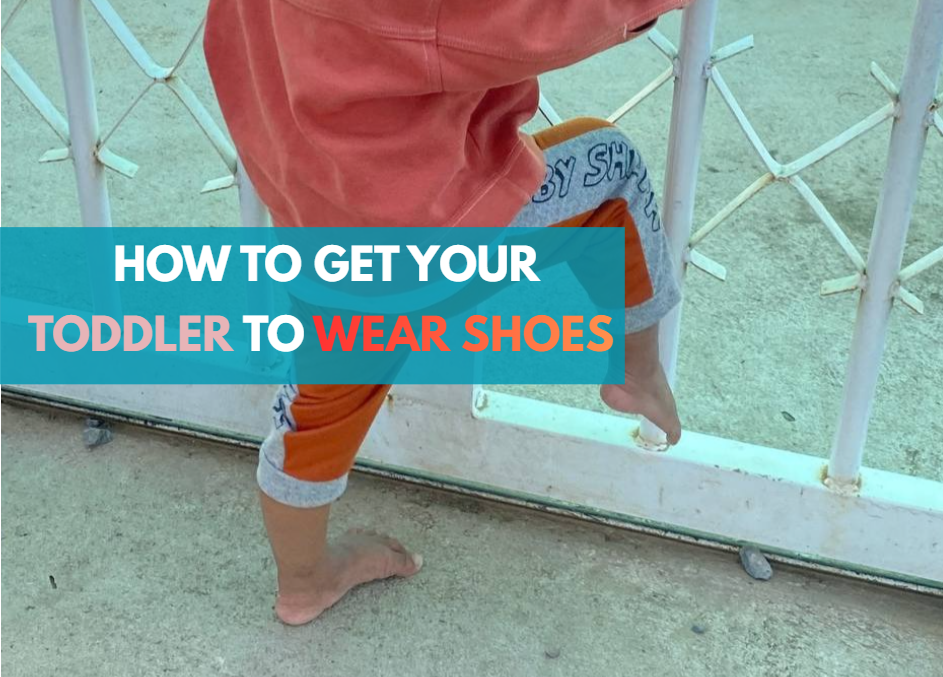
If your toddler refuses to wear shoes, you are not alone.
Thousands of parents face this exact battle every single morning, shoes in hand, clock ticking, and a very determined two-year-old going nowhere near them.
I lived this for weeks with my own son.
He would run, climb, and play all day without a single complaint, completely barefoot.
The moment I brought out his sandals, though?
Full meltdown.
I started calling him my little “Barefoot Bandit.”
One morning, I watched him scale the school gate in his bright orange jacket, bare feet gripping the metal bars like a tiny monkey.
The ground was rough.
Other parents were staring.
He did not care at all.
I could have forced the shoes on him.
I could have argued or bribed.
Instead, I tried something different, and it actually worked.
This article shares exactly what I did, along with the practical tips that helped us navigate the phase.
Quick Takeaway
- Toddlers refusing shoes is completely normal, usually driven by sensory discomfort, a need for independence, or simply not seeing the point.
- Forcing shoes on during a meltdown can exacerbate the resistance over time.
- The most effective approach is low-pressure social modeling: let your toddler watch other kids wearing shoes without any demands attached.
- Give your toddler a sense of control by letting them choose between two pairs.
- Check for genuine comfort issues first. Shoes that are too tight, too stiff, or have scratchy seams can cause real distress.
- Most shoe-refusing phases resolve on their own within a few weeks with patience and consistency.
Why Does My Toddler Refuse to Wear Shoes?
Toddlers are not being stubborn on purpose.
Here is what is usually behind the refusal:
- Sensory issues. Some children genuinely dislike how shoes feel. The texture, tightness, or warmth against their feet can be overwhelming, especially for kids with heightened sensory sensitivity. If your toddler screams or seems to be in real pain when shoes touch their feet, this is worth taking seriously.
- A need for independence. Around age two, saying “no” is a toddler’s superpower. Refusing shoes is often not really about the shoes at all. It is about asserting control over something in their world.
- They simply do not see the point. Your toddler feels perfectly comfortable barefoot. From their perspective, shoes solve a problem they do not have.
Once I understood this, I stopped treating it as defiance and started treating it as a communication.
That shift changed everything.
The 3-Day Method That Ended Our Shoe Battle
I work in Human Resources, where we talk a lot about how people learn new behaviors by watching others.
This is called modeling.
New employees rarely just read a handbook and change how they work.
They watch what the people around them do.
So I thought: what if my son just needed to see other kids wearing shoes?
I decided to run a small experiment during our daily school run.
Day 1: Just Observe
At school pickup, my son stood barefoot at the gate, watching students stream out.
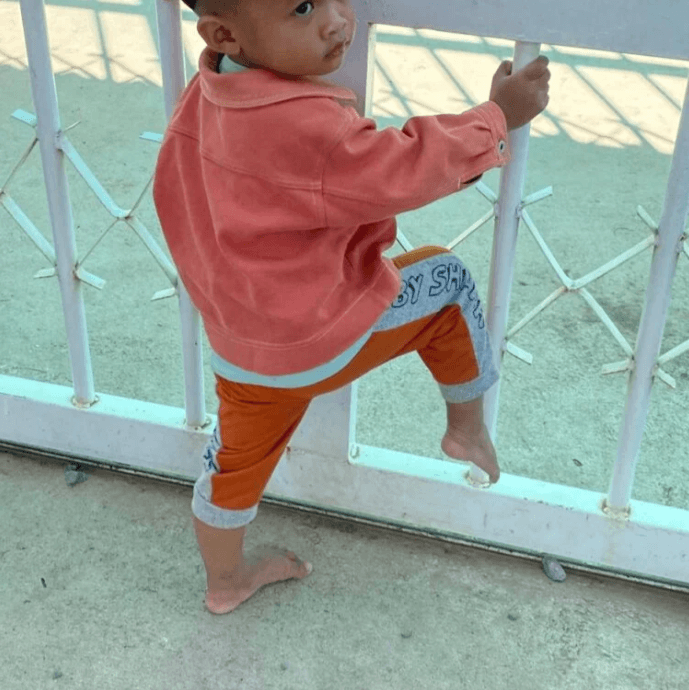
I crouched beside him and said quietly, “Look at all those big kids.
See their shoes?
They look so ready to play.”
He did not respond.
He just watched. I did not push it.
We went home.
Day 2: Mention It Again
Same scene the next day.
Barefoot at the gate.
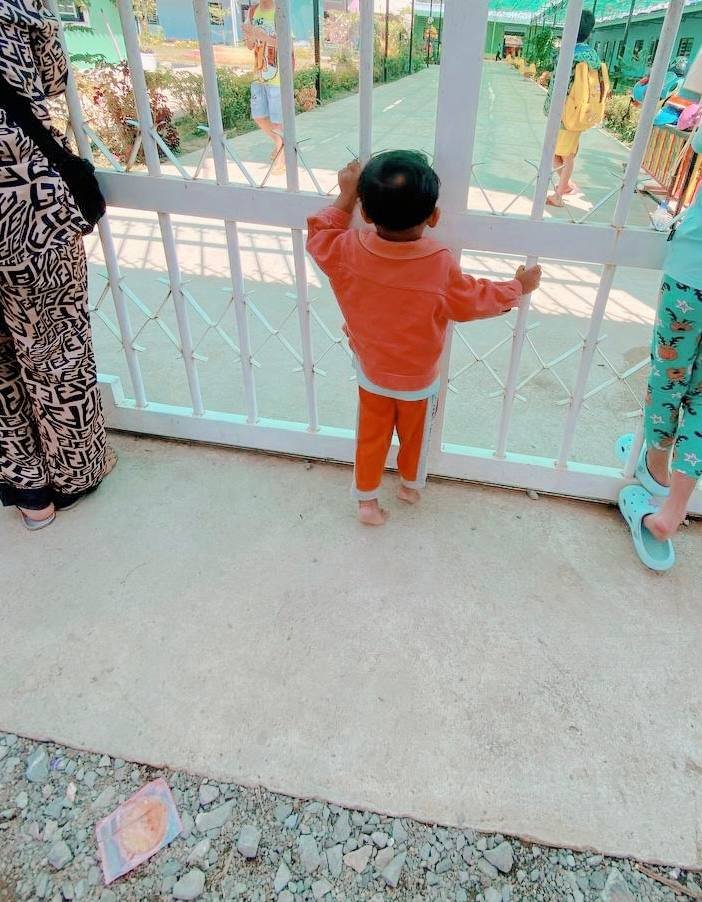
I kept it casual: “Wow, all the students are wearing shoes today.
They look like they are having so much fun.”
No reaction.
But this time, I noticed he was watching the other children more closely.
Most parents give up right here.
I almost did too.
But I gave it one more day.
Day 3: The Breakthrough
That morning, I held out his little black sandals, the ones with the cartoon charms he likes.
I did not demand anything.
I just offered them.
He looked at the shoes.
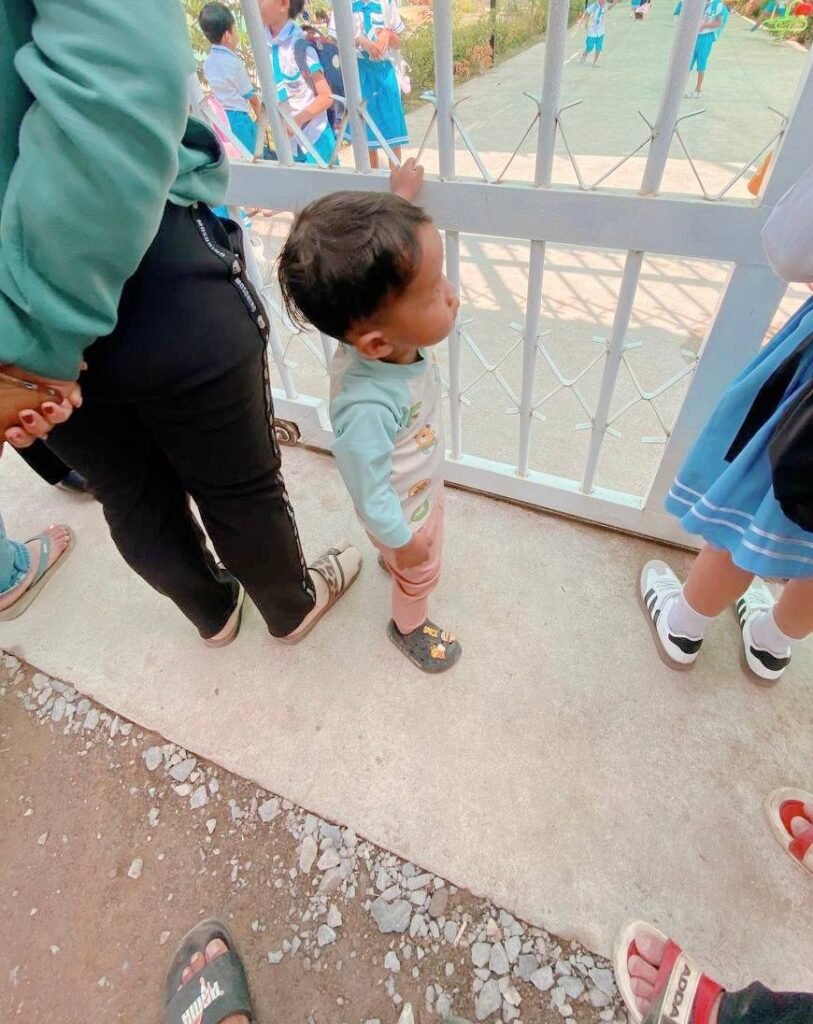
Then he put his feet in.
At school pickup that afternoon, he stood at the gate in his sandals and spotted a girl about his age wearing sneakers.
He looked at her shoes, then down at his own, then up at me with the proudest little face.
I could practically see him thinking: I am wearing shoes too. I am just like the big kids.
He has not fought me on shoes since.
How to Get a Toddler to Wear Shoes: 7 Tips That Actually Help
Beyond the school gate method, here are the strategies that helped us most during this phase.
1. Stop Making It a Power Struggle
The more you push, the harder they resist.
When your toddler will not wear shoes, take a breath before reacting.
Power struggles almost always make things worse.
Instead of “Put your shoes on RIGHT NOW,” try “We are going to see the big kids at school.
Want to bring your shoes along?”
The language shift is small, but it removes the confrontation from the equation.
2. Use Social Proof
Kids want to be like other kids.
Take your toddler somewhere they can watch children their age wearing shoes, whether that is a playground, library, or school pickup.
Drop a casual comment: “Look, that boy has cool shoes. I bet he can run really fast!”
Do not force anything.
Just plant the seed and let it grow for a day or two.
3. Give Them a Choice
Offer your toddler a sense of control by holding up two pairs and asking, “Which ones today, the blue ones or the red ones?”
They feel like they are making the decision.
That autonomy matters enormously at this age.
It redirects the conversation away from “will I wear shoes” and toward “which shoes will I wear.”
4. Make Shoes Feel Fun
If your toddler hates wearing shoes and socks, try building a positive association around the whole routine:
- Let them decorate their shoes with stickers.
- Get shoes with their favorite characters on them.
- Do a “shoe race” and see who can put theirs on the fastest.
- Sing a silly song while you put them on together.
The goal is to replace the dread with something they look forward to.
5. Check for Real Comfort Issues
Sometimes a toddler refuses shoes because they genuinely hurt or feel wrong.
Before anything else, ask yourself:
- Are the shoes too tight or too loose?
- Are the seams rubbing against their skin or toes?
- Are the socks bunchy or scratchy?
Try different styles.
Some children do much better with slip-ons, while others prefer velcro or shoes with a stretchy opening.
For kids with sensory sensitivity, seamless socks and soft leather shoes can make a big difference.
6. Start Small at Home
If your toddler refuses to wear shoes outside, do not kick things off with a three-hour shopping trip.
Start with just a few minutes at home.
Put the shoes on, walk around the kitchen, take them off.
Build up the time gradually over a few days.
Celebrate every small win: “You wore your shoes for five whole minutes! High five!”
7. Be Patient and Stay Consistent
This is the hardest part.
Change does not happen overnight.
For my son, it took three days of gentle, low-pressure exposure before he chose to put on his shoes on his own.
For your child, it might take a week or two. That is completely okay.
Stay calm. Stay consistent. Do not give up after one rough morning.
What NOT to Do When Your Toddler Will Not Wear Shoes
A few things I tried that completely backfired:
- Do not bribe with treats every single time. It quickly builds a pattern where your toddler expects a reward for every basic task, and the expectation grows from there.
- Do not shame them. Comments like “You are being a baby” or “Everyone is staring at you” hurt their confidence without solving anything.
- Do not force shoes on during a full meltdown. Sometimes there is no choice in an emergency, but if this becomes the daily routine, the resistance will only get stronger over time.
When Should You Worry? A Note on Sensory Processing
A toddler refusing shoes is completely normal and almost always just a phase.
That said, if your child has extreme reactions every single time, such as screaming, crying hard, or acting as though they are in genuine physical pain when shoes touch their feet, it may be worth mentioning to your pediatrician.
Some children have sensory processing differences that make certain textures genuinely unbearable rather than just uncomfortable.
Trust your instincts.
You know your child better than anyone else.
It Will Not Last Forever.
When I look back at that photo of my barefoot boy scaling the school gate, I smile.
It felt like such a big deal at the time.
But kids grow and surprise you every day.
What feels impossible this week often just clicks the next.
If you are trying to figure out how to get a toddler to wear shoes and nothing has worked yet, try the social proof method.
Be patient. Stay calm.
And celebrate every small win along the way.
Before you know it, the shoe battle will be behind you, and you will be onto the next parenting challenge (probably getting them to wear a jacket).
Frequently Asked Questions
Is it bad for toddlers to go barefoot all the time?
Barefoot walking on safe surfaces is actually great for foot development. The concern comes with outdoor surfaces where there is a risk of injury or infection. For short stretches on clean, safe ground, being barefoot is fine.
What are the best shoes for a toddler who hates wearing shoes?
Look for soft, flexible soles with minimal seams inside. Velcro closures are easier for toddlers to manage themselves, which gives them more control. Wide-toe-box shoes tend to feel less restrictive. Avoid stiff leather or shoes with tight elastic around the ankle.
Should I let my toddler go to school barefoot if they refuse shoes?
In most cases, shoes are required for safety at school or childcare. If your child refuses, try offering them their shoes as you leave the house without making it a demand. If they arrive barefoot, having a backup pair at school can help. Talk to your child’s teacher for support with the routine there, too.
Disclaimer: I am a parent and an HR/education professional, not a licensed child psychologist or occupational therapist. This guide is based on my personal parenting experience. Always consult your child’s pediatrician for professional advice regarding your child’s behavioral development or potential sensory processing issues.
