


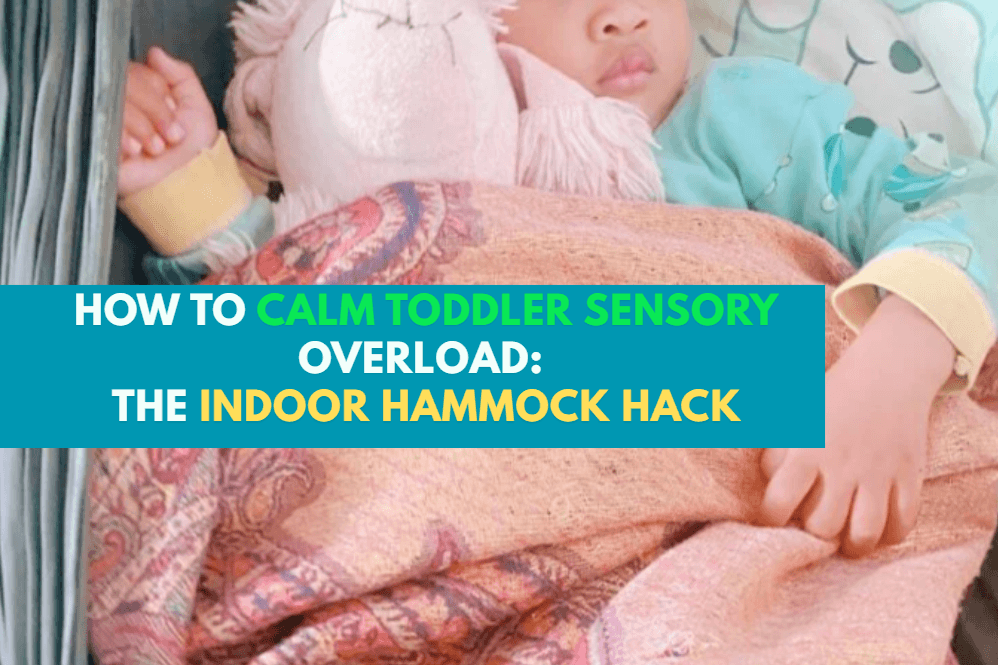
My two-year-old was having one of those days.
He was screaming because his water was in the wrong cup, rubbing his eyes but refusing to close them, and by 2 p.m., he was completely wiped out.
Honestly?
So was I.
I had tried everything when he got this way.
Dark room, white noise, pleading with him to just lie down.
Nothing worked.
He would bounce off the walls, getting more frustrated every minute.
It felt like a constant battle against a toddler fighting sleep with every ounce of his being.
Out of sheer desperation, I dragged our camping hammock and metal stand into the middle of the living room.
That is when we finally found his off switch.
Quick Takeaway
- Toddlers who look hyper when overtired are often experiencing sensory overload, not a behavioral tantrum.
- Sensory overload puts a child’s nervous system into fight-or-flight mode. No amount of asking them to calm down will fix a biological response.
- Gentle rocking (vestibular input) and the cocooning pressure of a hammock (deep pressure) are two calming tools used in occupational therapy that you can recreate at home.
- A standalone hammock frame requires no drilling, costs around $40 to $80, and works for renters.
- This is a supervised calming tool only, not a sleep solution. Always stay in the room.
Tantrums vs. Sensory Overload: Spotting the Difference
Before I figured out the hammock, I did not realize my son was not just being difficult.
He was dealing with sensory overload—what many parents call a meltdown—and from the outside, the two look almost identical.
A tantrum usually happens because a child wants something and is not getting it.
Sensory overload is different.
His brain was receiving too much information at once.
The lights were too bright, the sounds were too loud, his clothes felt itchy, and he could not process any of it fast enough.
When toddlers reach that state, they do not look tired.
They look hyper.
Their bodies go into fight-or-flight mode, and no amount of “please go to sleep” is going to override a biological nervous system response.
He needed a physical way to reset, not a verbal one.
Here are a few signs that can help you tell the difference:
Signs of a behavioral tantrum:
- Crying starts after a clear trigger (denied a snack, losing a toy)
- The child makes eye contact and is communicating.
- Calms down relatively quickly once the need is met or distracted
Signs of sensory overload:
- Meltdown seems out of proportion to the trigger
- Child covers ears, avoids eye contact, or throws themselves to the floor
- Gets worse the more you try to talk or reason with them
- Looks simultaneously exhausted and wired
If your child shows the second set of signs regularly, it is worth mentioning to your pediatrician, as it can sometimes be connected to sensory processing differences.
But many neurotypical toddlers go through this too, especially around nap time when their regulation skills are at their lowest.
Why the Hammock Worked When the Bed Did Not
That afternoon, I set up our inexpensive metal hammock stand in the middle of the living room. I put him in, gave him a gentle push, and fully expected him to climb right back out.
Instead, he went quiet.
The thrashing stopped.
Within five minutes, he was calm and drifting off while I sat nearby watching him.
After some reading on occupational therapy techniques for toddlers at home, I realized this was not magic.
It was biology.
The hammock was giving him two specific things his nervous system needed.
1. Vestibular Input: Why Rocking Calms a Toddler’s Brain
The gentle swinging motion stimulates the vestibular system, the part of the inner ear that controls balance and spatial awareness.
Rhythmic, back-and-forth motion sends a calming signal to the brain.
It is the same reason we rock newborns to sleep.
For some reason, we stop doing that once kids hit the toddler stage, right when big emotions are starting to kick in.
Their brains still crave that motion to settle down.
Vestibular input for toddlers is one of the most used calming techniques in pediatric occupational therapy, and a hammock delivers it passively without you having to hold a 30-pound child for 20 minutes.
2. Deep Pressure: The “Being Held” Feeling Without a Struggle
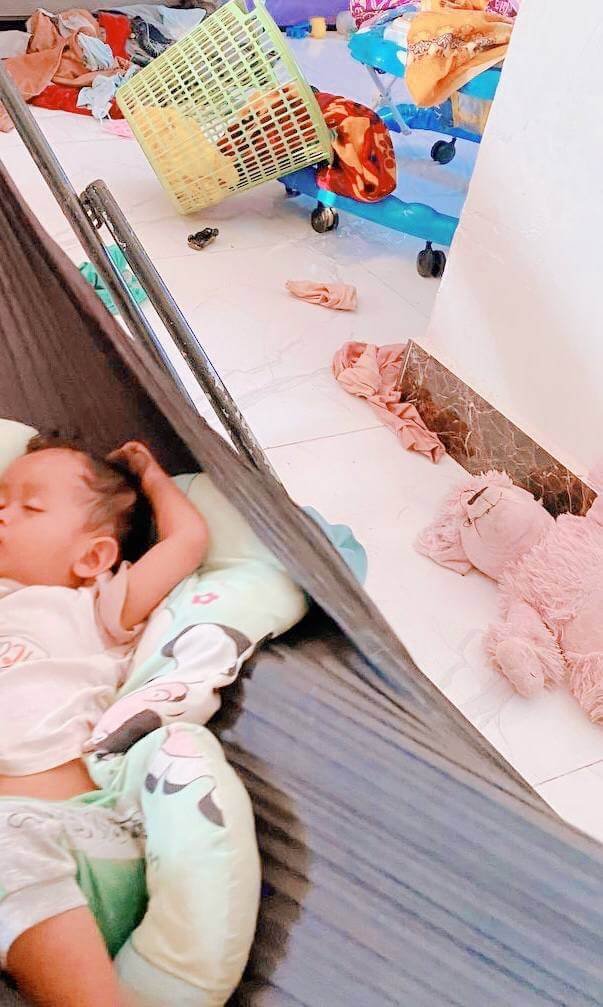
When he lies in the camping hammock, the fabric bunches up and wraps around his sides.
It is not tight, but it does cocoon him.

This is essentially deep pressure therapy at home.
The feeling of a firm, even hug helps a child whose body feels like it is buzzing with chaotic energy feel physically contained, which translates to feeling emotionally safe.
It is the same concept behind weighted blankets or the Temple Grandin squeeze machine, which you may have read about.
For toddlers who resist being held during meltdowns (mine absolutely does), the hammock provides that same input without turning it into a power struggle.
How to Set Up an Indoor Hammock (Without Drilling)
I have seen fancy therapy sensory swings and pods online that cost hundreds of dollars and require ceiling bolts drilled into studs.
If you rent or simply do not want holes in your ceiling, you do not need any of that.
- The stand: We use a standalone metal hammock frame. I prefer it over door-frame mounts because I can move it to any room, usually right in front of the fan on hot days. Setup and breakdown take about five minutes.
- The hammock fabric: Ours is standard nylon camping material. It is breathable so he does not overheat, and easy to throw in the washing machine after sticky-snack incidents.
- The height: The frame keeps him low to the ground, which also means less anxiety if he shifts in his sleep. I put a soft pillow inside for extra comfort.
- Cost: Expect to spend $40 to $80 for a basic camping hammock and metal stand combo. That is a fraction of what a dedicated sensory swing setup would run.
This setup is incredibly renter-friendly because it leaves zero marks on walls or ceilings and stores flat when not in use.
Safety Precautions to Follow Every Time
This is not a set-it-and-forget-it solution.
Here is how we use it safely.
- Stay in the room. Supervision is not optional. I use this for supervised calming while I am sitting nearby, not as a way to walk away and get things done.
- No overnight or unattended sleep. We do not use the hammock for nighttime sleep or any time he is not being directly watched. It is strictly for daytime calming and catching a meltdown early.
- Check the weight limits. Make sure both the hammock and the stand are rated well above your child’s weight.
- Clear the surrounding area. Remove any furniture with sharp corners or hard edges from the space around the hammock before use.
Our Step-by-Step Hammock Routine to Stop a Meltdown
Catching the signs early makes a big difference.
If he starts throwing toys, covering his ears, or falling apart over something tiny, I know his sensory cup is full.
Step 1: Spot the early warning signs
Toy throwing, covering ears, crying over small frustrations, or that glassy-eyed-but-wired look are all signals that he is approaching overload.
Step 2: Offer the hammock as an invitation, not a punishment
I do not force him in. That instantly becomes a power struggle.
I tell him it is time for a hammock break and frame it as something calm and cozy.
Step 3: Start with slow, rhythmic swings
I put him in and give a few gentle, even pushes.
The rhythm does the work quickly. Within a minute or two, his body usually starts to relax.
Step 4: Layer in comfort
Once the swinging takes over and his eyes start to get heavy, I tuck his favorite blanket around him and hand him a stuffed animal.
Step 5: Let him lead the exit
Even if he does not fall asleep, 15 minutes of quiet swinging is usually enough to reset his mood for the rest of the afternoon. When he is ready to get up, he gets up.
Is It Worth the Space It Takes Up?
The stand takes up a big chunk of our living room, right next to the baby walker and the laundry pile.
Ideally, I would have a tidy house with a designated calm-down corner.
That is not my reality right now.
My reality is that a toddler sensory overload meltdown is genuinely stressful for everyone involved, and this simple camping hammock helps my son feel safe when his emotions are too big to handle on his own.
It works better than anything else we have tried, costs less than a single session with a specialist, and requires no permanent changes to the house.
And once he is calm, it finally gives me a chance to sit down and breathe, too.
Frequently Asked Questions
What is the difference between a toddler tantrum and sensory overload?
A tantrum is driven by frustration over a specific unmet need. Sensory overload happens when a toddler’s brain gets too much input at once, such as loud noises, bright lights, or itchy clothing, and cannot process it. Sensory overload meltdowns often escalate when you try to reason with or comfort the child verbally. Physical calming tools, like rocking or deep pressure, tend to work better.
Why does my toddler look hyper when they are clearly tired?
When a toddler is overtired or overstimulated, their brain releases cortisol and adrenaline to keep them going. This puts them in a fight-or-flight state that looks like hyperactivity, even though what they need is rest. It is a biological response, not defiance. Rhythmic movement like swinging can help the nervous system shift out of that state.
Is a hammock safe for a toddler to sleep in?
A hammock can be used for supervised daytime calming, but it is not recommended for unsupervised or overnight sleep. Always stay in the room, ensure the hammock and stand meet the weight limits for your child, and keep the surrounding floor clear.
Do I need to drill into the ceiling for a sensory swing?
No. A standalone metal hammock frame provides the same swinging motion without any installation. It is a good option for renters or anyone who does not want to modify their home. These frames typically fold flat for storage.
What if my toddler refuses to get in the hammock?
Do not force it. Frame it as a cozy break rather than a consequence. Some kids take a few tries before they associate the hammock with feeling calm. You can also try getting in yourself first to show them it is safe and enjoyable.
Could my toddler have sensory processing disorder?
Many toddlers go through phases of sensory sensitivity that are completely typical for their developmental stage. If the meltdowns are frequent, intense, or affecting daily life, it is worth a conversation with your pediatrician, who can refer you to a pediatric occupational therapist for a proper evaluation.
How is this different from a regular sensory swing?
Dedicated sensory swings are designed specifically for therapeutic use and often attach to ceiling hardware. A camping hammock in a standalone frame achieves similar vestibular and deep pressure input at a much lower cost, without any installation, and with the added flexibility of being moveable. For most families dealing with garden-variety toddler sensory overload, the camping hammock is more than enough.
Disclaimer: I am a parent and an HR/education professional, not a licensed child psychologist or occupational therapist. This guide is based on my personal parenting experience. Always consult your child’s pediatrician for professional advice regarding your child’s behavioral development or potential sensory processing issues.
