


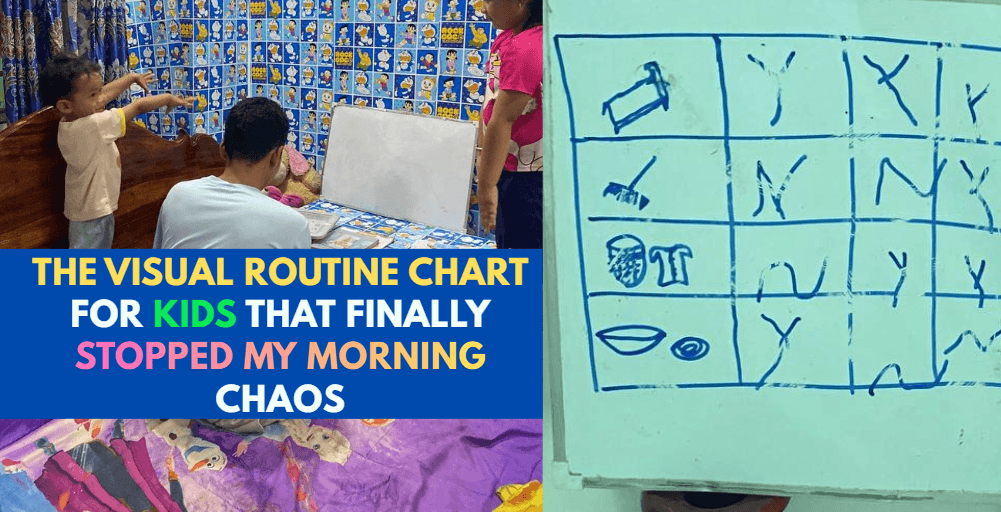
If you want to turn a peaceful morning into pure stress, just start firing off tasks the second your eight-year-old opens their eyes.
“Did you make your bed?” “Did you brush your teeth?” “Did you do your reading?” By question five, you sound like a drill sergeant and your kid has completely checked out.
I work in Human Resources, and one thing HR gets right is this: verbal micromanagement kills morale and rarely gets results.
The same thing happens at home. If you want your child to actually own their daily responsibilities, you need a system they can run themselves, not one you’re running for them.
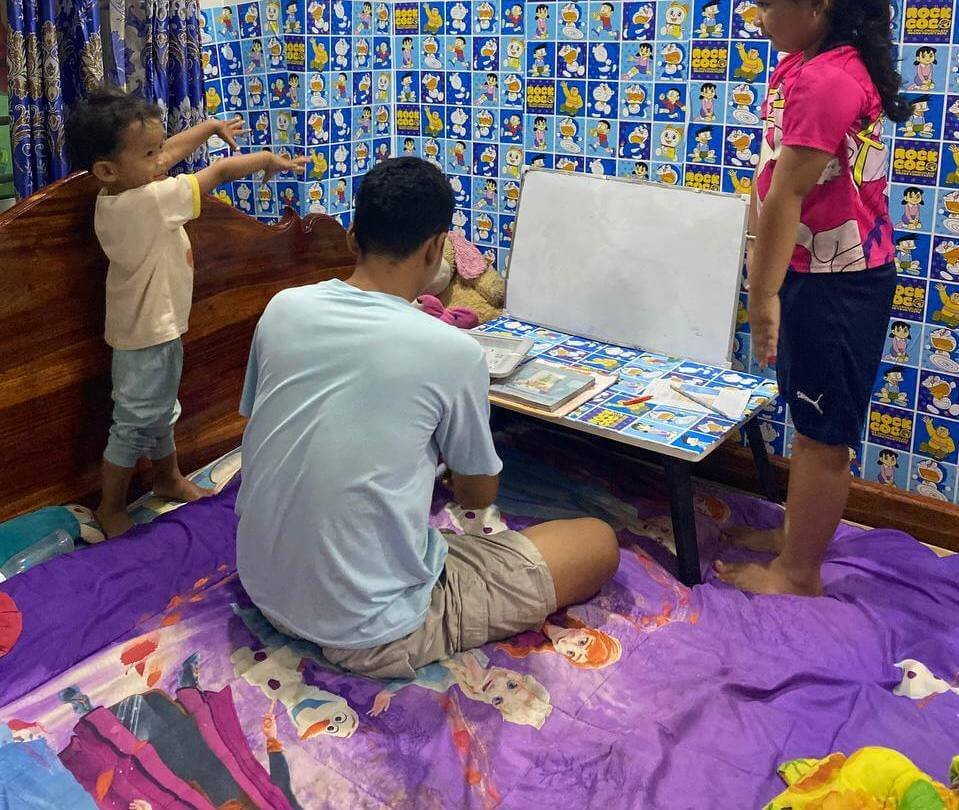
Here is the actual visual routine chart we put together. It isn’t fancy, but it has genuinely cut the nagging, built real habits, and given my daughter a real sense of personal accountability.
Why Written Checklists Don’t Work for Most Kids
The first thing most parents try is a written morning routine checklist. It seems logical. Write down the tasks, stick them on the fridge, done.
Here’s the problem: after six hours of school, reading another list of instructions feels like more homework. Your child glances at it once and never looks again.
Text-heavy checklists also put the responsibility in the wrong place. The chart just sits there. Your child just sits there. Nothing actually changes.
How a Visual Routine Chart Changes Everything
We ditched words entirely and built a visual schedule using a simple whiteboard kept right next to her bed, propped on two small wooden vases.
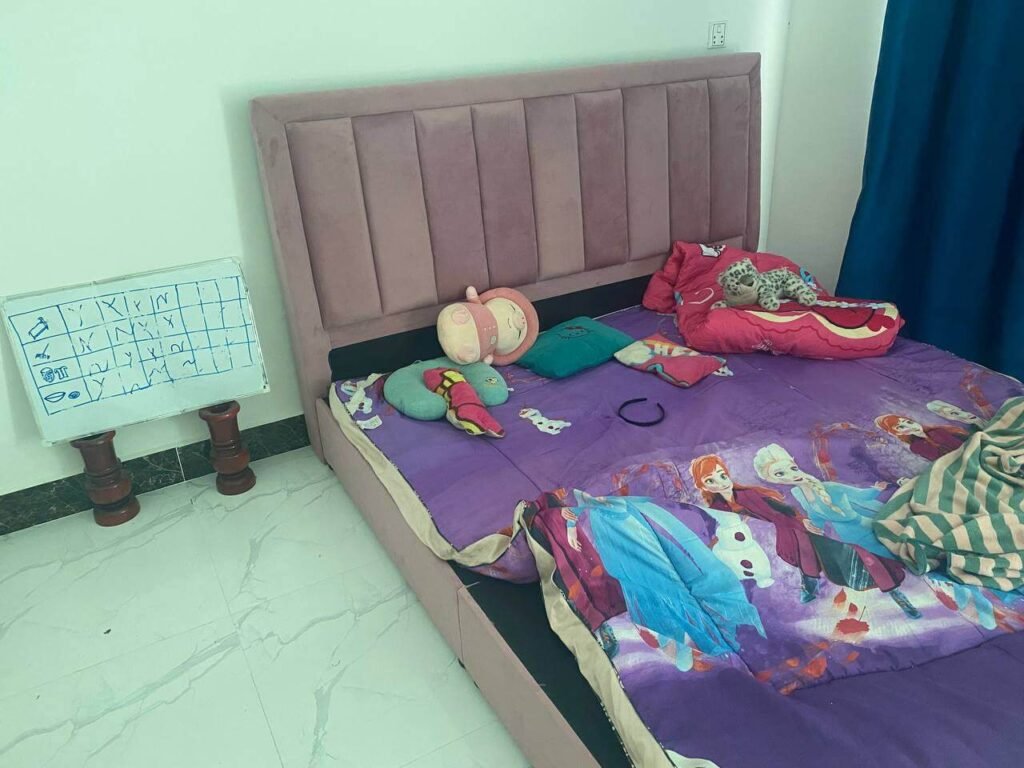
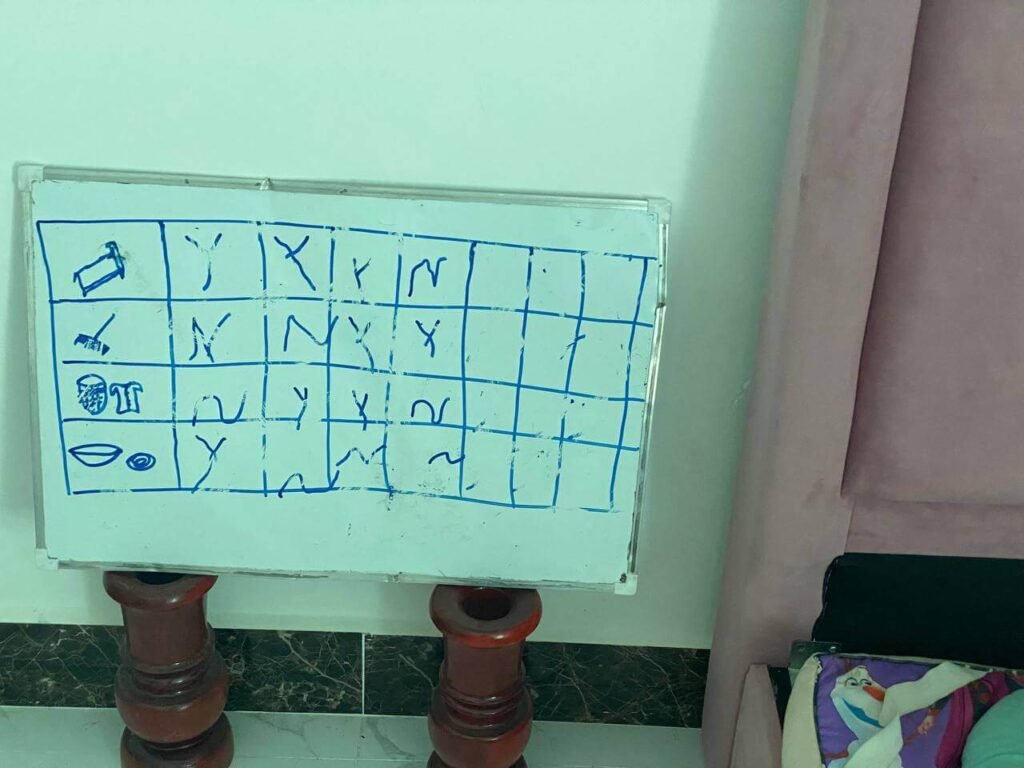
Instead of written instructions, I draw pictures. A broom means sweep the floor. A bed means make it. A basket means put away laundry.
I’m no artist. My broom looks a bit rough and the bed drawing is pretty basic. But she knows exactly what each one means.
That one change shifted everything. The whiteboard is divided into a simple grid. Each row is a picture of a task. Each column is a day.
At the end of each day, she fills it in herself with a blue marker. If she did the task, she writes a Y. If she skipped it, she writes an N.
It’s no longer me telling her what to do. It’s her looking at her own chart and deciding what comes next.
Moving Beyond Just Sweeping and Making Beds
A good responsibility chart for kids should go beyond sweeping floors and making beds.
Our daily routine at home covers three areas: life skills, cultural values, and academic development.
Teaching Manners Through Roleplay, Not Lectures
We live in Cambodia, where the Sampeah, the traditional gesture of raising joined palms to show respect to elders and teachers, is a meaningful part of daily life.
Simply telling a child to be polite doesn’t stick. Abstract instructions rarely do.
In HR training, we don’t just lecture employees on how to handle customers. We run them through real scenarios.
I use the same approach at home. Every morning before school, my daughter puts on her pink backpack and her Elsa dress, and we pretend our front door is the school gate.

I play the teacher. She stands by the door and practices the Sampeah before walking through. It takes about sixty seconds.
Making the Hard Stuff Feel Like a Game
If you’re wondering how to stop nagging your kids about homework, the honest answer is you need to make the work feel less like work.
Because English is my daughter’s second language, daily practice isn’t optional. But sitting alone at a desk doing drills after school is a fast track to burnout and tears.
So we turn it into a game.
We use online educational games, and instead of leaving her to do it alone, we do it together.
We sit on the bed with the laptop, and she practices letters or phonics while her little brother watches. I stay with her for ten to fifteen minutes.
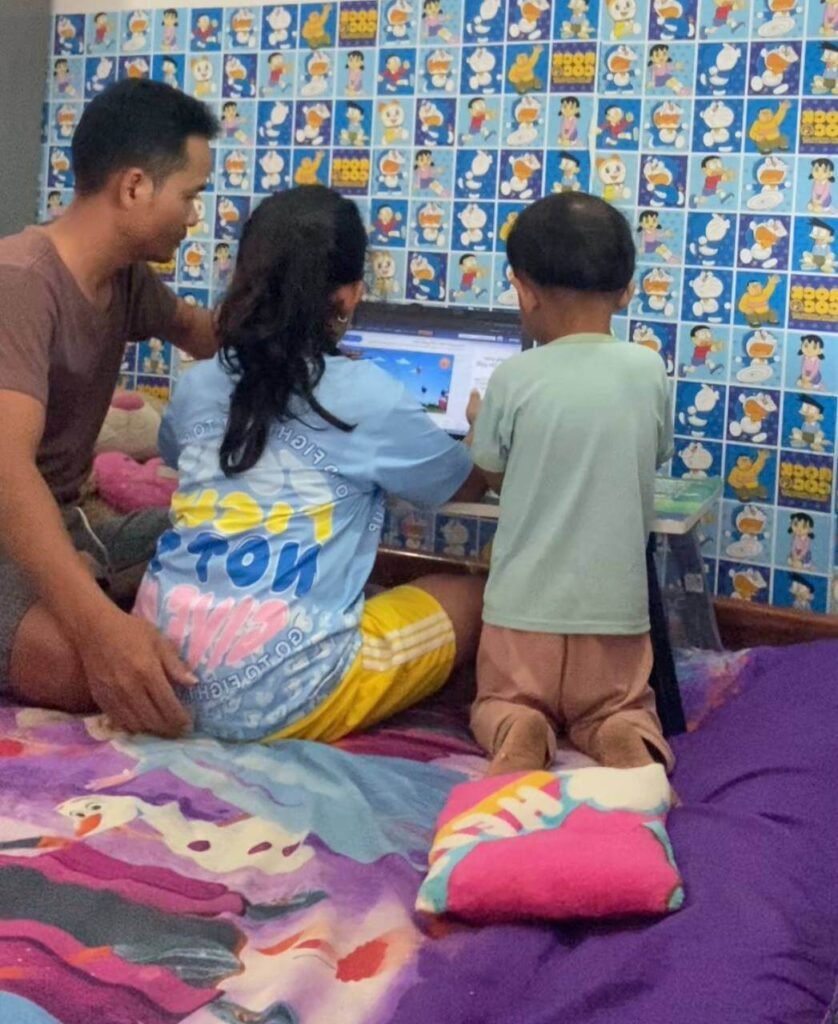
The goal is consistent forward progress, not long sessions that make her dread tomorrow.
The Part Nobody Talks About: Accepting the N Days
Looking at this kind of daily routine chart, you might picture a perfectly organized child completing every task with a smile, every single day.
Let me be straight with you, as both a dad and an HR professional: that is not what happens.
My daughter completes somewhere between 40 and 60 percent of her chart on any given day.
Her bed is sometimes made. Some mornings her chores are a mess. There are weeks where the whiteboard has far more N columns than Y columns.
And that’s okay.
If you go into this expecting 100 percent from an eight-year-old, you will exhaust yourself and quietly break the whole system.
The visual routine chart is not a performance tracker. It’s a habit-building tool. The goal isn’t perfection. The goal is awareness.
She’s learning to look at her own record and notice patterns.
She’s learning that missing a task doesn’t erase her. It just means she tries again tomorrow. That mindset is worth far more than a perfect row of Y marks.
How to Teach Kids Responsibility at Home
Most parenting tools try to hand everything to the child immediately. Give them a list, walk away, hope for the best. But true responsibility doesn’t work that way.
Whether we are roleplaying the Sampeah at the front door or sitting on her bed working through phonics together, the goal is to show up alongside her.
The visual schedule gives her the ownership, but we still provide the support.
That messy whiteboard propped up on the wooden vases isn’t magic. It’s just a tool.
Our job isn’t to run a flawless daily operation; it’s to build the systems, show up as the example, and offer quiet course corrections until the habits take root on their own.
Disclaimer: I am a parent and an HR/education professional, not a licensed child psychologist or occupational therapist. This guide is based on my personal parenting experience. Always consult your child’s pediatrician for professional advice regarding your child’s behavioral development or potential sensory processing issues.
