


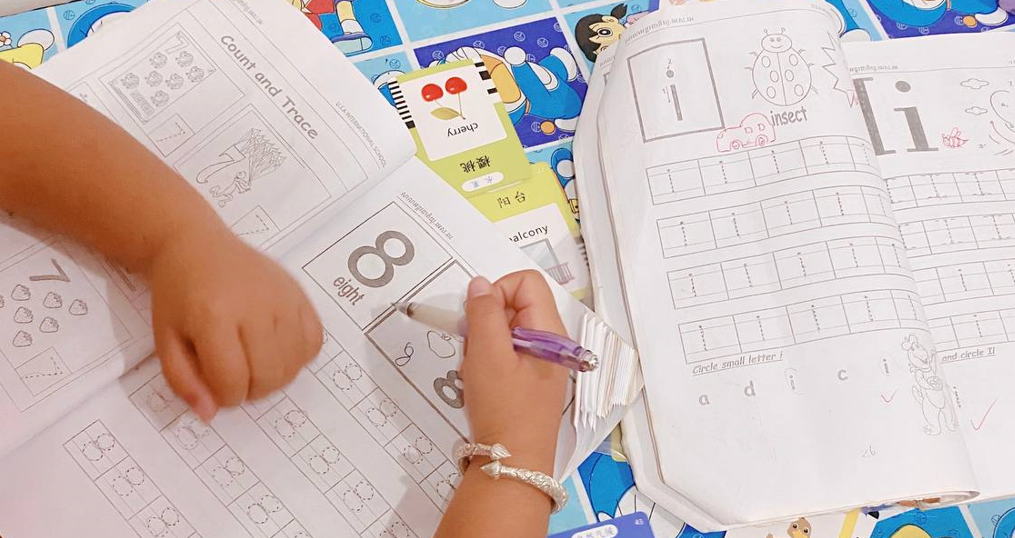
My daughter was guessing words instead of actually reading them.
If you have a second grader at home, you probably know the moment things get harder.
The books get longer, the pictures disappear, and suddenly your child has to figure out words completely on their own.
For us, the panic hit when my daughter stared at the word “eight” and froze.
She knew the number 8 perfectly (math is her thing), but connecting the letters E-I-G-H-T to that sound? Totally lost.
As a university professor, I’ve watched students memorize their way through tests without actually understanding anything.
My second grader was also struggling with reading.
She attends an international school and is learning English as a second language, so she’d built a coping mechanism: memorization.
Instead of sounding words out, she was recognizing shapes.
When she hit an unfamiliar word, she guessed. Sometimes it worked. Usually, it didn’t.
So we made a decision that felt a little scary. We put the chapter books away. We paused the grade-level workbooks.
For one full week, we revisited phonics basics.
It felt like a step backward. What happened next honestly surprised me.
The Reading vs. Guessing Trap
Before I get into what we did, I want to explain what was actually going on, because if your child is doing this too, you’re not alone, and it doesn’t mean something is seriously wrong.
When kids first learn to read, many rely on memorization.
They see a word, remember it from before, and say it. That works fine when the words are short and familiar. But once second-grade reading kicks in, there are too many new words to memorize.
So instead of slowing down to sound things out, kids start guessing based on the first letter or the overall shape of the word.
That was exactly what my daughter was doing.
She wasn’t reading. She was guessing. And the more she guessed, the less confident she felt about actually trying.
The 3 Simple Phonics Activities We Did at Home
I’m a university professor, not a primary school teacher. I don’t have a special curriculum or formal phonics training.
What I have is a daughter who needed help and enough curiosity to research what actually works for kids struggling at this age.
Here’s what we focused on, and why each one made a real difference.
1. The Flashcard Scavenger Hunt
Sitting at a table flipping through flashcards one by one is not exciting for an 8-year-old. So we turned it into a game.
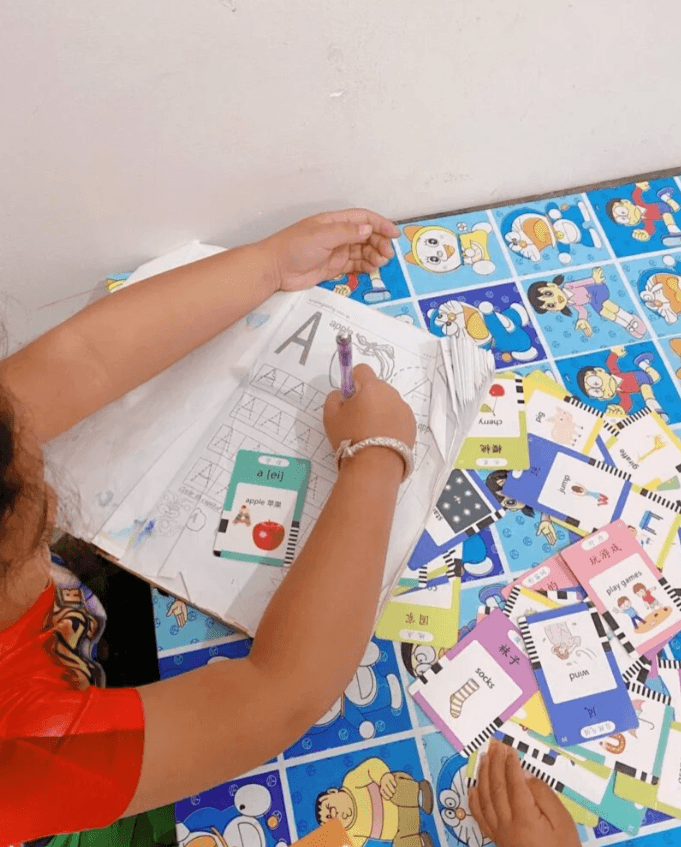
I spread her vocabulary flashcards across the table, words like “apple,” “grape,” and “socks.” Then I opened her workbook to a specific letter page.
When we worked on the letter A, her job was to find every flashcard that started with that sound and place it on the page.
Simple, right? But here’s what made it work: she couldn’t just guess anymore.
She had to actually look at the first letter of each word. Over a few days, that habit started to stick.
2. Tracing Words, Not Just Letters
Most people think of tracing as a handwriting exercise.
It helps with that, sure. But tracing is also one of the best ways to help a struggling reader connect letters to sounds.
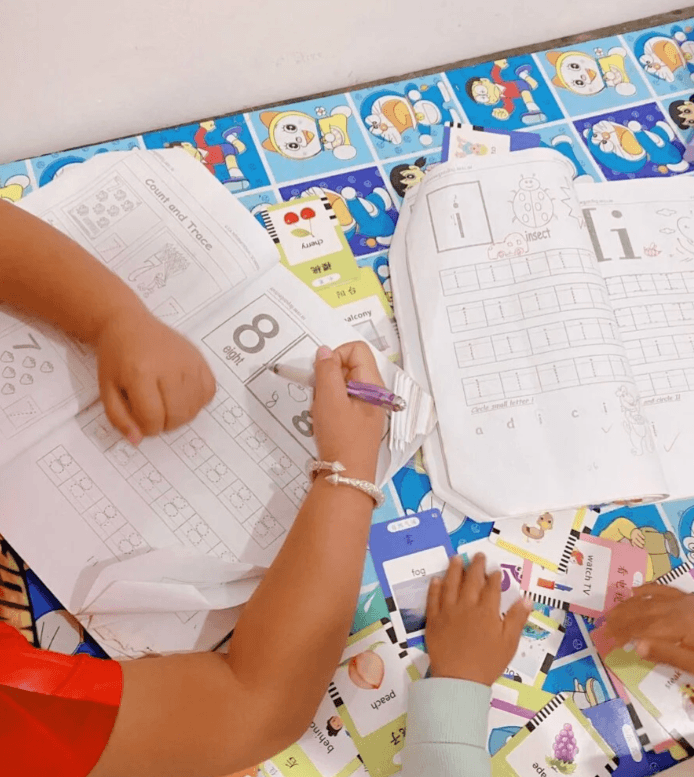
When a child traces a whole word, not just a single letter, their brain has to process each letter in order. It slows them down.
It makes them pay attention. And for a kid who’s been rushing through words and guessing, that slowdown is exactly what’s needed.
We used number words for this one.
My daughter traced the number 8, then traced the word “eight” letter by letter right next to it.
Doing both together helped her brain link the symbol she already knew to the spelling she kept stumbling over.
It clicked in a way that just reading the word never had.
3. Say It While You Trace It
This one came from a tip a teacher shared with me, and it quickly became our favorite part of the routine.
The rule is simple: while tracing, say the sound of each letter out loud at the same time.
So when my daughter traces the letter “i,” she says “ih… ih… insect.” When she traces “a,” she says “ah… ah… apple.”
She connects the letter to its sound and then to a familiar word.
It takes maybe 30 seconds per letter, but for a child who’s been skipping over sounds and guessing, that kind of repetition builds something real.
It looks slow. It feels repetitive. But for an 8-year-old who’s falling behind in a fast-moving classroom, this small habit builds genuine confidence.
Our Simple Phonics Toolkit
When we decided to reset, I assumed I’d need to buy expensive reading programs or apps. I was wrong.
Low-tech, hands-on tools worked best because they removed the distractions.
Here’s what was on our table that week.
1. “Count and Trace” Workbooks
We didn’t use standard reading books.
We used a workbook that combined numbers with words, and that was a deliberate choice. Because my daughter is strong in math, the number-based pages gave her a confidence boost right away.
She wasn’t intimidated because she already recognized the numbers.
If you’re shopping for a workbook, look for one with large, clear fonts and directional arrows inside the letters. Those arrows matter.
They guide your child’s hand and reinforce the correct path of each letter shape while they say the sound out loud.
2. Visual-Association Flashcards
Not all flashcards are the same. The ones we used had one specific feature that helped: visual cues.
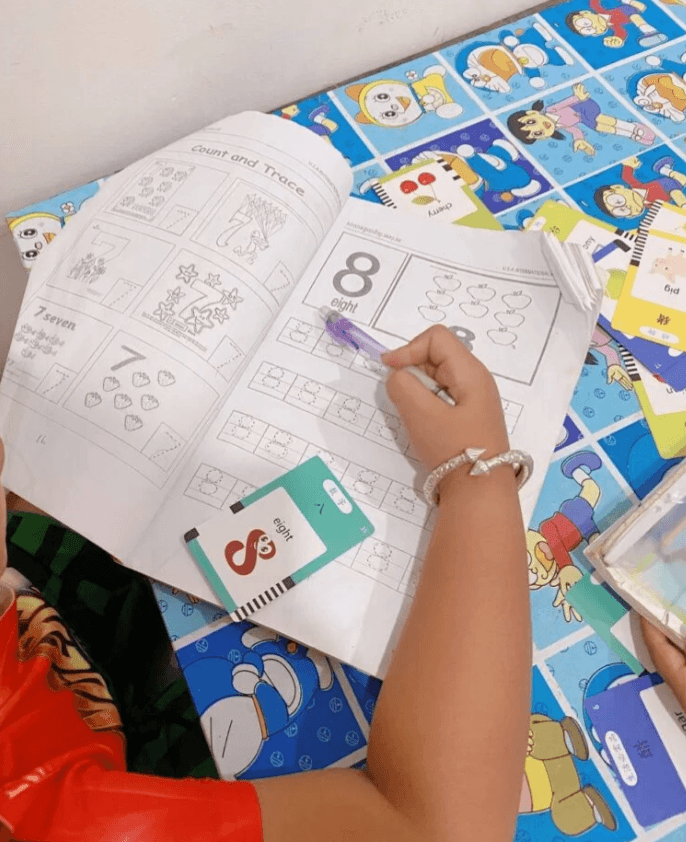
The flashcard for “eight” had a picture of a snake shaped like the number 8.
That image was the “aha” moment for her. It connected the shape, the object, and the word all at once.
Since we’re a bilingual family, having cards that included her native language characters also helped ground her understanding, even though our focus was entirely on English phonics.
3. The Purple Pen
This sounds like a small thing, but it mattered. I let her pick her own pen for these activities. She chose a bright purple gel pen.
Pencils feel like schoolwork and mistakes. A fun colored pen feels like an art project.
It lowered the stakes. When she made an error, we laughed and kept going. No erasing. No pressure. Just progress.
Taking a Step Backward to Move Forward
If your second grader is struggling to read, going back to basic flashcards doesn’t mean you’re failing as a parent.
Sometimes kids need to go back before they can move forward.
Building a stronger foundation at home, even if it only takes one week, can make everything that comes next so much easier.
My daughter still works on phonics every day. She’s not perfect. But she’s reading. And she’s not afraid to try anymore.
That’s the biggest win.
If your child is guessing words when reading, don’t wait.
Start with these three activities and see what happens.
Disclaimer: I am a parent and an HR/education professional, not a licensed child psychologist or occupational therapist. This guide is based on my personal parenting experience. Always consult your child’s pediatrician for professional advice regarding your child’s behavioral development or potential sensory processing issues.
