


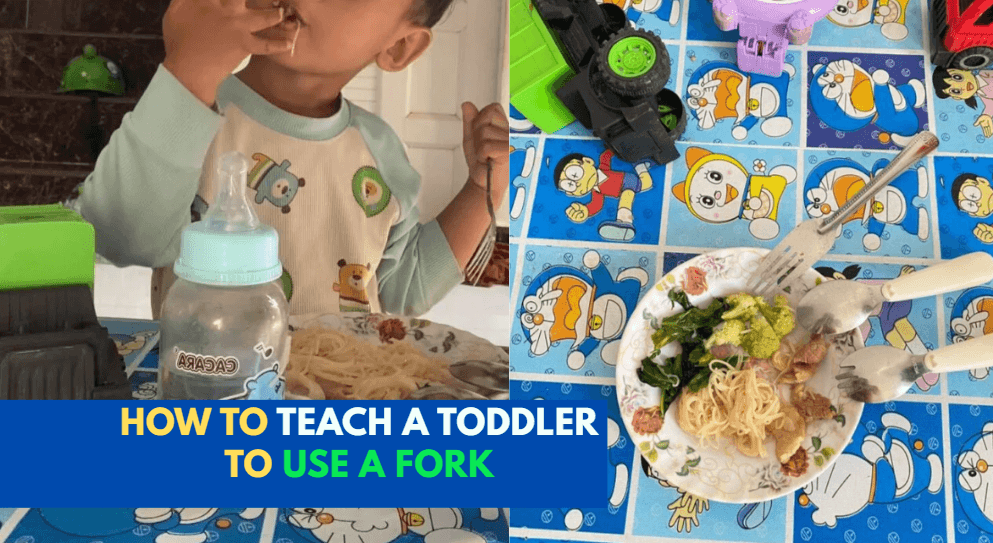
Last Tuesday, I found a noodle stuck to the ceiling.
Yes, the ceiling.
My two-year-old had just finished lunch, and honestly?
I wasn’t even mad. Because here’s what I’ve learned as a parent: when you’re teaching a toddler to use a fork, mess isn’t failure. It’s progress.
If you’re wondering how to teach a toddler to use a fork without turning every meal into a disaster zone, you’re in the right place.
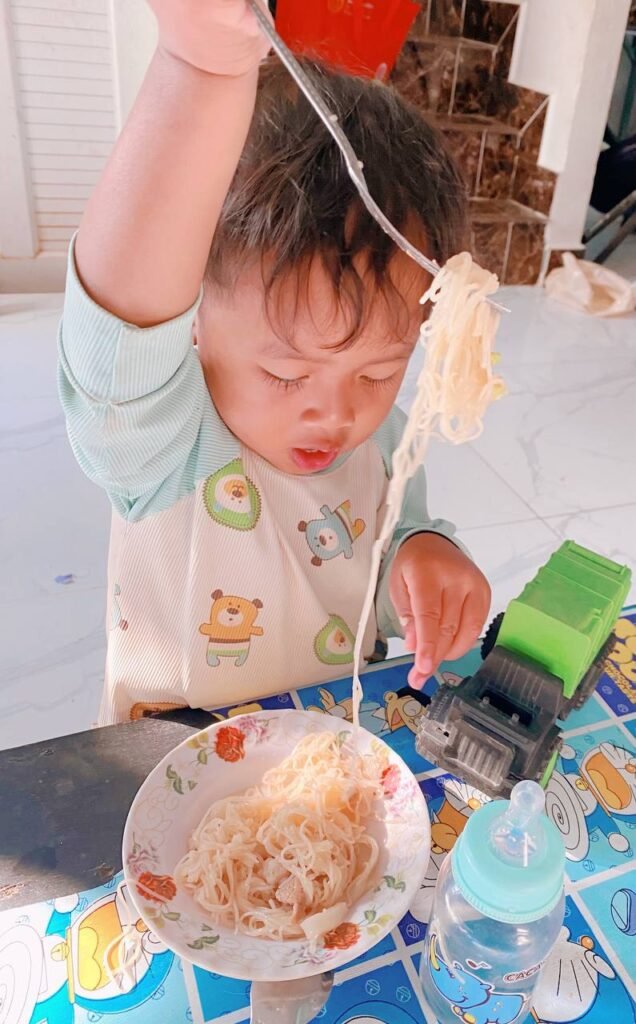
I’ll share what actually works and what doesn’t, based on real experience with a very enthusiastic eater.
Real life: Sometimes the fork is just an accessory while the hands do the actual work. Messy eating is a normal part of the learning process.
Is It Normal for Toddlers to Make a Mess When Eating?
Short answer: Absolutely yes.
If your toddler makes a mess when eating, their brain is working exactly as it should.
Think about what they’re actually trying to do:
- Hold a slippery object.
- Stab moving food (especially wiggly things like noodles)
- Lift it to their mouth without dropping it.
- Do all of this while sitting still (ha!)
That’s a lot of coordination for someone who just learned to walk last year.
The mess isn’t a problem to fix. Every dropped bite teaches their brain something new about angles, grip, and distance.
Why Teaching Toddler Utensil Skills Matters
For the first few months, I just fed my son myself. It was faster, cleaner, and way less stressful.
Then I noticed something: he’d reach for the spoon and get frustrated when I wouldn’t hand it over.
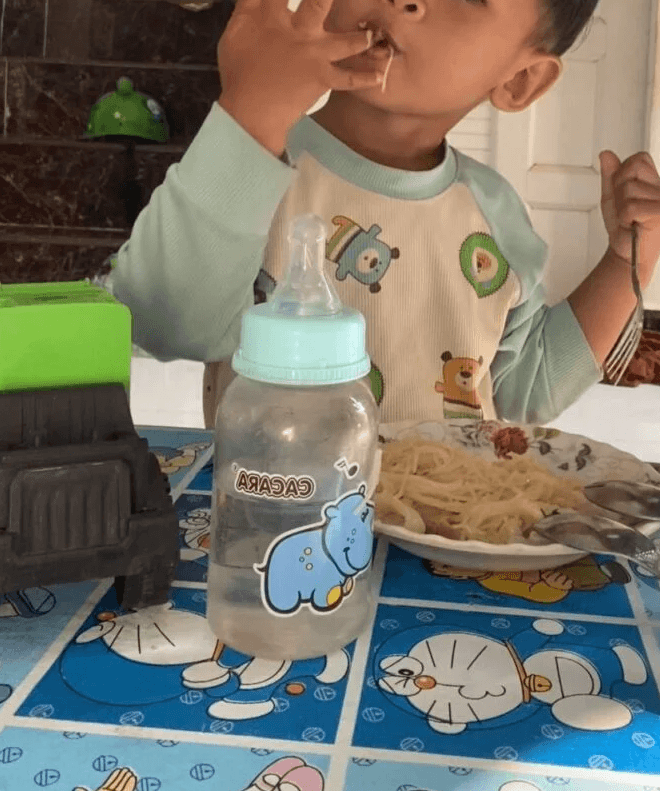
Kids want to feed themselves. It’s one of their first big steps toward independence.
When you teach toddlers to feed themselves, you’re building more than table manners. You’re building:
- Confidence — “I can do this myself!“
- Hand-eye coordination — the foundation for writing, drawing, and so much more
- Problem-solving — What happens if I tilt the fork this way? What if I use my other hand?
And once they get the hang of it, mealtimes genuinely get easier.
When Should You Start Teaching Fork Skills?
Most toddlers are ready to start around 12 to 15 months of age.
According to the CDC’s developmental milestones, most children are using spoons and forks by 18 months, although practice typically begins much earlier.
Signs they might be ready:
- They can pick up small objects with their fingers (like cereal or peas)
- They’re interested in what you’re eating.
- They try to grab your utensils.
- They can sit in a high chair without constantly sliding around.
Every kid moves at their own pace. My neighbor’s daughter was spearing broccoli at 14 months. My son wasn’t really interested until 18 months old. Both are completely normal.
The Best Fork for a Toddler Learning to Eat
Not all forks are made equal when it comes to tiny hands.
Experts recommend forks with short, chunky handles. We bought a few of those (and keep them on the plate!), but honestly?
My son usually insists on using a long metal fork exactly like the ones Mom and Dad use. Sometimes you just have to let them use what makes them happy!
How to Teach a Toddler to Use a Fork: Step-by-Step
Here’s the practical stuff.
Step 1: Start with the Right Foods
Don’t start with soup. Trust me.
Begin with soft solids that are easy to stab. Stick-shaped foods or soft squares make great, frustration-free targets.
Best foods for fork practice:
- Steamed vegetables (broccoli florets, carrot chunks)
- Soft fruit cut into small pieces (avoid round shapes like whole grapes)
- Noodles! Experts say short pasta is easier, but my son absolutely loves the challenge of long noodles. It’s messy, but it keeps him engaged!
- Cubed cooked chicken
- Pancake squares
Soft enough to stab, firm enough to stay on the fork.
Step 2: Let Them Watch You
Before handing over the fork, eat a few bites yourself. Slowly. Dramatically, even.
“Look! I’m poking this banana. Now I’m lifting it up. Now it’s going in my mouth!”
It may sound silly, but toddlers learn a great deal from watching. They’re little copy machines.
Step 3: Hand Over Hand (At First)
For the first few tries, place your hand over theirs and guide them through the motion:
- Stab the food
- Lift to mouth
- Take a bite
Do this two or three times, then let them try on their own. Don’t hover too long, or they’ll just wait for you to do it for them.
Step 4: Back Off
This is the hardest part.
You have to sit there and watch them miss their mouth. Watch the food fall. Watch them get frustrated.
But if you jump in too fast, they learn, “I can’t do this. Mom or Dad has to do it.”
Instead, try:
- “Oops! Try again, you almost had it.”
- “That one was tricky. Want to try a different piece?”
- Celebrate the wins: “You got it! High five!”
Step 5: Embrace the Mess (With Boundaries)
I don’t let my son eat spaghetti on the carpet. I’m not a saint.
But in the kitchen? In the high chair? Go for it.
How we manage messy eating:
- Put a plastic mat or an old towel under the high chair.
- Use a silicone bib with a food-catching pocket.
- Keep messier meals in easy-clean areas.
- Keep a damp cloth nearby for quick wipes.
Let them bring a “dining buddy” too. Our green dump truck attends every lunch.
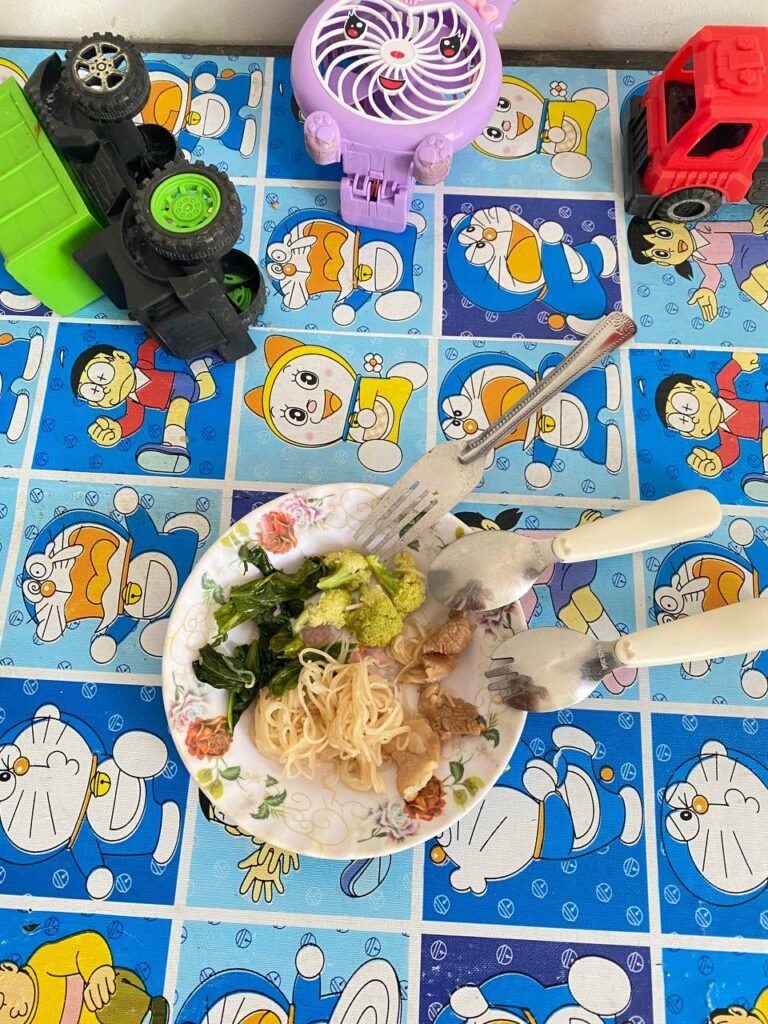
If a toy keeps him in the chair five minutes longer, that’s a win.
The mess is temporary. The skills are forever.
Sensory Learning Through Food: Why Mess Is Actually Good
Toddlers learn through their senses. Touching food, squishing it, and yes, even throwing it (ugh), is all part of how their brains process the world.
When my son smears yogurt on his tray, he’s learning:
- Texture (smooth, sticky, cold)
- Cause and effect (if I push this, it moves)
- Fine motor control (using fingers to manipulate objects)
That’s healthy brain development. We don’t encourage food fights, but a little sensory exploration is completely fine.
That said, if the mess or noise starts causing a meltdown, your child might be overstimulated. In those moments, a short break before trying again can really help.
How Long Does It Take to Learn Toddler Utensil Skills?
Real talk: weeks. Sometimes months.
My son started trying at 15 months. By 20 months, he could get food to his mouth about 60% of the time. By 2 years old, he was pretty reliable with a fork.
Even now, if he’s tired or the food is tricky, he’ll go back to using his hands. And that’s okay.
Progress isn’t a straight line. Some days they’ll nail it. Other days, they’ll ignore the fork completely and eat with their fingers.
Just keep offering it, keep modeling, and keep staying calm.
You’re Doing Great
If you’re reading this, you’re already doing an awesome job.
Teaching a toddler to use a fork isn’t about perfect table manners at 18 months.
It’s about giving them the chance to try, fail, and try again. It’s about patience, a lot of patience, and accepting that your kitchen floor will never look quite the same.
But one day, sooner than you think, you’ll look over and see your kid eating a full meal with a fork all by themselves. And you’ll realize all those noodles on the ceiling were completely worth it.
Disclaimer: I am a parent and an HR/education professional, not a licensed child psychologist or occupational therapist. This guide is based on my personal parenting experience. Always consult your child’s pediatrician for professional advice regarding your child’s behavioral development or potential sensory processing issues.
