


Your sweet little toddler just bit someone, and now you’re standing there feeling equal parts embarrassed, frustrated, and confused.
Maybe it happened during playtime at home, or maybe daycare called you about it. Either way, you’re not alone in this.
Take a breath. In the corporate world, biting a coworker gets you fired immediately. In the toddler world, it’s just a Tuesday.
It is one of the most common developmental phases out there, and there is a way to manage it.
Understanding the “Hostile Work Environment” (Why they actually bite)
Here’s the thing about toddlers: they’re dealing with huge feelings and zero ability to express them.
They don’t know the word “angry.” They can’t say “I don’t like that” or “give that back.” So when things get overwhelming, they do the only thing that makes sense to their little brain in that moment.
They bite.
They Can’t Tell You What’s Wrong Yet
Most toddler biting comes down to one simple thing: they don’t have the words yet.
My son went through this around age 2. His older sister would grab his toy car, and before I could blink, he’d bite her arm.
Not because he was being mean. He just had no other way to say “that’s mine.” His mouth became his only translator.
When your toddler bites, they’re almost always trying to communicate something.
They just picked the worst possible way to do it.
Their Gums Hurt
Sometimes it’s not even emotional.
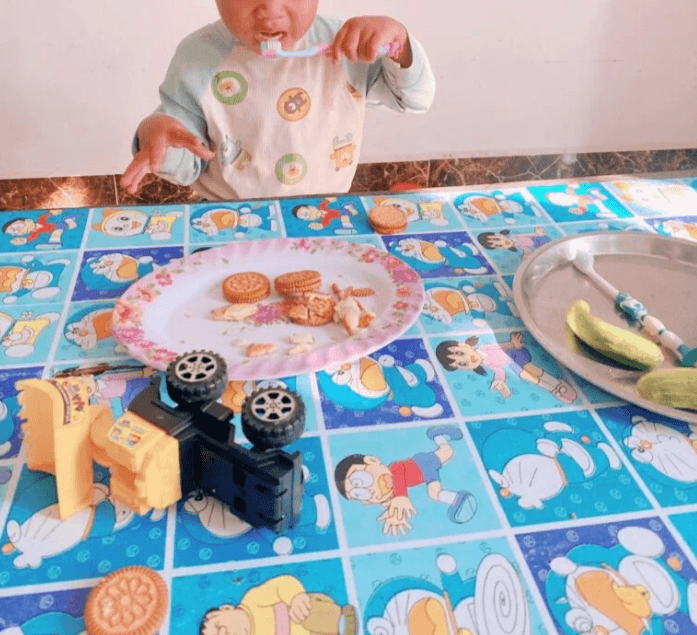
Teething puts real pressure on a toddler’s gums, and biting down actually gives them relief.
If your child is around the age when molars are coming in, this could be a big part of what’s driving the behavior.
Offering crunchy snacks like cucumber slices or letting them chew on a soft toddler toothbrush can genuinely help with sore gums.
It’s the fastest way to get Management’s attention
This one’s hard to hear, but it’s real.
When I was working from home, my son would come over, babble at me, try to show me his toys.
If I stayed glued to my screen, he’d bite my arm.
Did it work? Yes, every single time. I’d immediately stop what I was doing and look at him.
In his mind, he’d found a foolproof system.
Toddlers who bite for attention aren’t being manipulative, they’re just doing what gets results.
Everything Is Too Much
A tired toddler at a loud birthday party, surrounded by noise and chaos, is a toddler who’s running on empty.
When they bite in those moments, it’s basically their system overloading.
They don’t have the tools to manage big sensory input yet, so it spills out physically.
They’re Just Experimenting
Toddlers test everything. What happens if I throw my food? What if I pull the dog’s tail? What if I bite Dad’s shoulder?
They’re not being mean. They’re genuinely figuring out cause and effect, one bad decision at a time.
My 7-Step Incident De-Escalation Plan
These are the things that actually helped in our house. Not all of them worked every day, but they made a real difference over time.
1. React Right Away, But Keep It Calm
Your first instinct might be to yell or make a big deal of it. Try not to. A dramatic reaction can actually encourage some toddlers because it feels powerful or entertaining to them.
Instead, use a firm, serious tone right away: “No biting. That hurts.”
Keep your face calm and neutral. No laughing it off, but no screaming either. Just clear and direct.
2. Comfort the Victim First
This changed everything for us. My instinct was always to turn to my son and start scolding him. But when I switched to comforting his sister first, something shifted.
He started to notice that biting didn’t get him attention, it actually pulled my attention away from him.
When your toddler bites another child, turn to that child first.
Check on them, offer a hug, get an ice pack if needed. Let your toddler watch that play out.
3. Look for the Pattern
Start paying attention to when it happens. Is it always before lunch? During toy disputes? When they’re tired or overstimulated?
Once I figured out that my son mostly bit when he was tired or feeling ignored, I could prevent a lot of it.
I’d give him some extra one-on-one time before I needed to work, or I’d move his nap up a little earlier on busy days.
4. Teach Them a Better Way Out
Even toddlers who can’t talk much yet can learn to sign or say simple words like “no,” “stop,” or “mine.” Practice these during calm moments, not mid-meltdown.
I’d role-play with my son during quiet time: “When you want a toy, you can say ‘my turn’ or come get Mommy. We don’t bite.”
Did he get it immediately? Not even close. Did it eventually stick after what felt like a thousand repetitions? Yes.
5. Give Them Something Safe to Bite
If teething seems to be driving the biting, keep some options nearby. Cold teething rings, frozen washcloths, or crunchy snacks can take the edge off.

When you see them gearing up to bite, redirect them: “We don’t bite people. You can bite this instead.”
A chew toy, a soft plushie, even a cold cucumber slice works better than your arm.
6. Remove Them from the Situation
When biting happens during play with other kids, calmly take them out of it. Not as a dramatic punishment, just as a natural consequence.
“You bit your friend, so playtime stops for now.”
Keep it short. A minute or two is enough.
Long time-outs don’t really land with toddlers because their sense of time is almost nonexistent.
7. Be Consistent Every Time
This is honestly the hardest part. You have to respond the same way every single time it happens.
If you laugh it off one day and get upset the next, your toddler has no idea what the actual rule is.
Pick your approach and stick with it, even when you’re running on no sleep.
The Worst Management Tactics (What NOT to do)
Don’t Bite Them Back
Older relatives love suggesting this one. Please don’t. It’s confusing, it models the exact behavior you’re trying to stop, and it usually makes things worse.
You’re teaching them that biting is an acceptable response when someone upsets you.
Don’t Give a Long Lecture
A toddler’s attention span lasts maybe 30 seconds.
A five-minute talk about feelings and consequences isn’t going to land. Keep it short: “No biting. Biting hurts.”
Don’t Expect It to Stop Overnight
The toddler biting phase takes time to work through. Some days will be better than others. That’s completely normal, and it doesn’t mean what you’re doing isn’t working.
When to call in outside consultants (Your Pediatrician)
Most kids grow out of biting by around age 3 as their language and emotional regulation develop.
But it’s worth talking to your pediatrician if:
- Your child is still biting frequently after age 3
- The biting is breaking skin or leaving serious marks
- It’s happening constantly throughout the day, every day
- There are other signs of aggression that feel out of the ordinary
A pediatrician or child development specialist can help rule out sensory issues, anxiety, or anything else that might be contributing.
Figuring out how to stop toddler biting is one of those parenting challenges that really tests you. It’s painful.
It’s embarrassing when it happens in front of other people. And it can make you feel like you’re doing everything wrong.
But you’re not. This is a normal developmental phase. Annoying? Absolutely. A reflection of bad parenting or a bad kid? Not at all.
Stay calm, stay consistent, and give yourself some credit. You’re working through it, and that matters.
And one day, you really will look back on this and laugh. At least, that’s what I keep telling myself.
Disclaimer: I am a parent and a university educator, not a licensed child psychologist or pediatrician. This guide is based on my personal parenting experience and educational background. Always consult your child’s teacher or pediatrician for professional advice regarding your child’s educational development.
