


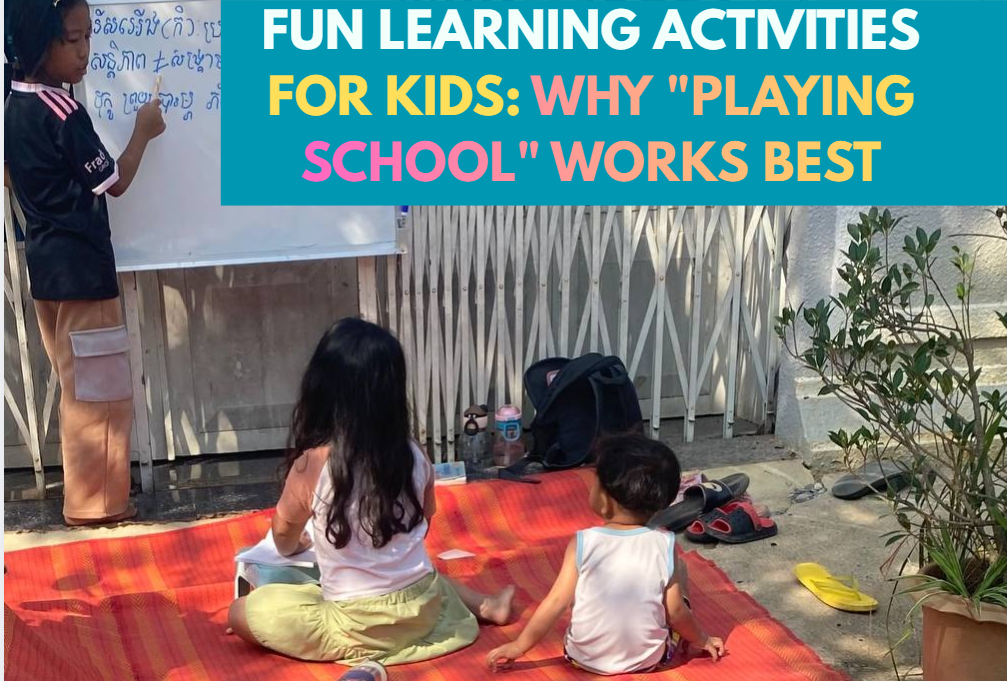
Last Sunday morning, around 9 a.m., I woke up to kids chanting and reading out loud.
I figured the TV was on. But when I walked to the front of the house, I found something I wasn’t expecting at all.
The neighborhood kids had turned my driveway into a school.
No cartoons. No video games. Just kids playing school, completely by choice, and clearly loving every second of it.
Learning Through Play: What I Saw
My neighbor’s daughter took charge as the teacher. My 8-year-old became her star student.
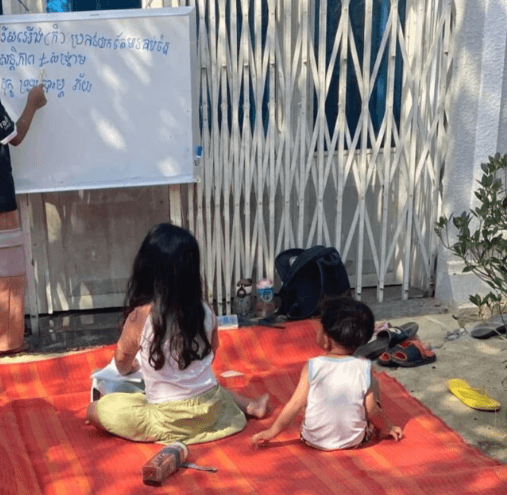
Even my 2-year-old son got pulled in as the “intern,” mostly supervising from the sidelines with his yellow toy dump truck.
The setup was simple but genuinely creative.
They hung a whiteboard on our front gate, spread a big red woven mat on the concrete, and my daughter dragged out a tiny blue plastic stool to use as her desk.
It looked like a real classroom. A small, slightly chaotic one, but real.
Making Learning Fun Without Technology
The “teacher” wasn’t just drawing on the whiteboard.
She was actually teaching my daughter to read and write complex Khmer script, pulled straight from her own school lessons.
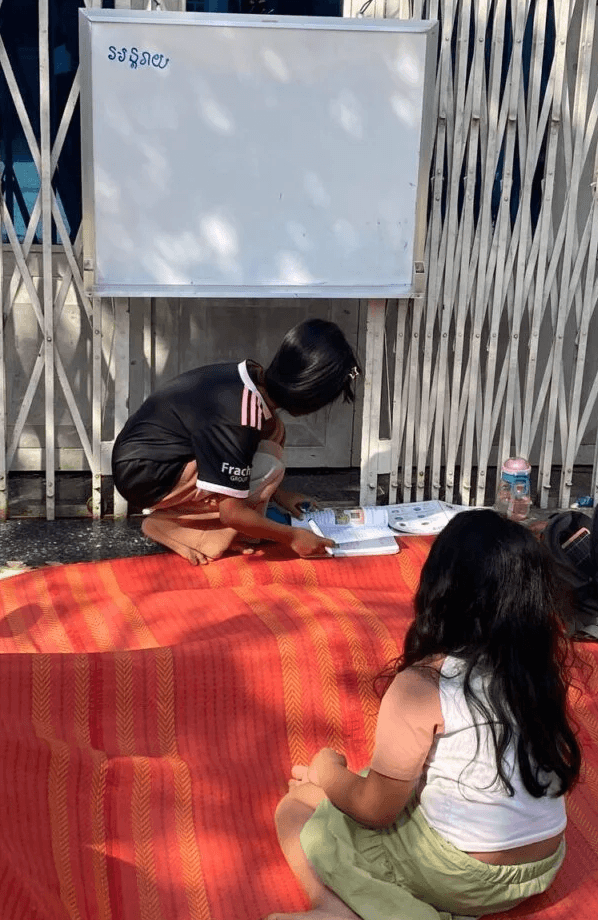
Then she added a twist I didn’t see coming: a deadline.
“You have 5 minutes to finish writing this,” she announced.
I watched from the doorway. My daughter’s head was down, writing fast, balancing on that little blue stool.
The whole thing felt surprisingly tense. Like watching a real classroom with real stakes.
That’s one of the unexpected benefits of kids playing school that I hadn’t really thought about before.
They were learning time management and working under pressure, and it didn’t feel like studying at all.
How Pretend Play Helps Learning
What got me most was this: these kids chose to play school during their break from actual school.
They could have done anything. They picked this.
Pretend play helps learning in ways that regular studying often can’t match.
When kids run the experience themselves, a few things happen naturally:
They decide what to learn and how, so they’re already more invested.
There’s no fear of failure because mistakes are just part of the game. Social skills show up without anyone forcing them through teaching, listening, and taking turns.
And the whole thing feels like an adventure rather than homework.
The teacher was passing on what she’d learned.
My daughter was practicing writing. The toddler was watching and copying everything. Everyone was getting something out of it.
When Nature Joined the Lesson
Right when the deadline pressure was at its peak, a strong wind swept across the patio.
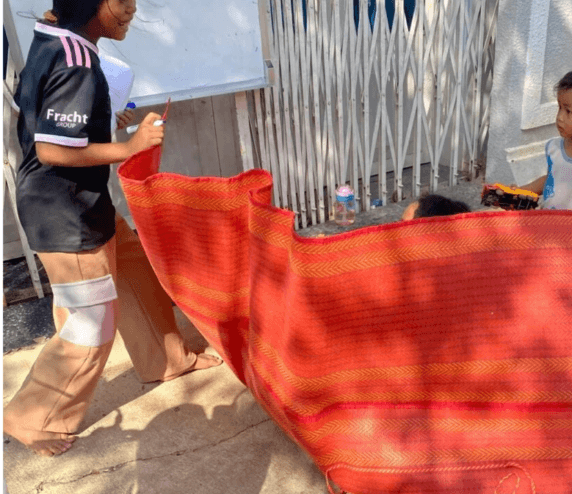
It caught the big red mat and launched it into the air like a magic carpet, folding it right over the students.
Notebooks flew. Pencils scattered across the driveway.
Then came the laughter.
The strict little teacher started giggling. My daughter cracked up.
Even the toddler looked around in total confusion as the floor suddenly became a wall. Just like that, the tension was gone.
The Importance of Play for Kids (And a Lesson for Adults)
That moment taught me something real about making learning fun. Goals and deadlines matter.
The kids were picking up actual skills. But when the pressure gets too heavy, the learning stops working.
The wind didn’t ruin anything. It made the whole thing better.
After the laughter settled, the kids went right back to their little school with more energy than before.
What Parents Can Learn
If you want to build fun learning activities for kids at home, a few things are worth keeping in mind.
- Let kids lead sometimes. When children pick their own learning games, they go deeper without even realizing it.
- Mix serious with silly. A bit of challenge keeps things meaningful, but humor keeps kids in it.
- Don’t cut off the laughter. When kids laugh during learning, they’re still learning, maybe even more.
- Keep it simple. You don’t need expensive toys or apps. A whiteboard on a gate, a mat on the concrete, and some imagination are honestly enough.
The Real Benefits of Playing School
Watching that driveway classroom, I noticed the benefits stacking up in real time.
Kids get more confident when they practice leading and explaining things. Knowledge sticks better when you teach it to someone else.
Creativity shows up when they have to find new ways to explain ideas. Patience builds when you take turns being the teacher and the student.
And when learning feels genuinely fun, kids just want more of it.
A Lesson for Parents and Teachers
Whether you’re a parent, a teacher, or even a manager, the same idea applies: results matter, but so does joy.
That little teacher created real pressure with her 5-minute deadline.
That’s not a bad thing. It built focus and urgency. But when the wind scattered everything, and everyone laughed?
That built something even more valuable: the feeling that learning together is actually enjoyable.
The best learning happens when kids feel both challenged and safe. Pushed forward and free to laugh when things go sideways.
Final Thoughts
That Sunday morning was a good reminder that the importance of play for kids is hard to overstate. Children genuinely want to learn.
They just sometimes need the space to do it their own way.
You don’t need perfect conditions. You need a safe space, even if it’s just a driveway. Some simple tools like paper and a board.
Time to let kids explore without interrupting. And permission to laugh when things fall apart.
The next time you catch kids playing school, playing store, or doing anything that looks a little like “work,” leave them to it.
You’re watching how pretend play helps learning happen in real time.
And if a gust of wind blows the whole lesson into chaos?
Even better. That’s life teaching them something no classroom ever could: how to laugh, shake it off, and keep going.
Disclaimer: I am a parent and a university educator, not a licensed child psychologist or pediatrician. This guide is based on my personal parenting experience and educational background. Always consult your child’s teacher or pediatrician for professional advice regarding your child’s educational development.
