


In corporate HR, if you put an employee in a dark room and make them watch mandatory training videos for two hours, they turn into a zombie.
In parenting, we call this ‘passive screen time.’
My kids used to spend their screen time watching cartoons. You know the drill: glassy eyes, open mouths, completely zoned out. I hated it.
I tried going cold turkey, but my 8-year-old ‘Assistant Manager’ needs to type for school, and my 2-year-old ‘Head of Negotiations’ desperately wants to copy everything she does.
Screens aren’t going anywhere.
So I stopped asking ‘how much screen time?’ and started asking ‘what kind of software are we running?’
That one small operational shift changed everything.
Passive Consumption vs. Interactive “Upskilling”
Not all screen time is created equal, and once I understood that, things got a lot clearer.
Passive screen time means sitting back and absorbing.
Cartoons, YouTube videos, mindless scrolling. Their brains are basically in receive-only mode.
Active screen time means actually doing something. Thinking, problem-solving, creating.
Typing games, educational apps, and interactive tools that require a response.
The difference isn’t subtle.
When my daughter watches a show, she melts into the couch. But when she’s doing a typing game, she sits up straight at her little table, focused, sometimes even grabbing a notebook to track her own progress.
Same device. Completely different experience.
Setting Up the Floor Office (Our Co-Working Space)
One of the biggest mistakes I made early on was treating the laptop like a forbidden object, something only for adults.
When I decided to switch to active screen time, I realized the physical setup needed to match that shift.
We didn’t buy an expensive desk. We kept it simple.
The Floor Office
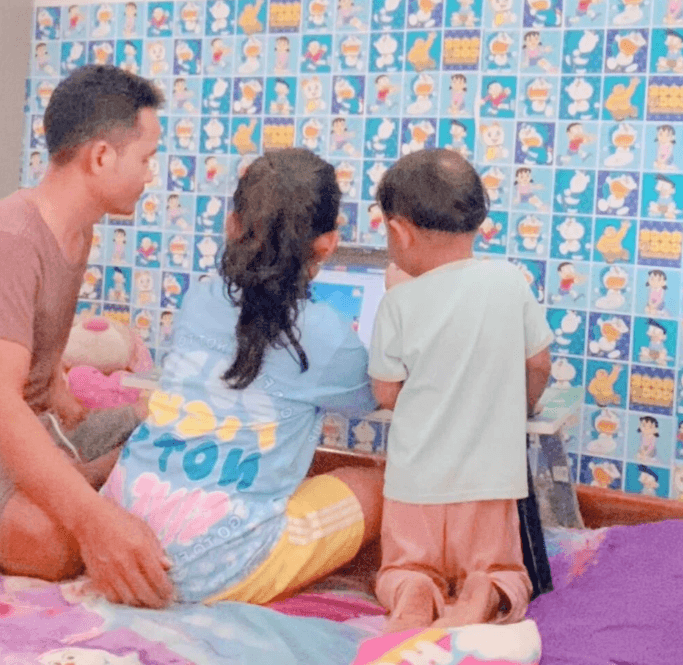
We set up a small foldable table right on the floor or the bed. Two reasons this worked really well:
- Eye level. The screen comes down to their level, so nobody’s craning their neck at a grown-up desk.
- Shared space. Sitting on the floor or bed keeps it open and inviting. It’s not a solitary thing tucked away in another room. It’s right there in the family space where I can sit behind them and watch.
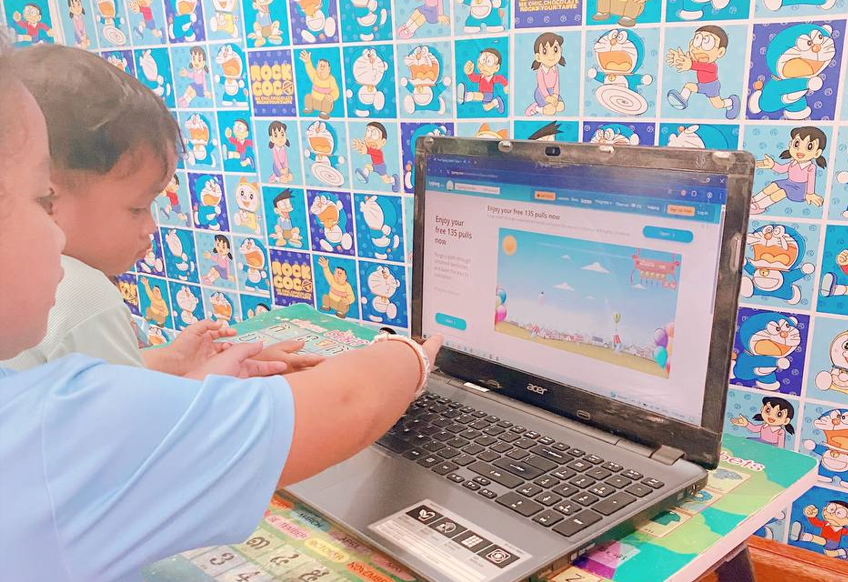
We even made the corner feel special with our “Doraemon Wall” of stickers. It signals something: when the laptop is on this table, it’s learning time, not just TV time.
The table itself has letters and numbers on it, which reinforces that this is a place for thinking.
Our Simple Switch: From Cartoons to Typing Games
I needed screen time with an actual purpose, not just entertainment that left them zoned out.
We found a free browser game called Typing Balloon. Super basic. No fancy graphics, no in-app purchases, no addictive hooks.
Just letters floating on balloons that you pop by pressing the right key.
My daughter started using it to improve her typing speed for school. Within a week, something shifted. She stopped asking for cartoons.
The typing game gave her something cartoons never could: a sense of accomplishment.
She could see herself getting faster, making fewer mistakes, leveling up.
Watching her feel proud of herself instead of just numbing out… that’s what educational screen time for kids should actually look like.
Cross-Training: When the Toddler Wants In
This part caught me completely off guard.
My 2-year-old couldn’t care less about cartoons when his sister isn’t watching them. But the second she sat down at the laptop to practice typing, he climbed right into her lap.
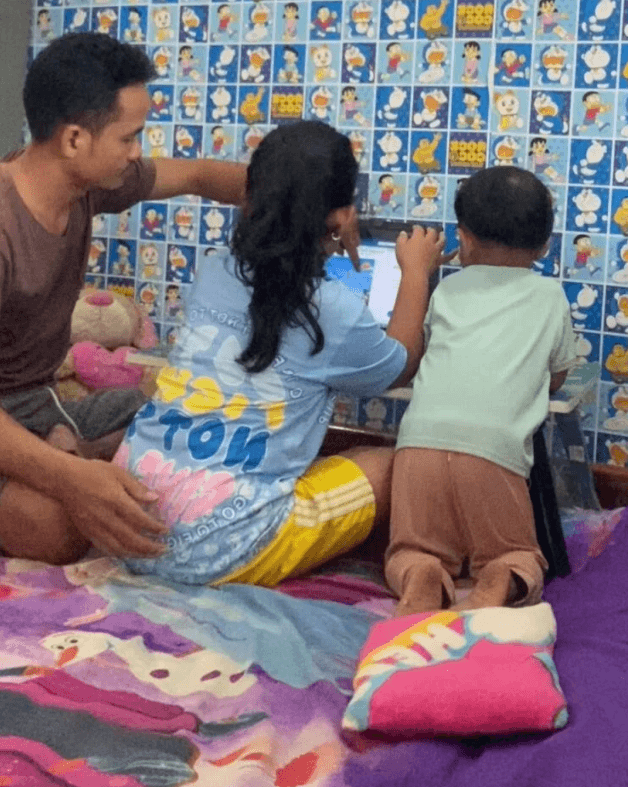
“I want to play letters!”
I figured he’d mash random keys and lose interest fast. Instead, my daughter became his little teacher.
“This one is B! Can you find B? Good job! Now find A!”
Suddenly, educational screen time for toddlers wasn’t something I had to plan. It just happened.
He was learning the alphabet while she practiced typing.
They were actually talking to each other instead of sitting silently in front of separate screens.
That’s what I’d been looking for all along.
The 3 Games That Actually Work (and How We Use Them)
Finding “educational” games is easy. Finding ones that aren’t stuffed with ads or predatory micro-transactions is harder.
Here’s what’s genuinely working for us right now.
1. Typing Balloon (The Favorite)
This is the one you see in the photos. Balloons float up from the bottom of the screen with a letter on each one. You press the matching key to pop it before it reaches the top.
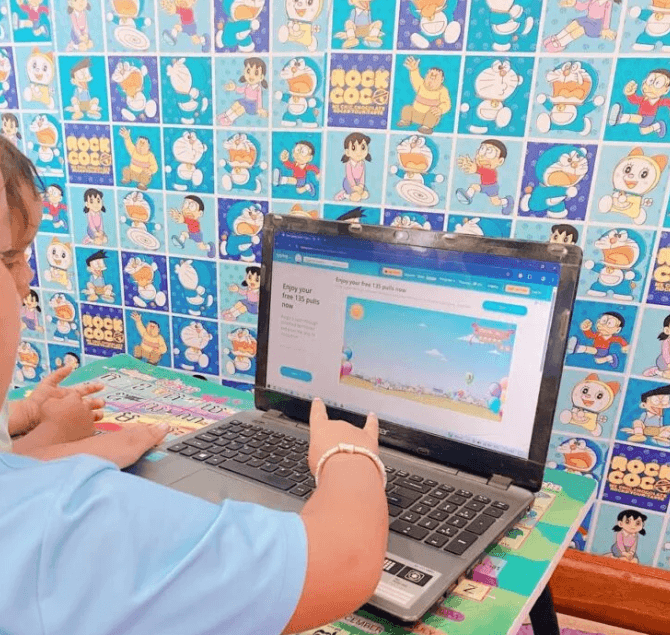
Why it works: instant feedback. My daughter sees the balloon pop and gets that little rush of accomplishment right away.
The toddler twist: my 2-year-old can’t type yet, but he loves the visual.
He points to balloons and shouts the colors or letters he recognizes while his sister does the actual typing.
A solo game becomes a two-player experience without any extra effort.
2. Digital Painting (The Creative Outlet)
When they get tired of structured games, we switch to a simple browser-based paint tool.
I was nervous about real paint and the cleanup involved, but digital painting lets my toddler explore cause and effect (I touch here, color appears there) without any mess.
One tip: I look specifically for painting apps without a “gallery” feature, where he might accidentally stumble onto other people’s artwork. Blank canvas only.
3. Drag-and-Drop Coding
We recently started with very basic block coding games. These aren’t about writing code. They’re about logic.
You drag an arrow to tell a character to move right, then hit play to see if it works.
It teaches kids the fundamental idea of giving clear instructions, which honestly translates to real life more than most school subjects do.
Our Active Screen Routine
I used to just hand over the tablet whenever I needed a break. Now we have a loose rhythm. We don’t follow it perfectly every day, but this is the general goal:
- The After-School Slot (20 minutes): Before dinner, when energy is low, but bedtime is still a while away, the laptop comes out to the low table. My daughter gets 15 to 20 minutes of typing practice. This is the focused, high-effort slot.
- The Sibling Session (10 minutes): The toddler usually wanders over during this time. Instead of sending him away, we invite him in. He naturally wants to touch the screen and be part of whatever is happening. We let him “help” for the last 10 minutes.
- The Friday Treat: On Fridays, we loosen up. More open-ended creative games, or we watch a science video together as a family.
Keeping sessions short means they never hit that zombie state. They finish feeling like they did something, not drained from an hour of passive watching.
Why This Actually Feels Different
I’m not going to pretend we’ve banned cartoons forever. Some days, I need 20 minutes of peace, and Bluey gets the job done. No shame in that.
But most days now, when the laptop comes out, I don’t feel that low-grade guilt anymore. I see my daughter building a real skill she’ll use in every grade, every job, for the rest of her life.
I see my toddler picking up letters without me hovering over flashcard drills. And I see them laughing together instead of zoning out separately.
We still have limits. They don’t get unlimited access. But when they do get screen time, it’s actually doing something for them instead of just keeping them quiet.
The Final Performance Review on Screens
If you are dealing with screen time guilt, here is my honest HR advice: don’t ban the tech. Upgrade the software.
Swap passive watching for active learning. Find things that make them think, not just consume. The screens aren’t the enemy; the lack of interactivity is.
Watching my kids learn together, help each other, and genuinely feel proud of their typing speed?
That is a return on investment worth a lot more than another episode of cartoons.
Disclaimer: I am a parent and a university educator, not a licensed child psychologist or pediatrician. This guide is based on my personal parenting experience and educational background. Always consult your child’s teacher or pediatrician for professional advice regarding your child’s educational development.
