


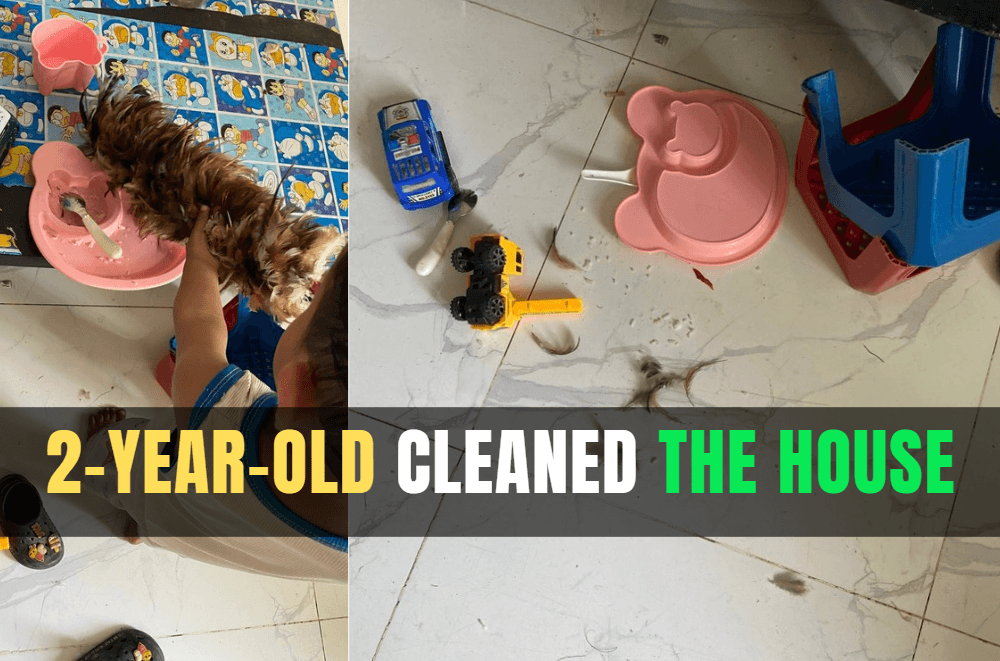
If you have ever hired someone who was absolutely certain they were excellent at their job and then watched them confidently destroy everything they touched, congratulations.
You already understand the Dunning-Kruger effect in toddlers.
You just did not know it had a name yet.
I did not expect to see it demonstrated so perfectly by a two-year-old with a feather duster.
A Daily Routine Built on Good Habits
Every day after lunch, my eight-year-old daughter earns her title as the Assistant Manager.
Without being asked twice, she clears the dishes, wipes the dining table, sweeps the floor, and organizes the chairs.
It takes her about ten minutes, and she does it perfectly.
My two-year-old son, the Head of Negotiations, usually observes this process from a safe distance.
He just stands there, watching his older sister and filing everything away in his toddler brain.
Every day it is the exact same routine.
This is a classic example of observational learning in real life.
In developmental psychology, observational learning describes how a child acquires new behaviors simply by watching others perform them.
Toddlers are actually among the most efficient observational learners on the planet.
This kind of sibling observation is so powerful that researchers consider older brothers and sisters to be one of the greatest early childhood teachers a child can have.
I just had no idea my son was preparing to deploy everything he had absorbed.
The Hostile Takeover
Today was different.
When my daughter picked up the brown feather duster to begin the post-lunch cleanup, her brother made his move.
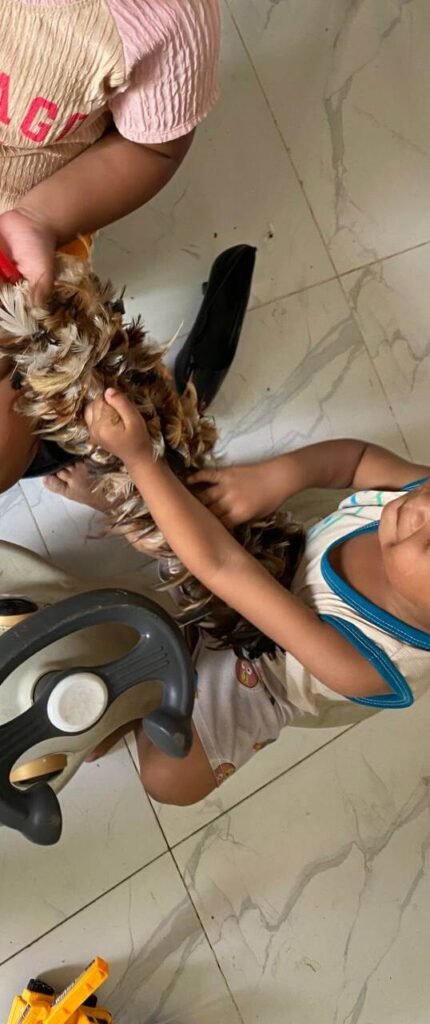
He crossed the room, grabbed the duster with both hands, and refused to let go.
In HR terms, this is an Unsolicited Role Transition.
It happens when an employee self-appoints to a position they have not been formally assessed for.
I made a quick management decision and told my daughter to let him have it.
I wanted her to step back and let the new recruit run the operation.
This moment perfectly captures that developmental stage where two-year-olds crave absolute independence.
Around age two, children actively push to do things on their own.
They have observed enough to feel ready.
The gap between what they believe they can do and what they can actually do is where all the comedy begins.
The Execution
His first task was to organize the small red and blue plastic stools we sit on.
He approached this with the energy of someone who has reorganized chairs a thousand times.
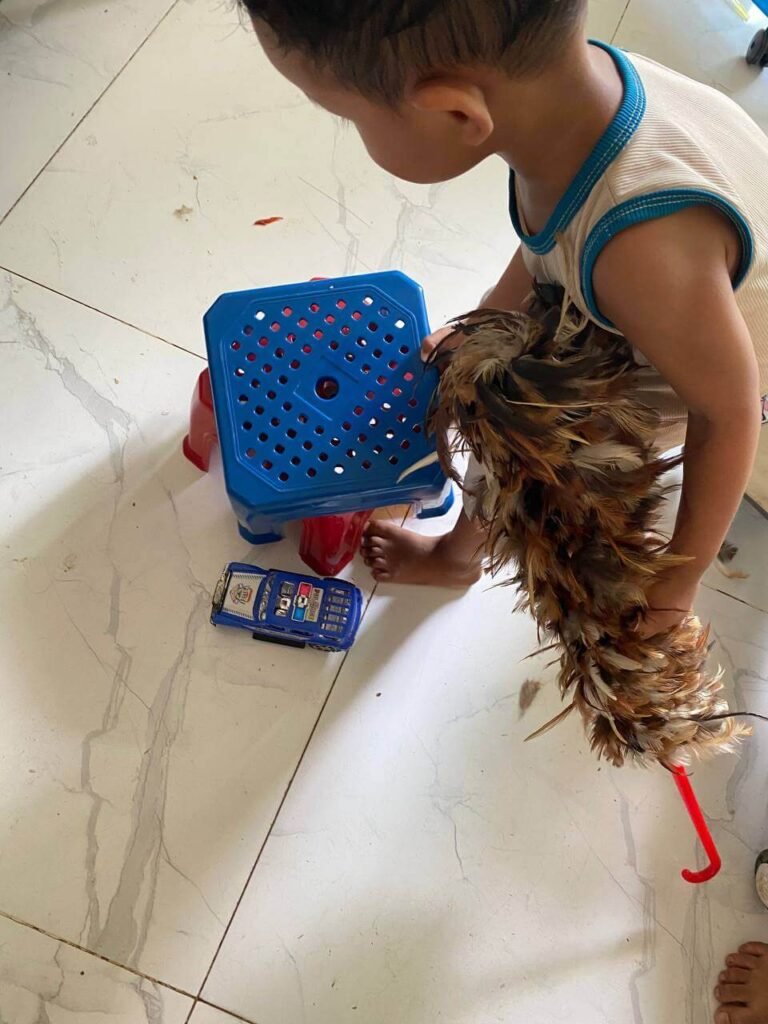
He pushed them and dragged them across the white tiles with great determination.
When he stepped back, the chairs were in an abstract configuration that completely blocked the entire walkway.
Next, he turned his attention to his lunch spot on the Doraemon table.
He raised the feather duster and applied it to the surface with incredible enthusiasm.
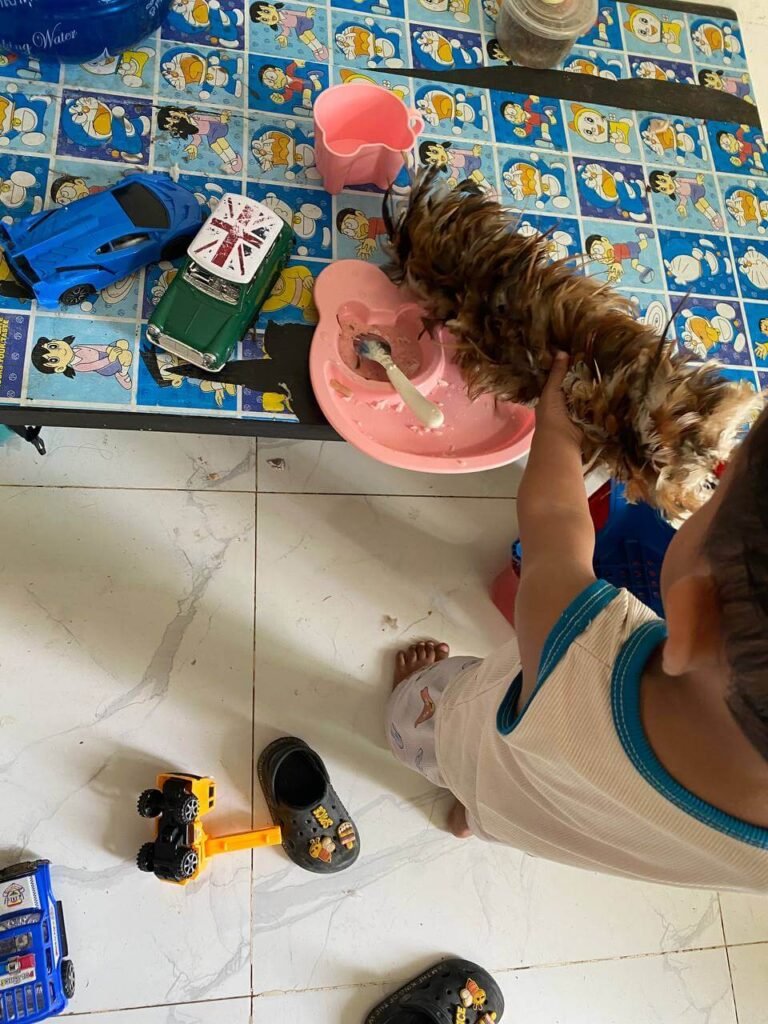
Responding to the basic laws of physics, his pink bear-shaped plastic plate slid right off the edge and hit the floor.
Grains of leftover rice scattered across the white tiles, landing right next to his toy yellow excavator and blue police car.
He watched this happen, nodded, and kept moving.
He swept the duster around with so much vigor that the brown feathers actually started falling out, littering the floor alongside the rice.
He stood in the middle of the room and surveyed his work.
The tiles were covered in debris.
The plastic stools were tangled together.
The pink plate was upside down.
The duster was losing its feathers.
He looked genuinely proud.
This is what child overconfidence psychology looks like in practice.
A toddler who overestimates abilities does not pause to measure results.
He measures effort. In his mind, maximum effort equals maximum success.
The outcome is simply irrelevant data.
The Official Damage Report
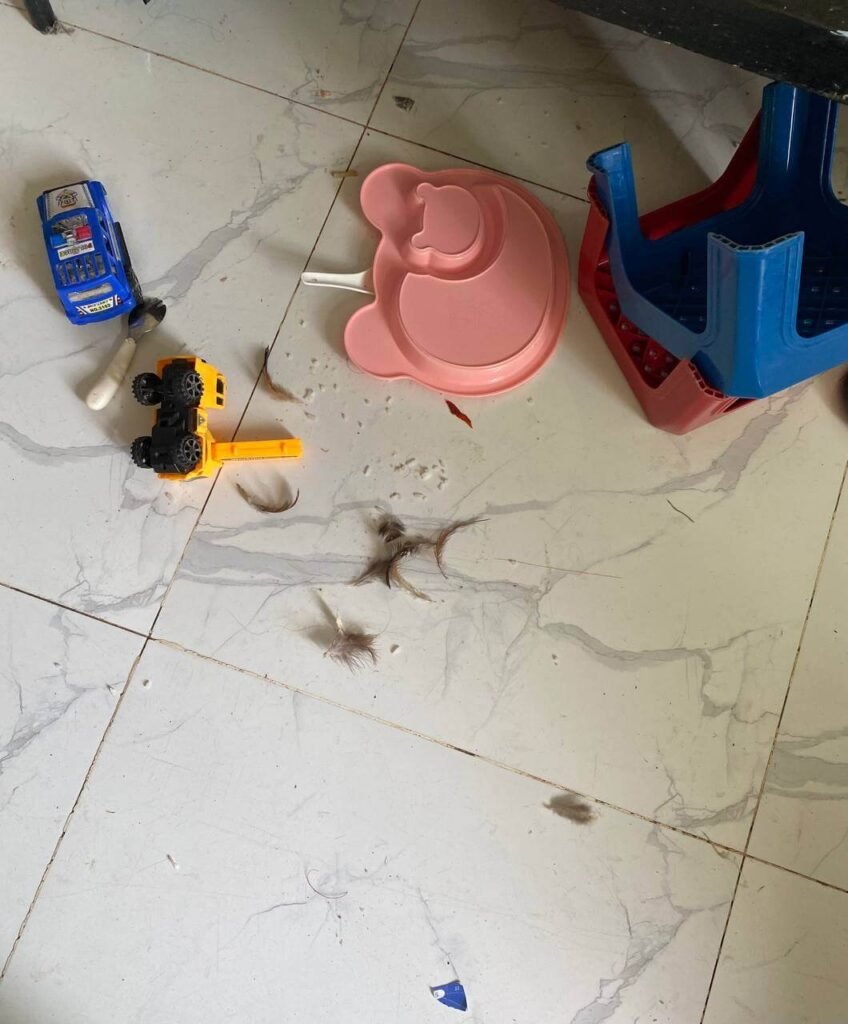
For the record, here is the formal performance review from today’s cleaning operation:
| Assessment Area | Task Completed Correctly? | Current Status |
| Chair Organization | NO | Messier than before |
| Plate Cleaning | NO | Plate on the floor |
| Floor Tiles | NO | Dirtier than before |
| Feather Duster | NO | Completely destroyed |
| Operator Confidence | N/A | Maximum |
Total Time Taken: 2 Minutes
In all my years of experience, I have never seen the Dunning-Kruger effect in toddlers documented so perfectly.
What the Dunning-Kruger Effect Actually Means
Psychologists David Dunning and Justin Kruger published research showing that people with very limited knowledge in a specific area tend to massively overestimate their own competence.
They simply do not know enough yet to know what they are doing wrong.
This is one of the best-known concepts in child overconfidence psychology, and it shows up constantly in early toddler cognitive development.
My son does not know that feathers fall out if you use a duster like a sword.
He does not know that sweeping a table sends plates onto the floor.
When looking at this through the lens of developmental science, a two-year-old’s overconfidence isn’t a flaw.
It is a feature.
Toddler overconfidence is a natural and necessary stage.
Why are toddlers so confident?
Because they have to be.
A child who was fully aware of their limitations would never attempt to walk, talk, or do anything new.
The boldness is the engine of growth.
But here is the part that matters most for parents who worry about this phase.
The solution to the Dunning-Kruger effect is not to stop children from trying. It is exposure and practice.
The more someone practices, the more they develop the awareness to judge their own performance accurately.
The only way to get better is to push through the messy phase.
In other words, the mess is the lesson.
Why a Toddler Who Wants to Help With Chores Is Actually a Good Sign
If your toddler wants to help with chores and leaves a trail of chaos behind them, you are not failing as a parent.
You are watching early childhood development happen in real time.
Research on toddlers helping at home shows that children who are encouraged to participate in household tasks from an early age develop a stronger sense of responsibility, belonging, and initiative as they grow.
The dynamic between my two kids is a perfect example of this.
My daughter’s quiet consistency gave my son a script to follow.
He did not copy her perfectly. He copied her confidence.
And that, developmentally speaking, is exactly right.
The Departure
When he decided the job was done, he did what all truly confident performers do after a successful session.
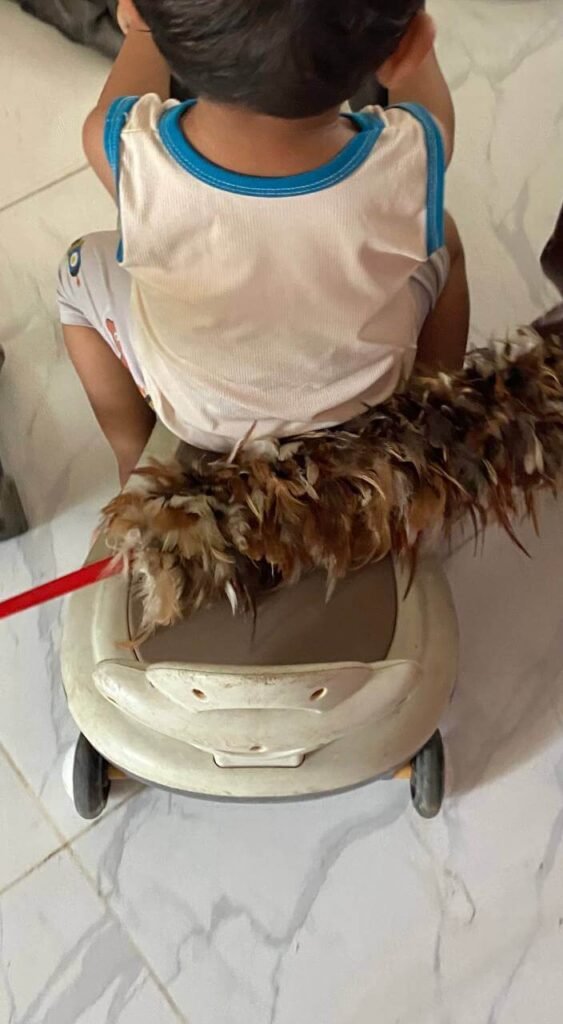
He picked up the battered feather duster, tucked it behind his back, sat down on his little white ride-on car, and drove away.
He rode off slowly and calmly, looking straight ahead like a CEO leaving the building after a highly successful quarterly review.
My daughter sighed, picked up the scattered rice, grabbed the pink plate, and spent ten minutes actually cleaning the room.
She got the job done with the kind of quiet professionalism I try to teach my university students every semester.
The Head of Negotiations, meanwhile, was in the living room on his toy car, completely satisfied with a job well done.
Of all the ridiculous things I have watched my kids do over the years, and out of all the stories I’ve swapped with other parents, this one sits at the very top.
It is the most relatable toddler story I have ever lived through, and I suspect many of you have a version of it saved somewhere in your own memory.
If this story made you laugh or nod in recognition, share it with a parent who needs it today.
FAQ: The Dunning-Kruger Effect in Toddlers
Why does my 2-year-old think they can do everything?
This is the Dunning-Kruger effect in action. Toddlers have just enough experience watching others to feel confident, but not enough real practice to understand how difficult tasks actually are.
This overconfidence is developmentally normal and actually healthy. It is what pushes them to keep trying new things.
Why are toddlers so confident even when they fail?
Toddlers measure success by effort, not outcome. Because they gave the task everything they had, they feel successful regardless of the result.
Their self-assessment is not connected to external feedback yet. That metacognitive skill develops gradually through childhood.
Is toddler overconfidence something I should correct?
Generally, no. Toddler overconfidence is a sign of healthy development. Rather than discouraging the attempt, let them try and gently guide them through what happened.
Natural consequences, like watching their mess, are far more effective teachers than criticism.
What does observational learning actually look like in toddlers?
If your toddler has ever grabbed a broom, tried to fold laundry, or attempted to cook after watching you do it, that is observational learning.
They absorb everything they watch a parent or older sibling do, and they replay it with complete conviction that they are ready.
Do toddlers learn faster by copying their older siblings?
Older siblings act as live demonstrations that run on repeat every single day. Toddlers watch, store, and eventually attempt to replicate.
Because the sibling is closer in size and behavior than an adult, the toddler often feels that the gap between observer and performer is smaller than it really is. This is why they leap in with such confidence.
When does the overconfidence phase end?
Gradually. As children gain more real experience and develop better metacognitive awareness, they start to calibrate their self-assessment more accurately.
By school age, most children have a more realistic sense of what they can and cannot do. The Dunning-Kruger curve flattens with practice and feedback over time.
Disclaimer: I am a parent and a university educator, not a licensed child psychologist or pediatrician. This guide is based on my personal parenting experience and educational background. Always consult your child’s teacher or pediatrician for professional advice regarding your child’s educational development.
