


It was raining outside.
My toddler was bouncing off the walls, and I was running out of ideas.
No backyard. No playroom.
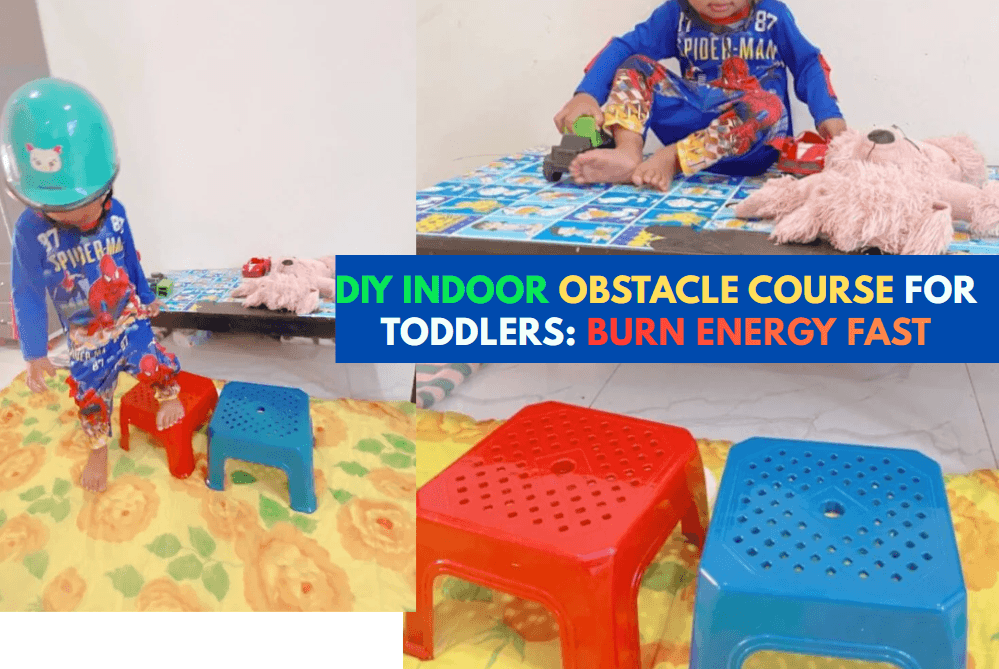
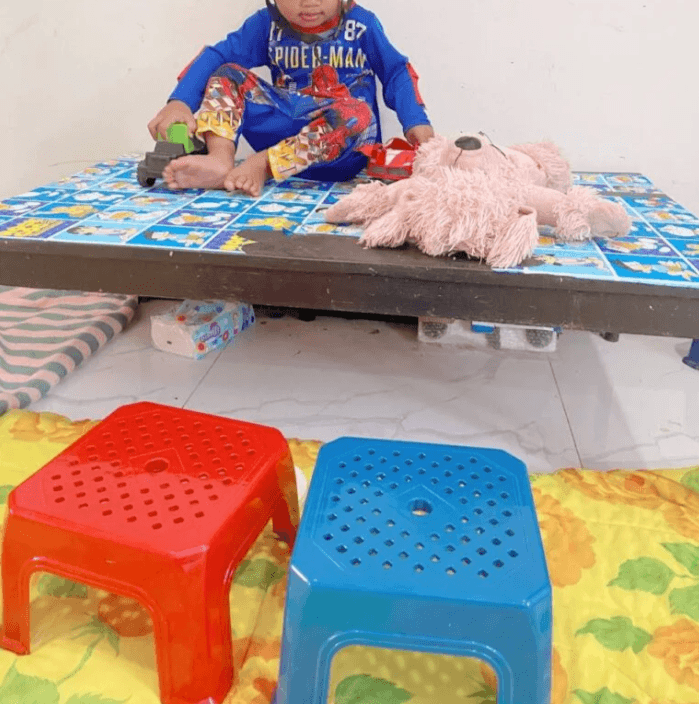
Just a living room, two plastic stools, and a low coffee table staring back at me.
So we built something.
Right there, in the middle of the living room.
No money spent. No special gear ordered.
Just stuff we already had, and honestly?
It became one of our best mini-adventures ever.
If you need a DIY indoor obstacle course for toddlers that actually works with zero prep, this is it.
Here is exactly how we did it, what materials you need, and why this simple activity does so much more than just burn energy.
Why Indoor Obstacle Courses Actually Work
Toddlers have energy that does not just disappear because it is raining.
It builds. And if it has nowhere to go, you know what happens next.
These homemade courses are effective because they channel all that restless energy into something physical and purposeful.
Climbing, jumping, balancing, crawling through tunnels: it hits everything a toddler’s body is craving on a rainy day at home.
And beyond burning energy, these activities build real skills.
Gross motor development, coordination, spatial awareness, and confidence all happen naturally through active play like this.
Research in early childhood development consistently shows that physical activity for toddlers is one of the most effective ways to support cognitive growth.
The best part?
You do not need a playroom or expensive gear.
The best indoor activities for toddlers usually cost nothing at all.
What You Need to Make an Indoor Obstacle Course at Home
For a rainy afternoon like this, you genuinely do not need much.
Look around your living room for:
- Sturdy plastic or step stools that will not tip
- A low, stable coffee table or ottoman
- A thick quilt or play mat for a soft landing zone
- Masking tape to mark paths on the floor
- Two dining chairs and a blanket for a crawl tunnel
- Couch cushions and pillows for a jump zone
- Optional: a helmet or knee pads (my son loved this part; it made him feel like a real superhero)
That is it. Seriously.
Everything you need for a solid indoor obstacle course is likely already sitting in your home right now.
How to Make an Indoor Obstacle Course at Home: Step by Step
Step 1: Start With the Safety Gear and Make It a Big Deal
Before anything else, I grabbed my son’s teal helmet with the little cat sticker.
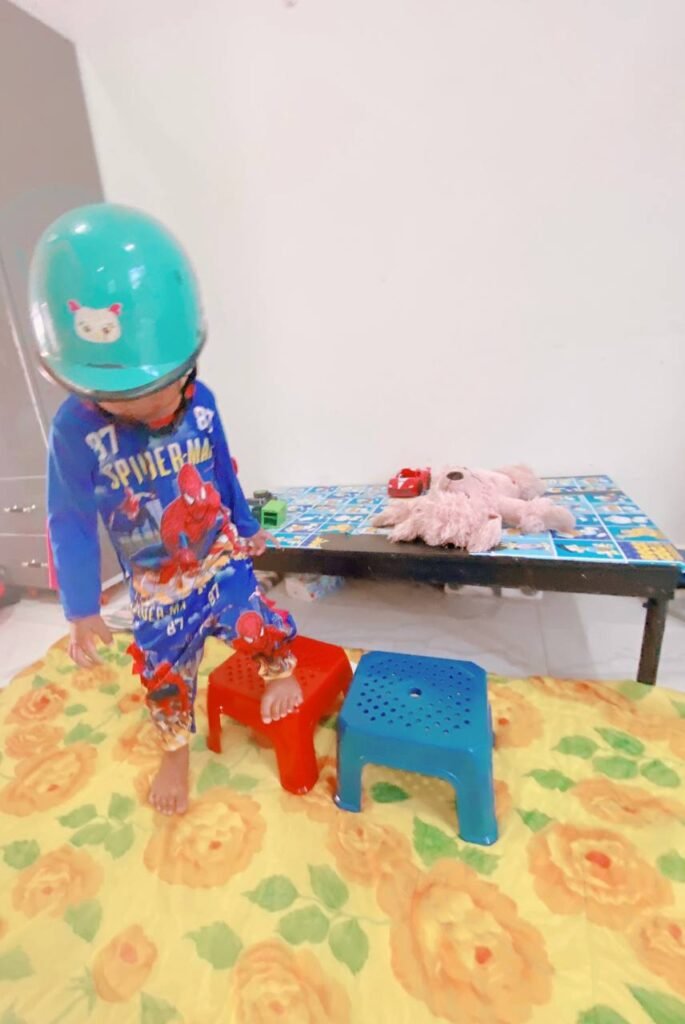
He was already in his Spiderman pajamas with the cape, so when I handed him the helmet, he was fully committed.
I told him, “Even Spiderman needs a helmet for this mission.”
That was it.
Helmet on meant adventure time.
It also meant his head was protected, which is the actual point.
Make sure whatever you use fits well and will not slip around.
Step 2: Build the Climbing Station
Toddlers love climbing. They love feeling tall. They love that little rush of “I made it.”
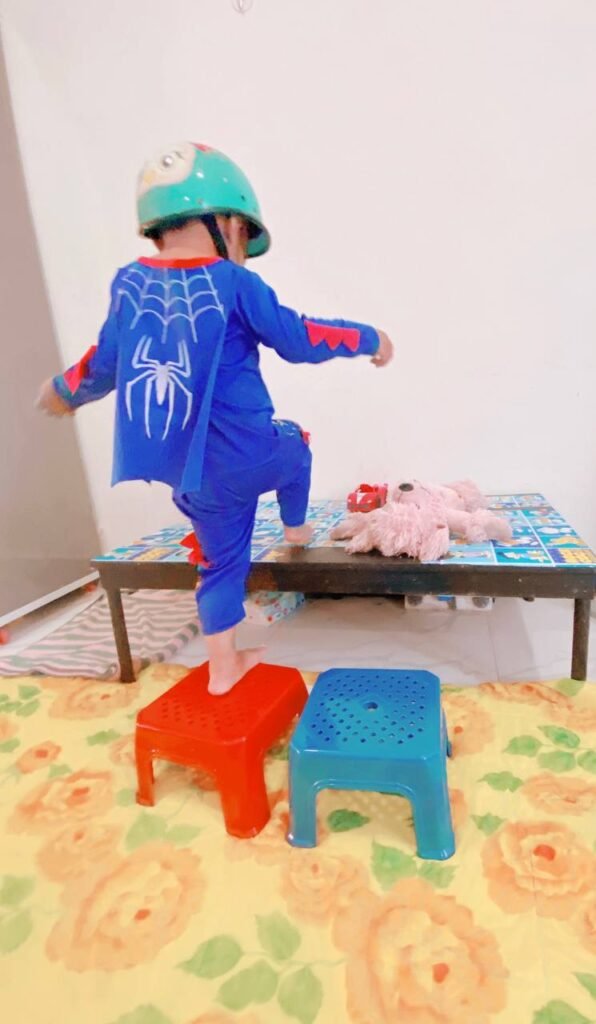
We used two plastic stools placed side by side to create a little staircase up to our low coffee table.
My son had to step carefully from one to the next, then up onto the table.
Simple, but he took it very seriously.
What it builds: leg strength, balance, and coordination.
Your toddler has to figure out which foot to move, how to shift their weight, and where to place their hands.
It is way more complex than it looks.
One rule: stay close and spot them the whole time.
Test the stools for stability before they climb.
This is a key safety step, especially for toddler climbing activities at home.
Step 3: Add the King of the Mountain Challenge
Once my son reached the top of the coffee table, the whole thing became a rescue mission.
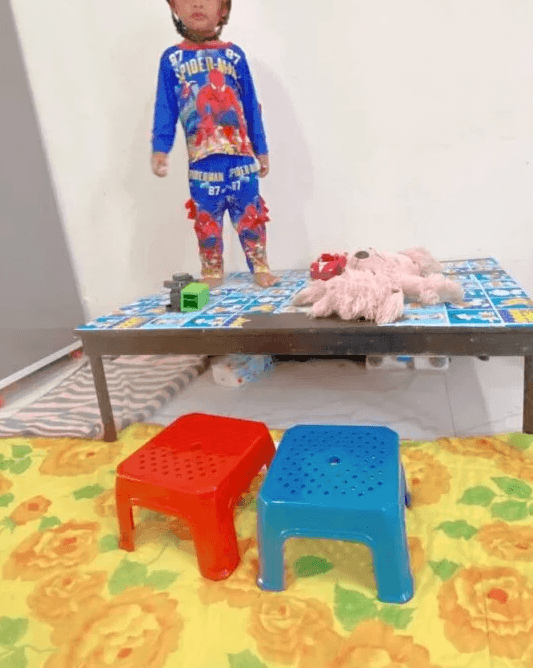
I placed his stuffed pink puppy up there first.
The goal was to climb up and save it.
He spread his arms wide at the top, laughed, and was so proud of himself.
I cheered like it was the Olympics.
Here is the thing about letting toddlers climb on safe furniture: it actually stops them from trying to climb on unsafe stuff.
Instead of a constant “no, get down,” you are giving them a real “yes” space to explore.
That matters a lot for toddler confidence and independence.
Step 4: Set Up the Pillow Path and Tape Balance Beam
Keep building.
Here are easy additions using what you already have.
- A pillow path: Line up cushions on the floor. Jump from one to the next without touching the “lava.” This is a great gross motor activity that also sparks imagination.
- A tape tightrope: A straight line of masking tape on the floor works perfectly as an indoor balance beam for toddlers. Walk it heel to toe like a tightrope artist. It is harder than it sounds, and kids take it very seriously.
- A crawl tunnel: Two chairs with a blanket draped over them. Crawl through to the other side. This one is always a huge hit.
- A jump zone: A pile of cushions or a soft mat at the end of the table creates a safe, satisfying landing spot.
We also started bringing toy cars up to the “mountain” and turning the table into a high-up parking garage.
He came up with that one himself, which is exactly the kind of creative problem-solving these courses encourage.
The Best Indoor Obstacle Course for 2 and 3-Year-Olds: What Your Kids Actually Gain
A toddler obstacle course at home is not just a way to kill time on a rainy afternoon.
It is genuinely good for their development.
Physical development happens fast at this age.
Activities like these build muscle strength and coordination in ways that feel like play rather than exercise.
The pillow jump zone for toddlers alone works on leg strength, spatial awareness, and landing control all at once.
Problem-solving kicks in, too, because your toddler has to figure out each obstacle on their own terms.
How do I get up here? Where do I put my foot? What comes next?
These are real cognitive challenges wrapped in fun.
The confidence piece is real as well.
When a two or three-year-old completes something that felt hard, you can see it in their face.
They stand a little taller. That feeling sticks.
And yes, better sleep and fewer meltdowns are also just a nice bonus.
Safety Tips Worth Repeating
Never leave your toddler alone on the course, not even for a minute.
Test all furniture before they climb on it.
Non-slip mats under stools and tables help a lot.
Keep the area clear of anything hard or sharp that they could fall on.
Always start low, especially with younger toddlers.
There is no rush to go higher. Know your child’s limits and work within them.
What is right for a three-year-old might not be right for an 18-month-old.
Final Thoughts
You do not need expensive toys or a fancy playroom to keep a toddler active and happy.
The best indoor activities for toddlers on a rainy day usually cost nothing.
Just a little creativity and whatever furniture you already have.
Next rainy day, grab some stools, clear the coffee table, and find a helmet if you can.
Build the cheapest, most fun gym your kid has ever seen.
And when they make it to the top and throw their arms out wide, that smile makes the whole thing worth it.
Looking for more toddler activities at home? Save this post for your next rainy day and share it with another parent who needs it.
Frequently Asked Questions
What age is an indoor obstacle course good for?
Most toddlers between 18 months and 4 years old enjoy a simple home obstacle course. For an 18-month-old, keep everything very low and focus on crawling and stepping.
For 2 and 3-year-olds, you can add the climbing station and balance beam. Always adjust the difficulty to match your child’s current gross motor skills.
What can I use instead of a play tunnel?
Two dining chairs placed a couple of feet apart with a blanket draped over them make a perfect crawl tunnel. You can also use a large cardboard box with both ends open. No special equipment needed.
How do I keep my toddler active indoors on a rainy day without spending money?
A DIY indoor obstacle course is one of the best free indoor activities for toddlers. Combine it with freeze dance, pillow jumping, and a simple scavenger hunt, and you can fill a whole afternoon without turning on a screen.
Does an obstacle course help with gross motor development?
Yes, absolutely. Climbing, balancing, crawling, and jumping all directly target gross motor skills. These are the large-muscle movements toddlers need to master before they can develop fine motor control and later academic skills like writing.
How long should a toddler obstacle course be?
For most toddlers, four to six stations is plenty. Keep it short enough that they finish wanting more. You can always add a new element on the next rainy day to keep things fresh.
Disclaimer: Activities with children should always be closely supervised. The obstacle course described below uses low, stable furniture and soft landing zones suitable for my specific home setup. Please assess the safety of your own furniture and environment before trying this. You are responsible for your child’s safety.
