Close Menu

    Subscribe to Updates

    Get the latest creative news from FooBar about art, design and business.

    What's Hot

    Outdoor Microadventure Ideas for Kids: Big Fun, Zero Stress

    February 26, 2026

    The Surprising Benefits of Letting Toddlers Play in the Dirt

    February 24, 2026

    How to Manage Resistance to Change (A Leadership Lesson from a Toddler)

    February 21, 2026
    Facebook Instagram Pinterest LinkedIn
    The Professor DadThe Professor Dad
    Facebook Instagram Pinterest
    • Home
    • Child Development
    • Confident Kids
    • Family Logistics
    • Learning Tools
    • About Me
    • Contact Us
    The Professor DadThe Professor Dad
    Home»Learning Tools»The Best Open Ended Toys for 2 Year Olds (You Already Own Them)
    Learning Tools

    The Best Open Ended Toys for 2 Year Olds (You Already Own Them)

    Why expensive educational gadgets can't compete with the items you already have in your kitchen.
    NoeumBy NoeumJanuary 31, 2026Updated:February 19, 20268 Mins Read
    Share
    Facebook LinkedIn Pinterest Copy Link

    Table of Contents

    Toggle
    • What Are Open-Ended Toys?
    • Why Simple Items Beat Fancy Toys
    • The Real Magic Happened Next
    • Open-Ended Play with Household Items: You Already Have What You Need
    • When to Buy Actual Toys: Best Open-Ended Toys for 2-Year-Old Children
    • Cheap Activities for Toddlers at Home
    • Why This Kind of Play Really Matters
    • What Should Parents Do?
    • The Real Lesson from Those Stools

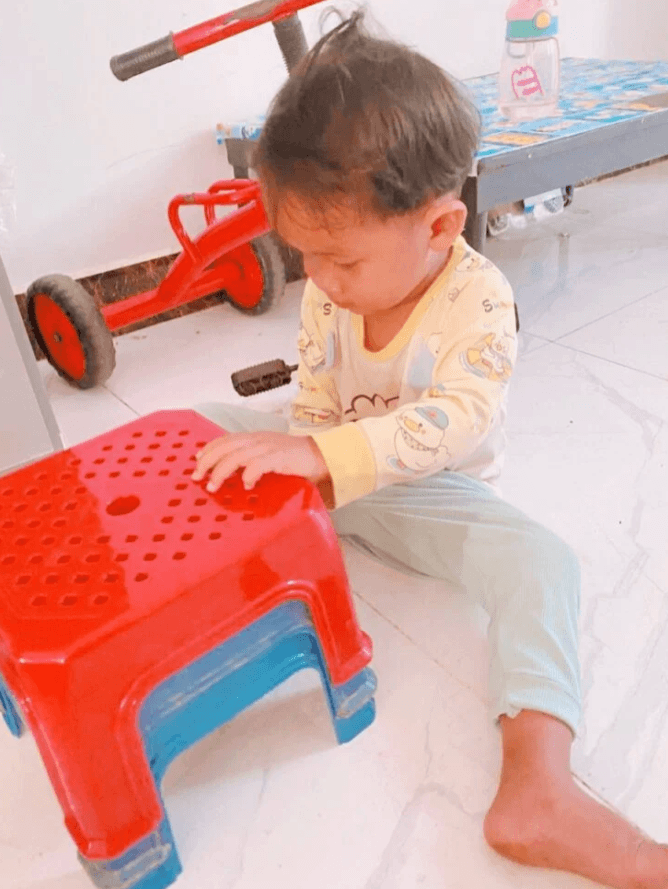
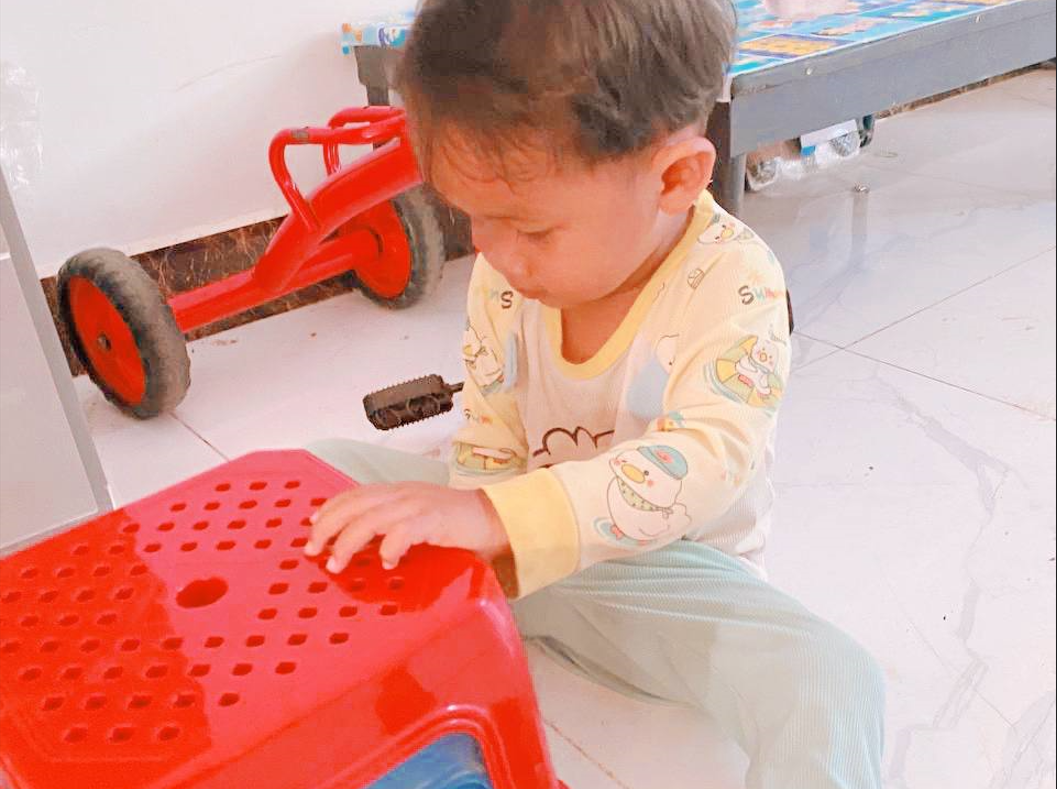
    This morning, my two-year-old son taught me something important. While his expensive battery-powered toys sat untouched in the corner, he spent nearly an hour completely absorbed with two plastic stools. Not sitting on them. Playing with them.

    Two year old boy playing quietly with plastic stools on a tiled floor.
    Sometimes the best open-ended toys for a 2-year-old are simple household items you already own.

    He stacked them, pulled them apart, looked through the holes, and eventually built something entirely his own. That’s when it hit me: The best playthings for a two-year-old aren’t always ‘toys’ at all.

    What Are Open-Ended Toys?

    Open-ended toys don’t have just one way to play. Unlike a toy that makes sounds when you press a button, open-ended play for toddlers means they get to decide what happens. A wooden block can become a car, a phone, a building, or a spaceship. The child is in control.

    These toys grow with your child. What a 2-year-old does with blocks will be different from what a 4-year-old does. That’s the beauty of open-ended play.

    Why Simple Items Beat Fancy Toys

    Watching my son with those stools reminded me why Montessori toys for toddlers focus on simplicity. When a toy does everything for a child, there’s nothing left for them to figure out.

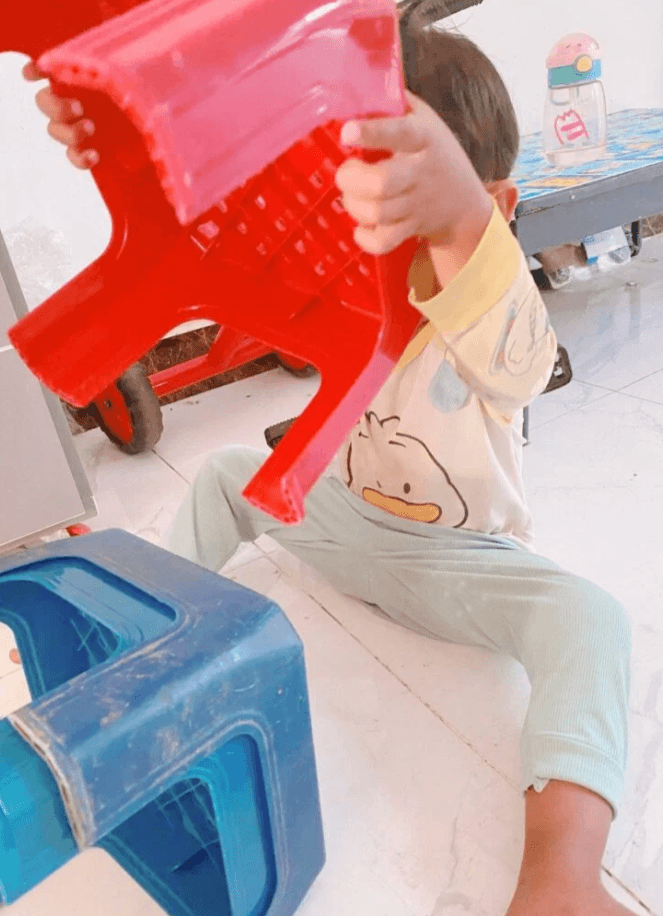
    Toddler holding a red plastic stool up to his eyes and looking through the ventilation holes like a telescope.
    Changing perspective: To a toddler, ventilation holes aren’t just plastic—they are a window to see the world differently.

    Here’s what happened this morning:

    First, he held the red stool up to his face and looked through the ventilation holes. To him, these weren’t just holes. They were a way to see the world in a different light. He was changing his perspective, turning an ordinary object into a telescope.

    Then came the real challenge. The blue stool was stuck inside the red one. He pulled. He twisted. His face scrunched up with effort. I almost helped him, but I stopped myself. This struggle? This was learning.

    He was figuring out how things fit together, how force works, and how to solve a problem. These are exactly the kind of fine motor skills activities that a toddler needs, but they were happening naturally, without any special ‘educational toy’ label.

    The Real Magic Happened Next

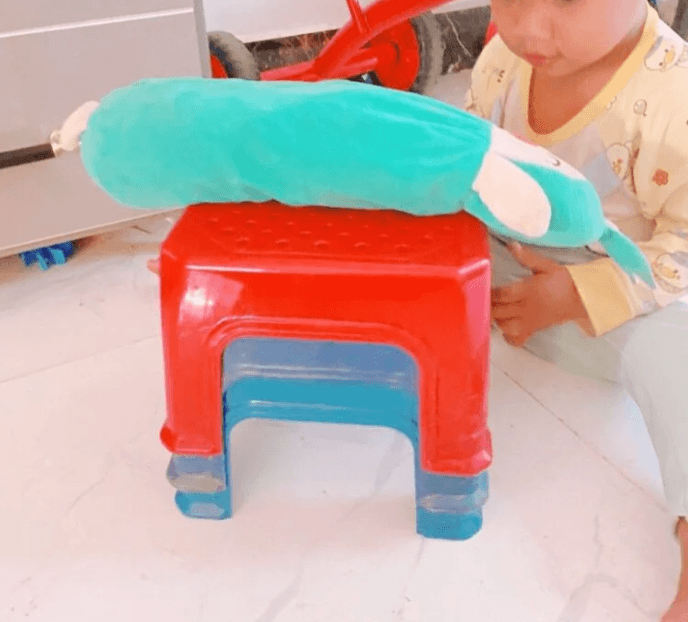
    Toddler carefully balancing a long blue bolster pillow on top of a red plastic stool.
    Is it a table? A bed? In open-ended play, the object becomes whatever the child imagines.

    After he finally got them apart, he stacked them back up again. I thought he’d sit on it, but instead, he grabbed his long blue pillow and carefully balanced it on top of the red stool. I’m not sure what he made.

    Maybe a bed for his stuffed animals. Maybe a table. Maybe nothing specific at all, just the joy of creating something new. That’s open-ended play.

    Happy toddler sitting on the floor clapping his hands after successfully stacking toys.
    The joy of independent play: That smile comes from solving a real problem without adult help.

    When he finished, he sat down and clapped for himself. That smile on his face wasn’t from a screen or a battery-powered song. It came from solving something real with his own hands.

    Open-Ended Play with Household Items: You Already Have What You Need

    You don’t need to buy expensive educational toys for toddlers to encourage this kind of play. Look around your house. You probably already have everything you need.

    The Kitchen Floor Orchestra

    You might think you need to buy a toddler-sized drum set, but the best musical instruments are already in your lower cabinets.

    Just yesterday, while I was trying to get dinner started, my son wandered into the kitchen. Instead of putting him in front of the TV, I handed him a heavy stainless steel mixing bowl and a wooden spoon.

    For the next twenty minutes, he was mesmerized. He didn’t just bang on the bowl (though he did plenty of that). He experimented. He tapped the side gently: ting, ting, ting. Then he flipped it over and hit the bottom: thud, thud, thud. He paused, listening to the difference in the echoes.

    Then came the “cooking.” He gathered random objects—a clean sponge, a plastic lid, a stray sock—and dropped them into the bowl, stirring furiously. He was imitating what I was doing at the stove, but on his own terms. He was learning about cause and effect (hit hard = loud sound) and practicing his grip strength, all without a single battery-powered song playing in the background.

    The Amazon Box “Cave”

    We’ve all heard the joke that kids like the box more than the toy inside, but watching it happen in real life is fascinating.

    Last week, a large delivery arrived. Once I emptied the box, I didn’t break it down for recycling immediately. I left it in the middle of the living room floor just to see what would happen.

    My son circled it like a shark. He touched the flaps. He pushed it across the floor. And then, he climbed inside.

    For a toddler, a big box isn’t just cardboard; it’s a secure, contained space where they control the boundaries. He spent the morning popping out to say “Boo!” and then retreating back into his “cave” with his favorite stuffed animal. Later, I gave him a crayon. Usually, we only draw on paper at the table, but I told him, “You can color on the box.”

    His eyes lit up. He scribbled all over the inside walls, creating his own wallpaper. This activity combined gross motor skills (climbing in and out) with fine motor creativity (drawing on a vertical surface). It cost zero dollars, and when he was finally done with it three days later, it went straight into the recycling bin.

    Blankets and Pillows

    These become forts, beds for dolls, mountains to climb, or hiding spots. The possibilities are endless, and it costs you nothing.

    When to Buy Actual Toys: Best Open-Ended Toys for 2-Year-Old Children

    Of course, household items aren’t the only option. If you want to buy toys, here are some good choices that support open-ended play:

    • Wooden blocks are classic for a reason. They never get old. My son builds towers, roads, and houses. Next year, he’ll probably build something completely different with the same blocks.
    • Play silks or large fabric squares are wonderful. Toddlers can use them for dress-up, making tents, wrapping dolls, or just waving them around.
    • Simple wooden toys like cars, animals, or people figures work great because kids can create their own stories with them.
    • Stacking cups or rings is perfect for this age. They teach so much about size, order, and coordination.
    • Art supplies like crayons, washable markers, and plain paper give toddlers the chance to create whatever they imagine.

    Cheap Activities for Toddlers at Home

    The best activities don’t cost much or anything at all. Here are some ideas that have worked for us:

    • Water play is huge. Fill a bin with water and give your toddler some cups and spoons. They’ll pour, splash, and experiment for a long time.
    • Sorting games. Give them a muffin tin and different small toys or safe objects. They’ll sort by color, size, or type.
    • Sensory bins. Fill a bin with dry rice, pasta, or beans (always supervise!) and some scoops to keep little hands busy. Hide small toys in there for them to discover.
    • Obstacle courses. Build a course with pillows, cushions, and furniture. Toddlers love climbing over, crawling under, and jumping on safe, soft surfaces.

    Why This Kind of Play Really Matters

    Toddler trying to pull apart two stuck plastic stools, showing effort and concentration.
    The struggle is where the learning happens. Figuring out how to separate these stools builds fine motor skills better than any battery-powered toy.

    When toddlers play with open-ended items, they’re building skills that will help them for years:

    • They learn to solve problems on their own. When my son couldn’t separate those stools, he didn’t give up. He tried different angles and used different amounts of force until he figured it out.
    • Their imagination grows stronger. Without buttons to push or sounds to listen to, they have to create their own fun and their own stories.
    • They develop fine motor skills naturally. Stacking, nesting, balancing, and building all strengthen little hands and improve coordination.
    • They learn to entertain themselves. This is such an important skill. Kids who can play independently are happier and more confident.

    What Should Parents Do?

    Honestly? Less than you think.

    The hardest part for me is stepping back. When I see my son struggling with something, my first instinct is to help. But I’ve learned that the struggle is where the learning happens.

    Your job is to make sure the environment is safe, provide interesting items to explore, and then get out of the way. Let them figure things out. Let them fail sometimes. Let them surprise you.

    You don’t need to narrate everything they’re doing or turn every moment into a teaching opportunity. Sometimes the best thing you can do is just watch and enjoy seeing their mind work.

    The Real Lesson from Those Stools

    That $2 plastic stool gave my son more learning opportunities this morning than any expensive electronic toy ever has. He explored, struggled, solved problems, and created something new.

    The best open-ended toys for 2-year-old children might already be in your home. You don’t need to spend a lot of money. You just need to give your toddler simple items and the freedom to explore them in their own way.

    So next time your toddler ignores their fancy toys and starts playing with a cardboard box or a kitchen bowl, don’t worry. They’re not being difficult. They’re being brilliant.

    And that’s exactly what we want.

    Share. Facebook Pinterest LinkedIn Copy Link
    Noeum

    Hi, I’m Noeum. By day, I’m a Professor of Human Resource Development at Preah Sihanouk Raja Buddhist University. By night, I apply those leadership strategies to my toughest students yet: my 8-year-old daughter and my 2-year-old "Head of Negotiations."

    Related Posts

    How to Set Up a Home Learning Space Kids Will Actually Use (5 Simple Tips)

    Toy Car Activities for Toddlers: 5 Simple Ways They Learn Through Play

    Why Kitchen Pots Are Better Than Expensive Toddler Toys (Free Play Idea)

    Easy Kitchen Activities for Toddlers: A $0 Pretend Play Idea

    Leave A Reply Cancel Reply

    Don't Miss
    Learning Tools

    How to Set Up a Home Learning Space Kids Will Actually Use (5 Simple Tips)

    Last Tuesday, I tried to get my daughter to finish her math while the TV…

    How to Manage Resistance to Change (A Leadership Lesson from a Toddler)

    February 21, 2026

    How to Teach Problem Solving to Toddlers: The “10-Second Pause” Rule

    January 21, 2026

    Toddler Tantrums Over Small Things: Why They Happen & How to Handle Them

    February 12, 2026

    Easy Kitchen Activities for Toddlers: A $0 Pretend Play Idea

    January 19, 2026
    © 2026 THE PROFESSOR DAD, All Rights Reserved.
    • About Me
    • Contact Us
    • Disclaimer
    • Privacy Policy
    • Terms and Conditions
    • Sitemap

    Type above and press Enter to search. Press Esc to cancel.