


In human resources, forcing an employee to work past their mental capacity is a fast track to burnout.
Yet, last Tuesday at 7:45 PM, I found myself doing exactly that to my 8-year-old “Assistant Manager” over a math worksheet.
She had been slumped over it for an hour.
If you are reading this while your eight-year-old is in tears over a math worksheet, you are not alone.
This post covers the actual industry standard for elementary homework, why pushing past that limit backfires, and the practical strategies that finally worked for our family.
Quick Takeaway
Second grade homework should take around 20 minutes per night, based on the widely accepted 10-minute rule endorsed by both the National PTA and the National Education Association (NEA). Reading is typically assigned separately and adds another 15 to 20 minutes, bringing the total to roughly 35 to 40 minutes for most second graders. If your child’s homework is regularly taking an hour or longer, the environment, timing, fatigue, or difficulty level are usually to blame, not your child.
The Industry Standard: The 20-Minute Shift
Most schools follow a simple guideline: second-grade homework should take around 20 minutes per night.
It comes from the 10-minute rule, a framework used widely in elementary school homework policy.
You multiply the grade level by 10.
First graders get 10 minutes, second graders get 20, third graders get 30, and so on.
Both the National PTA and the National Education Association (NEA) support this guideline, though I am pretty sure neither of them has met my daughter on a bad day.
What About Reading?
Most teachers treat reading separately from regular homework, usually another 15 to 20 minutes on top.
So realistically, you are looking at 35 to 40 minutes total for a second grader when reading is included.
Why 20 Minutes Actually Makes Sense
When my daughter’s teacher explained this at back-to-school night, I was skeptical.
Twenty minutes?
That felt like nothing.
But seven and eight-year-olds are still building their focus.
Their brains are working hard just to decode words, form letters, and recall math facts.
After about 20 minutes of genuine effort, most second graders hit a wall.
Push past it, and you are not getting quality learning anymore.
You are getting frustrated, tears, and a child who starts dreading homework altogether.
This is exactly what researchers have found, too.
Studies consistently show that homework offers minimal academic benefit for children in the early elementary years.
The real value at this stage is building study habits, not mastering content.
Red Flags: When Your Child Is Working “Overtime”
What if 20 minutes looks nothing like your reality?
If your second grader’s homework is regularly taking an hour or more, here are the warning signs worth paying attention to.
- Genuine confusion, not distraction. This happened to us during a word problem worksheet. My daughter did not know what “altogether” meant in a math context, so every single problem was a dead end. That is not a focus problem. That is a comprehension gap.
- Real tears, not just whining. When the crying starts in earnest, your child is telling you they are completely overwhelmed. That is different from a little grumbling about having to sit down.
- Handwriting that falls apart. If the letters get messier as the page goes on, their hand is probably cramping. Second graders are still developing fine motor skills, and writing is genuinely tiring for them.
- You start doing it for them. If finishing the worksheet becomes a shared project because you just want it to be over, something in the routine needs to change.
Why Does 2nd Grade Homework Take So Long? The Real Reasons
After talking to my daughter’s teacher and comparing notes with other parents, these are usually the culprits when a second grader’s homework takes way too long.
The environment is working against you
I used to let my daughter do homework at the kitchen table while I made dinner.
The TV was on in the next room, her little brother was playing nearby, and I was chopping vegetables.
She had zero chance of focusing.
Moving to a quieter spot cut her homework time nearly in half.
A dedicated, distraction-free homework space is one of the simplest fixes parents overlook.
They are tired
Simple, but easy to miss.
If homework is happening at 7 PM after soccer practice, you are asking an exhausted child to do hard cognitive work.
When kids do homework after school is genuinely important.
Earlier is almost always better, even if it means homework before free play.
The work is actually too hard
Sometimes the issue is not the volume of the work.
It is the difficulty level.
If your child does not understand the underlying concept, they are not really doing homework.
They are trying to teach themselves something new without a teacher, which is incredibly frustrating for a seven-year-old.
Writing just takes forever
My daughter can solve 10 math problems in her head in about five minutes.
Writing those same 10 problems on paper?
Twenty-five minutes.
Her hand gets tired, the eraser comes out constantly, and it is just slow going.
This is completely normal for second grade and not a sign of a learning problem.
2nd Grade Homework Tips for Parents: What Actually Works
After two years of trial and error, here is the after-school homework routine that works for our family.
Take real breaks
We do 10 minutes of work, then a five-minute break.
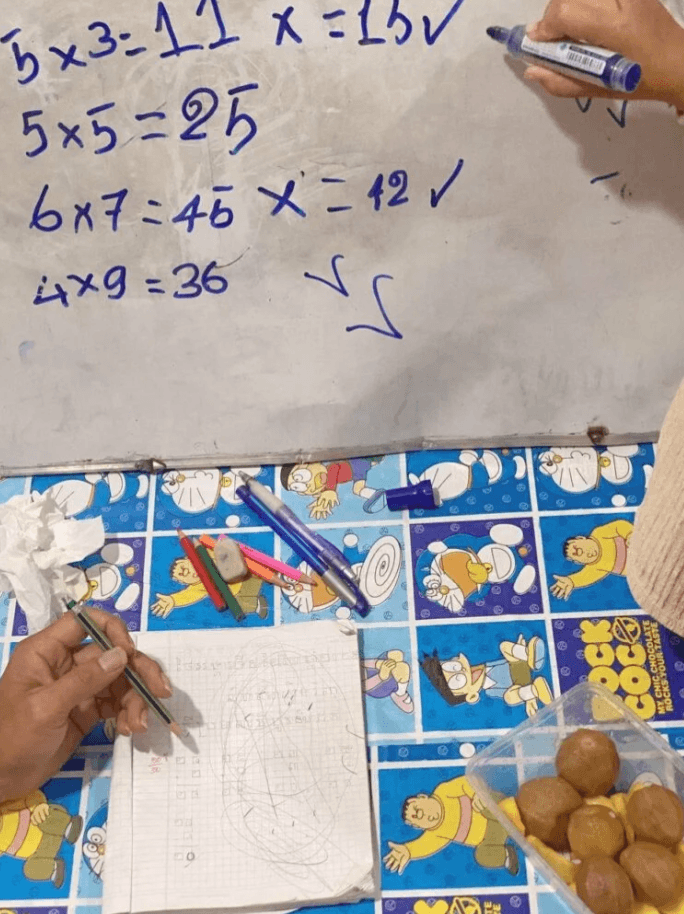
She can grab a snack, do a cartwheel, or pet the dog.
Then back to work.
It keeps the actual work time within the 20-minute window while giving her brain a chance to reset.
Short homework sessions with breaks consistently outperform grinding through everything in one go.
Let them teach you
This is my secret weapon.
I become the student, and my daughter becomes the teacher.
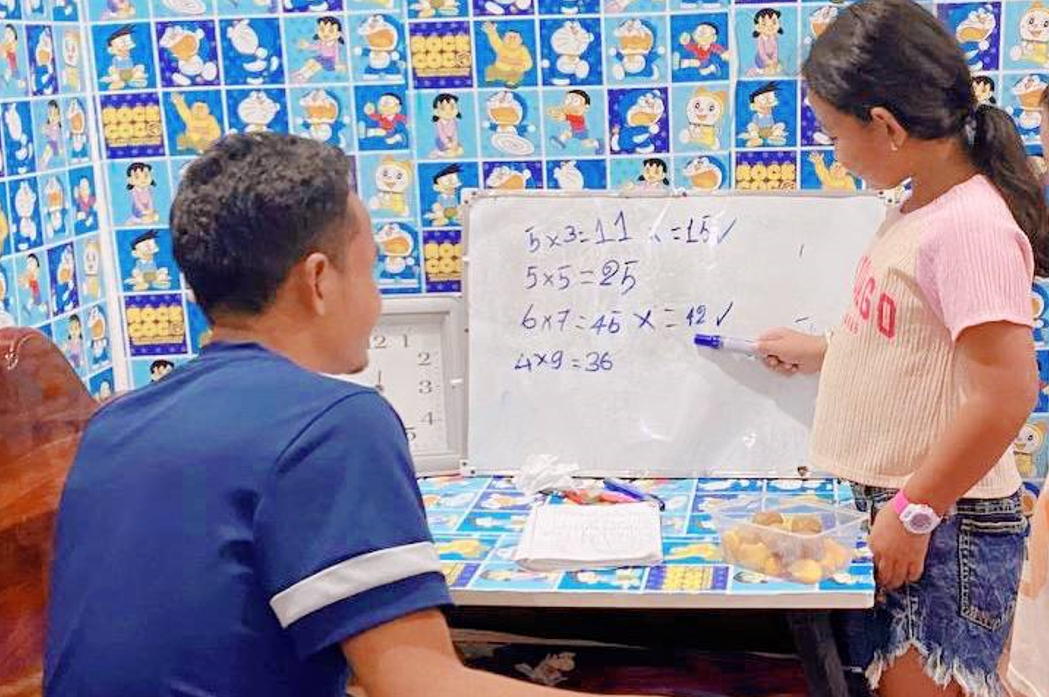
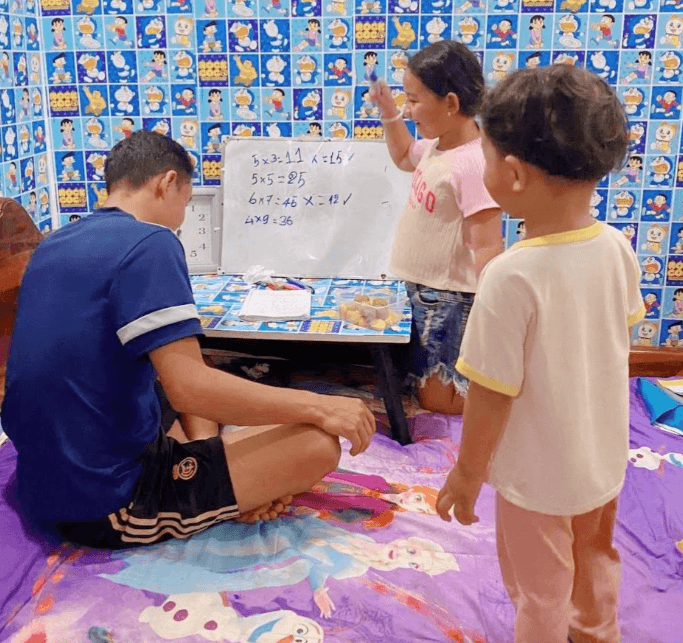
She gets a whiteboard, writes problems for me, and I answer most of them correctly but dramatically get one wrong.
“Wait, is 6 times 7… 45?” She loses it, marks a big X, and writes the correct answer.
Suddenly, we are 15 minutes into math practice, and she is laughing.
Some days this runs 30 to 40 minutes, well past the standard guideline, but she is genuinely learning and happy, so I will take it.
Use a visible timer
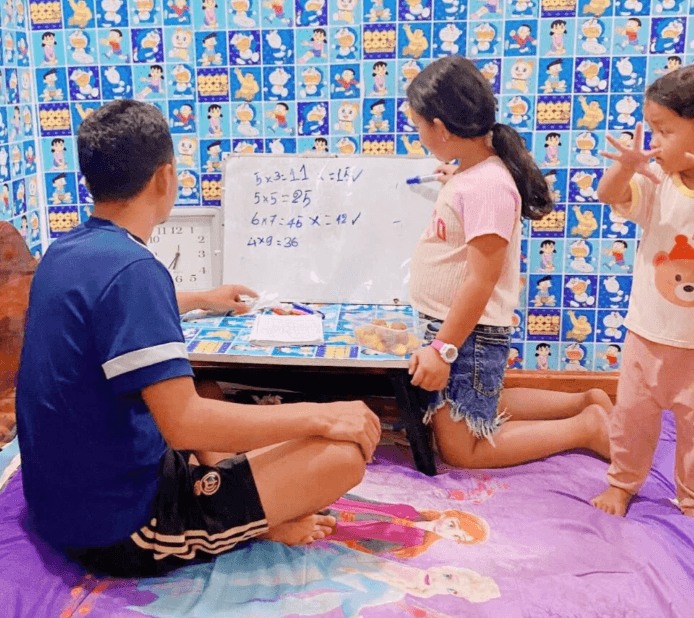
We keep a simple wall clock next to our homework spot.
Since second graders are still learning to tell time, an analog clock doubles as extra math practice.
Saying “when the big hand hits the 6, we take a break” gives her a concrete finish line, so the task feels manageable instead of endless.
A visible timer is one of the most underrated homework strategies for kids at this age.
Read first
We started doing the reading portion before anything else.
It warms up her brain, builds some confidence, and then the harder work, like math or writing assignments, does not feel as heavy.
What If Homework Is Still Taking Too Long?
If you have tried adjusting the environment, the timing, and the routine, and second grade homework is still regularly running way over 20 minutes, it is time to talk to the teacher.
I was nervous about that conversation, but our teacher was genuinely glad I brought it up.
Turns out several families were struggling with the same worksheet format.
She made some adjustments, and things improved quickly.
Most teachers do not want children spending hours on homework either.
They simply may not know how long it is actually taking at home.
What to say: Keep it factual and collaborative. Something like, “Hi, I wanted to check in about homework. It has been taking her about 45 to 60 minutes most nights, and I know the general guideline is around 20 minutes. I have tried a few things, but we are still struggling. Do you have any suggestions, or is there something she might be missing in class?”
That opens a real conversation without sounding like a complaint.
The Bigger Picture
Here is what I wish someone had told me at the start of second grade.
Twenty minutes is the target, not a hard rule.
Some nights will be 15 minutes, others might stretch to 30.
That is completely okay.
Quality beats quantity every single time.
Twenty focused minutes beats an hour of tears and frustration, full stop.
Your child is still little.
Second graders are only seven or eight years old.
They are learning to read, write, add, subtract, and sit still, all at the same time.
That is genuinely a lot to ask of a small person.
You are not failing if homework is hard.
I used to think something was wrong with our family.
Turns out it is hard for most families.
You are doing fine.
Last week, my daughter finished her homework in 18 minutes, got a sticker on her chart, and asked if she could do extra math problems.
I nearly fell over.
It does not happen every day.
But when you find the right routine for your child, those efficient 20-minute sessions do start showing up more often.
And on the really rough nights, just remember: your child will be okay even if a worksheet does not get finished.
You are the manager.
You set the tone.
Protect their time, protect your peace, and close the workbook.
Frequently Asked Questions
How long should homework take for a 7 or 8-year-old?
According to the 10-minute rule supported by the National PTA and NEA, a second grader (typically 7 to 8 years old) should spend about 20 minutes on homework per night. Reading is usually separate and adds another 15 to 20 minutes.
Is it normal for a 2nd grader’s homework to take an hour?
It is common, but it is not the standard. If second grade homework regularly takes an hour, the most likely causes are a distracting environment, working while tired, or a gap in understanding the material. Adjusting any one of these factors often brings the time back down.
What should I do if my second grader is crying over homework?
Stop the session. A child crying over homework is overwhelmed, not being stubborn. Take a short break, remove any distractions, and try again in 10 minutes. If the problem persists over several weeks, speak with the teacher. It may signal that the concept was not fully understood in class.
When is the best time for kids to do homework after school?
Most child development experts recommend doing homework within an hour or two after school, before a child gets too tired. After-school snacks and a short play break first can make a big difference in focus and attitude.
Should I do my child’s homework for them if they are really struggling?
No. Doing the work for your child removes the learning benefit and can create a pattern that is hard to break. Instead, focus on guiding them with questions, simplify the task into smaller steps, or write a note to the teacher explaining the difficulty. If your pencil is moving and theirs is not, that is the signal to stop.
Disclaimer: I am a parent and a university educator, not a licensed child psychologist or pediatrician. This guide is based on my personal parenting experience and educational background. Always consult your child’s teacher or pediatrician for professional advice regarding your child’s educational development.
