


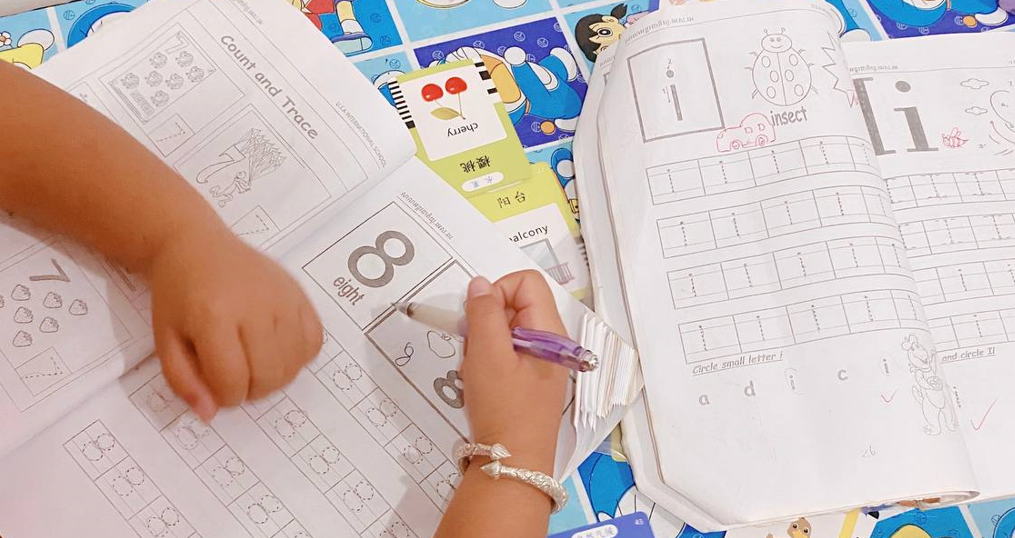
My daughter was guessing words instead of actually reading them.
If you have a second grader at home, you probably know the moment things get harder.
The books get longer, the pictures disappear, and suddenly your child has to figure out words completely on their own.
For us, the panic hit when my daughter stared at the word “eight” and froze.
She knew the number 8 perfectly (math is her thing), but connecting the letters E-I-G-H-T to that sound?
Totally lost.
As a university professor, I have watched students memorize their way through tests without actually understanding anything.
My second grader was struggling with reading in the same way.
She attends an international school and is learning English as a second language, so she has built a coping mechanism: memorization.
Instead of sounding words out, she was recognizing shapes.
When she hit an unfamiliar word, she guessed.
Sometimes it worked. Usually, it did not.
So we made a decision that felt a little scary.
We put the chapter books away.
We paused the grade-level workbooks.
For one full week, we revisited phonics basics.
It felt like a step backward.
What happened next honestly surprised me.
Quick Takeaway
If your child is guessing words instead of reading them, they are likely relying on word shapes or memorization rather than phonics. This is common in second graders and does not mean something is seriously wrong.
Three phonics activities that help at home: a flashcard scavenger hunt, tracing whole words while saying each letter sound aloud, and using visual-association flashcards. One focused week of going back to phonics basics can build genuine reading confidence, even for ESL children learning English at home.
Why Is My Second Grader Guessing Words When Reading?
Before I get into what we did, I want to explain what was actually going on, because if your child is doing this too, you are not alone, and it does not mean something is seriously wrong.
When kids first learn to read, many rely on memorization.
They see a word, remember it from before, and say it.
That works fine when the words are short and familiar.
But once second-grade reading kicks in, there are too many new words to memorize.
So instead of slowing down to sound things out, kids start guessing based on the first letter or the overall shape of the word.
A child who guesses rather than sounding things out isn’t being lazy.
They simply have not been given the right tools to decode unfamiliar words yet.
This is one of the most common signs parents notice when their seven- or eight-year-old hits a wall, and the fix is more straightforward than most people expect.
That was exactly what my daughter was doing.
She was not reading.
She was guessing.
And the more she guessed, the less confident she felt about actually trying.
3 Simple Phonics Activities for Second Graders at Home
I am a university professor, not a primary school teacher.
I do not have a special curriculum or formal phonics training.
What I have is a daughter who needed help and enough curiosity to research what actually works for kids struggling at this age.
Here is what we focused on during our one-week phonics reset, and why each activity made a real difference.
1. The Flashcard Scavenger Hunt
Sitting at a table flipping through flashcards one by one is not exciting for an 8-year-old.
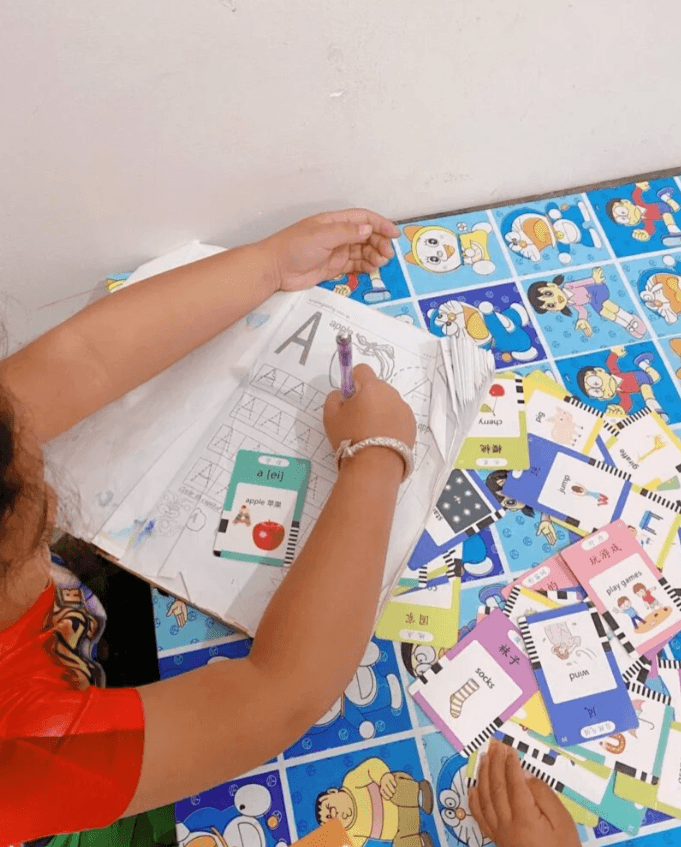
So we turned it into a game.
I spread her vocabulary flashcards across the table, words like “apple,” “grape,” and “socks.”
Then I opened her workbook to a specific letter page.
When we worked on the letter A, her job was to find every flashcard that started with that sound and place it on the page.
Simple, right?
But here is what made it work: she could not just guess anymore.
She had to actually look at the first letter of each word.
Over a few days, that habit started to stick.
This is an incredibly easy activity to set up at the kitchen table because it requires no special materials and takes less than ten minutes a day.
2. Tracing Words, Not Just Letters
Most people think of tracing as a handwriting exercise.
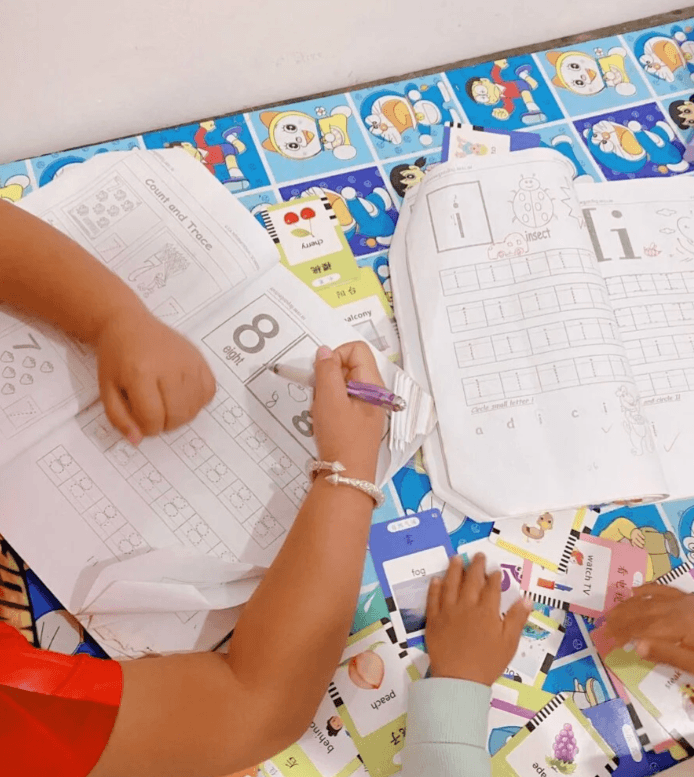
It helps with that, sure.
But tracing words to learn phonics is also one of the most effective ways to help a struggling reader connect letters to sounds.
When a child traces a whole word rather than just a single letter, the brain has to process each letter in order.
It slows them down.
It makes them pay attention.
For a child who has been rushing through words and guessing, that slowdown is exactly what is needed.
We used number words for this one.
My daughter traced the number 8, then traced the word “eight” letter by letter right next to it.
Doing both together helped her brain link the symbol she already knew to the spelling she kept stumbling over.
It clicked in a way that just reading the word never had.
Tracing sounds repetitive, but that repetition is the whole point.
It builds a physical memory of each word that silent reading alone does not create.
3. Say It While You Trace It
This one came from a tip a teacher shared with me, and it quickly became our favorite part of the routine.
The rule is simple: while tracing, say the sound of each letter out loud at the same time.
So when my daughter traces the letter “i,” she says “ih… ih… insect.” When she traces “a,” she says “ah… ah… apple.”
She connects the letter to its sound and then to a familiar word.
It takes maybe 30 seconds per letter, but for a child who has been skipping over sounds and guessing, that kind of repetition builds something real.
It looks slow. It feels repetitive.
But for a 7 or 8-year-old who is falling behind in a fast-moving classroom, this small daily habit builds genuine reading confidence.
Our Simple Phonics Toolkit
When we decided to reset, I assumed I would need to buy expensive reading programs or apps.
I was wrong.
Low-tech, hands-on tools worked best because they removed the distractions.
Here is what was on our table that week.
“Count and Trace” Workbooks
We did not use standard reading books.
We used a workbook that combined numbers with words, and that was a deliberate choice.
Because my daughter is strong in math, the number-based pages gave her a confidence boost right away.
She was not intimidated because she already recognized the numbers.
If you are shopping for a workbook to use at home, look for one with large, clear fonts and directional arrows inside the letters.
Those arrows matter.
They guide your child’s hand and reinforce the correct path of each letter shape while they say the sound out loud.
Visual-Association Flashcards
Not all flashcards are the same.
The ones we used had one specific feature that helped: a visual cue for each word.
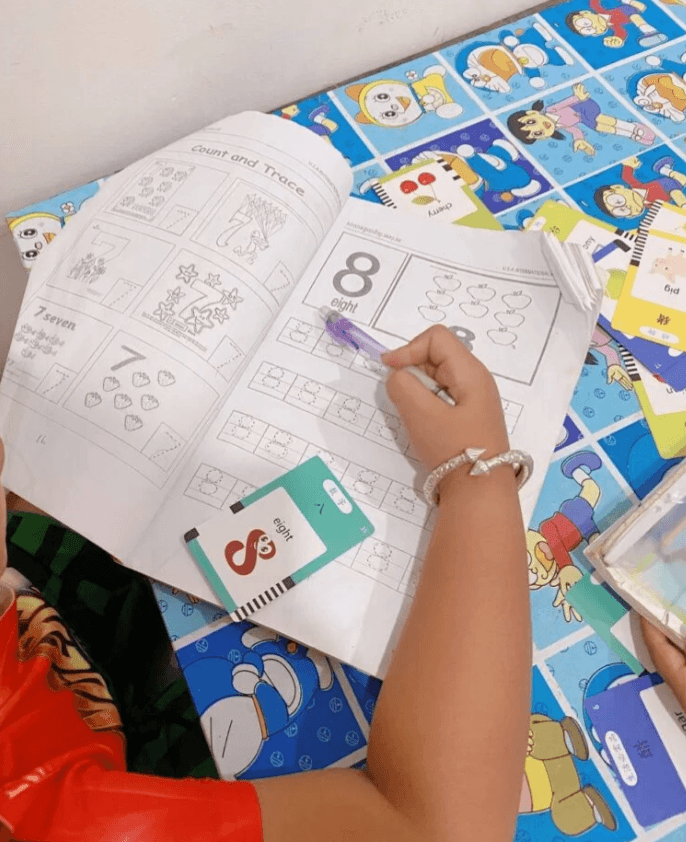
The flashcard for “eight” had a picture of a snake shaped like the number 8.
That image was the “aha” moment for her. It connected the shape, the object, and the word all at once.
Since we are a bilingual family, having cards that also included her native language characters helped ground her understanding, even though our focus was entirely on English phonics.
For any ESL child struggling to read English at home, visual-association cards like these are especially helpful.
They give a bilingual learner a second anchor for each new word, rather than relying purely on memorization.
The Purple Pen
This sounds like a small thing, but it mattered.
I let her pick her own pen for these activities.
She chose a bright purple gel pen.
Pencils feel like schoolwork and mistakes.
A fun colored pen feels like an art project.
It lowered the stakes.
When she made an error, we laughed and kept going.
No erasing. No pressure. Just progress.
Going Back to Basics: Why It Actually Works
If you are wondering how to help a child break this guessing habit from the comfort of your living room, the answer often starts with stepping back before moving forward.
Going back to phonics basics in second grade does not mean your child is failing.
It means you are giving them a stronger foundation to build on.
When kids skip this step and keep pushing forward through grade-level books, the guessing habit deepens and becomes much harder to break later.
My daughter still works on phonics every day.
She is not perfect.
But she is reading.
And she is not afraid to try anymore.
That is the biggest win.
If your child is guessing words when reading, do not wait.
Start with these three activities and see what happens.
Frequently Asked Questions
How long does it take to fix a guessing habit in reading?
Every child is different, but one focused week of daily phonics practice can create noticeable improvement. The goal is not immediate perfection, but building the physical habit of actually looking at each letter rather than guessing from context or word shape.
Is it okay to go back to phonics basics for a second grader?
Absolutely. Going back to basics in second grade is not a setback; it is a vital reset that builds a stronger foundation. Many children who appear to be reading at grade level are actually just guessing, and catching this early makes future learning much easier.
Does this approach work for ESL or bilingual children?
Yes. Bilingual children often rely on memorization more than native speakers because they are building two language systems at once. An ESL child struggling to read English benefits heavily from hands-on, visual-association tools that connect letters directly to familiar concepts.
Should I cover the pictures when my child is reading?
Yes, temporarily hiding illustrations is a highly effective strategy for chronic guessers. Pictures in early reading books are designed as context clues, which unintentionally encourage guessing. Covering them forces your child’s brain to rely entirely on decoding the letters and sounds.
What if my child gets frustrated or upset during phonics practice?
Stop the session for the day. To break a stressful reading habit, the stakes must remain low. Keep practice sessions under ten minutes, use fun tools like brightly colored pens instead of “school” pencils, and focus entirely on celebrating their effort.
Are decodable books better than leveled readers for a child who guesses?
Yes. Traditional leveled readers often rely on repetitive sentences and picture clues, which actually teach kids to guess. Decodable books restrict the vocabulary to specific phonics rules the child has learned, forcing them to sound out the words rather than predicting them.
Disclaimer: I am a parent and an HR/education professional, not a licensed child psychologist or occupational therapist. This guide is based on my personal parenting experience. Always consult your child’s pediatrician for professional advice regarding your child’s behavioral development or potential sensory processing issues.
