


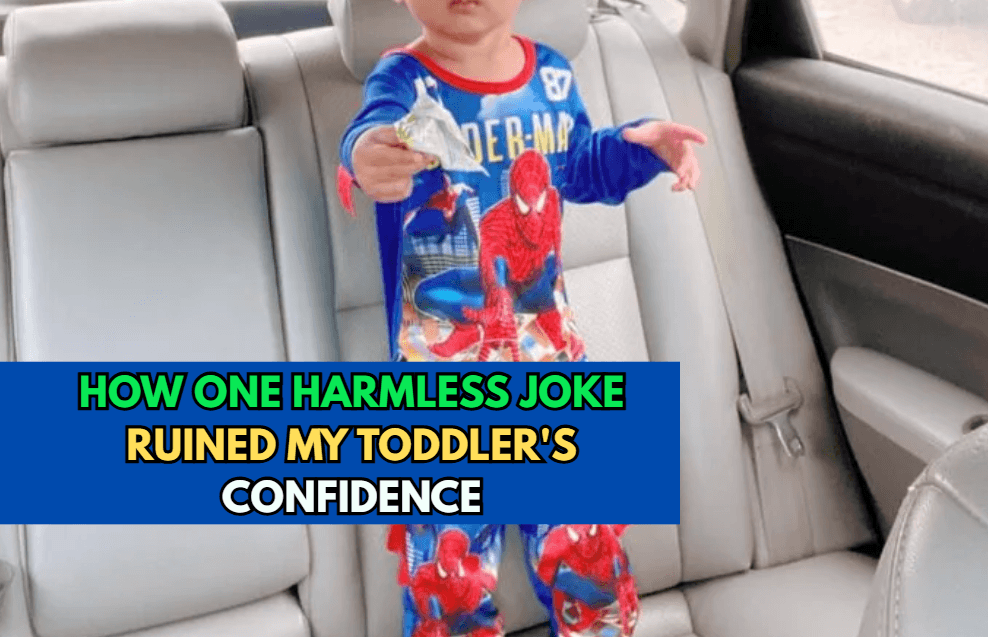
Two weeks ago, I accidentally crushed my toddler’s confidence in a gas station parking lot.
I thought I was being a fun dad.
The look on his face taught me something I was not expecting: a child’s belief in himself is fragile, and my job is to protect it, not poke holes in it.
That one moment in a muddy parking lot became a crash course in toddler imaginative play and why it matters far more than most parents realize.
Quick Takeaway
What this article is about: A dad (me) made a careless joke that broke the imaginative spell for his two-year-old son, who had been playing Spider-Man. Here is what happened, why it matters for child development, and how I fixed it fast.
The core lesson: When toddlers pretend to be superheroes, they are not just playing. They are practicing bravery. Protecting that play space is one of the most important things a parent can do for building self-esteem in toddlers.
What you will learn:
- Why toddlers wearing superhero costumes everywhere is developmentally healthy
- What the research says about pretend play and toddler development
- How to play along with toddler pretend play without losing your mind.
- What to do if you accidentally hurt your toddler’s confidence
- Simple ways to support and encourage toddler imagination every day
The Spider-Man Suit and the Power of Toddler Imaginative Play
To understand why that parking lot moment went so wrong, you have to understand the suit.
For the past month, my two-year-old son has not just liked Spider-Man.
He has been actively trying to become him.
The blue and red pajama set in these photos is not his clothing. It is a uniform.
A second skin.
We negotiate wash times while he is asleep, so it is ready by morning.
He wears it to the grocery store, to the park, and on long car rides.
When that polyester slides on, he stops being a toddler with a limited vocabulary and starts being a hero with unlimited potential.
This is one of the most beautiful benefits of imaginative play: for a toddler, the costume is not pretend at all.
It is completely real.
Child development researchers have found that role play gives toddlers a safe space to explore emotions, try on identities, and build a sense of what they are capable of.
The costume is armor.
The character is a rehearsal for courage.
If your toddler is wearing a superhero costume everywhere right now, that is not a phase to manage.
It is a developmental gift to support.
The Rainy Road Trip That Changed Everything
This happened during hour five of a six-hour family road trip.
If you are a parent, you already know what the inside of that car looked like: crushed goldfish crackers in the floor mats, empty juice boxes everywhere, and tension thick enough to feel.
It was pouring rain outside, the relentless gray kind that makes driving exhausting.
We were all worn out.
My wife and I needed coffee to push through the last hour, so we pulled into a muddy gas station off the highway. She hopped out and dashed inside.
I stayed in the car with Spider-Man.
Being the parent left behind in a parked car usually means a meltdown is coming.
I braced myself. But when I turned around to check on him, there were no tears.
He was working.
He had unbuckled and climbed up to stand on the backseat.
He was not bouncing or acting wild.
He was completely still, gripping a snack wrapper in one hand, eyes locked on the window.
He was scanning the perimeter.
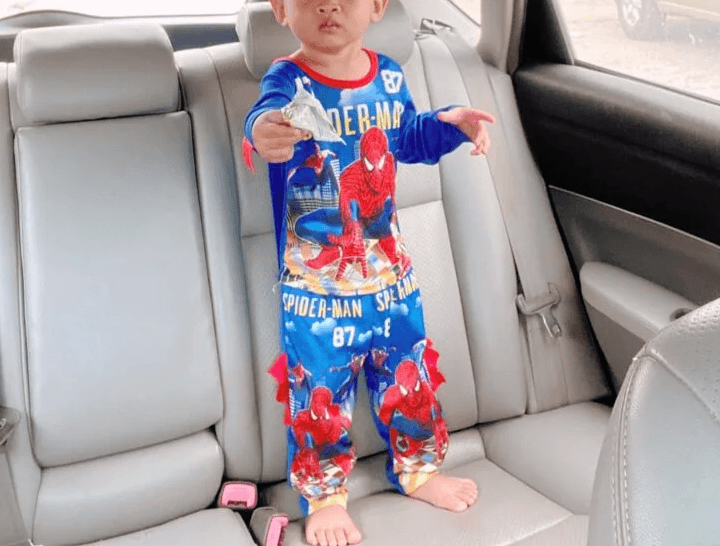
In his mind, he was not waiting for Mom to buy chips.
He was Head of Security, guarding the vehicle while the rain hammered down outside.
The Joke That Landed Wrong
He looked so intense standing there that I wanted to lighten the mood.
He turned from the window and handed me the empty wrapper.
“Dad, trash,” he said, making sure I was handling my end of things.
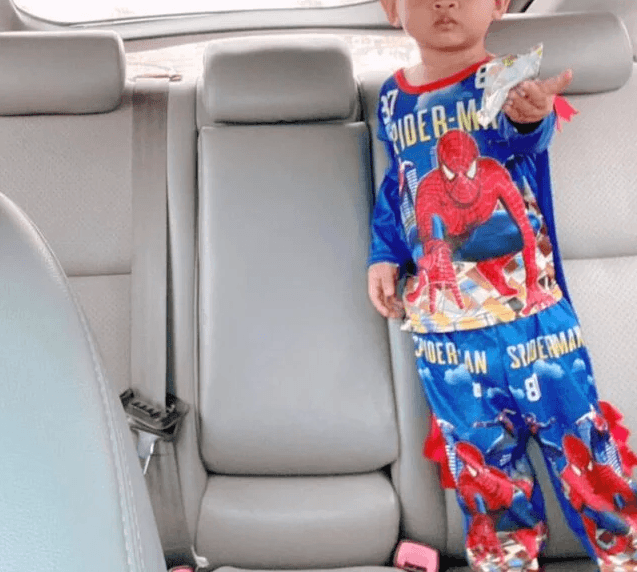
I thought it was adorable.
So I decided to use a little adult logic on his toddler’s imagination.
I took the wrapper and grinned. “Wait a minute,” I teased. “
Spider-Man does not need snacks! And if you are really Spider-Man, why are we even stopping?
Why did you not just fly to the store and grab the cookies yourself?
Why are we sitting here like regular people?”
I expected a giggle.
A pose. A “Zoom!” sound effect.
Instead, his face fell.
The superhero glare disappeared and was replaced by genuine confusion and worry.
He froze, looked down at his feet, then back at me, completely unsure of himself.
You can see that exact moment in the third photo.
His gaze is downward, quiet, and sad.
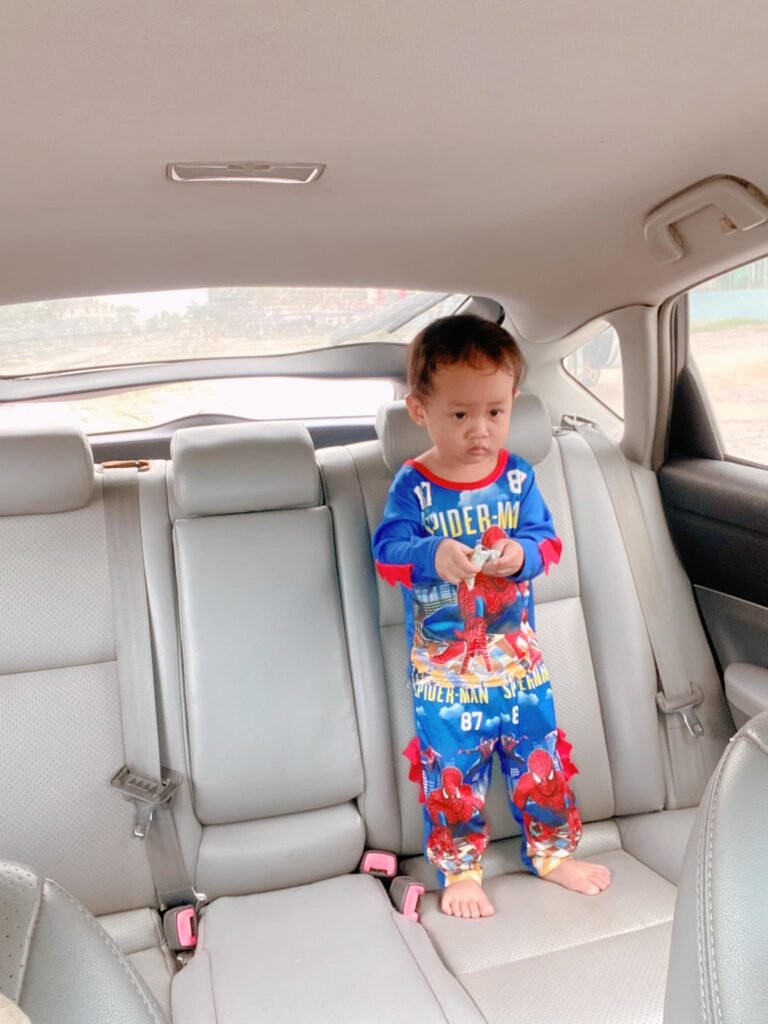
Just like that, the magic was gone.
I realized my mistake immediately.
I had used adult logic to puncture his safety bubble.
To me, it was a throwaway joke.
To him, it was a reality check he was not ready for.
He was not just playing pretend.
He was practicing being brave.
That supersuit was his armor against a big, loud, scary world. It made him feel capable.
When I pointed out that he could not actually fly, I did not make him laugh.
I stripped his armor away and reminded him he was just a little boy standing on a car seat.
How to Protect Your Toddler’s Confidence in the Moment
I felt awful.
It reminded me of the imposter syndrome feeling adults get when walking into an important meeting, the fear that someone is about to point at you and say you do not actually belong here.
I had just done that to my own kid.
I had to fix it fast before my wife got back and found a devastated toddler.
I shifted my tone from teasing to dramatic surprise.
“Oh, wait, I totally forgot!” I slapped my forehead. “Spider-Man is on vacation today.
Even superheroes have to ride in cars with their dads sometimes.
My mistake, buddy.”
The tension broke instantly.
His shoulders dropped, the color came back to his face, and he nodded like that made perfect sense.
Of course. Even heroes need a day off.
The logic worked for his toddler brain, and the safety bubble was back.
If you accidentally hurt your toddler’s confidence while they are in the middle of imaginative play, here is what works:
- Acknowledge their world on their terms, not yours. Do not correct the fantasy. Join it, or give the fantasy a logical explanation that preserves the magic.
- Shift your tone immediately. Go from teasing or logical to warm and conspiratorial. You are on their side.
- Give the story a bridge. “Even superheroes need snack breaks” or “Your powers only work when you are rested” are both toddler-logic gold.
- Move forward quickly. Do not linger or over-explain. Toddlers recover fast when you do not draw attention to the rupture.
Building Self-Esteem in Toddlers: What the Science Says About Role Play
The reason that moment hurt him so much is rooted in the developmental psychology behind pretend play.
According to child development research, pretend play is one of the primary ways young children develop emotional regulation, empathy, and a sense of personal agency.
When a child puts on a costume and becomes a character, they are doing something cognitively sophisticated.
They are testing out what it feels like to be powerful, to be capable, to be the one who protects others.
For a two-year-old who spends most of his day being told what to do and where to go, playing Spider-Man is a rare moment of total control and competence.
The benefits children gain from role-playing go well beyond imagination.
Researchers link sustained pretend play to stronger language development, better emotional problem-solving, and higher self-confidence in social situations.
When I poked a hole in that bubble, I was not just ending a game.
I was interrupting a self-esteem-building session.
The world will teach him about gravity, limitations, and hard realities soon enough.
There is plenty of time for him to learn what he cannot do.
My job right now is not to be his fact-checker.
It is to protect the space where he believes in himself.
How Dads Can Support Toddler Imagination Every Day
Since that rainy afternoon, I have changed how I handle these moments.
Here is what encouraging toddler imagination looks like in practice at our house:
- Take the role seriously. When he puts on the suit, I do not ask logic questions. If he says he is protecting the house, I thank him for his service. If he says he is going to fly off the couch, I make sure there are pillows underneath him.
- Add to the story, do not audit it. Instead of “Spider-Man cannot eat pizza,” try “I heard Spider-Man loves pizza. It gives him extra web power.” You are a co-author now. Act like it.
- Let him lead. The best thing about imaginative play is that the child sets the rules. Your job as a dad, or any parent, is to follow those rules with enthusiasm and without irony.
- Protect the play from interruptions. The outside world will break the spell plenty of times on its own. You do not have to help. Bedtime, dinner, bath time, all of these will pull him back to reality soon enough. While the spell is active, guard it.
- Know when a gentle transition is needed. Sometimes you do need to end the play for practical reasons. The most effective approach is to transition the character, not cancel him. “Spider-Man, it is time for your secret identity to eat dinner” is a hundred times smoother than “Take the costume off, we are eating.”
Let Him Wear the Suit
When my wife got back with the coffee, she could tell the vibe had shifted.
But Spidey was happily eating his snacks again. We finished the drive without a problem.
The benefits of imaginative play that I had always known about in theory became very real to me that afternoon.
I had seen firsthand how quickly confidence can be deflated, and how quickly it can be restored when you know what you are doing.
I am going to let him wear the suit and believe it for as long as he wants to.
I am going to thank him for his service when he guards the door.
I am going to marvel at his web-throwing every single time.
Believing you can fly is the very first step to eventually taking off.
Frequently Asked Questions
Should I play along with my toddler’s pretend play?
Yes, absolutely. Playing along is one of the best things you can do for your toddler’s development. You do not need to perform or be theatrical about it. Simply acknowledging their character and treating their role as real is enough.
Say “thank you for keeping us safe” instead of “you are being silly.” The validation matters far more than the performance.
Why does my toddler want to wear a superhero costume everywhere?
It is completely normal and developmentally healthy. At this age, children are beginning to explore identity and autonomy.
A superhero costume gives them a sense of power and capability in a world that is largely controlled by adults. It is their way of practicing what it feels like to be strong and in charge.
What should I do if I accidentally hurt my toddler’s confidence during play?
Do not panic, and do not over-apologize. Toddlers are resilient when you move quickly. Shift your tone to warm and supportive, offer a story bridge that makes sense in their imagination (“Even superheroes take breaks!”), and move forward. The goal is to restore the safety bubble, not to dissect what went wrong.
When should I let my toddler believe in fantasy vs. teach reality?
There is no strict age, but most child development experts suggest that ages 2 through 6 are the peak years for imaginative play and that these years are best protected, not corrected. Reality has a long lifetime ahead. The window for pure, uninhibited imaginative belief is short. Let it breathe.
Is it harmful to let my toddler think he is really a superhero?
No. Toddlers naturally understand the boundary between play and reality, even if they seem fully immersed. Your son knows he is your son. He also knows that when the suit is on, he is Spider-Man.
Both things are true to him at the same time. That is not confusion. That is healthy, creative cognition.
How can dads specifically support their toddler’s imaginative play?
Dads can support toddler imagination by being willing to be cast in a role, even a minor one. Let your toddler be the hero. You can be the sidekick, the bystander they rescue, or the one who calls for help. Take the role earnestly. Your enthusiastic participation tells your child that their inner world is worth taking seriously, and that message does more for their self-esteem than almost anything else you can offer at this age.
Disclaimer: I am a parent and a university educator, not a licensed child psychologist or pediatrician. This guide is based on my personal parenting experience and educational background. Always consult your child’s teacher or pediatrician for professional advice regarding your child’s educational development.
