


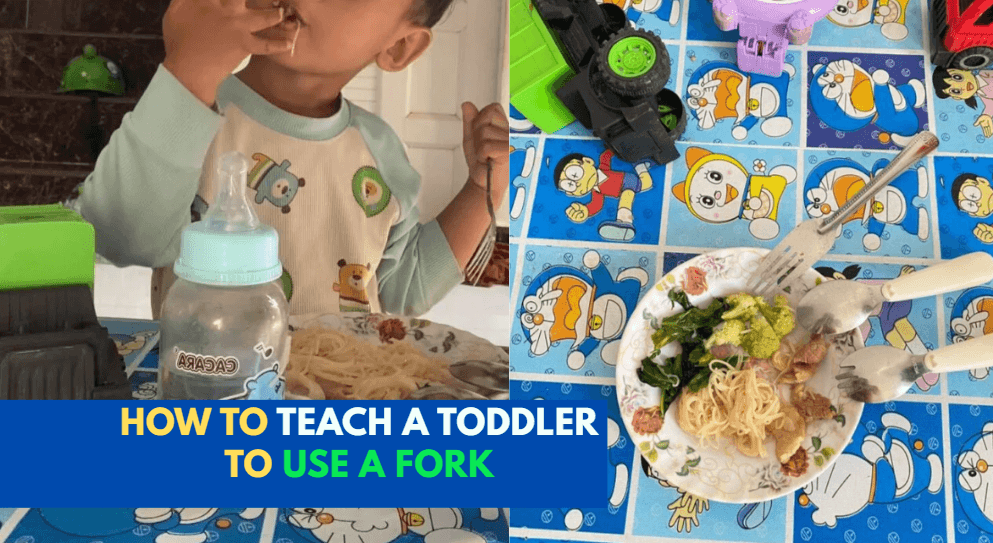
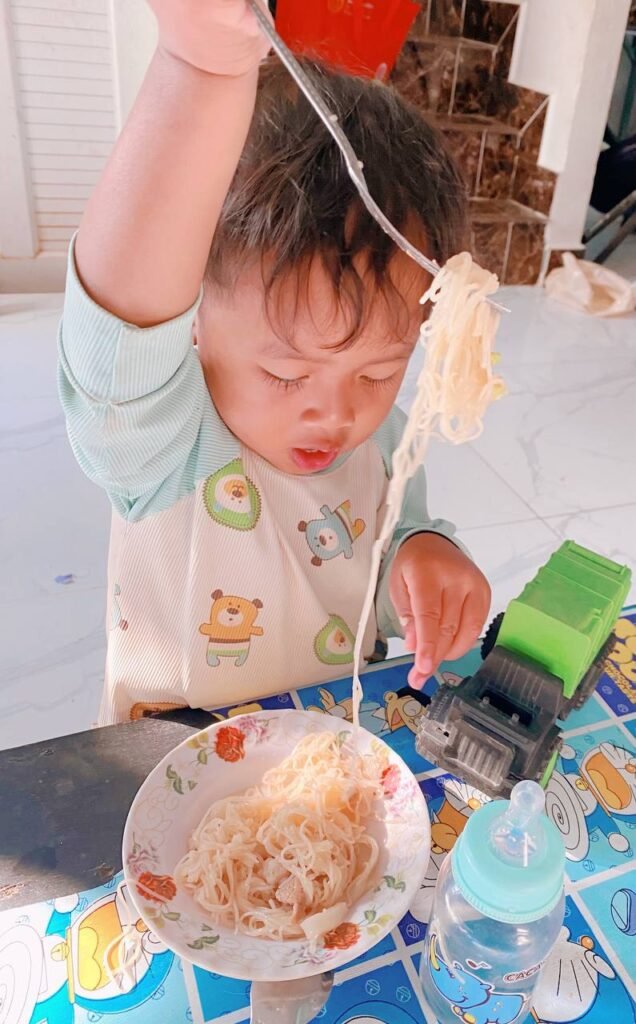
Last Tuesday, I found a noodle stuck to the ceiling.
Yes, the ceiling.
My two-year-old had just finished lunch, and honestly, I was not even mad.
Because here is what I have learned: when you are teaching a toddler to use a fork, mess is not failure.
Mess is progress.
If you are trying to figure out how to introduce utensils without turning every meal into a full disaster, you are in the right place.
Below, I’ll walk through what actually works, what does not, and why the chaos on your kitchen floor is doing more good than you think.
Quick Takeaway
- Most toddlers are ready to start fork practice between 12 and 15 months.
- Messy eating is completely normal and supports brain development.
- Start with soft, easy-to-stab foods like steamed vegetables and pancake squares.
- Use hand-over-hand guidance at first, then step back and let them try.
- A short, chunky-handled fork works best for small hands, though some kids insist on using a “grown-up” fork.
- Progress is not a straight line. Some days they will nail it; other days, fingers win.
- Patience and repetition are the two most useful tools you have.
Is It Normal for Toddlers to Make a Mess When Eating?
Short answer: yes, completely.
If your toddler makes a mess at every meal, their brain is working exactly as it should.
Think about what they are actually trying to coordinate:
- Gripping a small, slippery object
- Stabbing food that slides around a plate (especially wiggly noodles)
- Lifting the fork to their mouth without dropping it
- Doing all of this while sitting still
That is a lot of fine motor skills for someone who learned to walk not long ago.
The mess is not a problem to fix.
Every dropped bite teaches their brain something new about angles, grip, and distance.
Messy eating is a normal and healthy part of toddler development, and sensory exploration through food, touching it, squishing it, and occasionally launching it, is how small children process the physical world around them.
If the noise or mess starts triggering a meltdown, your child might be getting overstimulated.
A short break and a calm reset before trying again can really help.
Why Toddler Self-Feeding Skills Matter More Than You Think
For the first few months, I just fed my son myself. It was faster, cleaner, and way less stressful.
Then I noticed something: he started reaching for the spoon and getting frustrated when I would not hand it over.
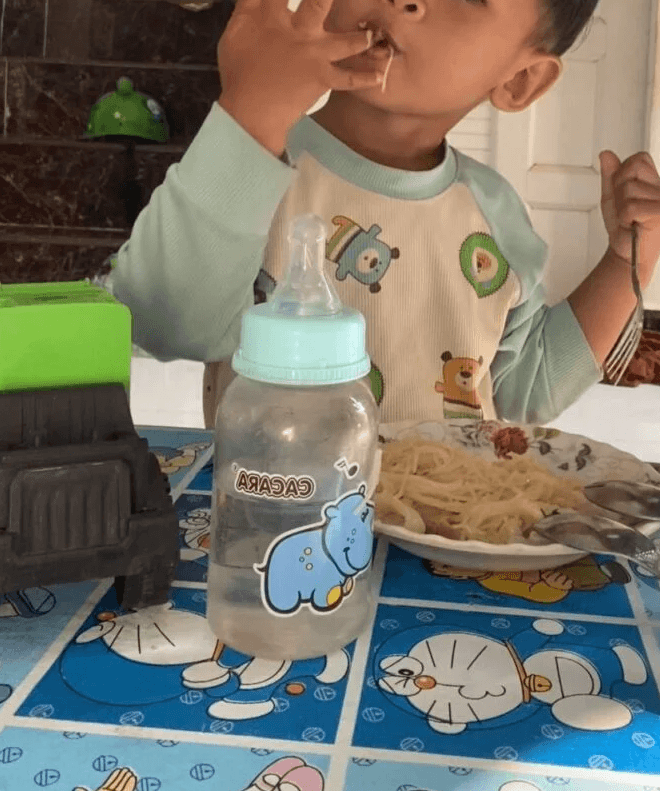
Kids want to feed themselves.
It is one of their first real steps toward independence, and when you support that, you are building far more than table manners.
Teaching toddler utensil skills helps develop:
- Confidence. “I can do this myself” is a powerful feeling for a two-year-old.
- Hand-eye coordination. The same fine motor control needed for fork use later supports writing, drawing, and self-care tasks.
- Problem-solving. What happens if I tilt the fork this way? What if I switch hands? Toddlers are running little experiments at every meal.
And once they get the hang of it, mealtimes genuinely become easier for everyone.
When Should You Start Teaching Fork Skills?
Most toddlers are ready to begin around 12 to 15 months of age.
According to CDC developmental milestones, most children are using spoons and forks by 18 months, though practice usually starts much earlier.
Signs your child might be ready:
- They can pick up small objects with their fingers, like peas or cereal pieces
- They show interest in what you are eating
- They try to grab your utensils at the table
- They can sit in a high chair without constantly sliding out
If you are wondering about an 18-month-old not using a fork yet, that is still within the normal range.
Every child moves at their own pace.
My neighbor’s daughter was confidently spearing broccoli at 14 months.
My son was not interested until 18 months old. Both are completely normal.
The Best Fork for a Toddler Learning to Eat
Not all forks are suited for tiny, developing hands.
What to look for:
- A short handle that fits a small grip
- A chunky or textured grip that is easier to hold
- Rounded or slightly blunted tines for safety
- Lightweight construction, so it does not feel heavy mid-air
Many occupational therapists and feeding specialists recommend forks with short, chunky handles specifically designed for toddler grip development.
We bought a few of these, and they do help.
That said, my son spent many meals insisting on using a long metal fork, exactly like the ones Mom and Dad use.
If that keeps your child engaged and at the table, go with it.
The goal right now is practice, not perfection.
Teaching Utensil Skills: A Step-by-Step Guide
Here is the practical part.
Step 1: Start with the Right Foods
Do not start with soup. Truly.
Begin with soft solids that are easy to stab and stay on the fork.
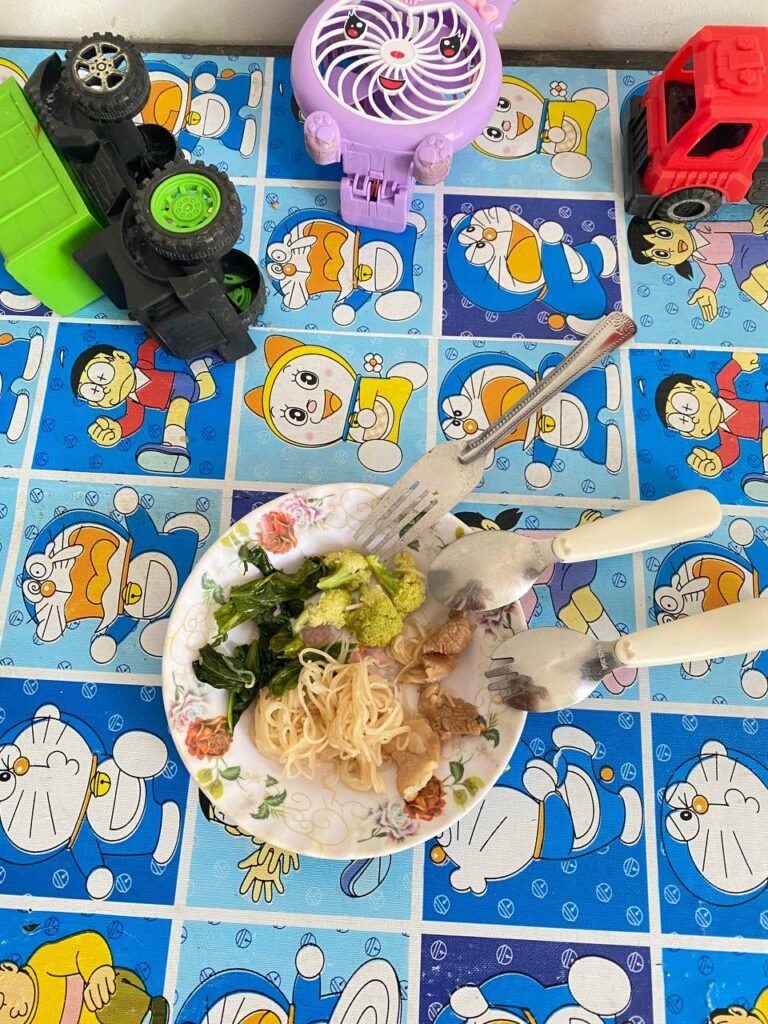
The best foods for toddler fork practice are:
- Steamed vegetables (broccoli florets, soft carrot chunks)
- Soft fruit cut into small pieces (avoid whole round shapes like grapes)
- Short pasta or noodles
- Cubed cooked chicken
- Pancake squares
- Scrambled egg pieces
Soft enough to pierce easily, firm enough to stay put.
This reduces frustration early on and keeps the experience positive.
Step 2: Let Them Watch You First
Before handing over the fork, eat a few bites yourself.
Slowly. Even a little dramatically.
“Look, I am poking this banana.
Now I am lifting it up. Now it goes in my mouth!”
It sounds silly, but toddlers are natural imitators.
They learn a huge amount just by watching the people around them, and modeling the motion clearly gives them a mental map before they try it themselves.
Step 3: Guide Them Hand Over Hand
For the first few attempts, place your hand gently over theirs and guide the motion together:
- Stab the food
- Lift toward the mouth
- Take a bite
Do this two or three times, then back off and let them try alone.
Do not hover too long, or they will simply wait for you to do it for them every time.
Step 4: Step Back and Let Them Struggle (A Little)
This is genuinely the hardest part.
You have to sit and watch them miss their mouth.
Watch the food fall. Watch the frustration build.
But if you jump in too quickly, they learn “I cannot do this without help.” Instead, offer calm encouragement:
- “Oops! Try again, you almost had it.”
- “That piece was tricky. Want to try a different one?”
- “You got it! High five!”
Celebrate the small wins out loud.
Independent eating builds on confidence just as much as it builds on coordination.
Step 5: Embrace the Mess, With Reasonable Limits
I do not let my son practice with spaghetti on the carpet.
I am not a saint.
But in the kitchen, at the high chair, with a mat underneath?
Absolutely.
Practical tools that actually help:
- A plastic splat mat or an old towel under the high chair
- A silicone bib with a deep food-catching pocket
- A damp cloth within easy reach
- Keeping messier meals in easy-clean areas of the house
We also started letting our son bring a “dining buddy,” a small green dump truck that joined him every lunch.
If a toy kept him sitting five minutes longer, that was a win.
The mess is temporary. The skill is forever.
Sensory Learning Through Food: Why Messy Eating Is Actually Helpful
Toddlers learn through their senses, and mealtime is one of the richest sensory environments they experience.
When your child smears yogurt across their tray or squeezes a piece of banana, they are learning:
- Texture: smooth, cold, sticky, soft
- Cause and effect: if I push this, it moves; if I drop this, it falls
- Fine motor control: using fingers to manipulate small objects with precision
This is fine motor development in action.
You are not watching a mess.
You are watching a brain at work.
We do not encourage food fights, but a reasonable amount of sensory exploration at mealtimes is not just acceptable, it is genuinely beneficial for development.
How Long Does It Take to Learn Toddler Utensil Skills?
Real talk: weeks. Sometimes months.
My son started trying at 15 months.
By 20 months, he could get food to his mouth about 60 percent of the time.
By age two, he was fairly reliable with a fork.
Even now, if he is tired or the food is challenging, he goes back to eating with his hands.
And that is fine.
Progress with toddler utensil skills is rarely a straight line.
Some days, they nail it.
Other days, the fork gets thrown on the floor within sixty seconds.
Keep offering it, keep modeling, and keep staying calm.
That consistency is what eventually makes it click.
A Note on the Montessori Approach to Toddler Utensils
If you have come across Montessori toddler mealtime ideas, the core principle fits well here: give children real tools, real food, and real opportunities to practice, even when it is slower and messier than just doing it for them.
The Montessori approach encourages:
- Letting children use child-sized but real utensils from an early age
- Setting up a consistent, low-distraction eating environment
- Resisting the urge to intervene before the child has genuinely struggled
- Treating mealtimes as a learning experience, not just a nutrition task
You do not need to follow any specific philosophy to apply these ideas.
The underlying principle, that children learn by doing and need the space to do it, applies no matter how you approach mealtimes.
Conclusion: You Are Already Doing It Right
If you are reading a guide on toddler feeding milestones, you are already paying attention in exactly the right way.
This skill does not happen overnight.
It happens bite by bite, drop by drop, and yes, sometimes noodle by noodle on the ceiling.
The goal at this age is not perfect table manners.
It is giving your child the chance to try, fail, and try again.
Stay patient. Keep modeling. Make it low-pressure.
One day soon, you will look over at the table and see your kid eating a full meal with a fork all by themselves.
Every single mess between now and then will have been worth it.
Recap
- Messy eating is 100 percent normal and supports development.
- Start with easy-to-stab foods and a toddler-friendly fork.
- Use hand-over-hand guidance, then step back and let them practice.
- Sensory exploration through food is good for the brain.
- Progress takes time. Consistency matters more than speed.
- The mess is temporary. The independence lasts.
Frequently Asked Questions
At what age should a toddler be able to use a fork?
Most toddlers begin practicing with a fork between 12 and 15 months and are using one with reasonable success by 18 to 24 months. That said, the timeline varies widely between children, and some are not very interested until closer to two years old. If your child is developing normally in other areas, a later start with utensils is rarely a concern.
How do I get my toddler to use utensils instead of their hands?
Keep offering the fork at every meal without making it a battle. Model the motion yourself at the table. Start with foods that are satisfying and easy to stab. Some children respond well to having their own special fork, while others want one that matches what the adults are using. Patience and repetition work better than pressure.
What is the best fork for a toddler just starting out?
Look for a fork with a short handle, a chunky grip, and rounded or blunted tines. Many toddler utensil sets sold at baby supply stores are designed with these features. That said, some toddlers refuse the toddler version and insist on a regular fork. If engagement is the goal, let them use what keeps them interested.
Is it normal for a two-year-old to still eat with their hands?
Yes, completely. Many two-year-olds alternate between using a fork and eating with their hands, especially when they are tired, the food is tricky, or they are just in a hurry. As long as they are familiar with utensils and use them some of the time, this is a normal part of the process.
Why does my toddler throw their fork instead of using it?
Fork-throwing is usually a sign of frustration, boredom, or a bid for attention, not a sign that they are not ready. Try reducing the pressure around fork use, switching to a food that is easier to stab, or simply acknowledging the frustration calmly before trying again. If throwing is a repeated issue, a short break away from the table and a calm return often helps reset the meal.
What foods are best for teaching a toddler to use a fork?
The best foods for early fork practice are soft enough to pierce easily but firm enough to stay on the tines. Good options include steamed vegetables, cubed cooked chicken, soft fruit pieces, scrambled eggs, short pasta, and pancake squares. Avoid very slippery, very hard, or very round foods at the start.
Does messy eating mean my toddler is behind developmentally?
No. Messy eating is completely normal at this age and is actually a sign of active learning. Toddlers use sensory exploration, including touching, squishing, and manipulating food, to understand texture, weight, and cause and effect. This is healthy fine motor and cognitive development, not a red flag.
Disclaimer: I am a parent and an HR/education professional, not a licensed child psychologist or occupational therapist. This guide is based on my personal parenting experience. Always consult your child’s pediatrician for professional advice regarding your child’s behavioral development or potential sensory processing issues.
