


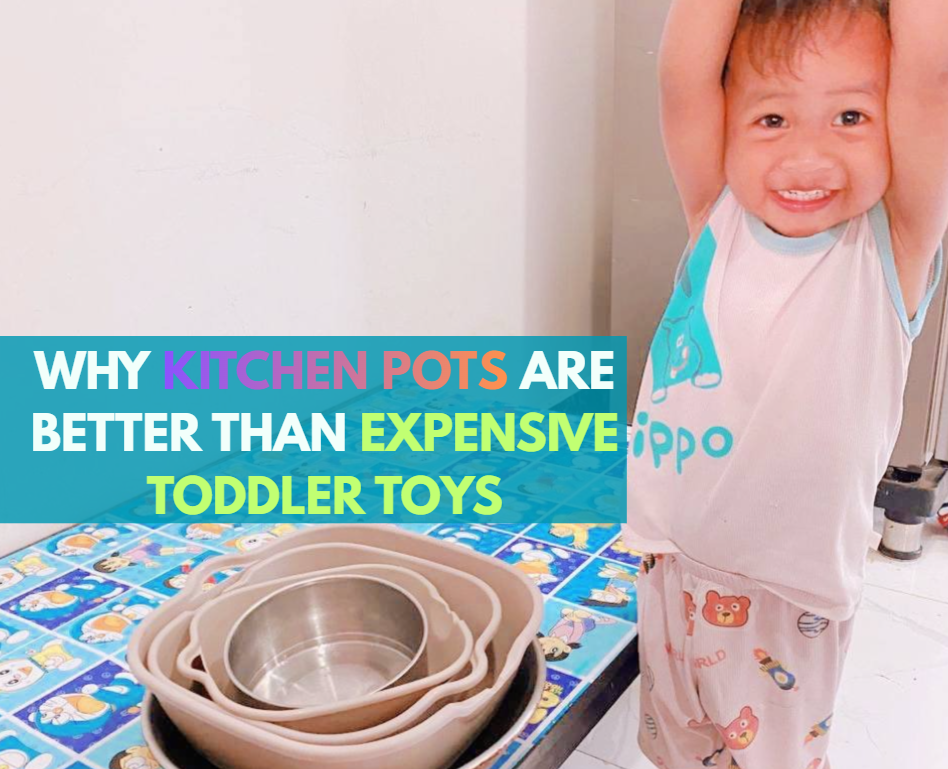
My toy box is stuffed with “proper” toys. There’s a colorful doctor kit, a plastic zoo, and expensive trucks that flash and beep. But my 2-year-old son ignores all of them.
His favorite toys weren’t the flashing trucks. It was my battered metal frying pan and a set of beige plastic washing baskets. For months, I said no. “These are for cooking, not playing,” I’d tell him. Every time he reached for them, I’d redirect him to his “real” toys.
Then one morning, I broke my own rule. And I’m so happy I did.
The Morning Everything Changed
It was 8:00 AM. I was wiping down the counters just a few feet away when I noticed the silence.
If you’re a parent, you know that silence from a toddler is suspicious. When kids play with metal pots and pans, it usually sounds like a drum concert. But my house was completely quiet.
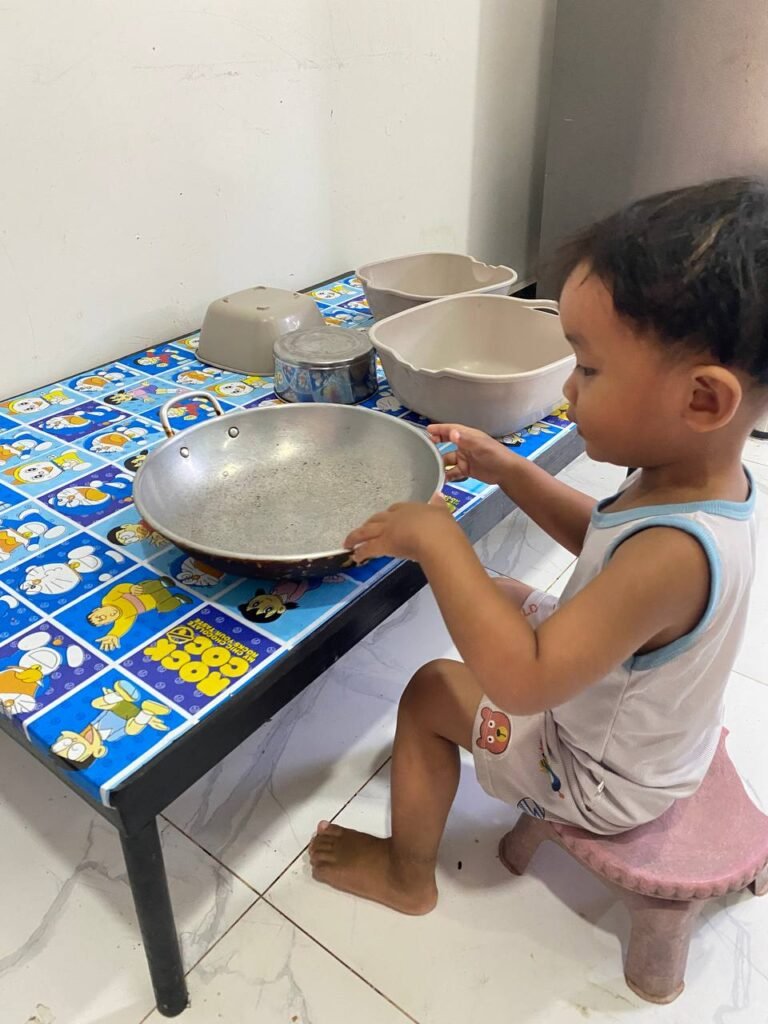
I peered around the corner, expecting to find him napping or drawing. Instead, I found him sitting at his little blue Doraemon table, focused intently on my frying pan and a stack of basins.
Why Was He So Quiet?
I realized something funny as I watched him: He knew I usually say “no” to the bowls. He didn’t want me to catch him.
So instead of banging them together like cymbals, he handled them with great care. He was trying to stay silent so I wouldn’t hear him from outside the room. It was the cutest sneaky behavior I’ve ever seen, and it resulted in something parents rarely get: 15 minutes of uninterrupted peace.
I didn’t interrupt him. I just stood back and watched.
The Physics of “The Square Basket”
For the next 15 minutes, he was completely focused. He picked up each bowl, looked at it closely, and tried to stack them on his table. This wasn’t random play. He was solving a puzzle.

The moment that really impressed me was when he tried to jam the square beige washing basket into the round metal frying pan. I watched him push it, wiggle it, and frown when it wouldn’t go in.
If this were a flashing electronic toy, the toy would have just made a “buzz” sound to tell him he was wrong. But with the pots, he had to figure it out himself. He paused, took the basket out, flipped it over, and tried a different angle.
That isn’t just play; that is physics and problem-solving in action. He was learning about shapes—that “square” doesn’t fit into “round”—without me saying a single word.
Math Class on the Kitchen Floor
I used to think he needed flashcards to learn math, but watching him arrange the bowls changed my mind.
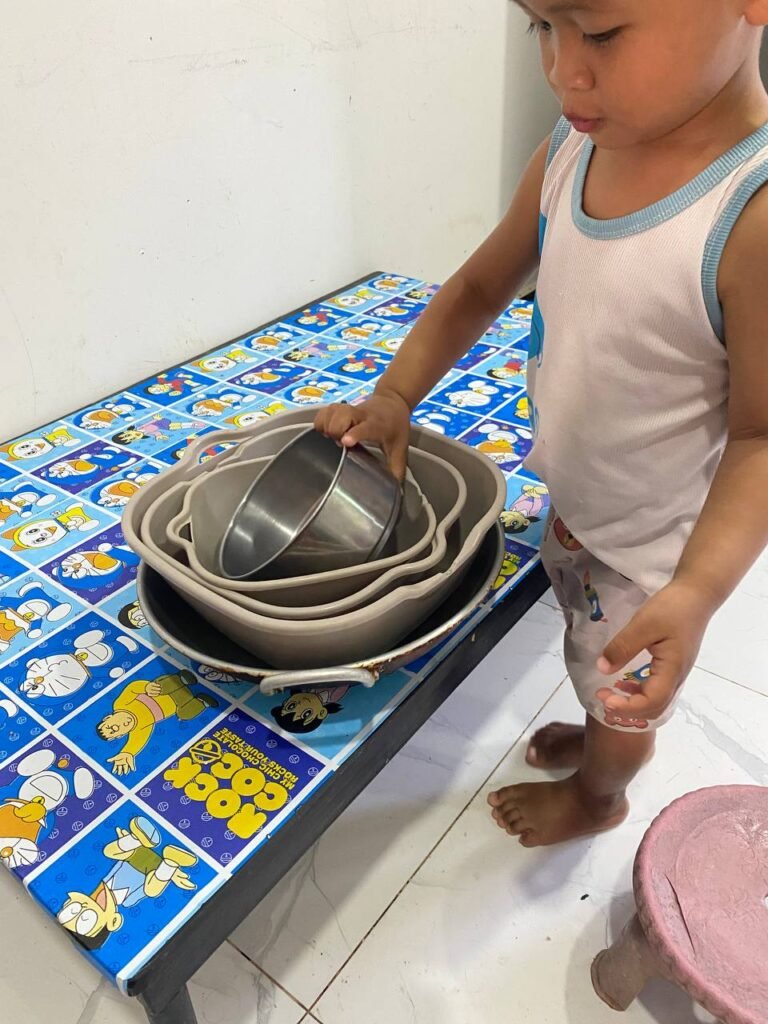
He started arranging the bowls from biggest to smallest. When he tried to put a large bowl inside a smaller one, he realized it didn’t work, so he switched them around. This is early math in action—understanding size, order, and spatial relationships.
Stacking these awkward shapes also required incredible fine motor skills. He had to grip the rim of the beige basin, balance it just right, and place it gently so the whole tower wouldn’t topple over.
These are the exact same hand muscles he will use to hold a pencil or button his shirt in a few years, and he was strengthening them right there at his Doraemon table.
How to Pick the Right “Kitchen Toys”
After seeing how much he loved this, I realized not all kitchen items are created equal. If you want to try this with your toddler, here is what worked for us (and what didn’t):
- Mix Your Materials. The magic happened because I gave him a mix of metal and plastic. The contrast between the heavy, cold metal pan and the lightweight, warm plastic baskets kept him interested. The different textures make the “stacking” feel more tactile and interesting than standard plastic blocks.
- Look for “Nesting” Ability. I grabbed a set of washing baskets that naturally fit inside each other. If you give them three items that are the exact same size, they can’t stack them, and they will get frustrated. You need a “Small, Medium, Large” set.
- The “Base” Matters. My old frying pan was the perfect base because it is wide and heavy. It anchored his tower so he could build upwards. A lightweight plastic bowl at the bottom would have tipped over instantly.
Safety Check: The “Potato Peeler” Incident
Before you let your little one raid the cupboards, you need to do a serious safety sweep.
I thought my “tupperware drawer” was safe, but when I did a double-check, I found a sharp vegetable peeler had slid to the back. Definitely not toddler-friendly!
My Safety Checklist:
- Weight Check: Heavy cast-iron skillets are a “no.” If they drop one on their toes, it’s a trip to the ER. Stick to aluminum or stainless steel.
- The “Pinch” Test: Check for tongs or gadgets with springs that could pinch little fingers.
- Glass is a No-Go: It seems obvious, but even Pyrex can shatter. Stick to metal, wood, and plastic.
The Victory Moment
After 15 minutes of careful work, he finally finished. He had built a perfect tower: the big metal pan on the bottom, the beige baskets nestled in the middle, and the tiniest silver bowl perched on top.
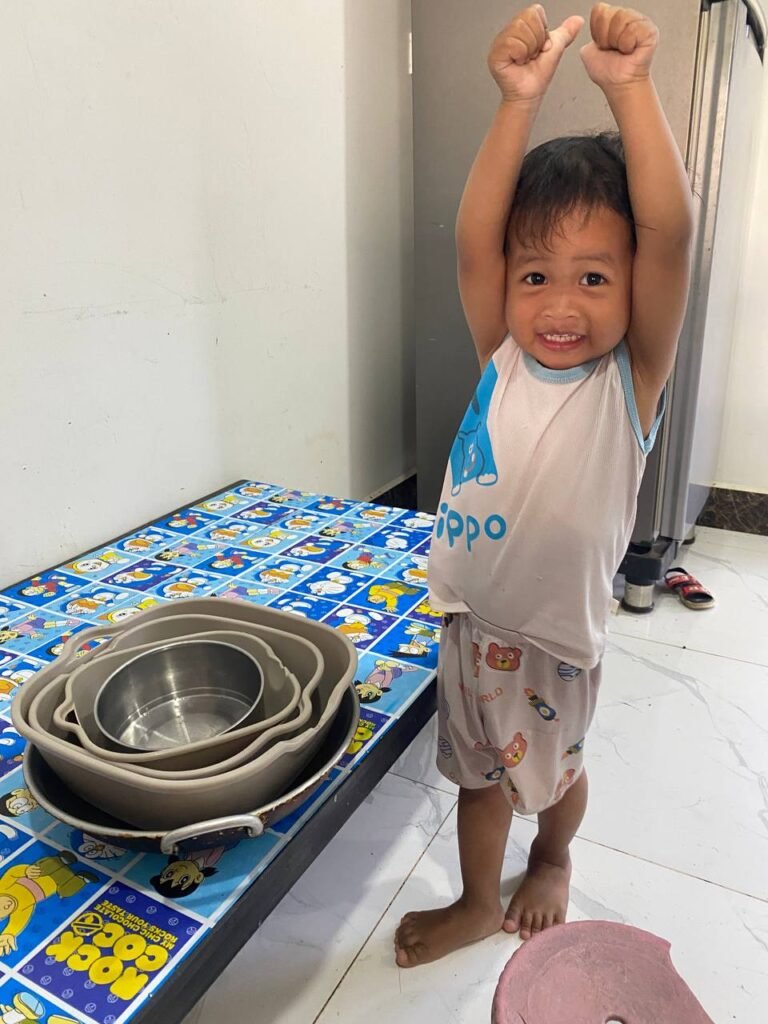
When he finally balanced that last piece, he didn’t just smile. He threw both hands straight up in the air—a pure ‘I did it!’ moment.
Looking at his proud face, you’d think he just won a marathon. That is the kind of confidence that comes from independent play.
Why I’m Glad I Broke My Own Rule
I could have walked in at 8:00 AM and said, “No, put those back.” I could have handed him a truck and enforced my “kitchen is not for play” rule.
But if I had done that, I would have broken his concentration, stopped him from learning about physics, and missed seeing that proud, happy smile.
Sometimes the best home activities for a 2-year-old aren’t the ones we plan, and the best toys aren’t the ones that cost $50. Sometimes, the best toy is just a boring metal bowl sitting in your kitchen cabinet, waiting to be discovered.
So next time your toddler reaches for the pots and pans, maybe say yes. You might be surprised by what happens. And who knows? You might get 15 minutes of blessed silence, too.
