


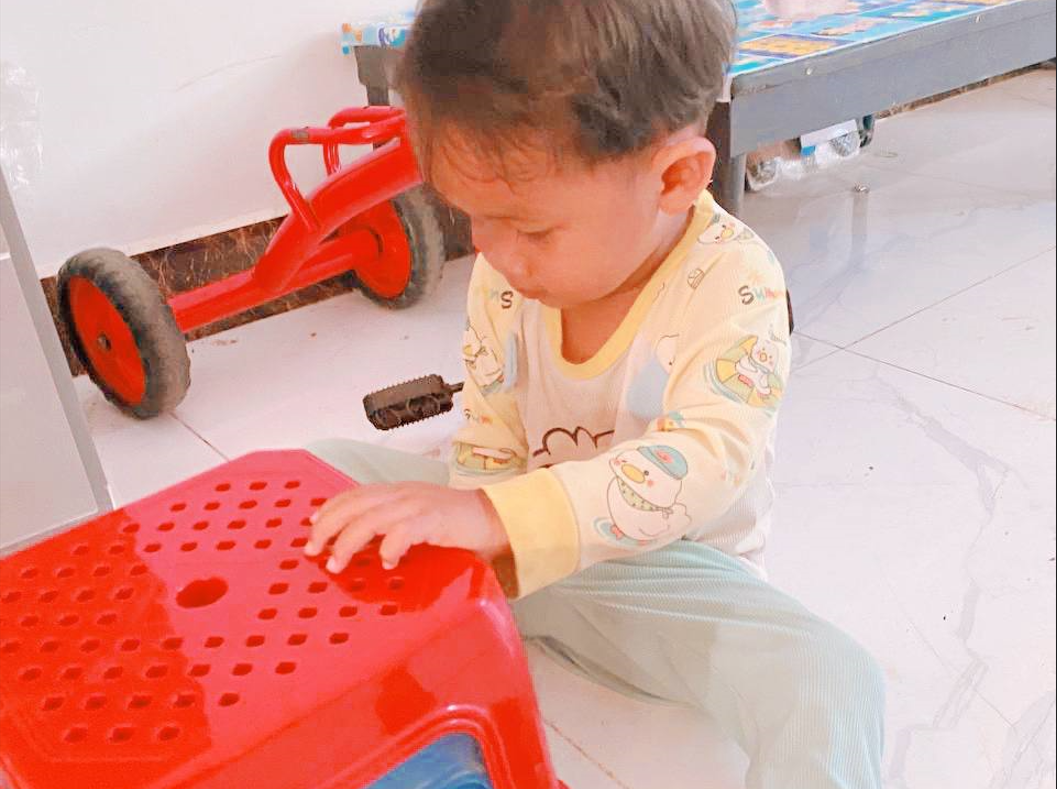
This morning, the Head of Negotiations in my house (my 2-year-old son) taught me a masterclass in resourcefulness.
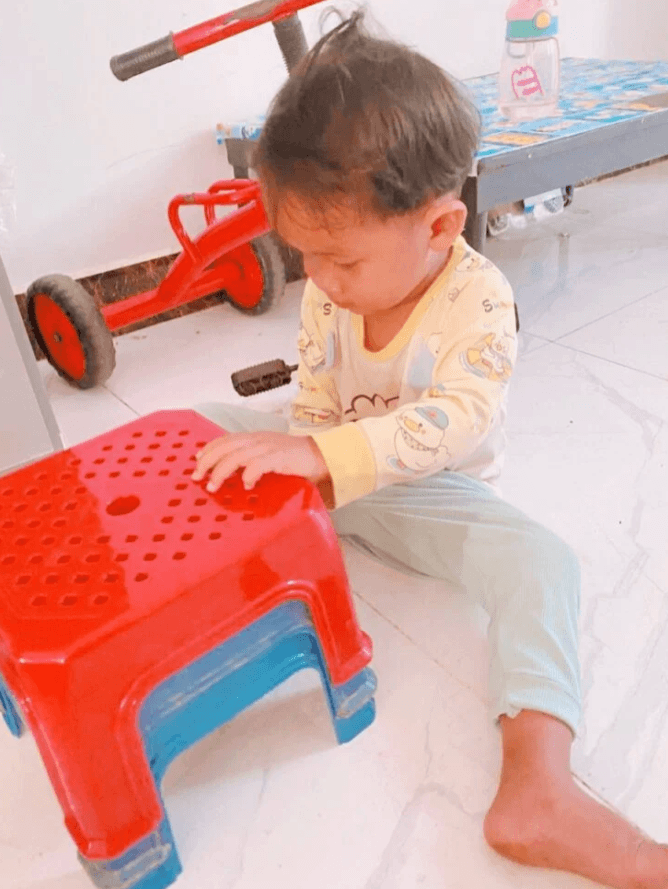
His expensive, battery-powered gadgets sat untouched in the corner while he spent nearly an hour completely absorbed with two plastic stools.
Not sitting on them.
Playing with them.
He stacked them, pulled them apart, and eventually built a structure entirely his own.
That is when it hit me: the best open-ended toys for 2-year-olds are not always “toys” at all.
In this guide, I will walk you through exactly what open-ended play is, why simple items consistently beat fancy toys, and which household objects and real toys give toddlers the richest, most developmentally valuable play experience.
I have also included cheap activities for toddlers at home that cost almost nothing and keep little ones engaged far longer than any light-up gadget.
Quick Takeaway
Open-ended toys for 2-year-olds are toys or objects with no single “right” way to play. Wooden blocks, play silks, stacking cups, and simple wooden figures are among the best options to buy. But the most effective open-ended play often costs nothing at all.
Household items like laundry baskets, cardboard boxes, and plastic containers give toddlers rich opportunities for imaginative play, fine motor development, and problem-solving. The core principle: the less a toy does, the more your child’s brain has to do.
What Are Open-Ended Toys? (Definition for Toddlers)
Open-ended toys are toys or objects that have no single correct way to play with them.
Unlike a toy that beeps when you press a button, open-ended play lets your toddler decide what happens next.
A wooden block becomes a car, a phone, a building, or a spaceship. The child leads every step.
The defining feature of truly open-ended toys is that they grow with your child.
What a 2-year-old does with a set of blocks looks completely different from what a 4-year-old does with the same set.
That is the whole point.
Open-ended play stands in contrast to closed-ended toys, which have a specific, finished goal.
A puzzle has one correct solution.
A shape sorter has one right answer.
Both have value, but they do not give a toddler the same freedom to invent, experiment, and build their own ideas from scratch.
Benefits of Open-Ended Play for 2-Year-Olds
Research and hands-on parenting experience consistently point to the same conclusion: open-ended play gives toddlers developmental benefits that structured, single-use toys simply cannot match.
- Fine motor development. Stacking, sorting, pouring, and manipulating open-ended objects builds the small muscle control toddlers need for writing and self-care later on.
- Problem-solving skills. When a toy does not tell your child what to do, they have to figure it out themselves. That productive struggle is where real cognitive development happens.
- Imaginative play. Child-led play allows a 2-year-old to assign any meaning to any object. This is how language, narrative thinking, and creativity develop together.
- Independent play skills. Open-ended toys hold a toddler’s attention longer than single-use toys because there is always something new to try. Over time, this builds a child’s ability to play alone with focus and satisfaction.
- Emotional resilience. When a toddler tries something, fails, adjusts, and tries again, they are learning that struggle is manageable. That lesson is far more valuable than any toy feature.
- Screen-free engagement. Open-ended play is one of the most effective alternatives to screen time because it is genuinely absorbing. It does not need to compete with screens; it simply occupies a different part of a child’s attention entirely.
Why Simple Household Items Beat Fancy Toys
Watching my son with those two stools reminded me why Montessori-style toys focus so heavily on simplicity.
When a toy does everything for a child, there is nothing left for them to figure out.
Here is exactly what happened that morning.
He held the red stool up to his face and looked through the ventilation holes as if it were a telescope.
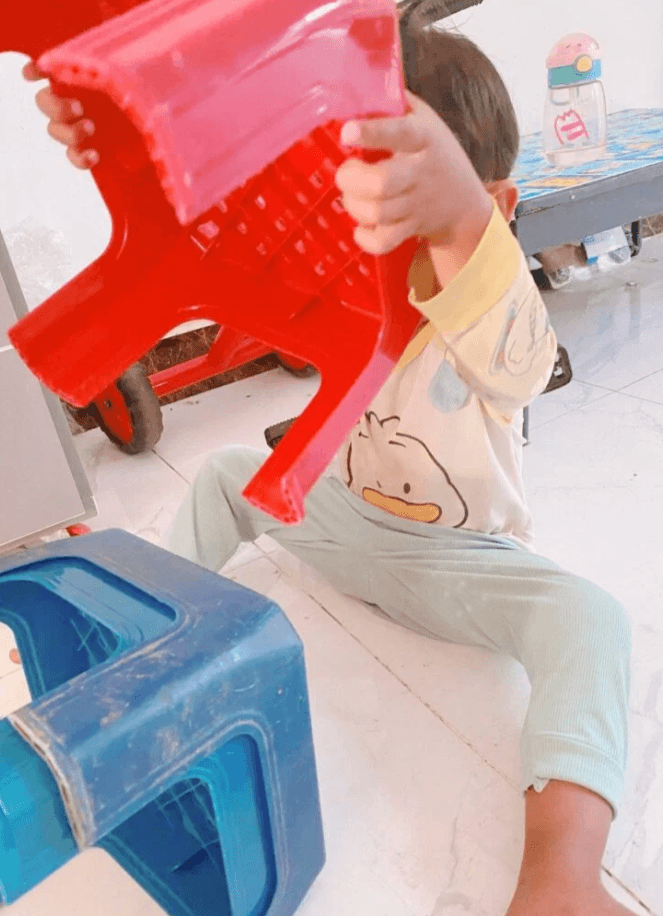
Then he noticed the blue stool was stuck inside the red one.
He pulled, twisted, and scrunched his face with effort.
My instinct was to step in and help.
I stopped myself.
That struggle was the learning.
He was figuring out how things fit together, how force works, and how to push through a problem.
After he finally got them apart, he stacked them again, then grabbed his long blue pillow and carefully balanced it on top.
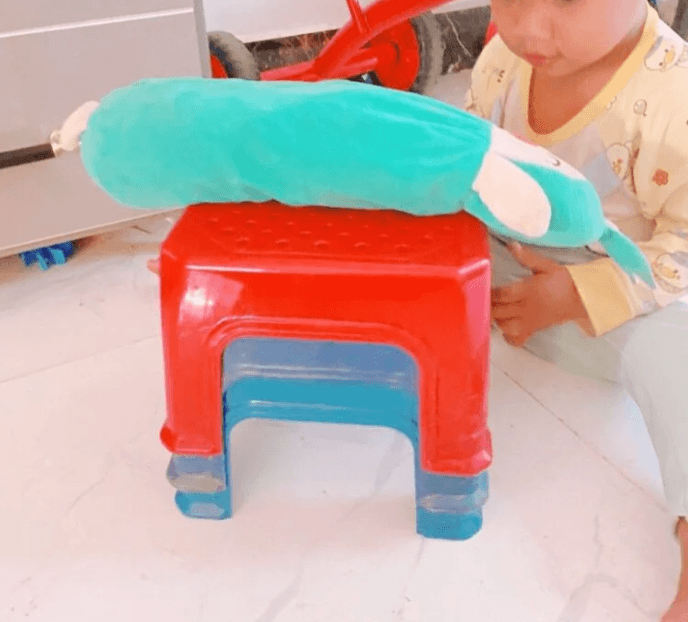
I have no idea what he built.
Maybe a bed for his stuffed animals.
Maybe a table.
Maybe just the joy of building something new.
When he finished, he sat down and clapped for himself.
That smile did not come from a screen or a battery-powered song.
It came from solving something real with his own hands.
That is open-ended play in its purest form.
Best Open-Ended Household Items for Toddler Play (Free!)
You do not need to spend money on expensive educational toys for toddlers to support rich development.
Just look around your house.
- The Laundry Basket. We have all heard the joke that kids prefer the box over the expensive toy inside it. But in our house, the green plastic laundry basket is the real MVP. Last week, instead of turning on the TV, we rolled up some paper balls and old socks. For the next twenty minutes, my son was completely absorbed in throwing them into the basket. For a toddler, a laundry basket is a target, a cave, a spaceship, or a turtle shell. It combines gross motor skills with hand-eye coordination, costs nothing, and keeps toddlers engaged longer than any light-up gadget.
- Cardboard Boxes. A large cardboard box is one of the richest open-ended play objects you can give a 2-year-old. It becomes a car, a house, a boat, or a hiding spot, depending entirely on your child’s imagination that day.
- Plastic Cups and Containers. Stacking, nesting, filling, and emptying containers teaches size, order, and cause and effect. A set of mismatched plastic cups from your kitchen drawer works just as well as an expensive stacking toy.
- Pots, Pans, and Wooden Spoons. Classic for a reason. Banging, stirring, and “cooking” with real kitchen objects gives toddlers sensory exploration, rhythm, and pretend play all at once.
- Pillows and Cushions. A pile of couch cushions becomes an obstacle course, a jumping platform, a fort, or a mountain. Physical play with soft materials also supports gross motor development and spatial thinking.
These are just a handful of open-ended play examples for 2-year-olds that cost absolutely nothing.
The common thread in all of them is that your child decides how to use the object, not the toy company.
Best Open-Ended Toys to Buy for 2-Year-Olds
Household items are excellent, but if you want to invest in toys, here are the ones that genuinely support child-led play and grow with your child for years.
- Wooden Blocks. These never get old. At 2, your child stacks and knocks down. At 4, they build towers and roads. At 6, they construct elaborate structures. The same set of blocks serves all of it. Wooden blocks are the single most recommended open-ended toy in Montessori-style learning environments, and for good reason.
- Play Silks. Large, lightweight fabric squares are surprisingly versatile open-ended materials. Toddlers use them for dress-up, tent-making, wrapping dolls, pretending they are rivers or capes, or simply waving them around in pure joy.
- Simple Wooden Figures. Animal figures, cars, or wooden people let children create their own stories without any script. Because there are no batteries and no instructions, the entire narrative comes from your child.
- Stacking Cups. While these look simple, a good set of stacking cups teaches size relationships, sequencing, and coordination in a completely hands-on way. Toddlers who have “mastered” them almost always find new ways to use them.
- Basic Art Supplies. Washable crayons, chunky markers, and plain paper give toddlers total creative freedom. There is no right answer, no finished product to compare against, and no screen involved.
- A Play Kitchen or Mud Kitchen. Pretend cooking supports imaginative play, language development, and social skills. It also gives toddlers a way to imitate what they see adults doing, which is deeply satisfying at this age.
All of these options align with Montessori at home principles: hands-on, child-led, simple materials that invite exploration without overstimulation.
Cheap Activities for Toddlers at Home (Screen-Free)
The best activities are usually free or close to it. Here are some that work beautifully for 2-year-olds.
- Water Play. Fill a bin or the kitchen sink with a few inches of water. Add some cups, spoons, and small containers. Let them pour and splash. Water play supports sensory exploration, fine motor skills, and early science concepts like volume and weight.
- Sorting Games. A muffin tin and a collection of random safe objects (pom-poms, blocks, bottle caps) keep little hands surprisingly busy. Sorting by color, size, or shape builds early math foundations without any formal instruction.
- Sensory Bins. Fill a large container with dry rice or pasta and hide a few small toys inside. Let them dig, pour, and discover. Stay close and supervise young toddlers. This is one of the most calming and focused activities for 2-year-olds, and it costs almost nothing.
- Obstacle Courses. Arrange cushions, pillows, low stools, and folded blankets into a simple course. Crawling through, climbing over, and jumping off soft surfaces gives toddlers exactly the kind of physical challenge their developing bodies are asking for.
- Drawing and Painting. Tape a large piece of paper to a low table or the floor and hand over washable crayons or finger paints. Give no instructions. Walk away. What comes next is entirely theirs.
- Nature Walks. Collecting rocks, sticks, and leaves on a simple walk around the block is open-ended play in the real world. Each object can be sorted, arranged, compared, and examined. The outdoors is a completely free sensory bin.
What Should Parents Actually Do During Open-Ended Play?
Honestly? Less than you think.
The hardest part is stepping back.
My instinct when my son is struggling is to jump in and fix it.
But the struggle is where the real learning happens.
Every time I resist the urge to help, I watch him figure something out that he would have missed if I had stepped in.
Your job during open-ended play has three parts.
- Create the environment. Put interesting materials within reach. Remove safety hazards. Make sure there is enough physical space for your child to move and explore.
- Observe without interrupting. Watch what your child is drawn to. Notice what frustrates them versus what engages them. This observation teaches you more about your child’s development than any assessment tool.
- Trust the process. Let them fail sometimes. Let them take apart what they built and start again. Let them use an object in a way you did not expect. That unexpected use is the clearest sign that their imagination is fully engaged.
The parents’ role in Montessori-inspired play is to prepare the environment, not to direct the play.
You set the stage. Your child runs the show.
Conclusion: The Real Lesson from Those Two Plastic Stools
A cheap plastic stool gave my son more genuine learning that morning than any expensive electronic toy ever has.
He explored, got stuck, solved a problem, built something new, and celebrated himself.
The best open-ended toys for 2-year-olds do not have to be expensive, branded, or educational-looking.
They just have to be open.
Open to whatever your child decides to do with them. Open to being a telescope, a tower, or a turtle shell.
So the next time your toddler skips the fancy toys and goes straight for a cardboard box or a mixing bowl, do not worry.
They are not being difficult.
They are leading their own research and development department. And that is exactly what you want.
Frequently Asked Questions
What are open-ended toys for 2-year-olds?
Open-ended toys for 2-year-olds are objects or toys with no single correct way to play with them. Examples include wooden blocks, stacking cups, play silks, simple wooden figures, and everyday household items like cardboard boxes and plastic containers. The key feature is that the child decides how to use them, which supports imagination, problem-solving, and independent play.
Why do toddlers prefer simple toys over expensive ones?
Toddlers are drawn to open-ended objects because they offer infinite possibilities. An expensive battery-powered toy does the same thing every time and offers no challenge. A simple object like a stool, a box, or a cup can be a car, a phone, a hat, or a building. The child’s brain stays engaged because it has to actively create the experience rather than passively receive it.
What household items can be used for open-ended toddler play?
Many common household items make excellent open-ended materials for toddlers. Good examples include laundry baskets, cardboard boxes, plastic cups and containers, cushions and pillows, pots and wooden spoons, muffin tins, and paper for drawing. These household items for toddler play cost nothing and are often more engaging than purpose-made toys.
What are the benefits of open-ended play for 2-year-olds?
The benefits of open-ended play for 2-year-olds include improved fine motor skills, stronger problem-solving and critical thinking, richer imaginative play, longer independent play sessions, better emotional resilience, and more screen-free engagement. Because the child leads the play, these benefits happen naturally without any adult instruction.
How is open-ended play different from Montessori play?
Open-ended play and Montessori play overlap significantly but are not identical. Montessori play emphasizes real-world materials, child-led activity, and hands-on sensory learning, all of which are features of good open-ended play. However, open-ended play is a broader concept that includes any activity where there is no fixed outcome, while Montessori is a specific educational philosophy. Most Montessori toys are open-ended, but not all open-ended toys are specifically Montessori.
How do I encourage my 2-year-old to play independently?
To encourage independent play, start by creating an environment with a few simple open-ended materials within easy reach. Then step back and resist the urge to direct or help. Begin with short sessions of five to ten minutes and gradually extend. Toddlers who have access to open-ended toys tend to build longer independent play skills over time because the materials consistently offer them something new to discover and no fixed “endpoint” where the play runs out.
What is the best open-ended toy for a 2-year-old on a budget?
The best budget option is a set of wooden unit blocks, which typically costs between 20 and 40 dollars and lasts for years. If budget is a real constraint, a large cardboard box, a collection of plastic containers, or a muffin tin with safe small objects costs almost nothing and delivers equally rich open-ended play for a 2-year-old.
Disclaimer: I am a parent and a university educator, not a licensed child psychologist or pediatrician. This guide is based on my personal parenting experience and educational background. Always consult your child’s teacher or pediatrician for professional advice regarding your child’s educational development.
