


For the longest time, 7 PM was the worst part of my day.
The toothbrush came out, and my toddler turned into a tiny wrestling champion.
You probably know this scene.
Your kid sees the toothbrush and suddenly acts like you are trying to feed them poison.
Mouth clamped shut.
Head whipping side to side.
Sometimes screaming.
Always exhausting.
I tried everything. Different flavored toothpaste.
Silly songs. Straight-up sticker bribery.
Nothing stuck longer than a day or two.
Then one random evening, I spotted his favorite stuffed poodle sitting in the toy corner, and something clicked.
Quick Takeaway
- Toddlers refuse to brush because brushing feels invasive, boring, and out of their control, not because they are being difficult.
- The most effective trick: let your toddler be the dentist first. Have them brush a stuffed animal’s teeth, then swap turns.
- Flavor matters as much as technique. If your toddler thinks the toothpaste is “spicy,” no trick in the world will open their mouth.
- Twice a day for 90 seconds beats a perfect routine you cannot stick to. Do not stress about the 3-3-3 rule.
- Building a positive habit now is more important than hitting every tooth. Your pediatric dentist will back you up on this.
Why Does My Toddler Refuse to Brush Their Teeth?
Before I get into what actually worked, I had to figure out why my son was fighting me so hard.
He was not trying to be difficult.
Something about toothbrushing just genuinely freaked him out.
Here is what I think was going on in his little head.
- It feels weird and invasive. Think about it from their side. You are a giant human coming at them with a plastic stick, trying to shove it in their mouth. That would make anyone nervous, especially a two-year-old who does not fully understand what is happening.
- They have zero control. Toddlers are deep in the “by myself!” phase. When we pin them down and brush for them, it goes against everything they are trying to figure out about independence. Saying no to brushing is one of the few ways they can assert control over their own body.
- It is boring. Standing still for two whole minutes is an eternity when you are two. They would rather be running, climbing, or doing literally anything else.
- Sensory sensitivity plays a role, too. For some kids, the feeling of bristles on their gums is genuinely overwhelming. If your toddler hates the toothbrush even when you are gentle, sensory discomfort might be the real culprit rather than defiance.
Once I understood all of this, I stopped trying to be a dentist and started trying to be a playmate instead.
The Stuffed Animal Trick (How It Actually Works)
Instead of making my son the victim of the toothbrush, I made him the boss of it.
I grabbed his stuffed poodle and said, “Oh no! Dolly ate cookies all day, and her teeth are super dirty! Can you help clean them?”
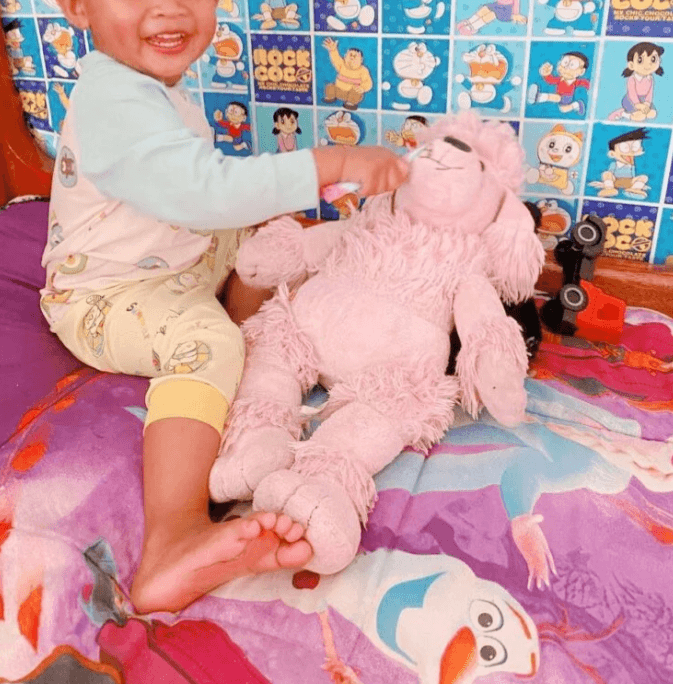
His whole mood changed immediately.
The crying stopped.
He actually reached for the toothbrush.
Suddenly, this was not something scary happening to him.
It was a job he got to do.
That was six months ago, and this trick still works almost every night.
The reason it works is simple.
It hands the control back to your toddler.
They go from being the patient to being the dentist.
That role reversal changes everything about how they feel going into brushing their own teeth.
How to Brush a Toddler’s Teeth When They Refuse: Step by Step
This whole thing works because it turns brushing into a game.
Here is exactly how to do it.
Step 1: You do not have to start in the bathroom
Sometimes we kick things off on his bed or in the play corner, so he is already relaxed before we even get to the sink.
Pick whatever spot feels low-pressure for your child.
Grab their favorite stuffed animal, action figure, or doll.
Any toy they actually care about will work.
Step 2: Let them be the dentist first
This is the most important part.
Hand the toothbrush to your toddler and ask them to clean the toy’s teeth.
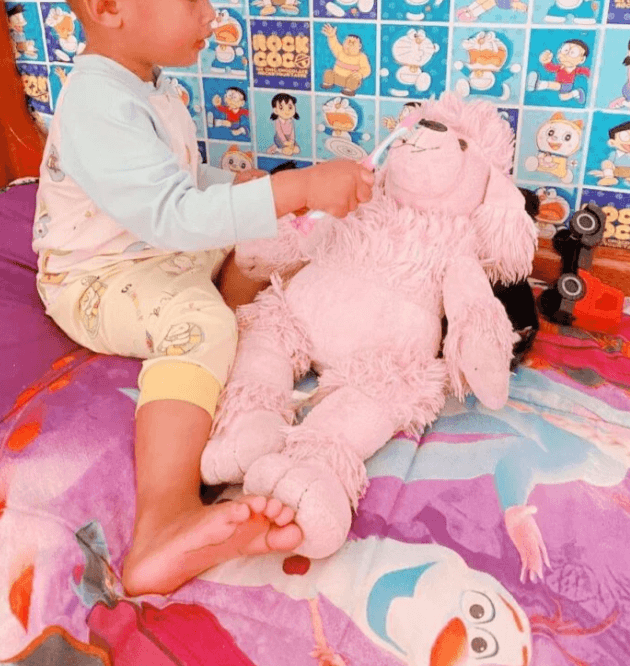
Let them go wild with it. Praise the effort. “Wow, you are such a good dentist! Dolly’s teeth are going to be so sparkly!”
Step 3: Use the “my turn, your turn” switch
Once your kid is feeling proud and in charge, that is your opening.
Say something like, “Wow! Dolly’s teeth are so sparkly now! Should we make your teeth sparkly too?”
I let my son chew on the bristles for a bit so he feels in control, then gently take over to get his back teeth properly cleaned.
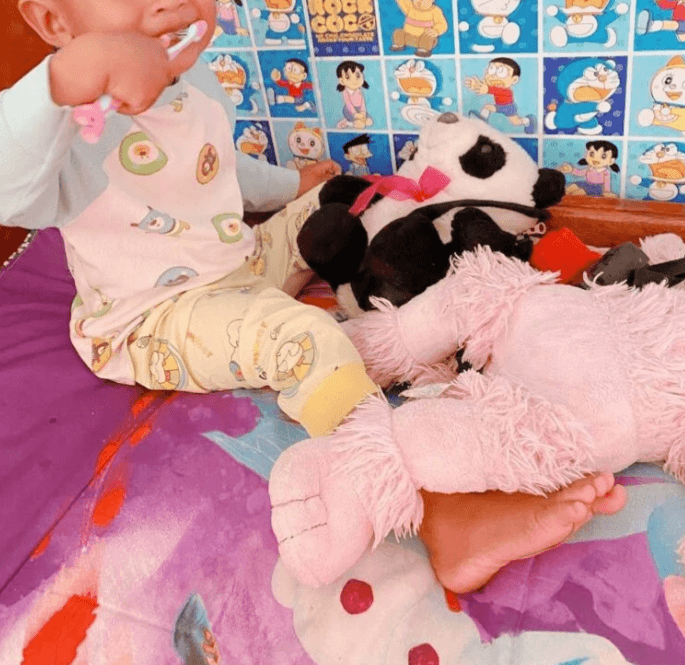
Step 4: Give two choices instead of one open question.
Instead of “Do you want to brush your teeth?” (which just invites a firm no), ask “Do you want to brush in the bathroom or the kitchen tonight?”
He feels in control of the situation, but either way, the teeth are getting brushed.
Best Toothpastes for Picky Toddlers
The flavor matters just as much as the technique.
If your toddler thinks the toothpaste is “spicy” (toddler code for anything minty), they will clamp their mouth shut no matter what tricks you try.
This is one of the most common reasons toddler tooth brushing resistance continues even when parents try everything else.
After testing way too many brands, here are the ones that passed the taste test at our house.
1. Hello Watermelon Fluoride-Free Toothpaste
If your kid hates mint, this one is a game-changer.
It genuinely smells like a watermelon Jolly Rancher, has zero burn, and does not leave blue stains on their pajamas.
No dyes, no artificial sweeteners.
We started with the fluoride-free version when he was still swallowing everything, then switched once he learned to spit.
2. Tom’s of Maine Silly Strawberry
A classic for a reason.
It is mild, natural, and one of the first toothpastes that a lot of pediatric dentists recommend.
The strawberry flavor is not overly sweet, which is actually a good thing if you do not want your kid trying to eat the tube.
It is a paste rather than a gel, so if your toddler hates the “slime” feeling of gels, start here.
3. Burt’s Bees Fruit Fusion
This one tastes like real fruit rather than fake candy flavoring.
It is also the gentlest on the list, so if your toddler has sensitive gums or just cannot handle strong flavors, this is the one to try first.
A Quick Note on Fluoride vs. Fluoride-Free
This stressed me out for a while.
Our pediatric dentist kept it simple.
- Under 2 (or until they can spit): A grain-of-rice amount of fluoride toothpaste is fine, or go fluoride-free if you are worried about them swallowing it.
- Age 2 and up: Fluoride is important for protecting their developing enamel. Use a pea-sized amount.
- Age 3 and up: Continue with fluoride. It reduces the risk of cavities by up to 25 percent in young children, according to the American Dental Association.
Always check with your own dentist.
But switching to a fruit flavor was honestly the second biggest thing that helped us, right after the stuffed animal trick.
Other Things That Sometimes Help
A few more strategies that have made a difference on tough nights.
- Let them pick the toothbrush. My son chose a bright pink one at the store and was way more excited to use it because it was his choice. A toothbrush with their favorite character or color makes brushing feel like something they own, not something being done to them.
- Brush at the same time. I brush my teeth alongside my son. He loves copying what I do, and it makes him feel like a big kid doing a grown-up thing. Toddlers are natural mimics. Use it.
- Make up a silly song. We have a ridiculous little song about brushing away sugar bugs. Ridiculous? Yes. Effective? Also yes. You can also use a two-minute timer app with fun animations. Anything that turns the wait into an event.
- Keep a consistent routine. Toddlers thrive on predictability. When brushing happens at the same point in the bedtime sequence every night, it becomes “just what we do” rather than a fresh battle each time.
What Dentists Actually Say About Toddler Tooth Brushing
Is the stuffed animal method perfect?
No. Does my son sometimes just chew the plastic instead of actually brushing?
Absolutely.
But our pediatric dentist told me something that really helped me relax: “At this age, building the habit matters more than perfect technique.”
If you force it and make your toddler cry every night, they will grow up dreading dental care.
If you make it playful, even if they miss a few spots, you are teaching them that brushing is normal and nothing to be afraid of.
That perspective shift changed everything for me.
I stopped stressing about hitting every single tooth and started focusing on making the experience feel okay.
A positive relationship with dental care at age two is worth far more than a perfectly clean mouth achieved through tears.
The American Academy of Pediatric Dentistry recommends that children see a dentist by their first birthday or within six months of their first tooth appearing.
If toothbrushing resistance continues to be a major struggle, bring it up at your next visit.
A good pediatric dentist will have tailored strategies for your specific child.
What About the 3-3-3 Rule?
You might have heard of it: brush 3 times a day, for 3 minutes each time, within 3 minutes of eating.
Honestly, that is a lot to ask from a toddler.
Most adults do not even manage this.
If you can get twice a day for 90 seconds, you are doing great.
Morning and bedtime are what matter most.
Do not stress yourself out chasing a perfect standard that sets everyone up to fail.
The Bottom Line
If bedtime toothbrushing has turned into a nightly battle, stop fighting it head-on.
Grab a stuffed animal and try the role reversal trick tonight.
Let your toddler be the dentist for a minute.
Give them that feeling of being in charge.
Then, when it is their turn, they will usually be a lot more willing to cooperate.
That is how we finally got our toddler to cooperate with brushing without it ending in tears.
My son used to scream the second he saw the toothbrush.
Now he runs to grab his poodle when I say it is time. That is a huge win.
And even if this trick does not work perfectly every single night, it at least turns the whole thing into something playful instead of stressful.
That is a win for both of you.
FAQ: Toddler Teeth Brushing Questions
At what age can toddlers use fluoride toothpaste?
Fluoride toothpaste is safe to use as soon as the first tooth appears, as long as you use the right amount. Under age 2, use a grain-of-rice-sized smear. From age 2 to 6, use a pea-sized amount. Always supervise brushing and teach your toddler to spit rather than swallow. If they are still swallowing everything, fluoride-free is a reasonable choice until they can spit consistently.
My 2-year-old clenches their mouth shut and won’t let me brush their teeth. What do I do?
Start with the stuffed animal trick. Have them brush a toy’s teeth first, so they feel like the one in charge. Then offer two limited choices about brushing their own teeth (where, which toothbrush) so they still feel control even while you proceed. If clenching is a persistent sensory issue rather than a mood issue, a very soft-bristled brush and a mild, unflavored or fruit-flavored toothpaste can also reduce the resistance significantly.
How long should I brush a toddler’s teeth?
Two minutes is the standard recommendation, but for most toddlers, that is not realistic at first. Aim for 90 seconds twice a day and build up from there. Use a song, a timer, or a short video to make the wait feel shorter. Consistency matters more than hitting an exact time.
Disclaimer: I am a parent and a university educator, not a licensed pediatric dentist or pediatrician. This guide is based on my personal parenting experience. Always consult your child’s pediatric dentist for professional medical advice regarding your child’s dental health and fluoride use.
