


In Human Resources, teaching workplace inclusion to adults usually involves a 50-slide PowerPoint and a lot of eye-rolling.
Teaching it to a 2-year-old?
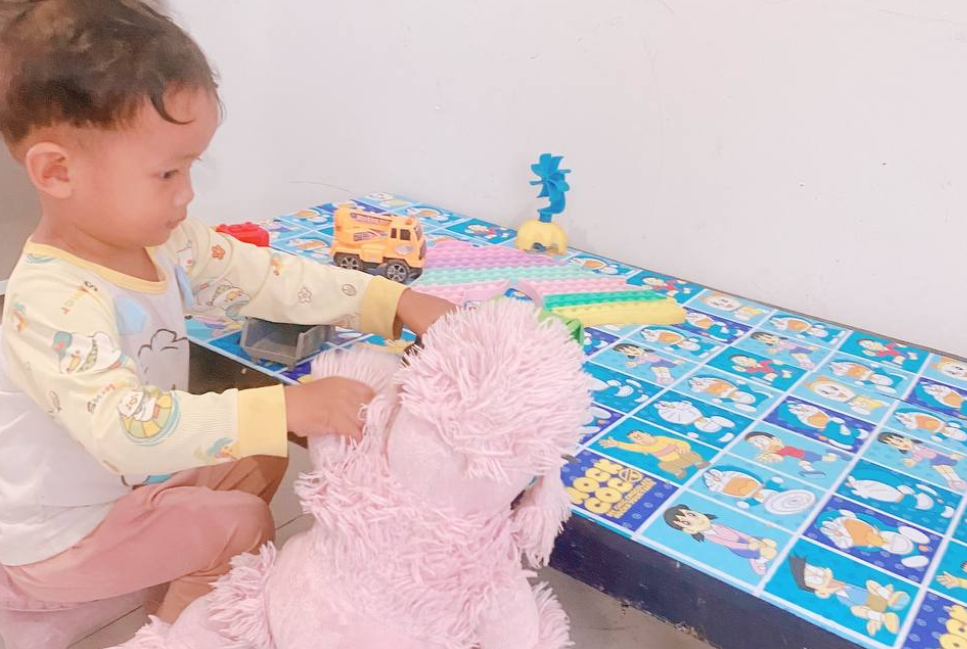
That just requires some toy trucks and a pink stuffed poodle.
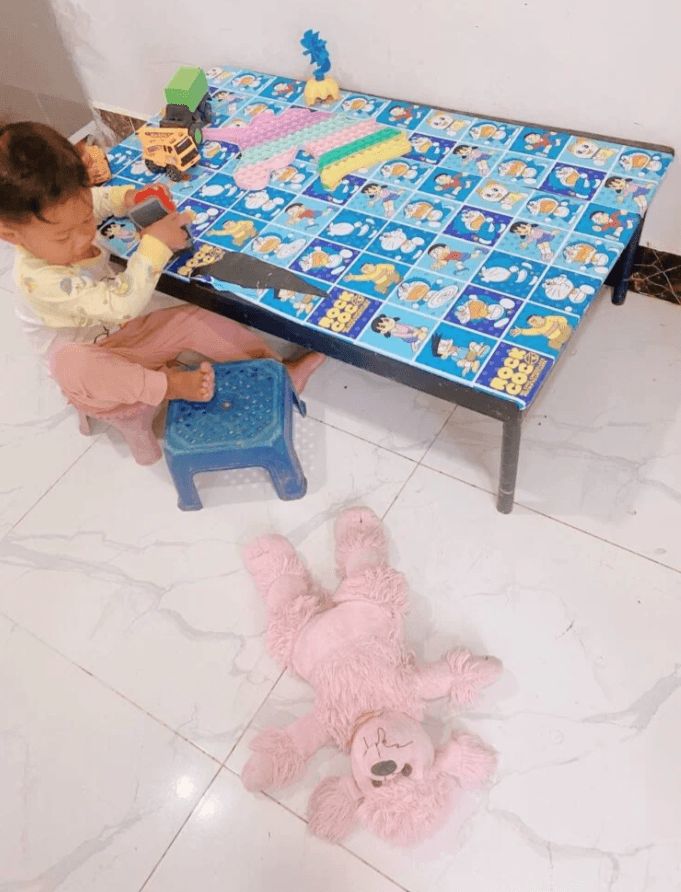
Last Tuesday morning, my son was deep in his own little world, pushing his trucks back and forth across his Doraemon table.
He was totally focused and completely happy.
But then I noticed his pink stuffed poodle lying on the floor, off to the side, completely left out of the project.
I realized this was the perfect moment for some early life training.
Here is a real story about how to teach empathy to a 2-year-old, and a simple 4-step framework that any parent can use without forcing it.
Quick Takeaway
- Toddlers as young as 2 can begin practicing empathy through pretend play with stuffed animals and dolls.
- You do not need a structured curriculum or special toys. Every day, play moments are enough.
- A gentle nudge, not a lecture, is the most effective way to encourage empathy in toddlers.
- Acknowledging kind behavior right after it happens is what makes it stick.
- Consistent small moments build the social-emotional skills toddlers need for daycare, preschool, and beyond.
When Do Toddlers Start Developing Empathy?
Most children begin to show early signs of empathy between the ages of 2 and 3.
At this stage, they may notice when someone around them is upset or hurt, even if they do not yet know how to respond.
By age 3, many toddlers will start to actively comfort a friend or a toy they perceive as sad.
Two-year-olds are still very much figuring out that other people have feelings at all.
Their world is naturally self-centered, and that is completely developmentally normal.
The good news is that you do not have to wait for empathy to appear on its own.
Small, everyday play moments can gently move it along.
A Real-Life Case Study in Toddler Empathy
I did not make a big deal out of the poodle situation.
I just pointed to her and said, “Look, your doll is sleeping alone on the floor.
Why do you not let her play too?”
He stopped. Looked at the doll.
And then did something that caught me off guard.
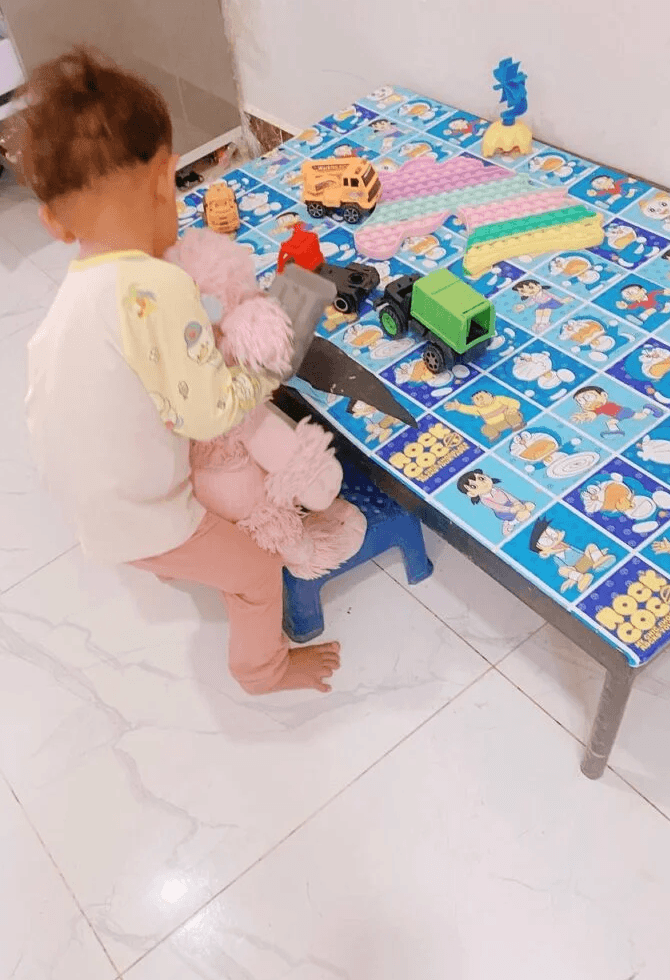
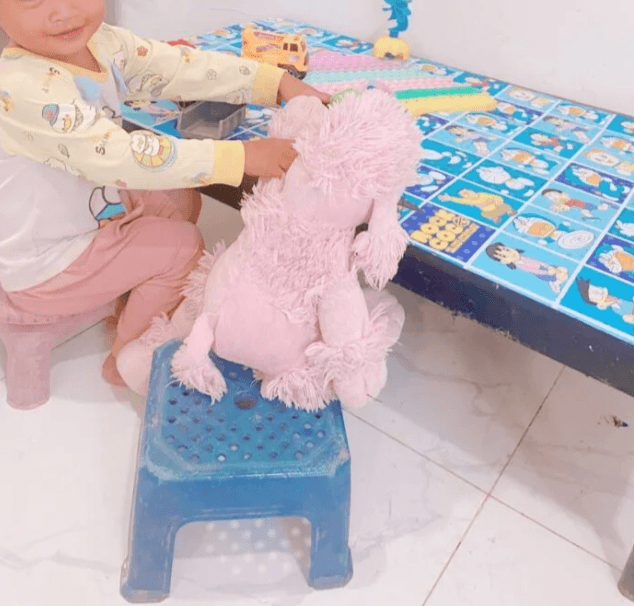
He picked her up, set her carefully on a little blue stool next to his table, and held her paw against the truck.
Then he started “showing” her how to move it, talking to her in his toddler babble like he was explaining the whole thing.
That right there was empathy.
Real, genuine, two-year-old empathy.
Why Toddler Empathy Training Through Play Actually Works
When toddlers play alone, their world is pretty self-centered, and that is completely normal.
But the second you nudge them to think about someone else, even a stuffed animal, something shifts in how they are thinking.
In those five minutes, my son picked up on a few things without me saying a word about any of them:
- He noticed that the doll was left out.
- He decided to do something about it.
- He figured out that playing together is more fun.
That is how empathy gets built in toddlers.
Not through lectures.
Through small, everyday moments exactly like this one.
This is also the foundation of social-emotional learning, or SEL, which researchers and early childhood educators now recognize as one of the most important skill sets a child can develop before entering preschool.
The toddler years are the right time to start, not because you need a program, but because the brain is ready.
A 4-Step Framework for Teaching Empathy to Toddlers at Home
You do not need special toys or a planned activity.
You just need to pay attention and nudge gently when the moment shows up.
Step 1: Notice when your child is playing alone
Watch for times when your toddler is locked in on one toy while everything else gets ignored.
Those are your openings.
Cooperative play does not come naturally at this age, so you are looking for the small gaps where it becomes possible.
Step 2: Gently point out the “lonely” toy
Keep it simple and kind.
Something like “Teddy is all by himself over there.
Does he want to play too?” works perfectly.
No lecture needed.
The goal is to plant a seed, not to redirect their play entirely.
Step 3: Let your child take the lead
Suggest, then step back.
You might be surprised by what they come up with on their own.
Toddlers who are given the space to solve a small social problem, even a pretend one, are building real decision-making and perspective-taking skills.
Step 4: Acknowledge what they did
When they include the toy, say something like “Look how happy Dolly is now!” or “That was so kind of you.”
It does not have to be over the top. Just enough to let them know that caring about others is a good thing.
This is how gentle parenting turns small moments into lasting habits.
Developing Soft Skills in the Sandbox
When kids pretend their toys have feelings, they are quietly practicing skills that matter way beyond playtime:
- Noticing when someone seems left out
- Taking turns and sharing something they care about
- Explaining things patiently to someone else
- Staying calm when play does not go their way
These are not small things.
They are the exact skills that help kids navigate friendships at daycare, preschool, and pretty much everywhere else.
Researchers who study toddler emotional intelligence development consistently find that children who begin practicing these skills early show stronger relationships and better conflict resolution throughout childhood.
Practical Tips for Cooperative Toddler Play (What Actually Works at Age 2)
Two-year-olds are still figuring out that other people have feelings at all.
Pushing cooperative play too hard usually backfires.
Here is what tends to work better:
- Start with stuffed animals and dolls before expecting to share with other kids. It is lower stakes and much easier for them to practice without meltdowns. A stuffed animal will not grab the toy back or cry.
- Model empathy yourself. Say things like “Oh no, Dolly fell. Let us help her up.” Let them see what caring looks like in action before you expect them to do it on their own.
- Keep sessions short. Five minutes of cooperative play at this age is genuinely a win. Do not expect more than that, and do not extend the moment past the point where it stops being fun.
- Skip punishment when they act selfishly. It is developmentally normal. Just keep gently redirecting toward including others, and over time, it sticks. This is the core idea behind gentle parenting, empathy work with toddlers.
Small Moments Build Big Hearts
You really do not need a program or a curriculum to help your toddler build these skills.
You just need to pay attention during regular, everyday play.
When my son picked up that pink poodle and patiently “taught” her how to use the truck, he was not just playing.
He was learning that other people, even pretend ones, have experiences worth thinking about.
He learned that someone can be left out.
And he learned that he could be the one to change that.
That is a pretty big idea for someone who still needs help putting his shoes on.
The takeaway from this whole experience is simple: the next time your toddler ignores a toy, do not just tell them to clean it up.
Ask them to include it. “Can you show Dolly how the truck works?”
Soft skills take time to develop.
But sometimes it just takes one gentle question, and then you get out of the way and watch your child’s heart do the rest.
Frequently Asked Questions
When does cooperative play start for toddlers?
True cooperative play, where children work together toward a shared goal, typically begins around age 3 to 4. Before that, most toddlers engage in parallel play, playing near each other but not really together. The empathy work you do at age 2 with stuffed animals and pretend play is what lays the foundation for cooperative play later on.
What is the difference between empathy and sympathy in young children?
Sympathy means feeling concern for someone else’s situation. Empathy goes a step further: it means imagining and sharing what that person is actually feeling. In toddlers, both develop gradually. At age 2, you are mostly planting the seeds of empathy by helping them notice others at all. Full perspective-taking, where a child can truly imagine another person’s inner experience, develops more fully between ages 3 and 5.
Disclaimer: I am a parent and a university educator, not a licensed child psychologist or pediatrician. This guide is based on my personal parenting experience and educational background. Always consult your child’s pediatrician or a qualified specialist for professional advice regarding your child’s behavioral or educational development.
